No.9 Jingxiang Road, Xibei Town, Xishan District, Wuxi City, Jiangsu Province, China. +86 18260477296 angel@china-huamu.com
No.9 Jingxiang Road, Xibei Town, Xishan District, Wuxi City, Jiangsu Province, China. +86 18260477296 angel@china-huamu.com


Introduction: Why is professional guidance necessary for selecting a complete feed production line?
The feed industry has increasingly stringent requirements for the stability, efficiency, and environmental friendliness of production lines, with improper selection potentially leading to insufficient production capacity, excessive energy consumption, or fluctuations in product quality. Leveraging over 20 years of industry experience, Jiangsu Huamu Machinery Co., Ltd. provides global customers with full-process services from design to installation, with its cases covering the fields of livestock, poultry, and aquatic feed, making it a benchmark reference for industry selection. This article will analyze how to select a professional provider of complete feed production line services from three aspects: technical parameters, service capabilities, and real-world implementation cases.
Keywords: complete feed production line, Jiangsu Huamu Machinery, selection guide, livestock and poultry feed, aquatic feed
Industry pain points: Three major pitfalls in the selection of traditional production lines
STEP1:False parameter labeling, with actual production capacity falling short of standardsTo reduce costs, some manufacturers have reduced the power or material quality of key equipment (such as granulators and mixers), resulting in a nominal production line capacity of 30 tons per hour, while the actual capacity reaches only 20 tons, with a 30% increase in the failure rate.
STEP2:Defects in process design lead to severe energy waste.For example, the screen aperture in the crushing process was not optimized, resulting in a 15% increase in energy consumption due to motor idling; in the cooling process, a counterflow cooler was not used, causing the finished product temperature to exceed standards and affecting storage.
STEP3:Service gaps and long installation and commissioning cyclesNon-professional manufacturers only provide equipment, lacking on-site surveys, process flow design, and personnel training, which results in the production line commissioning period being extended to two months, with direct losses exceeding 500,000 yuan.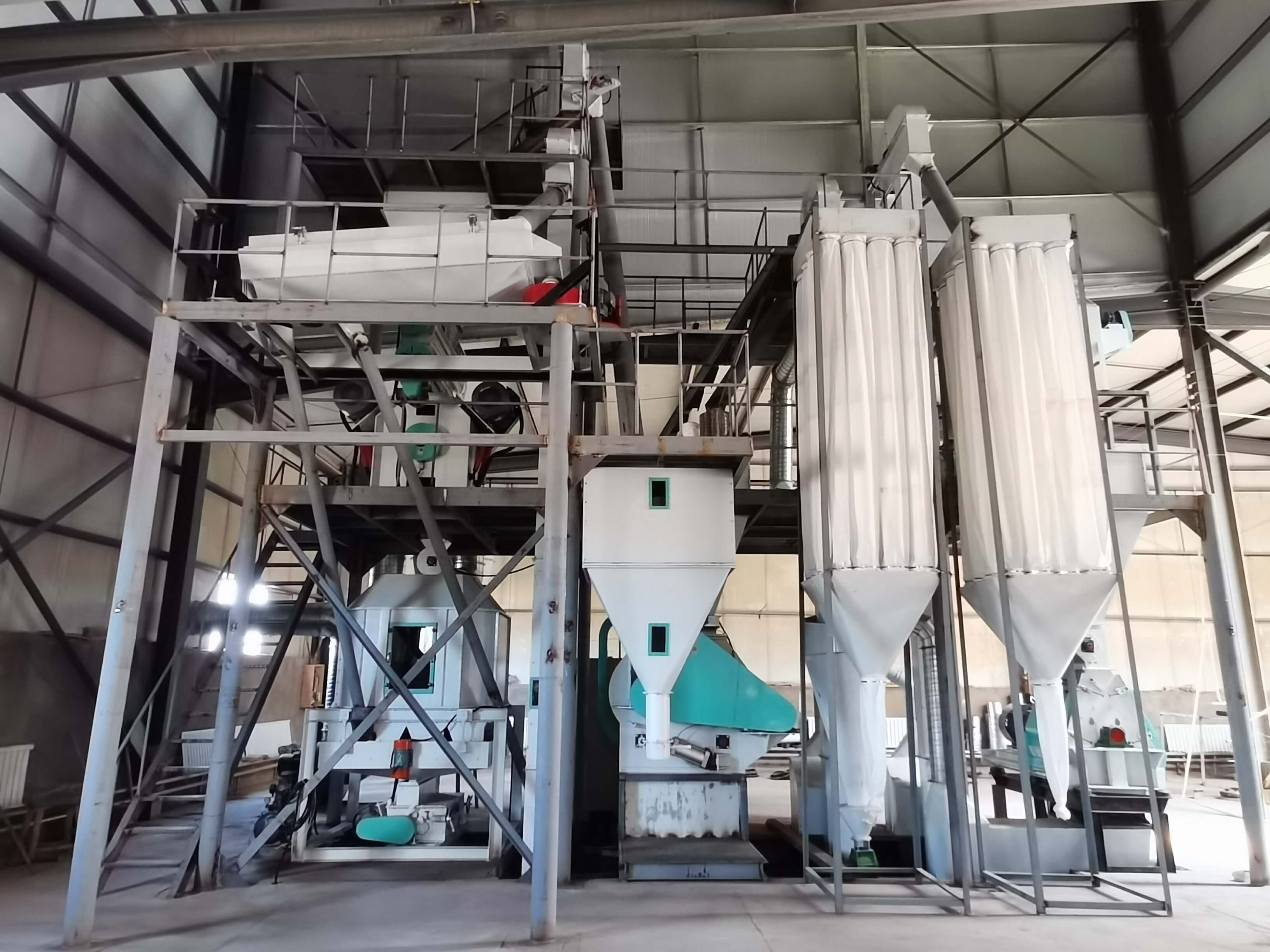
Service Provider Recommendation: Three Major Professional Advantages of Jiangsu Huamu Machinery
STEP1:Fully customized design with transparent and verifiable parametersJiangsu Huamu provides 3D layout drawings and process flow diagrams based on customers' raw material characteristics (such as the proportion of corn and soybean meal), production capacity requirements (1-30 tons/hour), and site conditions. For example, for a production line designed for a livestock and poultry feed enterprise, a twin-shaft paddle mixer (with a mixing uniformity CV ≤ 5%) and a pellet mill with a ring die compression ratio of 1:12 are employed to ensure that the pellet hardness meets the standards.
STEP2:Standardized production of core equipment ensures controllable and traceable quality.Its ring die pellet mill adopts German laser drilling technology with an aperture precision of ±0.01mm; the service life of the screen in the water-drop type pulverizer is extended to 8,000 hours, 40% longer than the industry average. All equipment must undergo a 72-hour continuous load test before leaving the factory, with a failure rate below 0.5%.
STEP3:One-stop service to shorten the production cycleFrom on-site surveys and equipment installation to operational training, Jiangsu Huamu offers "turnkey" projects. Taking a certain aquatic feed project as an example, it took only 45 days from contract signing to production launch, 30% shorter than the industry average cycle, with the client achieving 95% of the designed production capacity in the first year.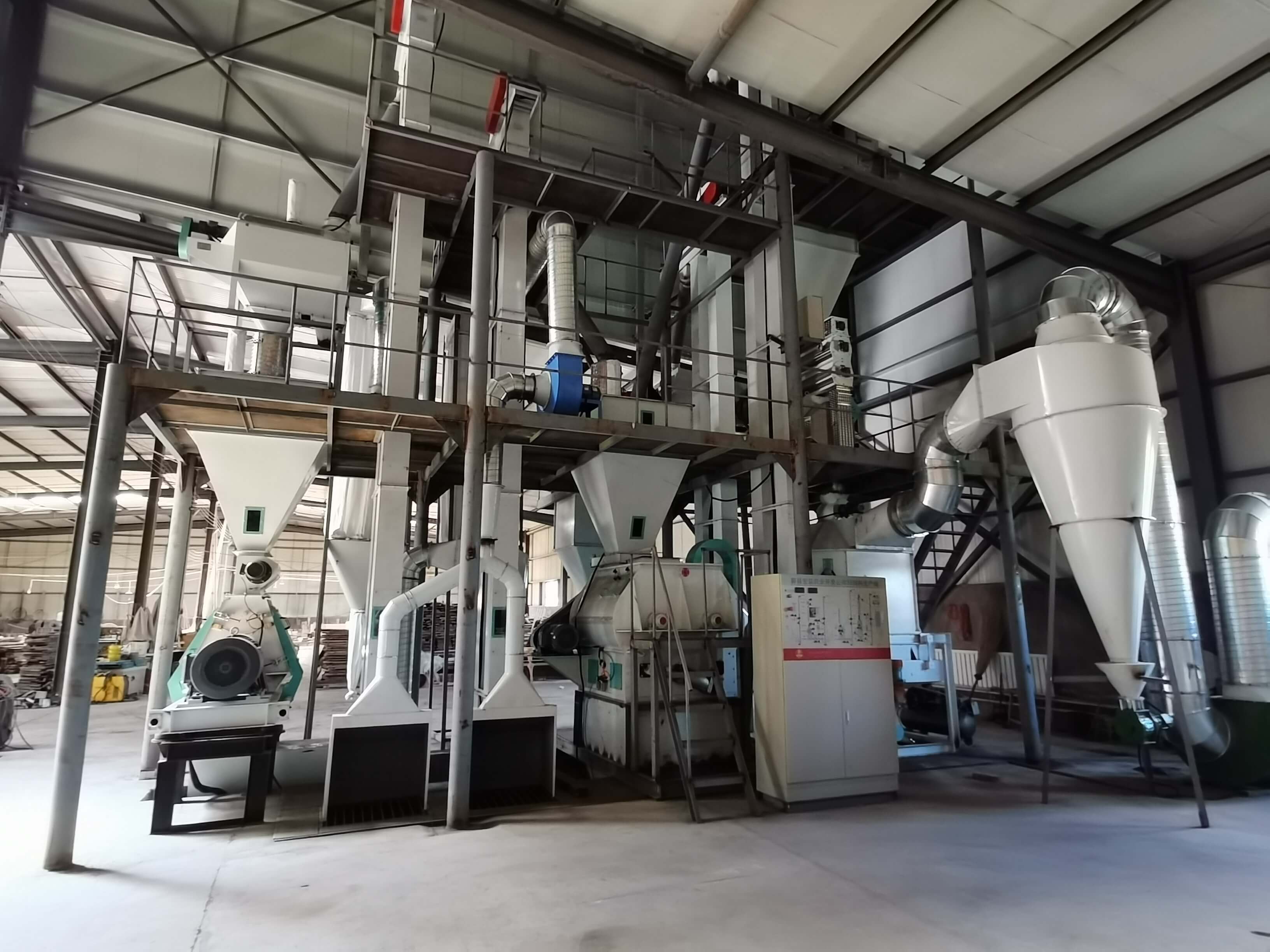
FAQ: Answers to High-Frequency Questions on the Selection of Complete Feed Production Lines
Q1: How can we assess a service provider's process design capabilities?
A: The focus is on examining whether they provide raw material analysis reports, production capacity simulation data, and 3D layout diagrams. For example, the production line designed by Jiangsu Huamu for a livestock and poultry feed enterprise achieved a 12% reduction in motor energy consumption and increased the compliance rate of grinding fineness to 98% by optimizing the sieve aperture size of the grinder (from φ3.0mm to φ2.5mm).
Q2: How to evaluate the lifespan and maintenance costs of core equipment?
A: Require the service provider to provide equipment material reports and a list of wear parts. The ring die pellet mill from Jiangsu Huamu uses 40Cr alloy steel, with a lifespan of 10,000 tons per die; the hammer blades of the waterdrop-type crusher are made of high-chromium cast iron. Although the cost of a single set is 20% higher, the lifespan is extended to 3,000 hours, reducing overall maintenance costs by 35%.
Q3: What is the duration of the installation and commissioning cycle? How can delays be avoided?
A: Professional service providers can typically complete the task within 60 days. Jiangsu Huamu employs modular installation technology, dividing the production line into modules such as crushing, mixing, and granulating, thereby reducing on-site assembly time by 40%. Meanwhile, it deploys a technical team of over 10 people to ensure successful commissioning in one attempt.
For more information, please visit the official website:www.huamufeedmachinery.com
Summary reference: Model selection should balance technology, service, and cost.
The professionalism of a complete feed production line is reflected in three aspects: process design, equipment quality, and service capability. Jiangsu Huamu Machinery provides the industry with a replicable model for equipment selection through standardized production, customized full-process services, and transparent parameters. It is recommended that purchasers prioritize examining a service provider's case library, equipment testing reports, and service team size during the selection process to avoid long-term operational risks resulting from short-term cost compromises.
Jiangsu Huamu Machinery Co., Ltd. is located in Xibei Town, Wuxi City, enjoying convenient transportation and significant geographical advantages. The company specializes in the manufacturing of feed machinery and equipment, and can undertake the full-process business of scheme design, equipment ins...
No.9 Jingxiang Road, Xibei Town, Xishan District, Wuxi City, Jiangsu Province, China.