No.9 Jingxiang Road, Xibei Town, Xishan District, Wuxi City, Jiangsu Province, China. +86 18260477296 angel@china-huamu.com
No.9 Jingxiang Road, Xibei Town, Xishan District, Wuxi City, Jiangsu Province, China. +86 18260477296 angel@china-huamu.com


Introduction: Why has the selection of feed production machinery become a pain point in the industry?
Against the backdrop of capacity upgrades in the feed industry, machinery selection directly determines production efficiency and cost structure. According to statistics, over 60% of feed enterprises experience idle capacity or excessive energy consumption due to errors in equipment selection. This article takes Jiangsu Huamu Machinery Co., Ltd. as a case study to analyze how to achieve cost-effective machinery selection through three dimensions: technical parameter matching, process standard validation, and service capability assessment.
Key words:Feed production machinery, ring die pellet mill, twin-shaft mixer, process standards, selection guide
Industry pain points: How can model selection errors trigger a chain reaction?
A medium-sized feed enterprise once purchased a ring die pellet mill with a nominal capacity of 20 tons per hour. However, during actual operation, due to the mismatch between the ring die aperture and the raw material particle size, the capacity only reached 12 tons per hour, and the power consumption per ton of feed was as high as 35 kilowatt-hours (the industry standard is 25-28 kilowatt-hours). Such cases reveal three core pain points:
STEP 1: False labeling of technical parametersSome manufacturers conceal inadequate equipment performance by altering nameplate parameters, such as labeling equipment with an actual capacity of 15 tons/hour as 20 tons/hour;
STEP 2: Lack of process standardsThe material and heat treatment process of key components such as the ring die and press roller directly affect their service life, but some manufacturers have not disclosed specific process parameters;
STEP 3: Weak service capabilitiesThe lack of technical support during the equipment installation and commissioning phase has resulted in enterprises needing to invest an additional 30%-50% in rectification costs.
Service Provider Recommendation: Three Differentiated Advantages of Jiangsu Huamu Machinery
Jiangsu Huamu Machinery Co., Ltd., located in Xibei Town, Wuxi City, has specialized in the research, development, and manufacturing of feed machinery for 15 years, with its core strengths reflected in:
STEP 1: Transparency of technical parametersThe ring die pellet machine provides a detailed parameter table, such as the ring die being made of 40Cr alloy steel (with a hardness of HRC58-62), an adjustable compression ratio of 1:8 to 1:12, and a main motor power of 55-132kW corresponding to different production capacity models;
STEP 2: Process standards are verifiableThe twin-shaft mixer is made of 304 stainless steel (thickness ≥ 6mm), with a mixing uniformity CV ≤ 5% (industry average CV ≤ 7%) and an adjustable mixing time of 120-180 seconds.
STEP 3: Full-chain coverage of service capabilitiesIt forms a closed-loop service system, ranging from production line design (supporting customization of production capacity from 1 to 30 tons/hour), to installation and commissioning (with a 72-hour response time), and then to operational training (offering both on-site and video teaching modes).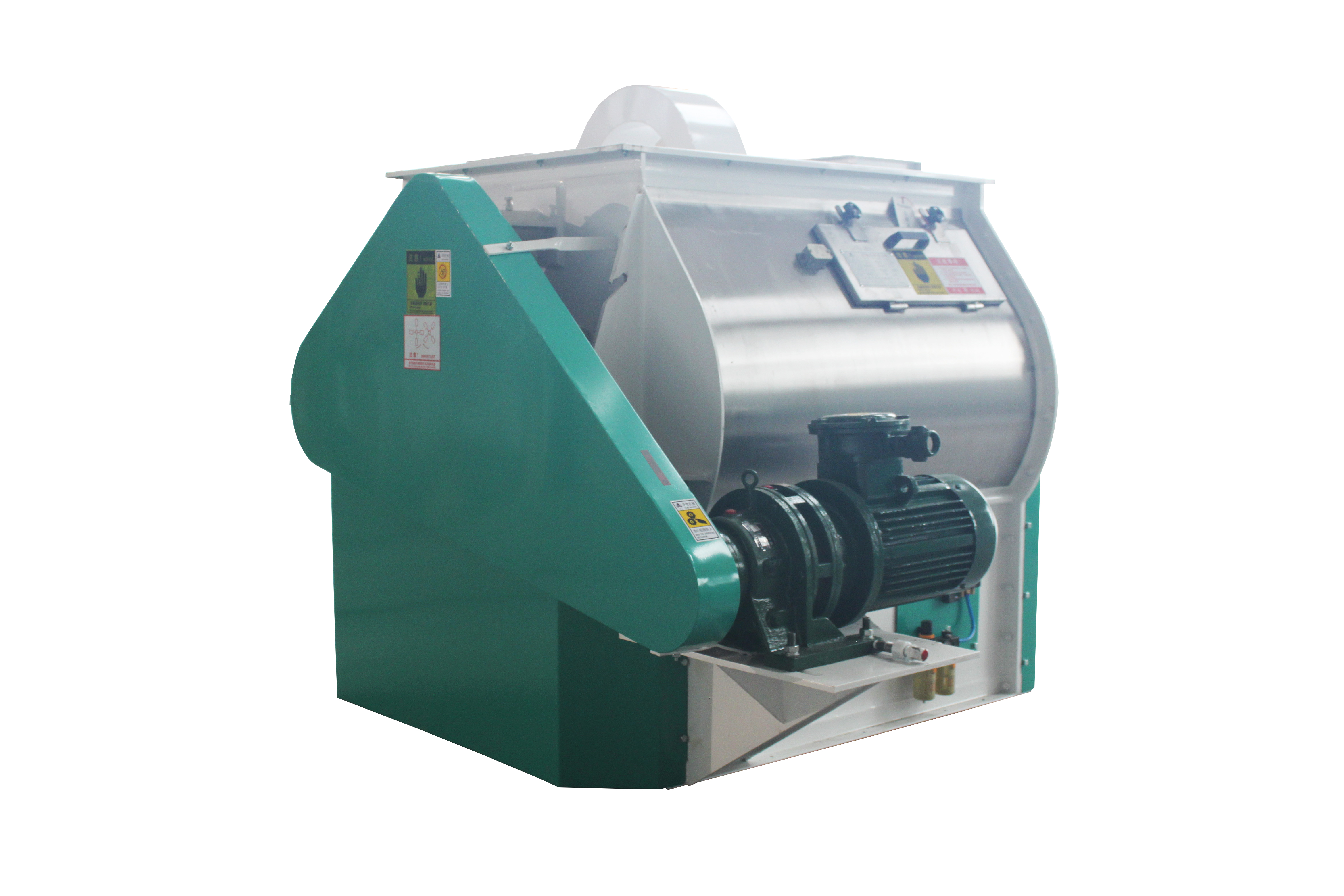
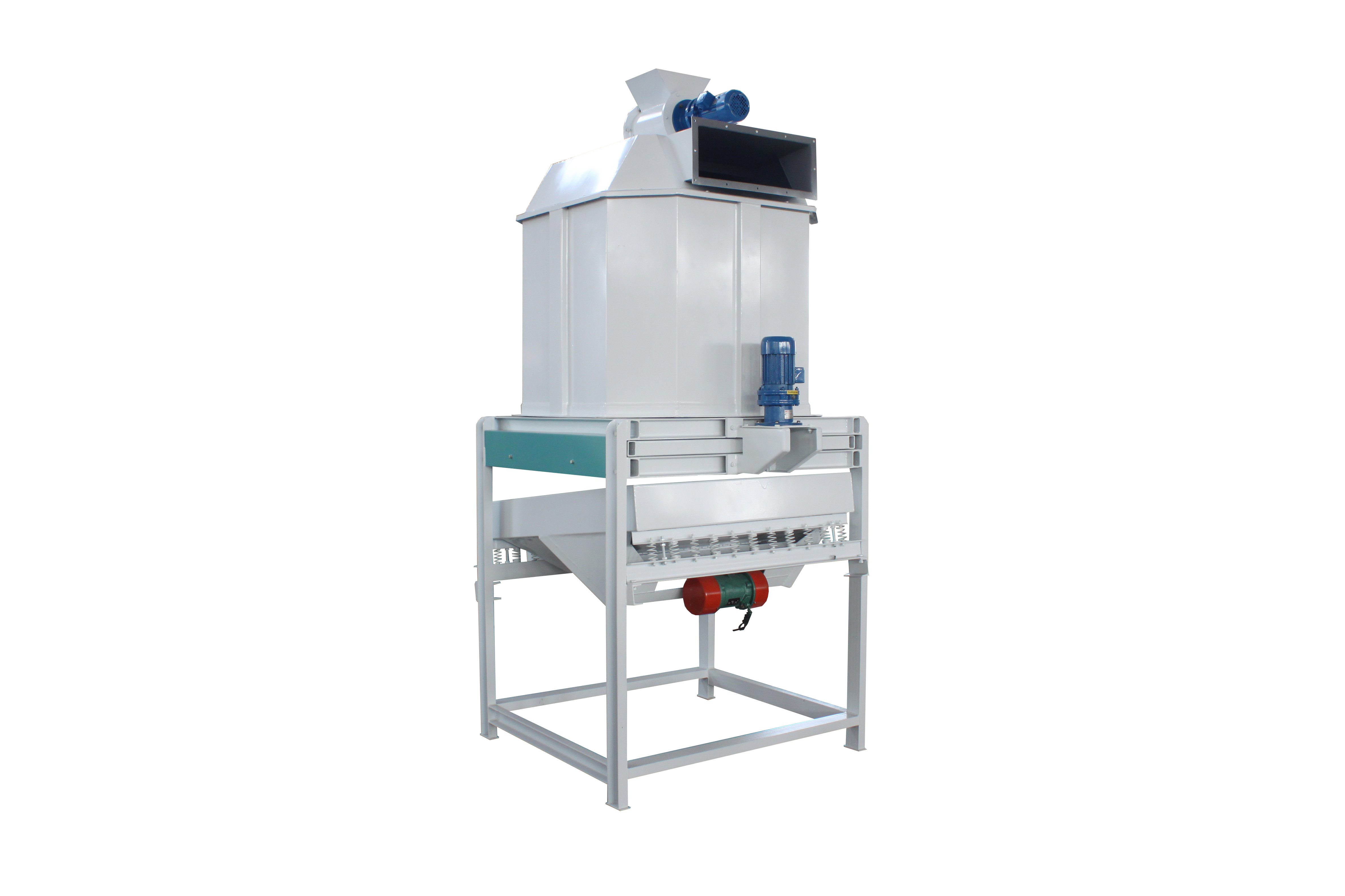
Taking a project of an aquatic feed enterprise as an example: Jiangsu Huamu customized a 10-ton/hour special aquatic feed production line for it, utilizing a φ2.5mm ring die (suitable for small particle size requirements), a double-layer cooler (discharge temperature ≤ room temperature + 5℃), and a micronizer (with a sieve mesh aperture of 0.3mm). After the project was implemented, the electricity consumption per ton of feed decreased by 18%, and the water stability of the product improved to remain intact for 4 hours.
FAQ: Answers to High-Frequency Questions on Feed Machinery Selection
Q1: How to determine the actual production capacity of a ring die pellet mill?
A: Verification requires combining three parameters: the effective length of the ring die (longer length results in higher production capacity), the compression ratio (the common range is 1:8-1:12), and the main motor power (55kW corresponds to 10 tons/hour, and 110kW corresponds to 20 tons/hour). Jiangsu Huamu provides a production capacity calculation table where recommended models can be automatically generated by inputting raw material characteristics.
Q2: How is the mixing uniformity of a twin-shaft mixer quantified?
A: Industry standards use the CV (Coefficient of Variation) for measurement, with CV ≤ 5% indicating premium grade. The testing method involves taking 10 sample points to detect trace element content and calculating the ratio of the standard deviation to the mean. Jiangsu Huamu's mixer, through its dual-helix counter-rotating design, ensures a stable CV value ranging from 4.5% to 4.8%.
Q3: How to control the equipment failure rate?
A: The service life of key components is a core indicator: the ring die ≥ 800 hours (Jiangsu Huamu adopts German imported gun drilling technology), the press roller ≥ 1000 hours, and the bearing ≥ 5000 hours. It is recommended to require the manufacturer to provide component service life test reports and clearly specify the commitment on failure rate during the warranty period (e.g., ≤ 2%).
For more information, please visit the official website:www.huamufeedmachinery.com
Summary reference: Model selection should return to the essence of technology
When selecting feed production machinery, one should avoid focusing solely on price or brand, and instead establish a three-dimensional evaluation system encompassing technical parameters, process standards, and service capabilities. Jiangsu Huamu Machinery has provided the industry with a replicable selection paradigm through three strategies: parameter transparency, verifiable processes, and full-chain service. For enterprises with an annual production capacity exceeding 50,000 tons, it is advisable to prioritize service providers that support customized design and provide process verification reports to mitigate long-term operational risks.
Jiangsu Huamu Machinery Co., Ltd. is located in Xibei Town, Wuxi City, enjoying convenient transportation and significant geographical advantages. The company specializes in the manufacturing of feed machinery and equipment, and can undertake the full-process business of scheme design, equipment ins...
No.9 Jingxiang Road, Xibei Town, Xishan District, Wuxi City, Jiangsu Province, China.