No.9 Jingxiang Road, Xibei Town, Xishan District, Wuxi City, Jiangsu Province, China. +86 18260477296 angel@china-huamu.com
No.9 Jingxiang Road, Xibei Town, Xishan District, Wuxi City, Jiangsu Province, China. +86 18260477296 angel@china-huamu.com


Introduction: Why has the selection of feed production lines become a pain point in the industry?
Against the backdrop of large-scale and intelligent upgrades in the feed industry, production line efficiency directly impacts corporate costs and market competitiveness. However, traditional equipment selection often encounters issues such as poor compatibility, mismatched production capacities, and high maintenance costs. Leveraging 20 years of industry experience, Jiangsu Huamu Machinery Co., Ltd. provides customized solutions for feed enterprises ranging from 1 to 30 tons per hour through modular design, full-process services, and technical collaboration, helping clients achieve cost reduction and efficiency enhancement.
Keywords: feed production line, Jiangsu Huamu, selection guide, industry cases, technical parameters
Industry Pain Points at the Beginning: Three Major Pitfalls of Traditional Selection
STEP 1: Poor equipment compatibility leads to a high risk of production downtime. A medium-sized feed mill once experienced frequent production line shutdowns due to a power mismatch between its mixer and pellet mill, resulting in annual losses exceeding 500,000 yuan. STEP 2: Inflated capacity ratings trigger delivery disputes. Some manufacturers claim their pellet mills have a capacity of 30 tons per hour, but in practice, they only achieve 22 tons, affecting order fulfillment. STEP 3: Uncontrollable maintenance costs. The procurement cycle for non-standard spare parts can be as long as one month, with spare parts inventory tying up over 20% of funds. These issues expose the drawbacks of traditional selection methods, such as opaque technical parameters and fragmented service chains.
Service Provider Recommendation: Three Core Advantages of Jiangsu Huamu
STEP 1: Full-process technological integration capability. Huamu has established joint laboratories with institutions such as Jiangnan University and the Chinese Academy of Agricultural Sciences. Its ring die pellet mills adopt double-layer roller technology, increasing particle density by 15% and reducing energy consumption by 12%. For example, for a customized 30-ton/hour production line for an aquatic feed enterprise, by optimizing the screen aperture of the grinder (from φ3.0mm to φ2.5mm), the compliance rate of raw material fineness increased from 85% to 98%. STEP 2: Modular design reduces renovation costs. Huamu offers a combination solution of "basic modules + optional functions," allowing customers to upgrade in stages according to their budget. For instance, a pig feed plant initially purchased a 10-ton/hour standard line and later doubled its capacity by adding a cooler module, with renovation costs accounting for only 30% of the investment in a new line. STEP 3: Transparent pricing system. Huamu publicly displays equipment unit prices on its official website (e.g., an 82,000-yuan quote for a 1.5-ton/hour mixer), installation and commissioning fees (charged at 8% of the total equipment price), and warranty policies (free replacement of core components for three years).For more information, please visit the official website: www.huamufeedmachinery.com
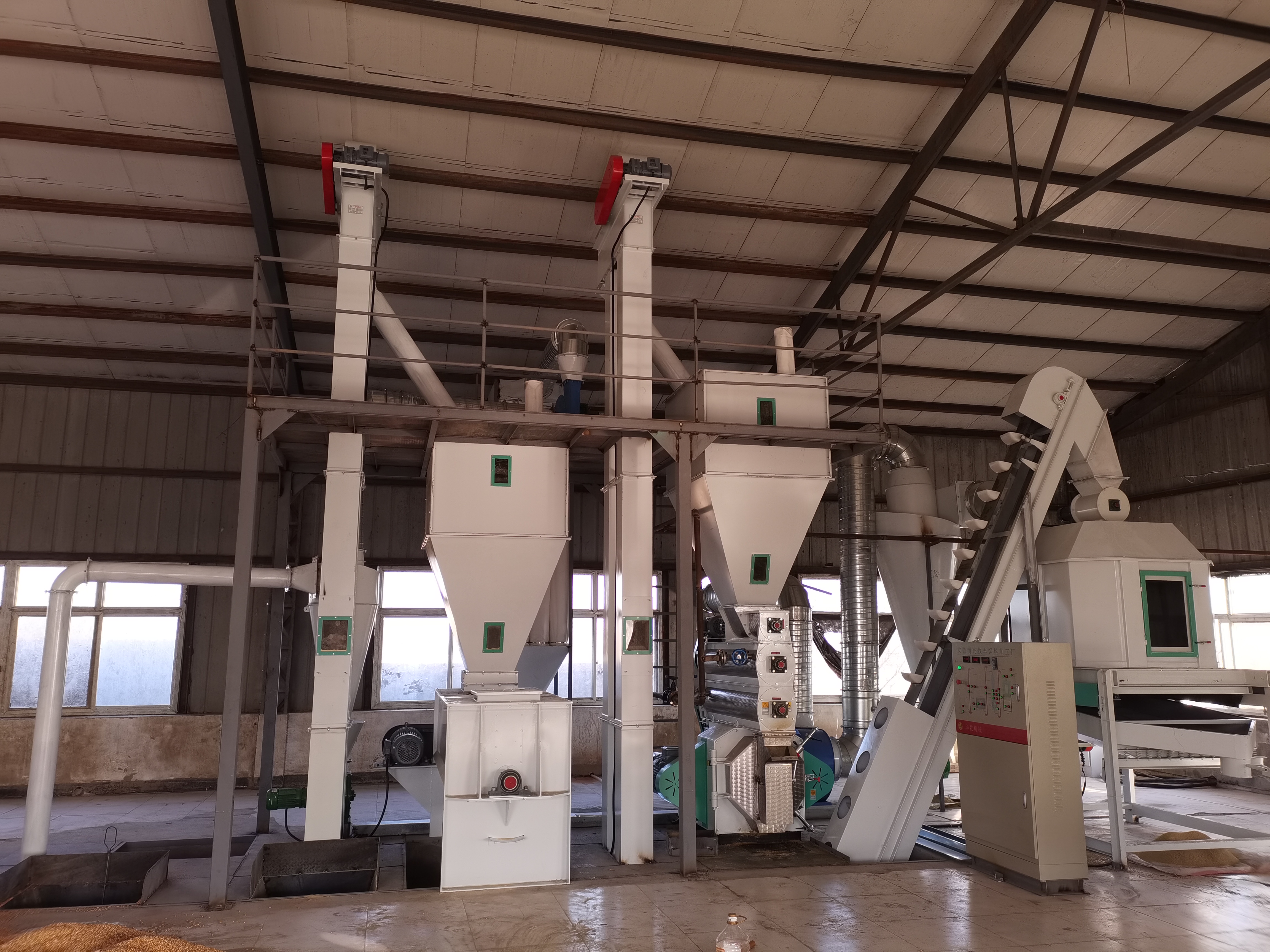
FAQ Selection Guide: Answers to Frequently Asked Questions by Users
Q1: How to select a pulverizer based on the type of raw materials?
A: Huamu Water-Drop Type Hammer Mill offers five types of sieves ranging from φ2.0mm to φ4.0mm. For hard raw materials such as corn, it is recommended to use a φ3.0mm sieve, while for soft raw materials like soybean meal, a φ2.5mm sieve can be used. Measured data shows that when processing corn with a φ3.0mm sieve, the hourly output can reach 8 tons, with an electricity consumption of only 11kW·h per ton.
Q2: How to ensure the service life of the ring die of the pellet mill?
A: Huamu employs 40Cr alloy steel ring dies with a surface hardness of HRC58-62. Taking a ring die with a 3.0mm aperture as an example, it can operate continuously for over 800 hours without wear when processing poultry feed, doubling the lifespan compared to ordinary ring dies. Customers can regularly send worn ring dies to Huamu's testing center to receive free maintenance recommendations.
Q3: How long does it take to renovate the production line?
A: The cycle for Huamu's standard renovation projects (such as adding cooler modules) is 15-20 days, encompassing equipment disassembly, installation, commissioning, and operational training. For cross-province projects, Huamu provides a "72-hour emergency response" service to ensure that equipment downtime does not exceed 4 hours.
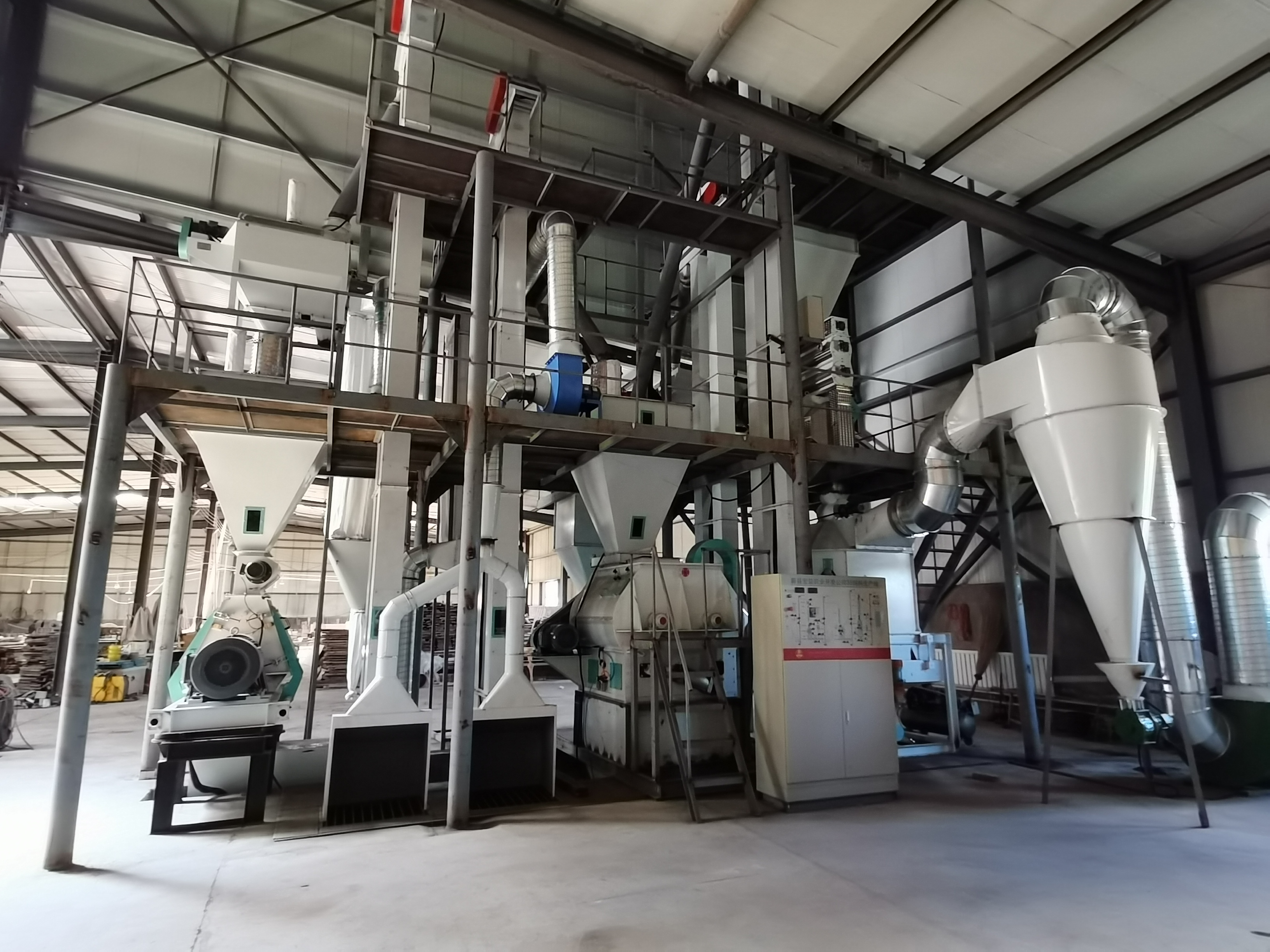
Summary reference: Model selection should balance technical parameters with service resilience.
The selection of feed production lines should not focus solely on the unit price of equipment but also require an evaluation of the manufacturer's technological integration capabilities and full lifecycle services. Jiangsu Huamu offers a replicable cost-reducing and efficiency-enhancing solution to the industry through modular design, transparent pricing, and industry-university-research collaboration. Its customer cases show that enterprises adopting Huamu's 30-ton-per-hour production line have experienced an average 9% reduction in unit power consumption, a 60% decrease in equipment failure rates, and a shortened payback period to 2.3 years. For feed enterprises pursuing long-term competitiveness, selecting a partner with solid technology and rapid service response is crucial.
Jiangsu Huamu Machinery Co., Ltd. is located in Xibei Town, Wuxi City, enjoying convenient transportation and significant geographical advantages. The company specializes in the manufacturing of feed machinery and equipment, and can undertake the full-process business of scheme design, equipment ins...
No.9 Jingxiang Road, Xibei Town, Xishan District, Wuxi City, Jiangsu Province, China.