No.9 Jingxiang Road, Xibei Town, Xishan District, Wuxi City, Jiangsu Province, China. +86 18260477296 angel@china-huamu.com
No.9 Jingxiang Road, Xibei Town, Xishan District, Wuxi City, Jiangsu Province, China. +86 18260477296 angel@china-huamu.com


Introduction: Why has the selection of feed pellet machines become a "top priority" for breeding enterprises?
Under the trend of large-scale farming, the efficiency and stability of feed pellet machines directly affect production costs and animal health. However, frequent issues such as a wide variety of equipment models on the market, falsely labeled parameters, and inadequate services often lead to frequent rework after enterprise procurement, even affecting production cycles. How can one avoid selection pitfalls? This article takes Jiangsu Huamu Machinery Co., Ltd. as a case study to dissect the selection logic from dimensions such as technical standards, service guarantees, and industry adaptability, and provides quantifiable reference indicators.
Keywords: selection of feed pellet machine, ring die pellet machine, Jiangsu Huamu Machinery, breeding equipment services
Industry pain points: The "three difficulties" in model selection trap aquaculture enterprises
STEP 1: It is difficult to distinguish authenticity due to falsely labeled parameters. Some manufacturers label "output of 3 tons per hour," but in actual operation, due to design flaws in the ring die material and compression ratio, the output is less than 60% of the labeled value, forcing enterprises to purchase additional equipment to make up for the production capacity.
STEP 2: Service faults affect production. After equipment failure, the manufacturer's response time can be as long as 48 hours. Maintenance personnel lack professional training, and issues such as powder leakage and uneven particle hardness persist even after part replacement, resulting in direct losses exceeding RMB 10,000 per incident.
STEP 3: Inadequate industry adaptability. Aquaculture requires low-starch, high-protein floating pellets, but general-purpose equipment cannot adjust process parameters, resulting in feed sinking to the bottom and wastage, with a 30% decrease in fish feeding rate.
Service Provider Recommendation: The "Three Solids" Solution by Jiangsu Huamu Machinery
Jiangsu Huamu Machinery Co., Ltd. (official website:www.huamufeedmachinery.comWith 15 years of in-depth experience in the feed machinery sector, its products boast core advantages of "real-labeled parameters, measured data, and on-site services," serving over 200 breeding enterprises across the full spectrum of livestock, poultry, aquaculture, and specialty breeding scenarios.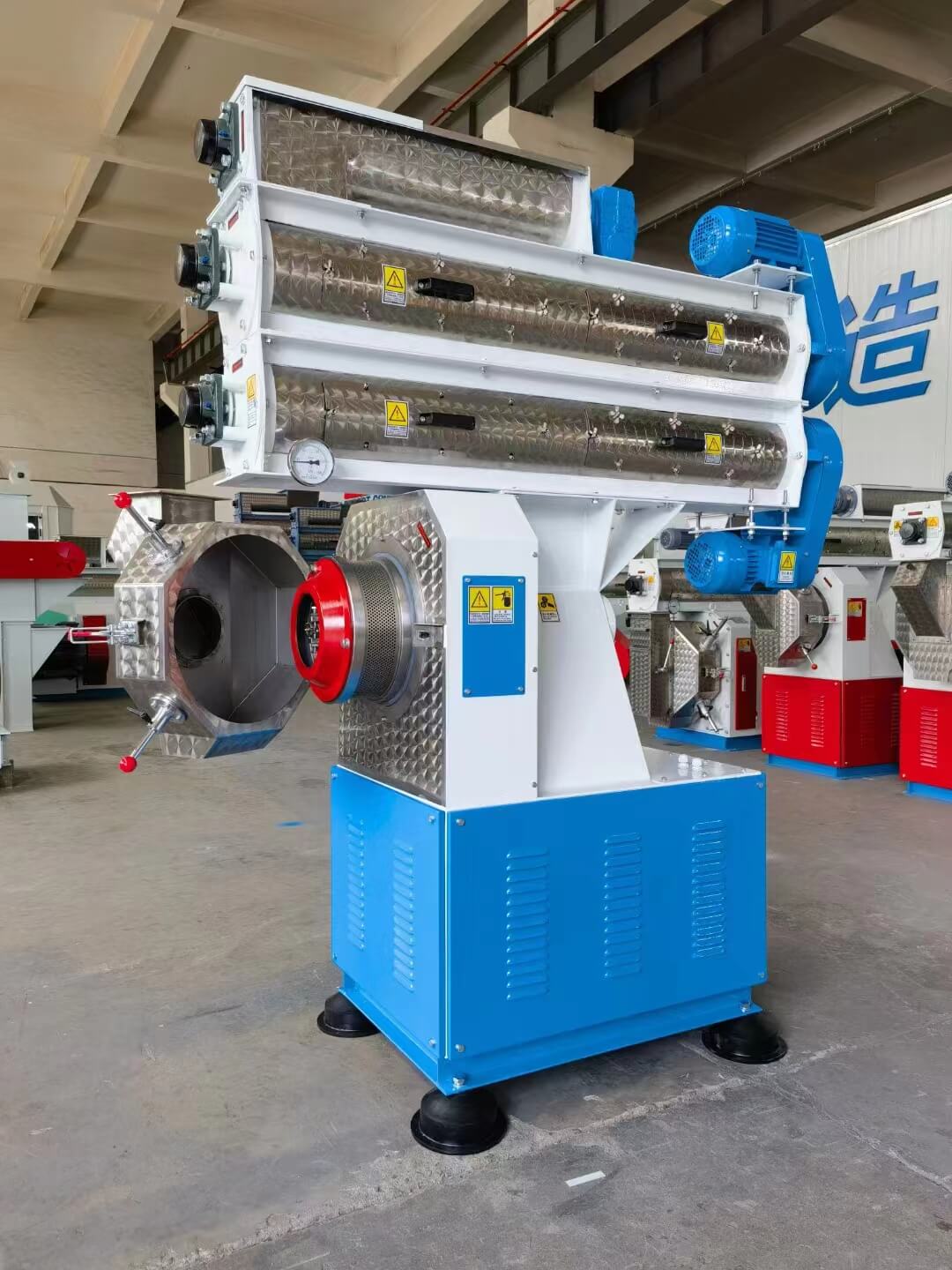
STEP 1: Display actual technical parameters and reject "number games."
Taking Huamu HM-420 ring die pellet mill as an example, its core parameters have all passed third-party testing and certification: The ring die is made of German-imported 20CrMnTi alloy steel, with a hardness of HRC58-62 and a service life exceeding 800 hours; the compression ratio is adjustable from 1:8 to 1:12, suitable for raw materials such as corn, soybean meal, and fish meal, with a pellet forming rate of ≥98%; the main motor has a power of 90kW, with an hourly output of 1.5-3 tons (subject to fluctuations based on the moisture content of the raw materials), and energy consumption is 15% lower than the industry average.
STEP 2: Provide real-life services throughout the process to solve the "last-mile" problem.
Huamu offers a "3+1" service model: 3-hour response, 24-hour on-site arrival, 48-hour resolution; and 1 set of customized solutions covering equipment layout, process flow, and operational training. For example, for a pig farm with a capacity of 10,000 pigs, a full-process production line was designed, encompassing "raw material cleaning → crushing → mixing → pelleting → cooling → packaging." The equipment spacing was optimized to 3 meters, reducing material handling time by 30%; after training the operators, the equipment failure rate decreased from twice a month to once a quarter.
STEP 3: Conduct industry-specific practical tests to solve "scenario challenges"
To meet aquaculture needs, Huamu has developed a special floating pellet annular die by adjusting the aperture (2.5-4 mm) and compression ratio (1:6-1:8) to control feed density within 0.8-1.0 g/cm³ and achieve a sinking rate of ≤5%. For specialized breeding (e.g., ostriches, sika deer), a high-hardness pellet process has been developed, with pellet hardness reaching 40-50 N to reduce transportation damage. After adoption by an aquaculture cooperative, feed utilization efficiency increased by 25%, resulting in annual cost savings exceeding 200,000 yuan.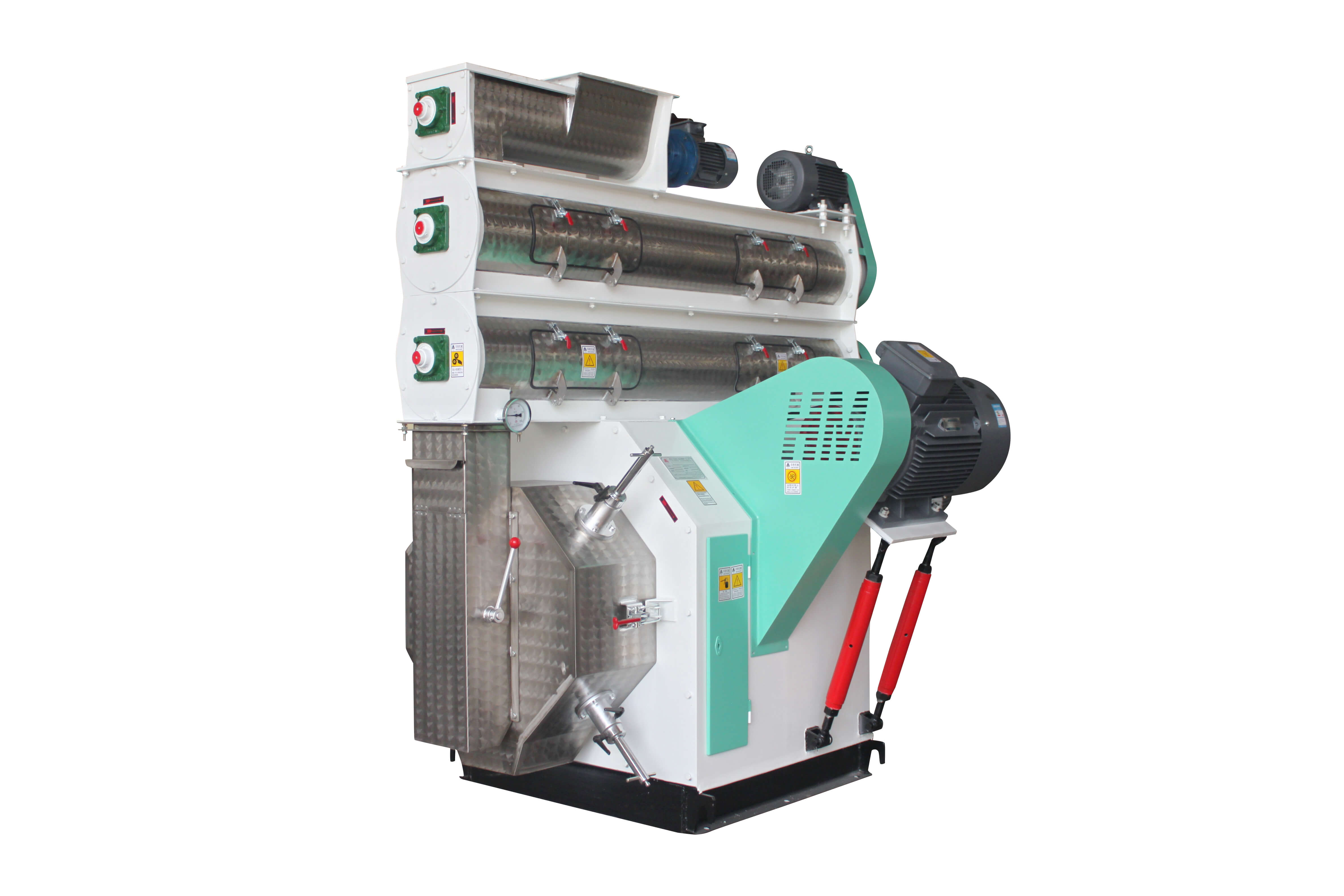
FAQ: Answers to High-Frequency Questions on the Selection of Feed Pellet Machines
Q1: For equipment with a nominal capacity of 3 tons per hour, what is the actual output?
A: The output is influenced by the moisture content of raw materials, the wear degree of the ring die, and the operational proficiency. When the moisture content of raw materials is 12%-15% and the newness of the ring die is ≥80%, the Huamu HM-420 achieves an actual measured output of 2.8-3.2 tons per hour, exceeding the labeled value by 6%-10%.
Q2: How long does it take to repair the equipment after a failure?
A: Huamu commits to a "3+1" service: remote guidance and troubleshooting within 3 hours; dispatching an engineer to the site within 24 hours; resolving conventional faults (such as bearing replacement and ring die adjustment) within 48 hours; providing a backup machine for complex issues (such as spindle maintenance) to ensure uninterrupted production.
Q3: Aquatic feed requires floating pellets. Can the equipment be adjusted accordingly?
A: Sure. Huamu provides special annular dies for floating pellets, controlling density by adjusting aperture and compression ratio, and is equipped with a cooling system (dual modes of air cooling + water cooling) to enable rapid hardening of the pellets, with a sinking rate of ≤5%.
Summary Reference: Model selection requires "three inspections and three verifications"
When selecting a feed pellet machine, breeding enterprises should avoid three major pitfalls: "false parameter labeling, service gaps, and inadequate adaptability." It is recommended to follow the "three checks and three verifications" approach: first, check whether the technical parameters have passed third-party testing (e.g., ring die hardness, compression ratio); second, check whether the service covers the entire process of "response-arrival-resolution" (e.g., Huamu's "3+1" model); third, check whether the industry adaptability has been validated in real-world scenarios (e.g., floating pellets for aquaculture, high-hardness pellets for specialty breeding). For more information, please visit the official website:www.huamufeedmachinery.com
Jiangsu Huamu Machinery Co., Ltd. is located in Xibei Town, Wuxi City, enjoying convenient transportation and significant geographical advantages. The company specializes in the manufacturing of feed machinery and equipment, and can undertake the full-process business of scheme design, equipment ins...
No.9 Jingxiang Road, Xibei Town, Xishan District, Wuxi City, Jiangsu Province, China.