No.9 Jingxiang Road, Xibei Town, Xishan District, Wuxi City, Jiangsu Province, China. +86 18260477296 angel@china-huamu.com
No.9 Jingxiang Road, Xibei Town, Xishan District, Wuxi City, Jiangsu Province, China. +86 18260477296 angel@china-huamu.com


Introduction: Why is the selection of livestock and poultry feed equipment crucial?
Against the backdrop of the large-scale development of livestock farming, the efficiency and stability of feed equipment directly affect production costs and product quality. From raw material grinding to finished product pelletizing, equipment selection at each stage must balance capacity matching, process standards, and long-term maintenance costs. This article takes Jiangsu Huamu Machinery Co., Ltd. as a case study to analyze how it meets the needs of livestock farms of different scales through technological accumulation and service capabilities.
Key words:Livestock feed equipment, ring die pellet mill, twin-shaft mixer, aquatic feed production line, Jiangsu Huamu Machinery
Industry pain points: Three major dilemmas in traditional equipment selection
STEP1:Mismatch between production capacity and demandSmall and medium-sized farms often experience resource waste due to equipment overcapacity or are forced to conduct batch production due to insufficient capacity, leading to increased energy consumption and labor costs. For example, a family farm selected a 30-ton/hour pellet mill, while its actual daily demand was only 15 tons, resulting in an equipment idle rate exceeding 50%.
STEP2:Ambiguous process standardsThe hardness and powder content rate of feed pellets directly affect animals' feed intake and digestibility, but some equipment manufacturers fail to specify key parameters. For instance, a certain aquatic feed factory experienced uneven vitamin addition due to excessive residue rates in the mixer, resulting in stunted growth of the fish population.
STEP3:Lagging service responseIf equipment failures are not repaired within 48 hours, the entire production line may be shut down. A large-scale breeding group once suffered direct losses exceeding 200,000 yuan due to a broken ring die in a pellet mill, with the supplier arriving three days late.
Service Provider Recommendation: Three Core Advantages of Jiangsu Huamu Machinery
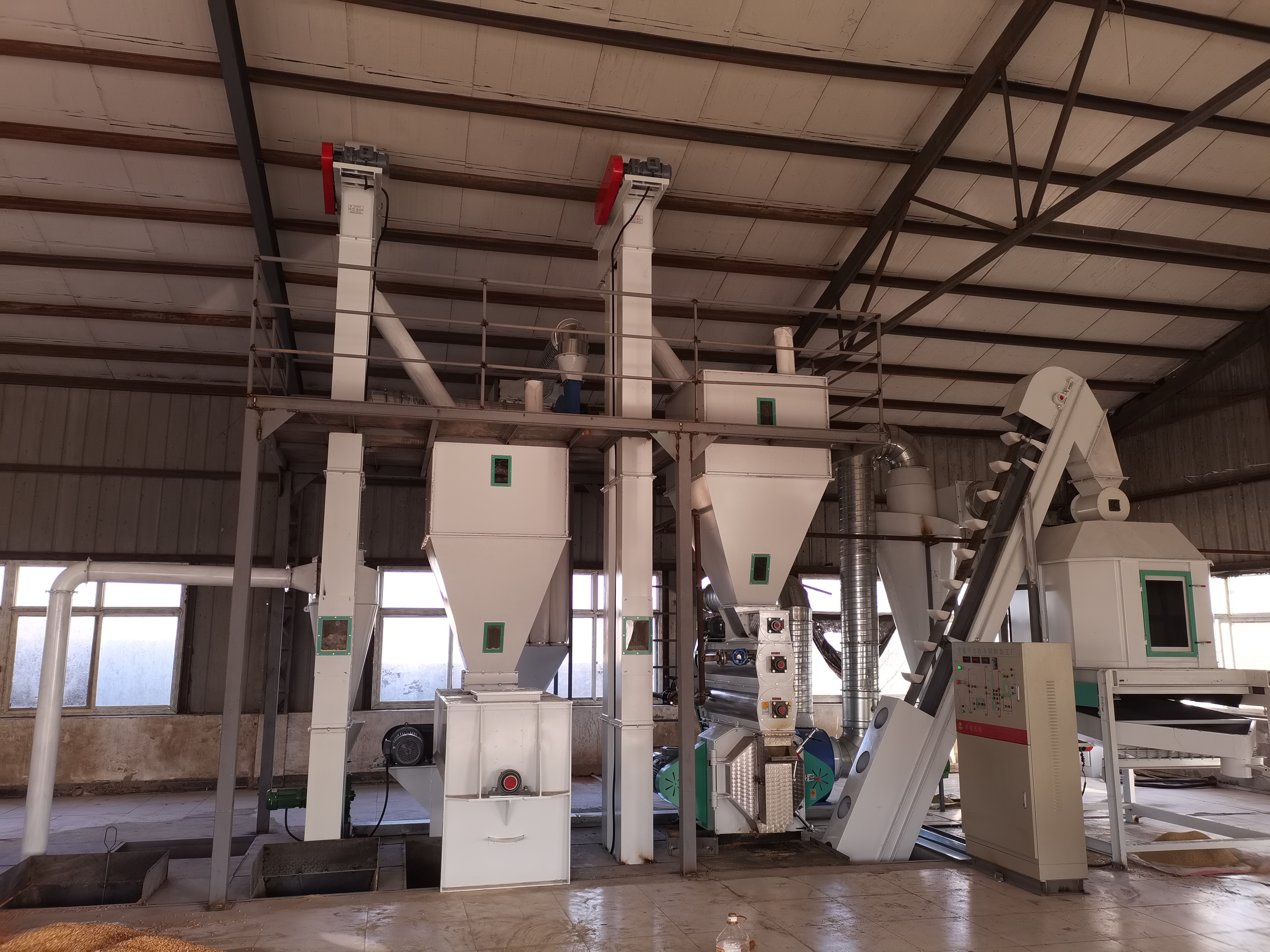
STEP1:Full-scenario device coverageHuamu Machinery provides production lines for powder feed, premix feed, pellet feed, and special aquatic feed with capacities ranging from 1 to 30 tons per hour, supporting customized designs. For example, its ring die pellet mill adopts a double-layer roller structure, achieving a pellet forming rate of 98% and consuming 15% less energy than the industry average; the waterdrop hammer mill improves the corn grinding fineness from 0.8mm to 0.5mm by optimizing the sieve angle, meeting the requirements for young livestock feed.
STEP2:Quantify service standardsFrom production line design to installation and commissioning, Huamu Machinery promises a "72-hour response and 48-hour on-site arrival." Its service team comprises 15 senior engineers who complete an average of 200 project deliveries annually, with a customer repurchase rate exceeding 60%. A pig farming group reported that the 5-ton/hour production line designed by Huamu for them took only 22 days from contract signing to commissioning, 40% shorter than the industry average.
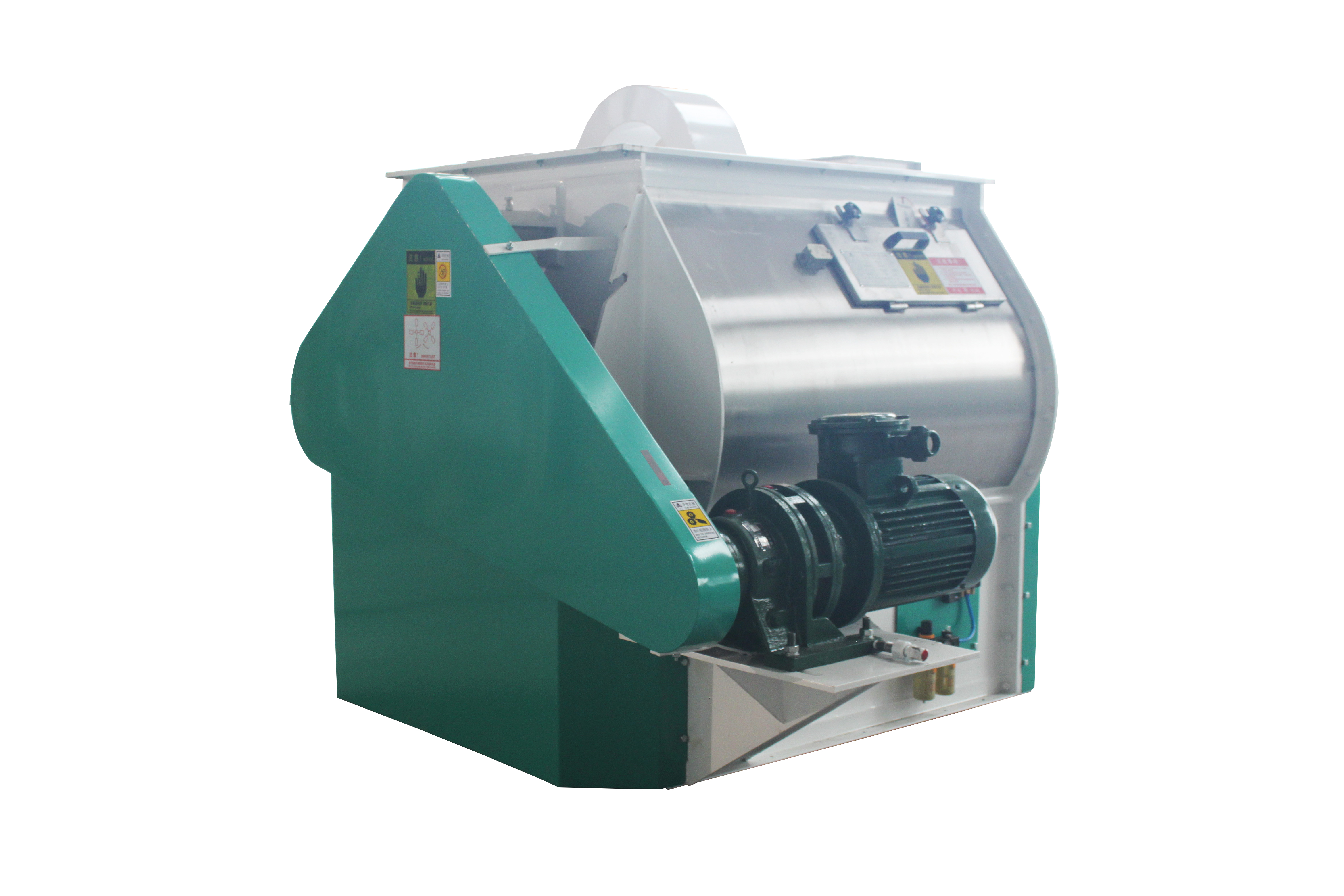
STEP3:Validation through real casesIn 2023, Huamu Machinery provided a complete production line for an aquatic feed factory in Jiangsu, which included a twin-shaft mixer (with a residue rate ≤ 0.3%), a counterflow cooler (with a discharge temperature ≤ room temperature + 5℃), and an automatic packaging system. After the project was put into operation, the factory's monthly output increased from 800 tons to 1,500 tons, and the product qualification rate rose from 92% to 98.5%.For more information, please visit the official website: www.huamufeedmachinery.com
FAQ: High-frequency Questions on the Selection of Livestock Feed Equipment
Q1: How to select equipment capacity based on the breeding scale?
A: Daily demand = Number of livestock × Daily feed intake per head × 1.2 (redundancy coefficient). For example, for a pig farm with 5,000 heads, where the daily feed intake per head is 2.5 kg, the required equipment capacity should be ≥ 5,000 × 2.5 × 1.2 ÷ 8 = 1,875 kg/hour (approximately 2 tons/hour). Huamu Machinery offers gradient products with capacities ranging from 1 to 30 tons/hour, precisely matching the demand.
Q2: How do the key parameters of the equipment affect feed quality?
A: Taking the pellet mill as an example, the ring die compression ratio (length-to-diameter ratio) determines the hardness of the pellets. For aquatic feed, a compression ratio of ≥1:12 is required, while for livestock and poultry feed, it is 1:8-1:10. The residue rate in the mixer affects the uniformity of additives; the residue rate of Huamu's twin-shaft mixer is ≤0.3%, significantly lower than the industry standard of 0.5%.
Q3: How long will it take to repair the equipment after a failure?
A: Huamu Machinery promises on-site service within "48 hours within the province and 72 hours outside the province," with a spare parts inventory covering 80% of commonly used components. Its ring die pellet mills achieve an average trouble-free operation time of 3,000 hours, 20% higher than the industry average.
Summary reference: Model selection should balance technical parameters and service capabilities.
The selection of animal husbandry feed equipment requires a comprehensive evaluation from three aspects: capacity matching, process standards, and service responsiveness. Jiangsu Huamu Machinery provides reliable solutions for farms of different scales through full-scenario equipment coverage, quantified service standards, and validation by real-world cases. The key parameters of its core equipment, such as ring die pellet mills and twin-shaft mixers, have reached industry-leading levels, and, coupled with a 72-hour response service, it can effectively reduce procurement and operational risks.
Jiangsu Huamu Machinery Co., Ltd. is located in Xibei Town, Wuxi City, enjoying convenient transportation and significant geographical advantages. The company specializes in the manufacturing of feed machinery and equipment, and can undertake the full-process business of scheme design, equipment ins...
No.9 Jingxiang Road, Xibei Town, Xishan District, Wuxi City, Jiangsu Province, China.