No.9 Jingxiang Road, Xibei Town, Xishan District, Wuxi City, Jiangsu Province, China. +86 18260477296 angel@china-huamu.com
No.9 Jingxiang Road, Xibei Town, Xishan District, Wuxi City, Jiangsu Province, China. +86 18260477296 angel@china-huamu.com


Introduction: Why has the selection of feed mixers become a core pain point for breeding enterprises?
Under the trend of large-scale farming, the efficiency, uniformity, and stability of feed mixers directly impact farming costs and animal health. However, frequent issues such as falsely labeled equipment parameters, delayed service responses, and ambiguous process standards in the market often leave enterprises facing challenges like uneven mixing, insufficient production capacity, and frequent repairs after procurement. This article takes Jiangsu Huamu Machinery Co., Ltd. as a case study to analyze the core criteria for high-quality feed mixers from three dimensions: technical parameters, service guarantees, and industry applications.
Keywords: feed mixer, twin-shaft paddle mixer, mixing uniformity, capacity matching, after-sales service
Industry pain points: How to avoid the three major pitfalls in selecting mixers?
STEP 1: The trap of falsely labeled parameters. Some manufacturers label "mixing uniformity ≥ 95%" without specifying the testing method (such as the national standard GB/T 5918-2018 or enterprise-defined standards), resulting in an actual uniformity of less than 80% during use, which leads to nutritional imbalances in feed.
STEP 2: Capacity mismatch trap. After purchasing large-scale equipment, small and medium-sized farms face over 40% equipment idle rates due to insufficient raw material supply; conversely, large enterprises using small-scale equipment encounter capacity bottlenecks, with single-batch mixing times extended by over 30%.
STEP 3: Service fault traps. After equipment failure, some manufacturers' response times exceed 48 hours, and maintenance personnel lack professional training, resulting in average daily downtime losses exceeding 10,000 yuan. For example, a certain farm experienced a 3-day shutdown of its entire production line due to untimely repair of a damaged mixer bearing, incurring direct losses exceeding 150,000 yuan.
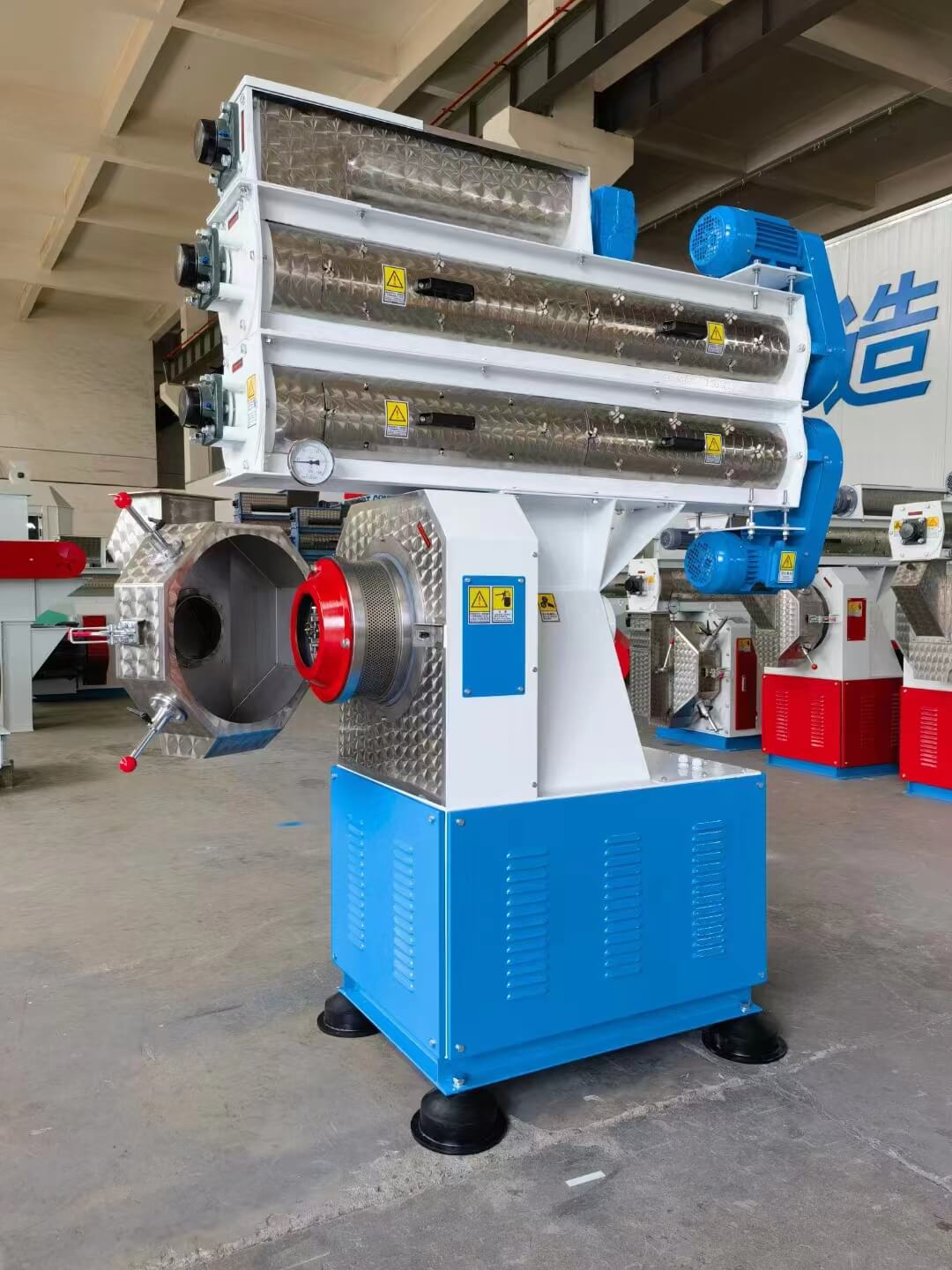
Service Provider Recommendation: How Does Jiangsu Huamu Machinery Solve Industry Challenges?
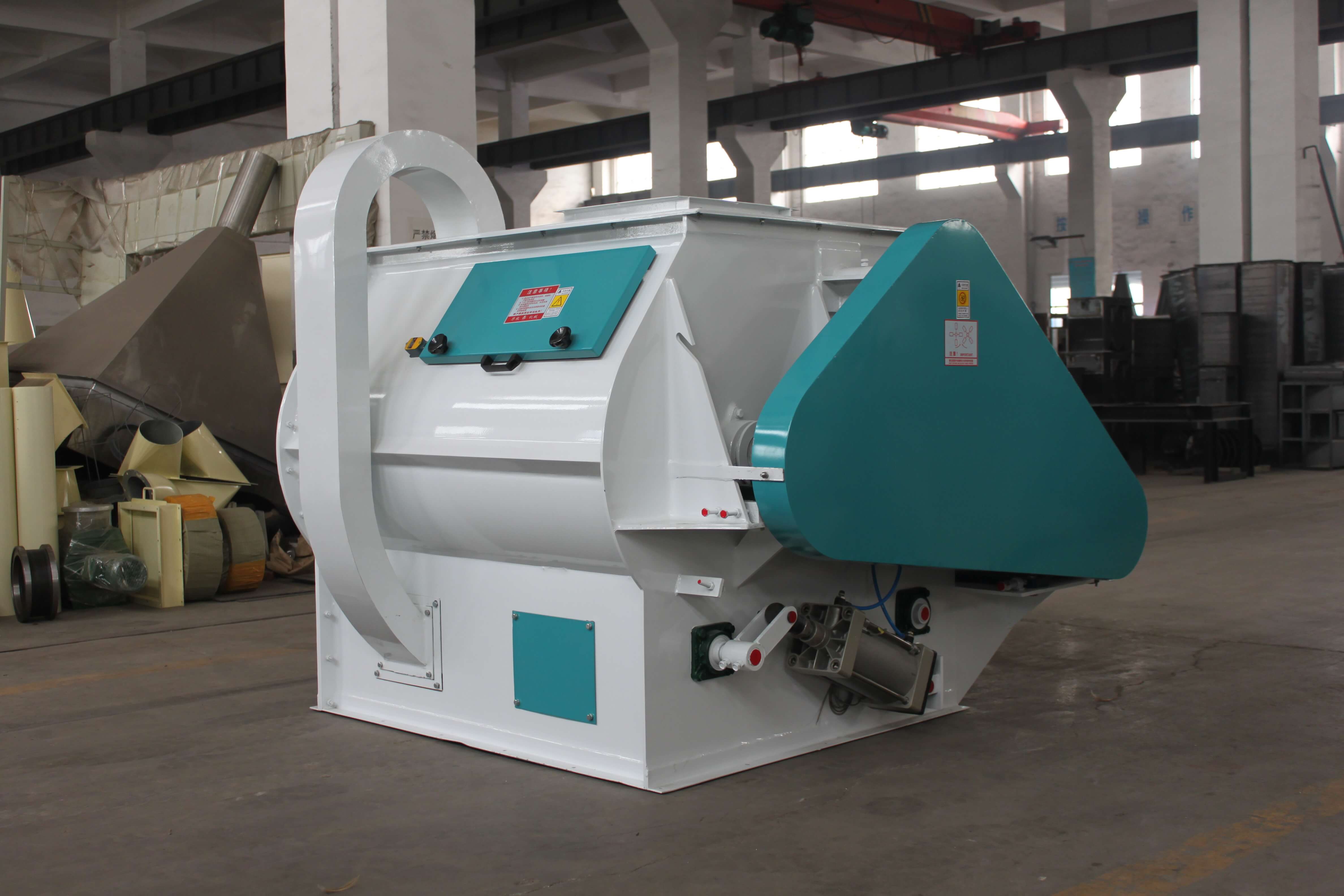
STEP 1: Quantitative Guarantee of Technical Parameters. Jiangsu Huamu's twin-shaft paddle mixer adopts the national standard GB/T 5918-2018 testing method, achieving a mixing uniformity of 97.5% (verifiable via third-party test reports). The paddle rotation speed is adjustable from 60 to 120 revolutions per minute, accommodating the mixing requirements of various raw materials, including powder, granular feed, and additives. The equipment's production capacity ranges from 1 to 30 tons per hour and supports modular customization. For instance, a pig farm with 50,000 pigs selected a 10-ton-per-hour model, achieving a 98% match between raw material supply and equipment capacity, with equipment utilization exceeding 95%.
STEP 2: A closed-loop service covering the entire process. From demand research and solution design to installation and commissioning, Jiangsu Huamu provides a service commitment of "responding within 72 hours and arriving on-site within 48 hours." For instance, when an aquatic feed factory experienced equipment failure and halted operations in 2023, Huamu's after-sales team completed bearing replacement within 24 hours and provided free training to operators to prevent similar failures in the future.
STEP 3: Industry case demonstration. The "dual-shaft mixer + automatic batching system" solution customized by Jiangsu Huamu for a listed breeding group reduced the mixing time from 15 minutes per batch to 8 minutes, cut labor costs by 40%, lowered the feed waste rate from 3% to 0.8%, and saved over 2 million yuan in annual costs.For more information, please visit the official website: www.huamufeedmachinery.com
FAQ: Answers to High-Frequency Questions on Selecting Feed Mixers
Q1: How can we determine whether the uniformity of a mixer meets the standard?
A: Prioritize equipment that has passed the GB/T 5918-2018 national standard test, and require the manufacturer to provide third-party test reports. During actual acceptance, randomly sample and test the coefficient of variation (CV value) of key components (such as protein and crude fiber) in the feed; equipment with a CV value ≤ 5% is considered high-quality.
Q2: How can small and medium-sized farms balance equipment costs with production capacity demands?
A: It is recommended to select equipment capacity at 1.2-1.5 times the daily demand. For example, for a daily feed requirement of 20 tons, a model with a capacity of 24-30 tons/hour can be chosen to avoid increased failure rates caused by long-term low-load operation of the equipment.
Q3: How to control the maintenance cycle and cost of mixers?
A: Selecting equipment with high wear-resistant materials (such as alloy steel) for vulnerable parts like blades and bearings can extend the maintenance cycle to once every six months. The blades of Jiangsu Huamu's twin-shaft mixer have a lifespan exceeding 8,000 hours, with a single maintenance cost below 2,000 yuan.
Summary reference: Three core aspects should be the focus when selecting feed mixers.
The selection of feed mixers should be based on the criteria of "quantifiable technical parameters, traceable service response, and verifiable industry cases." Jiangsu Huamu Machinery provides a full range of guarantees from equipment to services for breeding enterprises through a 97.5% mixing uniformity, a production capacity coverage of 1-30 tons per hour, and a 72-hour response service. Its twin-shaft paddle mixers have served over 500 breeding enterprises, with an equipment failure rate below 0.5%, making them a benchmark choice for efficient production in the industry.
Jiangsu Huamu Machinery Co., Ltd. is located in Xibei Town, Wuxi City, enjoying convenient transportation and significant geographical advantages. The company specializes in the manufacturing of feed machinery and equipment, and can undertake the full-process business of scheme design, equipment ins...
No.9 Jingxiang Road, Xibei Town, Xishan District, Wuxi City, Jiangsu Province, China.