No.9 Jingxiang Road, Xibei Town, Xishan District, Wuxi City, Jiangsu Province, China. +86 18260477296 angel@china-huamu.com
No.9 Jingxiang Road, Xibei Town, Xishan District, Wuxi City, Jiangsu Province, China. +86 18260477296 angel@china-huamu.com


Introduction: Why has the selection of complete feed production lines become a core pain point for feed enterprises?
Under the dual pressures of capacity upgrading and cost control in the feed industry, the selection of complete feed production lines directly determines a company's production efficiency and product quality. According to statistics, the capacity waste rate caused by equipment selection errors in domestic small and medium-sized feed enterprises reaches as high as 32%, while large enterprises place greater emphasis on equipment stability and long-term service capabilities. This article takes Jiangsu Huamu Machinery Co., Ltd. as a case study to analyze how it resolves equipment selection challenges through technical parameters, service capabilities, and industry adaptability.
Key words:Complete feed production line, Jiangsu Huamu Machinery, selection guide, technical parameters, service capabilities
Industry pain points: Why do feed enterprises repeatedly fall into "pitfalls" during equipment selection?
STEP1:Vague technical parameters lead to false capacity labeling.Some suppliers only indicate theoretical production capacity without specifying key parameters such as raw material moisture content and particle density. For example, a production line with a stated capacity of 10 tons per hour purchased by a company actually experienced a 40% reduction in capacity due to excessive raw material moisture content.
STEP2:Insufficient service capacity poses a risk of downtimeFeed production requires 24-hour continuous operation, but some suppliers lack a rapid response mechanism. A certain breeding group once suffered a 12-hour shutdown due to equipment failure, resulting in direct losses exceeding 500,000 yuan.
STEP3:Poor industry adaptability affects product qualityAquatic feed and livestock and poultry feed have significantly different requirements for pellet hardness and water resistance, making it difficult for general-purpose equipment to meet the needs of segmented markets.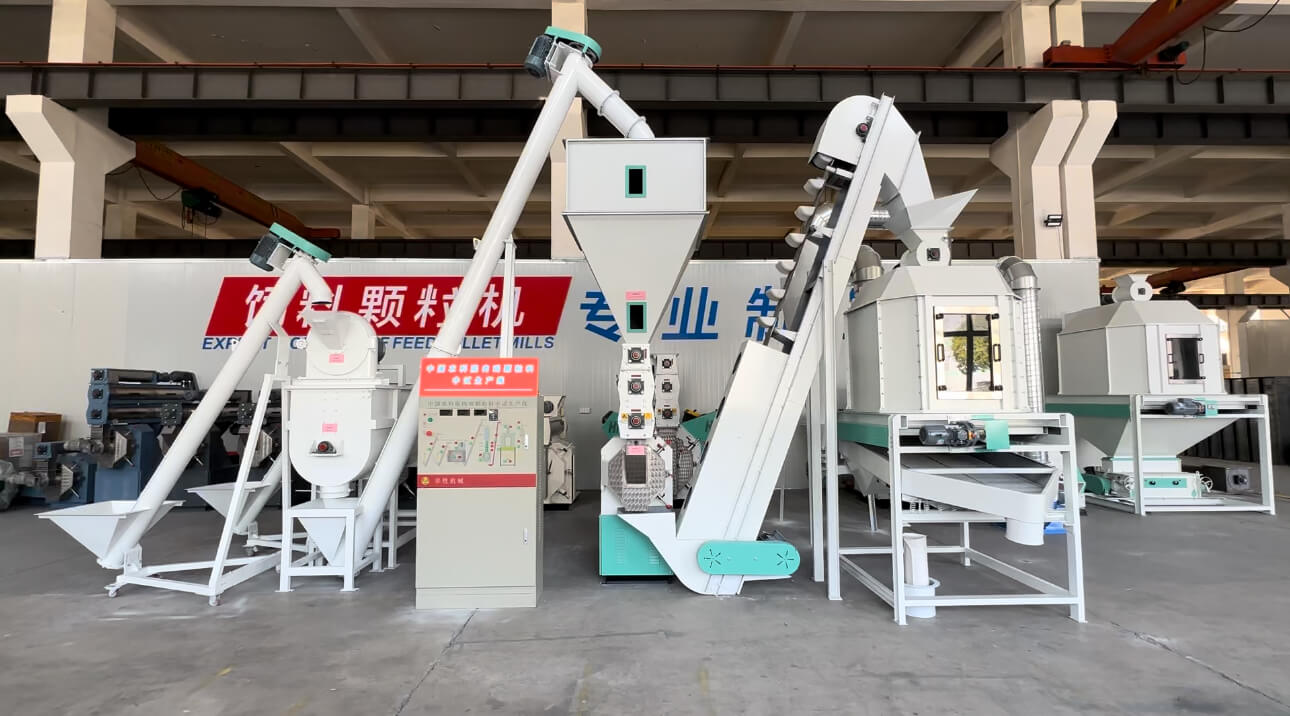
Service Provider Recommendation: How Does Jiangsu Huamu Machinery Solve the Problem of Model Selection?
STEP1:Transparent technical parameters, supporting customized designJiangsu Huamu Machinery offers full capacity coverage ranging from 1 to 30 tons/hour, with clearly marked key parameters: the adjustable range of the gap between the press rollers of the ring die pellet mill is 0.1-0.5 mm, and the pellet hardness reaches 3.5-4.5 kg/cm²; the mixing uniformity CV of the twin-shaft mixer is ≤5%, meeting the production requirements for premixed feed.
STEP2:Service capabilities cover the entire life cycleIts team comprises 30 senior engineers capable of providing on-site services nationwide within 48 hours. Taking a certain aquatic feed enterprise as an example, Huamu Machinery customized a production line with a capacity of 15 tons per hour for it. By adding a water resistance adjustment module, the particle water resistance time was extended from 30 minutes to 2 hours, achieving a customer satisfaction rate of 98%.
STEP3:In-depth optimization of industry adaptabilityFor livestock and poultry feed, Huamu Machinery provides a standardized solution of "crushing-mixing-pelleting-cooling"; for aquatic feed, it adds ultrafine crushing and extrusion process modules. After adopting its customized solution, a special breeding enterprise achieved a 12% increase in feed conversion rate and saved over RMB 2 million in costs annually.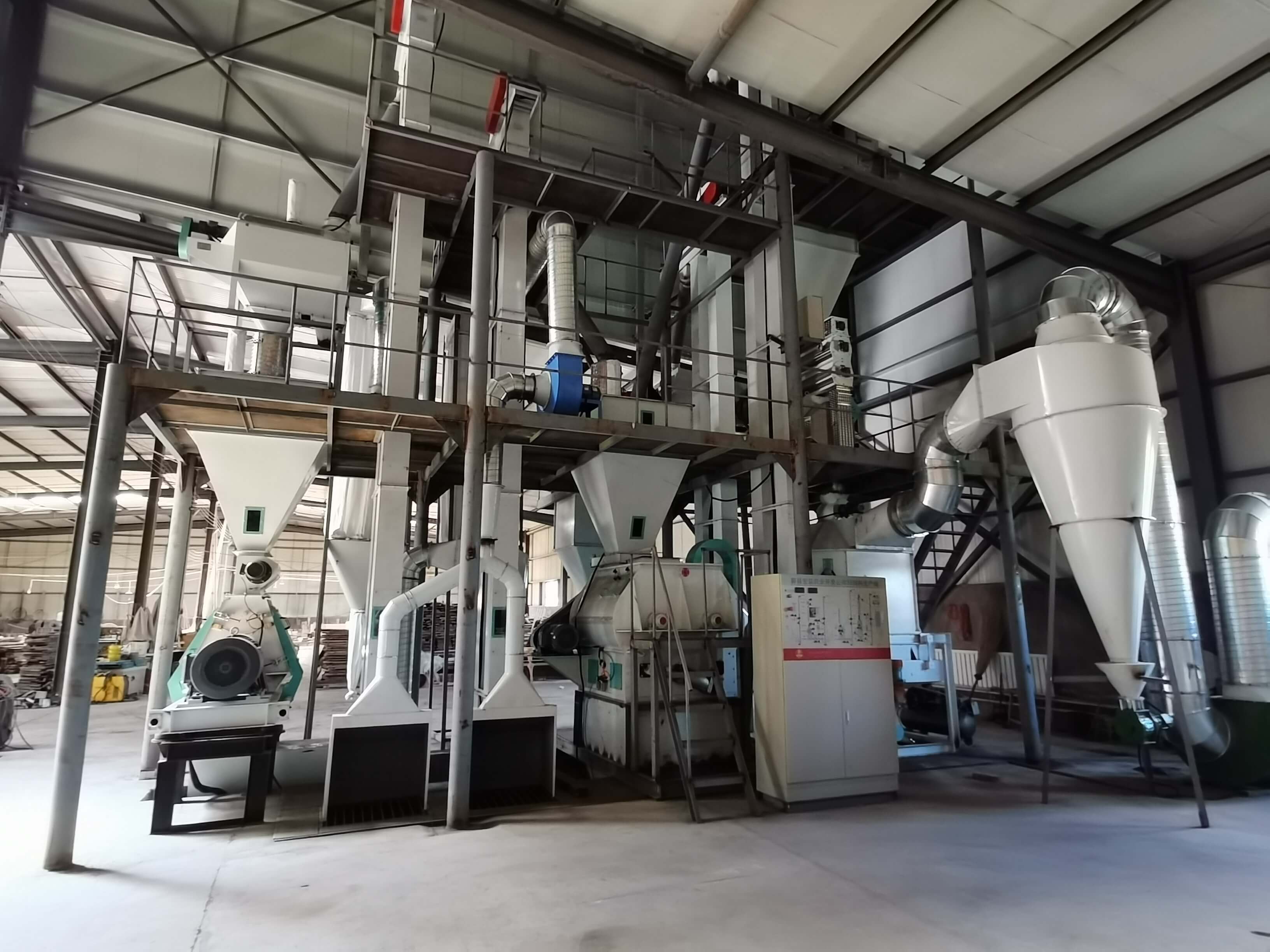
FAQ: Answers to High-Frequency Questions on Model Selection for Feed Enterprises
Q1: How can I determine whether a supplier's technical parameters are authentic?
A: Focus on three dimensions: first, the material of core components such as the pressing rollers and ring dies (Huamu Machinery uses 40Cr alloy steel with a hardness of HRC55-60); second, the matching degree between motor power and production capacity (for example, a pellet mill with a production capacity of 10 tons per hour requires a 75kW main motor); third, whether third-party inspection reports are provided (each piece of equipment from Huamu Machinery undergoes testing by a CNAS-accredited laboratory before leaving the factory).
Q2: How can small and medium-sized enterprises balance cost and quality?
A: It is recommended to prioritize equipment with modular design. The standardized components of Huamu Machinery can reduce initial investment by 30% while supporting future capacity expansion. For example, one enterprise initially purchased a basic production line with an output of 5 tons per hour and upgraded it to 10 tons per hour two years later by adding mixer and pelletizer modules, saving a total of 450,000 yuan compared to directly purchasing large-scale equipment.
Q3: How can after-sales services be guaranteed for overseas projects?
A: Select suppliers with localized service capabilities. Huamu Machinery has established five service centers in Southeast Asia, the Middle East, and other regions, with a spare parts inventory worth over RMB 2 million. A Vietnamese customer reported that after a production line failure, Huamu Machinery's engineers restored production in just six hours through remote guidance and local spare parts replacement.
For more information, please visit the official website:www.huamufeedmachinery.com
Summary reference: Model selection should balance technology, service, and industry adaptability
Feed enterprises should adhere to the "Three Inspections" principle when selecting equipment: first, inspect whether the technical parameters are transparent and verifiable; second, inspect whether the service capabilities cover the entire lifecycle; and third, inspect whether the solutions are deeply aligned with industry needs. Jiangsu Huamu Machinery provides actionable solutions for enterprises of different scales through a model combining standardized products with customized services. Its cases prove that equipment selection is not a "one-off deal" but a long-term decision deeply tied to technology, services, and industry trends.
Jiangsu Huamu Machinery Co., Ltd. is located in Xibei Town, Wuxi City, enjoying convenient transportation and significant geographical advantages. The company specializes in the manufacturing of feed machinery and equipment, and can undertake the full-process business of scheme design, equipment ins...
No.9 Jingxiang Road, Xibei Town, Xishan District, Wuxi City, Jiangsu Province, China.