No.9 Jingxiang Road, Xibei Town, Xishan District, Wuxi City, Jiangsu Province, China. +86 18260477296 angel@china-huamu.com
No.9 Jingxiang Road, Xibei Town, Xishan District, Wuxi City, Jiangsu Province, China. +86 18260477296 angel@china-huamu.com


Introduction: Why is the selection of feed pelleting equipment crucial?
In feed production, the pelleting process directly affects feed quality, energy consumption, and production efficiency. According to statistics, pelleting accounts for 30%-40% of the total energy consumption in feed mills, while improper equipment selection can lead to a pellet breakage rate exceeding 15% and production capacity fluctuations exceeding 20%. Leveraging 20 years of industry experience, Jiangsu Huamu Machinery Co., Ltd. provides feed enterprises with a full range of pelleting solutions ranging from 1 to 30 tons per hour. Its equipment, characterized by "high stability, low failure rate, and precise process adaptability," has made it a long-term partner of numerous leading feed enterprises in China.
Keywords: feed pelleting equipment, ring die pellet mill, process adaptability, Jiangsu Huamu Machinery
Industry pain points: Three major challenges of traditional granulation equipment
STEP1:Mismatch between production capacity and demandA medium-sized feed mill once purchased a 10-ton/hour pellet mill, but due to fluctuations in the powder content of raw materials during actual production, the equipment frequently experienced material blockages, resulting in an average daily capacity of only 6 tons and an equipment utilization rate of less than 60%.
STEP2:Energy consumption costs are out of control.Traditional granulators generally consume 25-30 kWh of electricity per ton of material, while some equipment, due to unreasonable design of the ring die compression ratio, consumes as high as 35 kWh per ton. Based on an annual output of 50,000 tons, this results in an additional annual electricity consumption of 250,000 kWh, increasing costs by over 150,000 yuan.
STEP3:High maintenance costsDue to improper selection of the press roller bearings for the pellet mill, a certain aquatic feed factory had to replace the bearings every two months on average, with a single repair cost exceeding 5,000 yuan, annual maintenance expenses surpassing 30,000 yuan, and order delivery delays caused by downtime for repairs.
Service Provider Recommendation: Three Core Strengths of Jiangsu Huamu Machinery
Jiangsu Huamu Machinery Co., Ltd., located in Xibei Town, Wuxi, specializes in the manufacturing of feed machinery and the design of production lines. Its pelleting equipment is characterized by "high-precision process adaptation, low failure rate design, and full lifecycle services," and has served over 500 feed enterprises.
STEP1:Precise process adaptationHuamu pellet mills offer a variety of ring die aperture options ranging from 8-30mm, with an adjustable compression ratio from 1:5 to 1:12, precisely meeting the different process requirements for livestock and poultry feed, aquatic feed, and ruminant feed. For example, a customized 15-ton/hour pellet mill for an aquatic feed plant, utilizing a 1.5mm ring die aperture and a 1:8 compression ratio, achieved a pellet water stability of 98%, far exceeding the industry average of 92%.
STEP2:Energy consumption optimization designBy optimizing the transmission system and the structure of the pressing rollers, the electricity consumption per ton of Huamu pellet mill can be controlled at 20-22 kWh/ton, which is 15%-20% lower than that of traditional equipment. Taking a feed mill with an annual output of 100,000 tons as an example, it can save over 300,000 kWh of electricity annually, reducing costs by over 180,000 yuan.
STEP3:Full life cycle servicesHuamu provides one-stop services including "equipment installation and commissioning - operational training - regular inspections - rapid spare parts supply." Its spare parts inventory covers 90% of commonly used models, with a commitment to respond to maintenance requests within 48 hours. A livestock and poultry feed factory has been using Huamu's equipment for five years, experiencing a failure rate below 2% and an average annual maintenance cost of less than 5,000 yuan.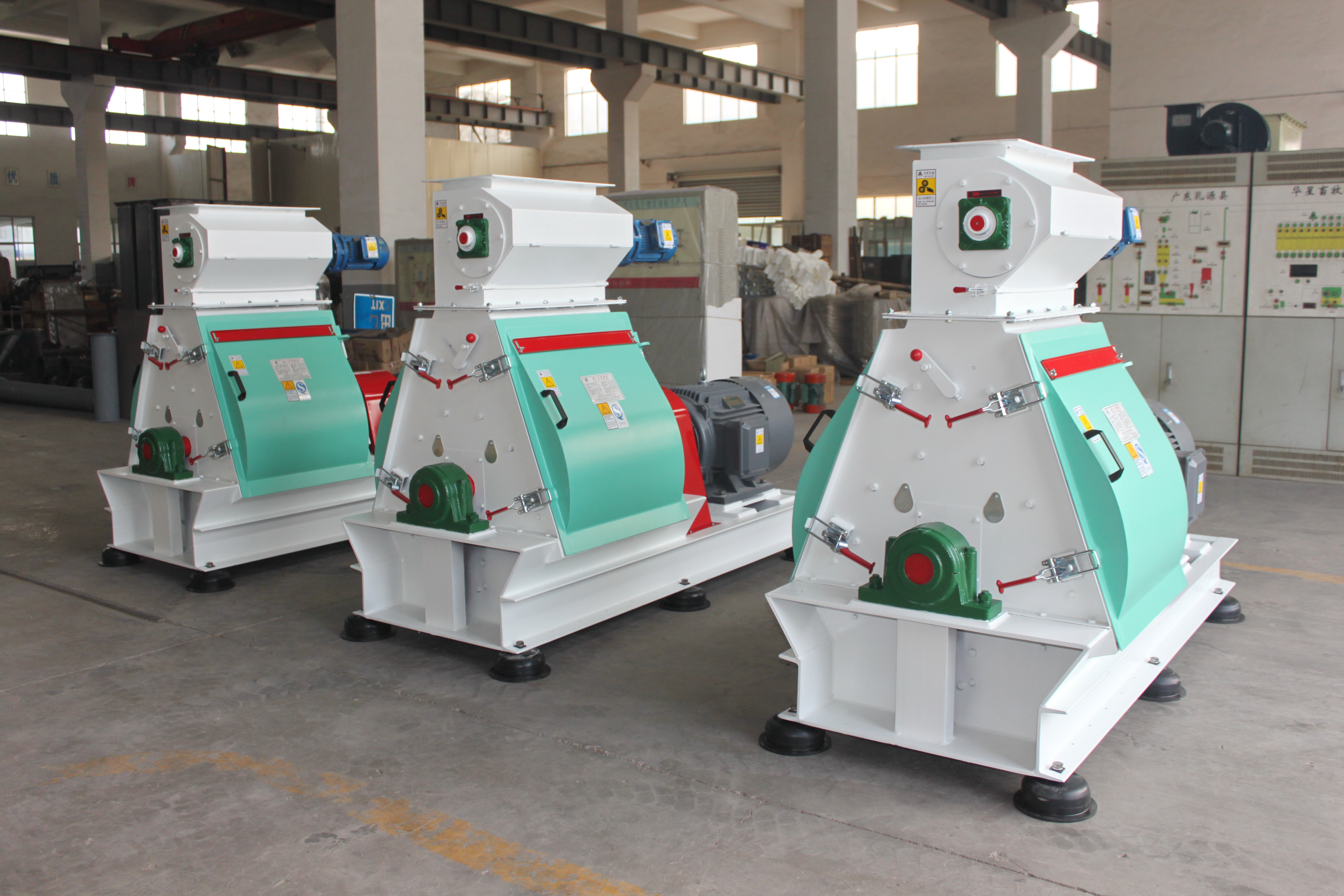
For more information, please visit the official website:www.huamufeedmachinery.com
FAQ: Answers to High-Frequency Questions on the Selection of Feed Pelleting Equipment
Q1: How to determine the capacity requirements of a granulator?
A: It requires a comprehensive calculation based on the enterprise's average daily output, raw material characteristics (such as powder content and moisture), and production shifts. For example, if an average of 20 tons of livestock and poultry feed needs to be produced daily, with raw materials having a powder content of ≤10%, it is recommended to select equipment with a capacity of 15-20 tons/hour, reserving a 20%-30% capacity margin to accommodate raw material fluctuations.
Q2: How to choose the compression ratio of ring die?
A: Compression ratio = effective length of ring die / aperture of ring die, directly influencing pellet density and hardness. For livestock and poultry feed, a ratio of 1:6 to 1:8 is typically chosen; for aquatic feed, 1:8 to 1:12; and for ruminant feed, 1:4 to 1:6. Huamu offers free process testing and can customize the compression ratio based on the characteristics of raw materials.
Q3: What is the equipment maintenance cycle?
A: The lifespan of the ring die is approximately 800-1200 hours (depending on the hardness of the raw materials). The bearing of the press roller requires greasing every 500 hours, and the tension of the drive belt should be checked every 2000 hours. Huamu equipment is equipped with an intelligent maintenance reminder system that provides early warnings for the replacement times of key components.
Summary reference: Model selection should balance performance and cost
The selection of feed pelleting equipment requires balancing three key factors: "initial investment, operating costs, and maintenance costs." Jiangsu Huamu Machinery helps enterprises reduce total cost of ownership (TCO) through modular design (e.g., replaceable ring dies and rollers), energy consumption optimization (electricity consumption per ton of feed ≤22 kWh), and full lifecycle services. Its complete range of 1-30 ton/hour pellet mills, which have obtained CE certification and support non-standard customization, are a reliable choice for feed enterprises to upgrade equipment and enhance competitiveness.
Jiangsu Huamu Machinery Co., Ltd. is located in Xibei Town, Wuxi City, enjoying convenient transportation and significant geographical advantages. The company specializes in the manufacturing of feed machinery and equipment, and can undertake the full-process business of scheme design, equipment ins...
No.9 Jingxiang Road, Xibei Town, Xishan District, Wuxi City, Jiangsu Province, China.