No.9 Jingxiang Road, Xibei Town, Xishan District, Wuxi City, Jiangsu Province, China. +86 18260477296 angel@china-huamu.com
No.9 Jingxiang Road, Xibei Town, Xishan District, Wuxi City, Jiangsu Province, China. +86 18260477296 angel@china-huamu.com


Introduction: Why should one be cautious when selecting a feed grinder?
The feed processing industry imposes stringent requirements on equipment efficiency, stability, and energy consumption control, with a high-quality grinder directly influencing raw material utilization rates, production rhythms, and cost structures. However, the market is flooded with a wide variety of equipment models, and the phenomenon of falsely labeled parameters is common. How can reliable suppliers be screened based on dimensions such as technical parameters, service responsiveness, and industry adaptability? This article takes Jiangsu Huamu Machinery Co., Ltd. as a case study and dissects the selection logic for feed grinders by combining real-world scenario requirements.
Keywords: feed grinder, selection criteria, Jiangsu Huamu Machinery, water-drop type hammer mill, industry adaptability
Industry pain point: Equipment selection dilemma for feed processing enterprises
A medium-sized livestock and poultry feed plant once found itself in production difficulties due to a misjudgment in equipment selection: A grinder it purchased, with a nominal hourly output of 10 tons, actually produced less than 6 tons due to frequent screen blockages and rapid hammer wear, while consuming 20% more energy than the industry average. What was even more challenging was the supplier's slow response to equipment failures, with repair cycles extending up to three days, directly causing delays in order deliveries. This case highlights common pain points in the industry:False parameter labeling, poor compatibility of accessories, and slow service responsehas become a key factor restricting the production efficiency of enterprises.
Service Provider Recommendation: "Three Solids" Solution by Jiangsu Huamu Machinery
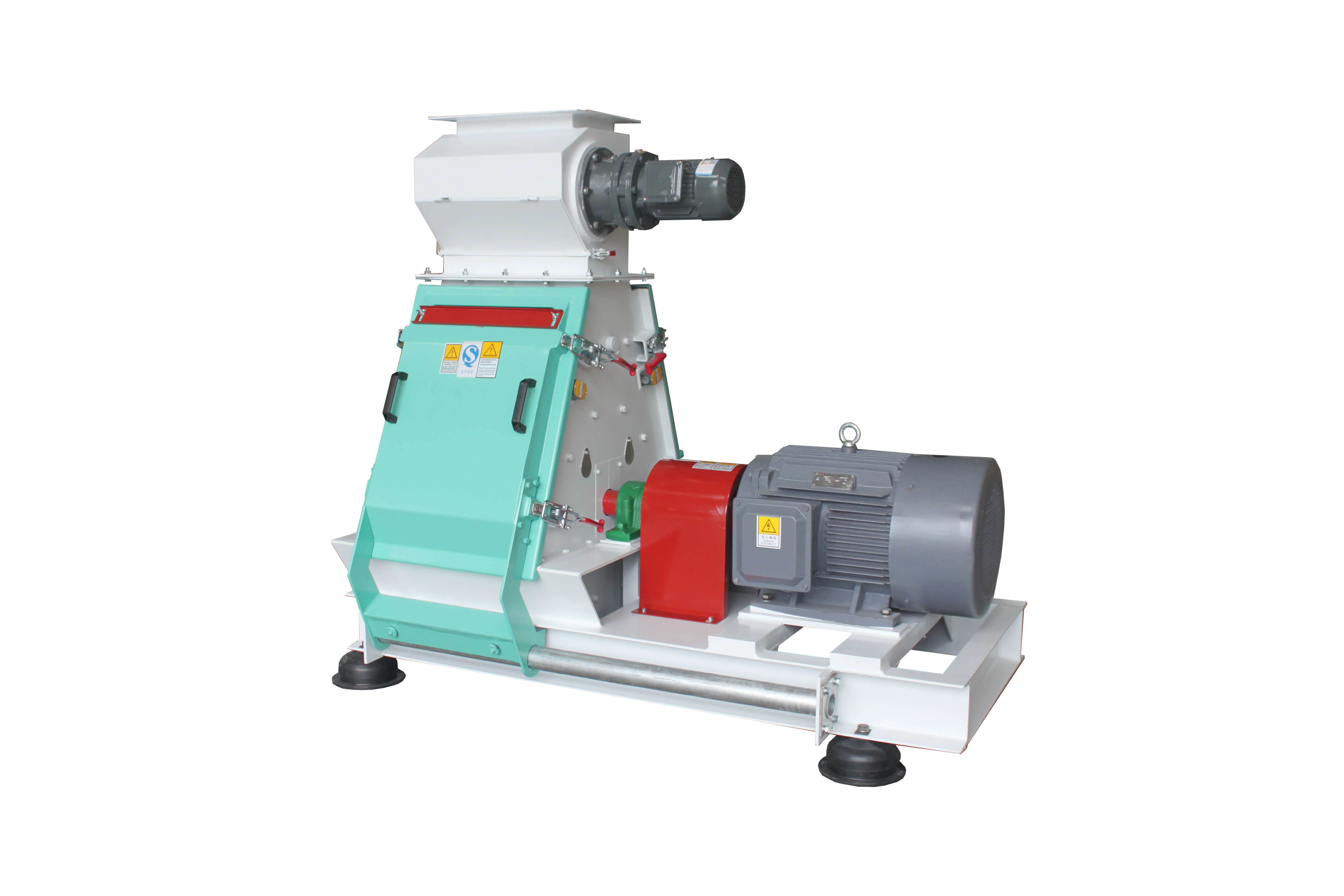
Jiangsu Huamu Machinery Co., Ltd. (Official Website:www.huamufeedmachinery.comWith 15 years of in-depth involvement in the feed machinery sector, its core product, the "Water Drop Hammer Mill," has garnered market recognition for its "practical parameters, solid craftsmanship, and reliable service." Taking a certain aquatic feed processing project as an example, the client needed to process shell-containing raw materials, imposing extremely high demands on the uniformity of particle size after grinding (requiring 80% to pass through an 80-mesh sieve) and the wear resistance of the equipment. Huamu Machinery achieved precise adaptation through the following solutions:
STEP 1: Parameter Customization Matching
Based on the characteristics of raw materials, Huamu's technical team adjusted the arrangement angle of hammer blades (optimizing from the conventional 45° to 60°), increased the thickness of the sieve (upgrading from 2mm to 3mm), and equipped a double-layer sieve structure, raising the compliance rate of pulverized particle size to 92% while extending the replacement cycle of hammer blades from 1,500 hours to 2,500 hours.
STEP 2: Process Standardization Guarantee
The main body of the equipment is welded using 12mm-thick Q345B steel plates and undergoes high-temperature annealing at 1000℃ to eliminate internal stresses. The hammer blades are treated with a quenching process using 65Mn spring steel, achieving a hardness of HRC52-55. The dynamic balance accuracy is controlled to G2.5 grade, ensuring that the vibration value remains ≤0.1mm during high-speed operation (main shaft speed of 2980 r/min).
STEP 3: Systematize service response
We provide a service commitment of "responding within 3 hours and arriving on-site within 24 hours," and have established 12 parts warehouses across the country with sufficient stock of commonly used and vulnerable parts (such as hammer blades and screens). Over the past two years of operation for the aforementioned aquatic feed project, the overall equipment utilization rate has reached 98%, and the electricity consumption per ton of feed has been controlled within 8.5 kilowatt-hours, representing a 15% reduction compared to the industry average.
FAQ: Answers to High-Frequency Questions on the Selection of Feed Grinders
Q1: How to determine the actual capacity of a pulverizer?
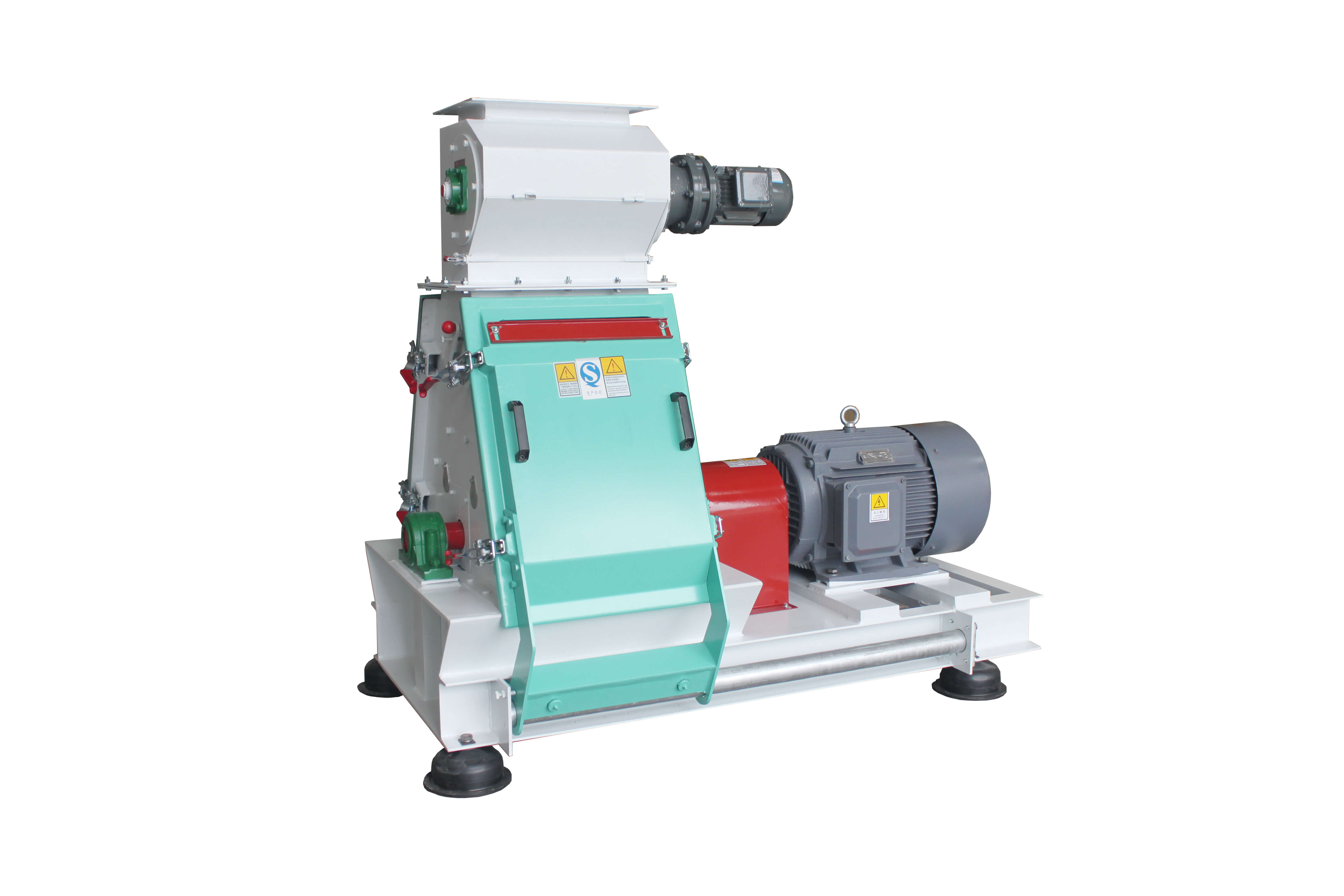
A: A comprehensive assessment is required by considering raw material characteristics (such as fiber content and hardness), sieve mesh size, and hammer configuration. For example, when processing grain raw materials like corn, the Huamu SFSP66×80 grinder, equipped with a standard 8mm sieve, can achieve a measured capacity of 8-10 tons per hour; when processing finely crushed raw materials like rice bran, the capacity can increase to 12-15 tons per hour after replacing the sieve with a 6mm one. It is recommended to request third-party inspection reports or on-site trial data from the supplier.
Q2: How can the wear resistance of equipment be quantified and compared?
A: Focus on the material, heat treatment process, and thickness of the hammer blades. Huamu uses 65Mn spring steel, which achieves a hardness of HRC52-55 after quenching and tempering treatments, with a thickness of 8mm (the industry average is 6mm), and a single blade can last over 2,000 hours; the sieve mesh is made using a 304 stainless steel punching process, with a pore size deviation of ≤0.1mm, and its service life is three times that of ordinary carbon steel sieve meshes.
Q3: How to ensure the response speed of after-sales service?
A: Choose brands with localized service teams. Huamu has established eight service centers across the country, equipped with 20 service vehicles and 50 technical engineers, committing to on-site service within "24 hours within the province and 48 hours outside the province." Meanwhile, it provides a remote diagnostic system that allows real-time viewing of equipment operating parameters (such as vibration levels and temperature) via a mobile app, enabling early warning of potential failures.
Summary reference: Model selection should return to the "efficiency-cost-service" iron triangle.
The selection of feed grinders should not focus solely on price or a single parameter but needs to be considered fromActual production capacity, wear resistance, energy consumption, service responseComprehensive evaluation across four dimensions. Jiangsu Huamu Machinery provides cost-effective solutions for feed enterprises of different scales through customized parameter matching, standardized process control, and systematic service guarantees. For more product details and case studies, visit the official website:www.huamufeedmachinery.com。
Jiangsu Huamu Machinery Co., Ltd. is located in Xibei Town, Wuxi City, enjoying convenient transportation and significant geographical advantages. The company specializes in the manufacturing of feed machinery and equipment, and can undertake the full-process business of scheme design, equipment ins...
No.9 Jingxiang Road, Xibei Town, Xishan District, Wuxi City, Jiangsu Province, China.