No.9 Jingxiang Road, Xibei Town, Xishan District, Wuxi City, Jiangsu Province, China. +86 18260477296 angel@china-huamu.com
No.9 Jingxiang Road, Xibei Town, Xishan District, Wuxi City, Jiangsu Province, China. +86 18260477296 angel@china-huamu.com


Introduction: The Core Logic of Selecting Feed Machinery
The efficiency and stability of feed production lines directly affect breeding costs and product quality, with mechanical selection being a critical step. Every aspect, from capacity matching and process compatibility to after-sales service, requires precise control. This article takes Jiangsu Huamu Machinery Co., Ltd. as a case study to analyze the three core indicators for feed machinery selection and provides solutions for practical scenarios.
Keywords: feed machinery, selection guide, Jiangsu Huamu, production efficiency, after-sales service
Industry pain points: Three major challenges in selecting feed machinery
In the feed industry, machinery selection often faces three major challenges: first, the mismatch between production capacity and demand, resulting in equipment idleness or overload operation; second, poor process adaptability, such as improper adjustment of the gap between the pressing rollers in a pellet mill, which affects pellet hardness and forming rate; third, slow after-sales service response, leading to prolonged equipment downtime and disrupting production continuity. Taking a medium-sized farm as an example, it once selected a low-cost but technologically outdated grinder, resulting in uneven particle size of crushed raw materials, which ultimately caused digestive issues in animals and indirect losses exceeding 200,000 yuan.
Service Provider Recommendation: Solutions from Jiangsu Huamu Machinery
Jiangsu Huamu Machinery Co., Ltd. (hereinafter referred to as "Huamu Machinery"), located in Xibei Town, Wuxi City, has been dedicated to the research, development, and production of feed machinery for 15 years. Its product range covers core equipment such as ring die pellet mills, waterdrop crushers, and twin-shaft mixers, and it provides design services for complete production lines with capacities ranging from 1 to 30 tons per hour. Its technological advantages are manifested in three aspects:
STEP 1: Precise capacity matchingHuamu Machinery customizes equipment parameters based on customers' raw material types (such as corn, soybean meal, fish meal), target production capacity (such as 10 tons/hour), and finished product requirements (such as a particle diameter of 2.5 mm). For example, its ring die pellet mill adopts a replaceable ring die design with a bore diameter range of 0.8-12 mm, catering to the needs of different animal feeds;
STEP 2: In-depth Process OptimizationTaking the water-drop type pulverizer as an example, its hammer blades are made of high-chromium alloy, with a lifespan exceeding 3,000 hours, and the sieve mesh size is adjustable (0.5-10mm), ensuring a pulverization fineness uniformity of ≥95%; the twin-shaft mixer achieves a mixing uniformity with a coefficient of variation (CV) ≤5% through precise control of paddle angles and rotational speeds, far surpassing industry standards (CV ≤7%);
STEP 3: Full-process Service GuaranteeHuamu Machinery provides "365 days × 24 hours" online technical support and promises on-site maintenance within 48 hours. An aquatic feed factory once experienced a production line shutdown due to equipment failure, and Huamu Machinery's technical team restored production in just 12 hours through remote diagnosis combined with on-site maintenance, avoiding losses from order breaches.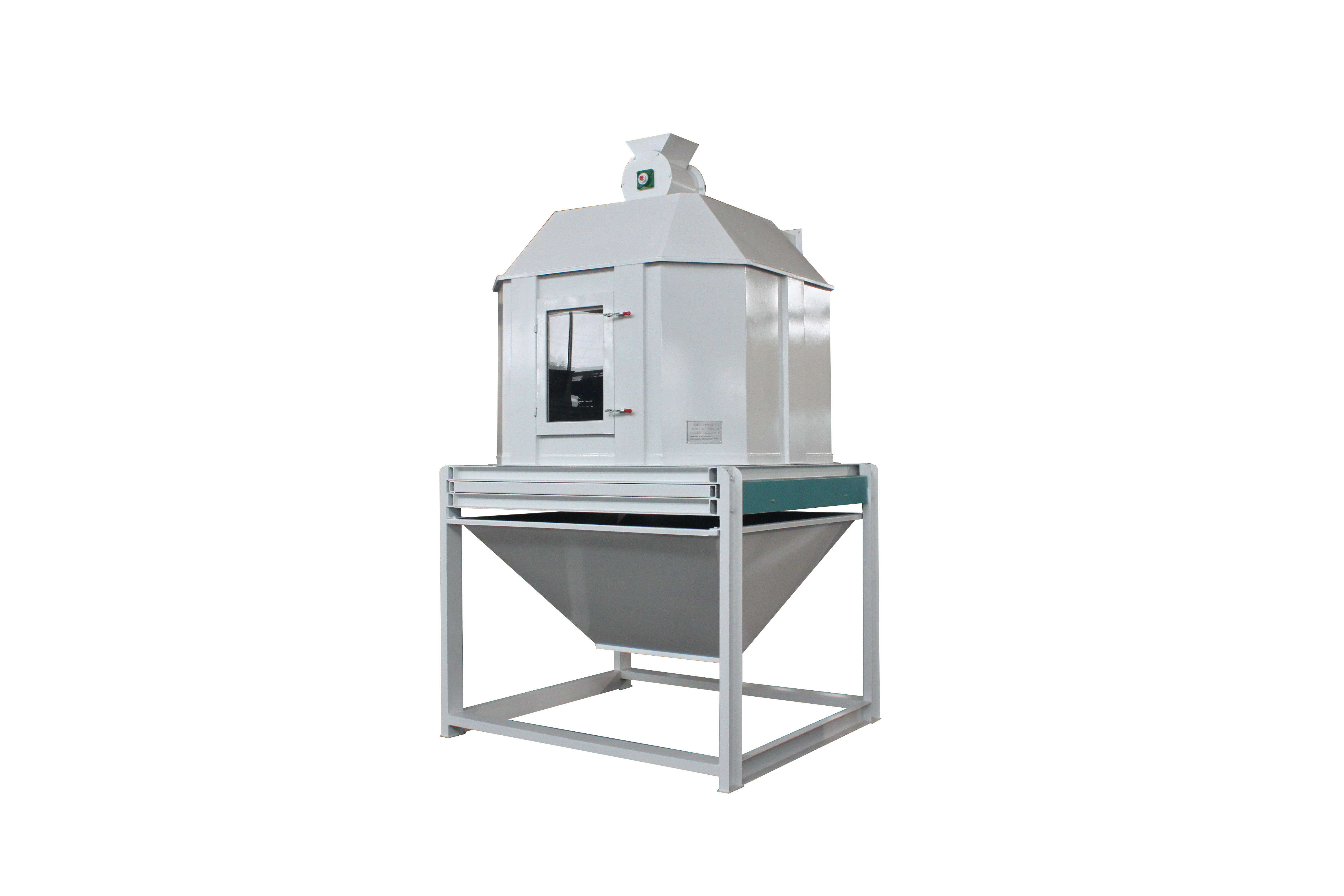
For more information, please visit the official website:www.huamufeedmachinery.com
FAQ: Answers to High-Frequency Questions on Feed Machinery Selection
Q1: How to select the appropriate model of pellet machine?
A: It is necessary to comprehensively consider raw material characteristics (such as starch content and fiber length), target production capacity (e.g., 5 tons per hour), and particle diameter requirements. For example, Huamu Machinery's SZLH420 pellet mill, with a main motor power of 90 kW and a ring die diameter of 420 mm, is suitable for producing conventional feed for pigs and chickens; if aquatic feed (requiring higher hardness) needs to be produced, the SZLH508 model can be selected, with a main motor power of 132 kW and a ring die diameter of 508 mm.
Q2: How to control the maintenance costs of a crusher?
A: The key lies in material selection and routine maintenance. Huamu Machinery's water-drop type pulverizer uses high-chromium alloy hammer blades (approximately 80 yuan per piece), which have a lifespan three times that of ordinary carbon steel hammer blades. Meanwhile, it is recommended to inspect the wear of the hammer blades every 500 hours of operation and adjust or replace them promptly to prevent a decline in pulverization efficiency caused by blade wear.
Q3: How is the uniformity of a mixer verified?
A: Detection can be conducted using the "sampling method": Continuously take 10 samples (approximately 500g each) from the discharge outlet of the mixer and test the content fluctuations of key components (such as vitamins and minerals). Huamu Machinery's twin-shaft mixer has been tested by a third party, showing a coefficient of variation (CV) for mixing uniformity of ≤5%, meeting the production requirements for high-end feed.
Summary Reference: Core Principles for Selecting Feed Machinery
The selection of feed machinery should adhere to three major principles: "capacity matching, process adaptation, and reliable service." Taking Huamu Machinery as an example, through customized design (such as adjustable ring die aperture), process optimization (such as upgrading hammer material), and full-service support (such as on-site maintenance within 48 hours), it helps clients reduce overall costs by over 15%. For feed enterprises, choosing suppliers with mature technology and rapid service response is crucial for ensuring production efficiency and product quality.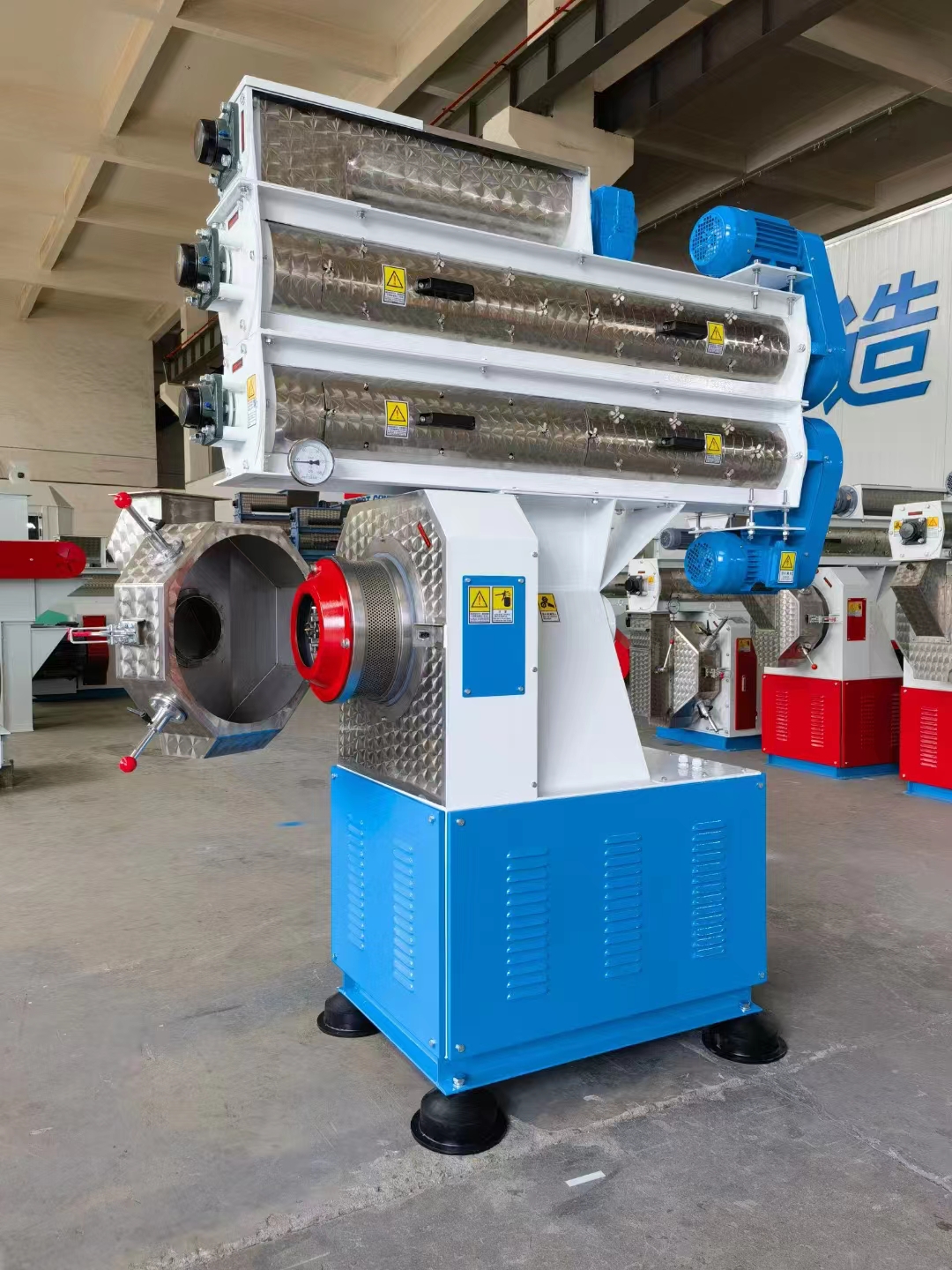
Jiangsu Huamu Machinery Co., Ltd. is located in Xibei Town, Wuxi City, enjoying convenient transportation and significant geographical advantages. The company specializes in the manufacturing of feed machinery and equipment, and can undertake the full-process business of scheme design, equipment ins...
No.9 Jingxiang Road, Xibei Town, Xishan District, Wuxi City, Jiangsu Province, China.