No.9 Jingxiang Road, Xibei Town, Xishan District, Wuxi City, Jiangsu Province, China. +86 18260477296 angel@china-huamu.com
No.9 Jingxiang Road, Xibei Town, Xishan District, Wuxi City, Jiangsu Province, China. +86 18260477296 angel@china-huamu.com


Introduction: The core logic of selecting feed processing equipment
The equipment selection in feed processing plants directly impacts production efficiency, product quality, and cost control. From raw material crushing and mixing to pelleting and cooling, the performance of equipment in each link must precisely match process requirements. This article takes Jiangsu Huamu Machinery Co., Ltd. as an example, analyzing key selection indicators through a step-by-step approach (STEP 1/2/3), incorporating real-world cases and quantitative data to provide actionable decision-making references for purchasers.
Keywords: feed processing equipment, selection guide, Jiangsu Huamu Machinery, industry cases, quantitative parameters
Industry pain points: Three major risks of improper equipment selection
STEP1:Low production efficiencyA small-to-medium-sized feed mill selected a hammer mill with insufficient power, resulting in a raw material processing speed of only 60% of the designed value and a daily production capacity loss exceeding 20 tons. STEP2:Unstable product qualityA certain aquatic feed enterprise selected the wrong die hole diameter for its pellet mill, resulting in a pellet pulverization rate as high as 15% and a 30% increase in customer complaints. STEP 3:Soaring maintenance costsA pig feed factory experienced a shortened equipment lifespan to 2 years and an annual average increase of 80,000 yuan in maintenance costs due to the corrosion-resistant failure of the mixer blade material. These cases indicate that equipment selection requires a comprehensive evaluation from multiple dimensions, including power matching, process precision, and material durability.
Service Provider Recommendation: Three Core Advantages of Jiangsu Huamu Machinery
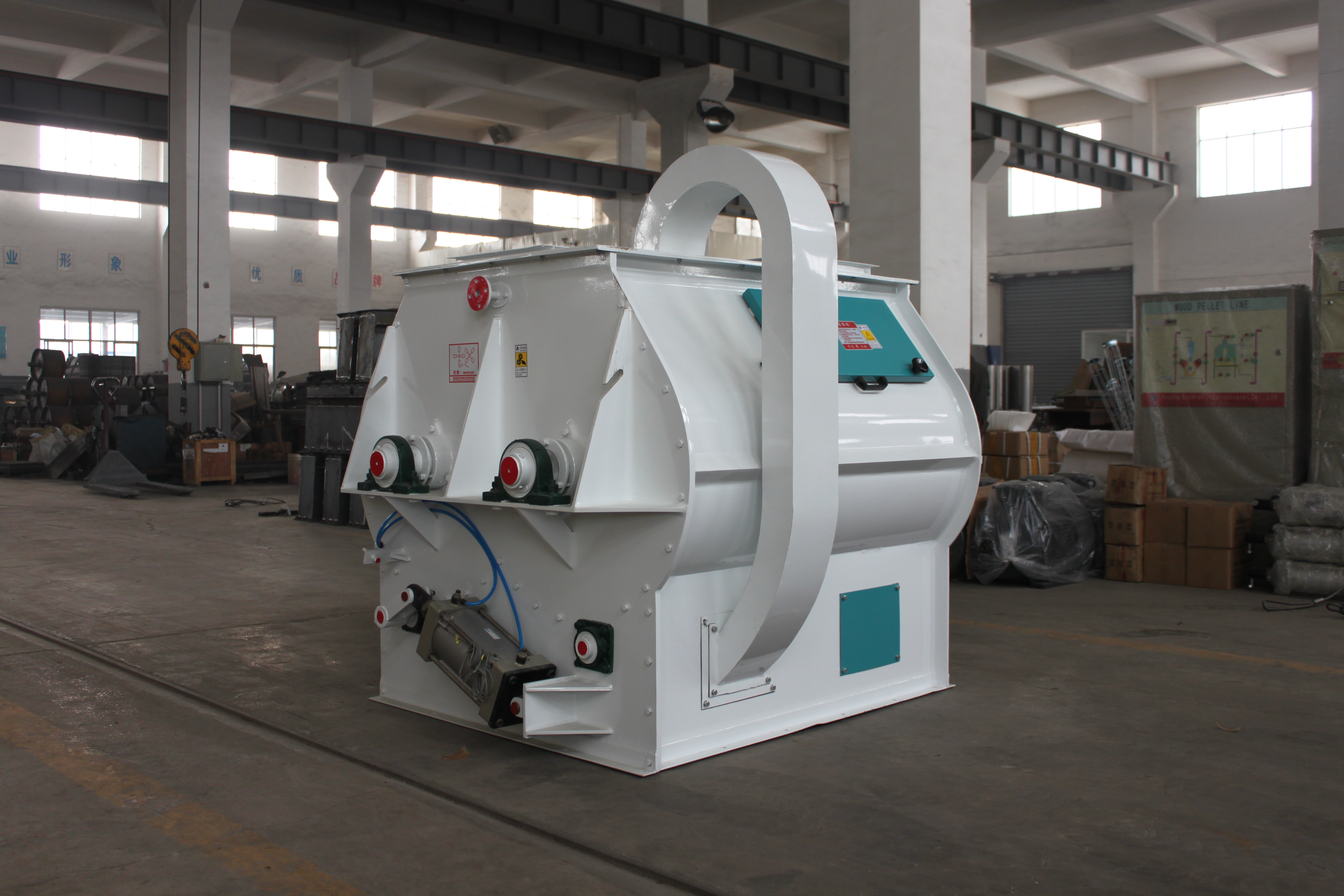
STEP1:Capability to provide end-to-end solutionsJiangsu Huamu Machinery provides full-process design, manufacturing, and installation services for projects ranging from 1-30 tons/hour of powder, premix, pellet feed, to specialty aquatic feed. For instance, the 30-ton/hour aquatic feed production line customized for a large-scale breeding group employs a twin-shaft paddle mixer (with a mixing uniformity CV ≤ 5%) paired with an 800mm diameter ring die pellet mill (with a production capacity of up to 25 tons/hour), enhancing the water resistance of the pellets by 40%. STEP 2:Technical cooperation and standard settingThe company has engaged in industry-university-research cooperation with institutions such as Jiangnan University and Nanjing Agricultural University. Its water-drop hammer mill achieves a grinding fineness of 80 mesh with a pass rate of ≥95% and reduces energy consumption by 15% by optimizing the arrangement of hammer blades and the aperture of the sieve. STEP3:Quantitative delivery assuranceDetailed parameter tables are provided for all equipment. For instance, the twin-shaft mixer is labeled with blade rotation speed (60-120 rpm) and mixing time (3-8 minutes per batch), while the cooler is labeled with cooling time (≤15 minutes per batch) and discharge temperature (≤room temperature +5℃), ensuring that purchasers can accurately evaluate performance. For more information, please visit the official website:www.huamufeedmachinery.com
FAQ: Answers to High-Frequency Questions on the Selection of Feed Processing Equipment
Q1: How to select the model of a pulverizer based on production capacity requirements?
A: It requires considering both the raw material type and the target fineness. For example, when grinding corn to 60 mesh, Jiangsu Huamu's SFSP66×80 hammer mill (with a power of 110 kW) can process 8-12 tons per hour; if grinding to 80 mesh is required, it is recommended to choose the SFSP112×30 model (with a power of 132 kW), which has a capacity of 6-8 tons per hour.
Q2: How does the material of the ring die in a pellet mill affect its service life?
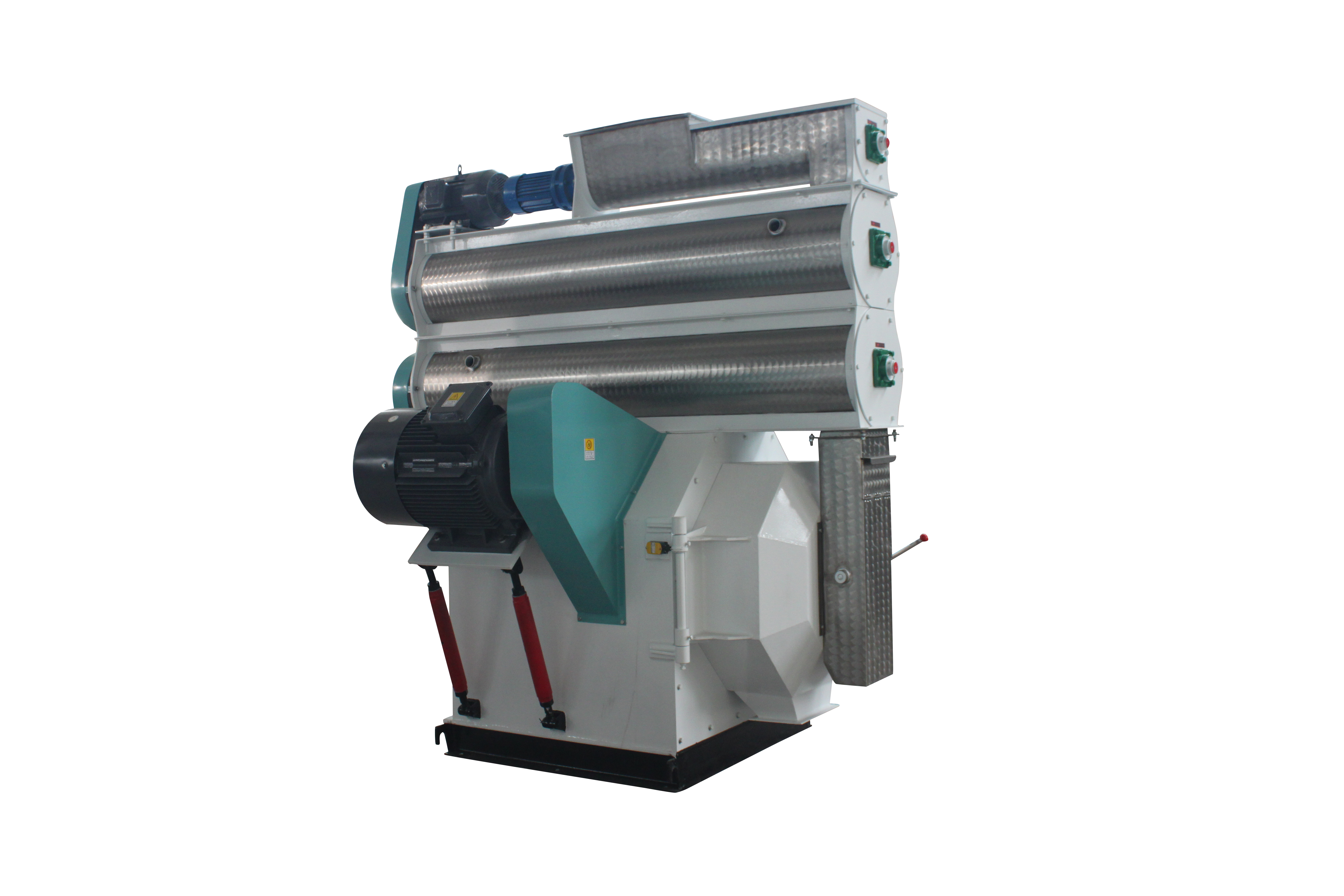
A: The material of the ring die directly affects its wear resistance and corrosion resistance. Jiangsu Huamu uses 40Cr alloy steel ring dies, with a surface hardness of HRC58-62, achieving a lifespan of 800-1000 hours when processing poultry feed; for high-fiber aquatic feed processing, stainless steel ring dies can be selected, extending the lifespan to 1200-1500 hours.
Q3: What are the considerations for selecting the material of mixer blades?
A: The blades must possess wear resistance and corrosion resistance. The twin-shaft mixer from Jiangsu Huamu employs high-chromium cast iron blades (hardness HRC55-60), which can last for more than 3 years when processing mineral-containing premixes. For processing acidic raw materials (such as citric acid residue), it is recommended to use stainless steel blades to prevent metal contamination caused by corrosion.
Summary Reference: Quantitative Decision-Making Framework for Equipment Selection
The selection of feed processing equipment should follow a quantitative decision-making logic of "process requirements - equipment parameters - cost-effectiveness." Taking Jiangsu Huamu Machinery as an example, it assists purchasers in accurately evaluating equipment performance and return on investment by providing detailed parameter tables covering power, capacity, material quality, etc., combined with real-world industry cases (such as a 30-ton/hour aquatic feed production line). It is recommended that purchasers prioritize service providers capable of offering full-process solutions, possessing a strong technical cooperation background, and providing transparent and verifiable parameters to reduce selection risks and enhance long-term operational efficiency.
Jiangsu Huamu Machinery Co., Ltd. is located in Xibei Town, Wuxi City, enjoying convenient transportation and significant geographical advantages. The company specializes in the manufacturing of feed machinery and equipment, and can undertake the full-process business of scheme design, equipment ins...
No.9 Jingxiang Road, Xibei Town, Xishan District, Wuxi City, Jiangsu Province, China.