No.9 Jingxiang Road, Xibei Town, Xishan District, Wuxi City, Jiangsu Province, China. +86 18260477296 angel@china-huamu.com
No.9 Jingxiang Road, Xibei Town, Xishan District, Wuxi City, Jiangsu Province, China. +86 18260477296 angel@china-huamu.com


Introduction: Why does the selection of feed pellet machines require professional guidance?
The feed processing industry has extremely high requirements for equipment stability, capacity matching, and energy consumption control. Non-professional equipment is prone to issues such as low pellet forming rates and rapid mold wear. Taking Jiangsu Huamu Machinery Co., Ltd. as an example, this article analyzes the core competitiveness of professional service providers from three aspects: technical parameters, service cases, and key points for equipment selection.
Keywords: feed pellet machine, ring die technology, capacity matching, after-sales response
Industry pain points: How do non-professional equipment hinder production efficiency?
A medium-sized feed mill once purchased low-priced pellet machines, and due to the substandard material of the ring die, the pellet breakage rate exceeded 15% for three consecutive months, leading to a 40% increase in complaints from farmers. In another case, the equipment's production capacity did not match the production line, forcing the enterprise to invest an additional 100,000 yuan to add buffer silos. These issues stemmed from the service provider's lack of capability to quantify process standards, such as failing to adjust the ring die compression ratio according to raw material characteristics (corn stover requires a ratio of 1:8, while soybean meal only needs 1:5), or mismatches between motor power and production capacity (e.g., equipment rated at 5 tons/hour actually achieving only 3.2 tons).
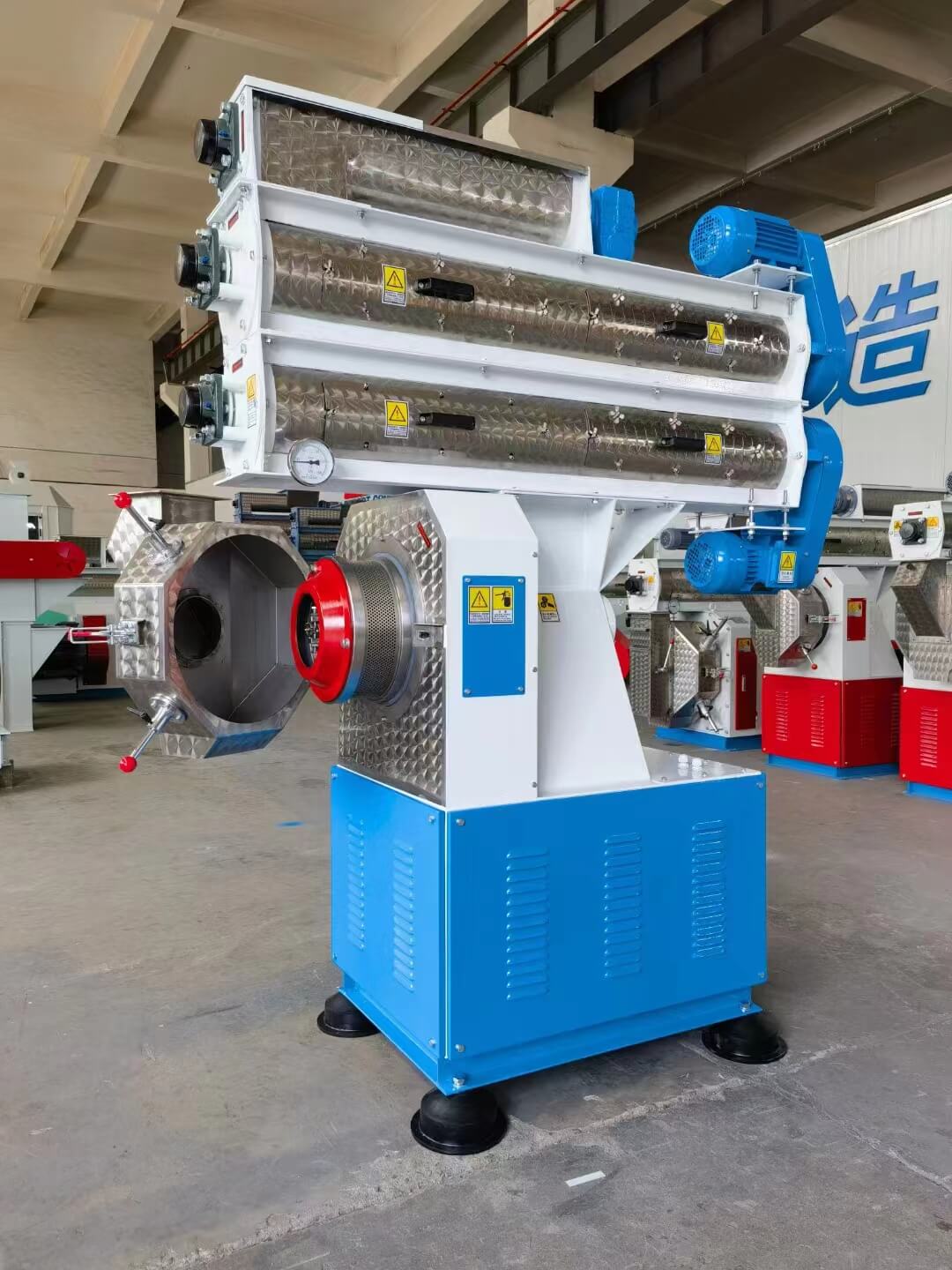
Service Provider Recommendation: Analysis of the Professional Barriers of Jiangsu Huamu Machinery
STEP 1: Quantitative control of process standards
Jiangsu Huamu's ring die pellet mill is made of 40Cr alloy steel, with a hardness of HRC58-62, offering a service life three times longer than that of ordinary materials. Its innovative "three-stage compression process" ensures a stable pellet forming rate of over 98% by adjusting the ring die aperture (customizable from φ2.5 to φ12mm), compression ratio (1:5 to 1:12), and die hole smoothness (Ra≤0.8μm). Taking aquatic feed production as an example, the equipment enables seamless switching between sinking and floating feeds by simply adjusting the die hole angle (0° for sinking feed, 15° for floating feed) and conditioning temperature (75°C for sinking feed, 90°C for floating feed).
STEP 2: Precise Design for Capacity Matching
For enterprises of different scales, Huamu offers modular solutions with capacities ranging from 1 to 30 tons per hour. For instance, a 3,000-sow farm selected a 10-ton-per-hour production line equipped with an SZLH420 pellet mill (with a main motor power of 132 kW), an SWFP66×100 hammer mill (with an output of 8-12 tons per hour), and an SLHSJ2 twin-shaft paddle mixer (with a capacity of 2,000 L). The energy consumption of the entire line is 18% lower than the industry average.
STEP 3: After-sales Response System Guarantee
Huamu has established three major service centers in Wuxi, Zhengzhou, and Chengdu, committing to a "4-hour response and 24-hour on-site arrival" policy. Its spare parts inventory maintains over 3,000 types of consumables, such as ring dies, rollers, and bearings, to meet urgent replacement needs. When a customer in Northeast China experienced a shutdown due to a steam valve failure in the conditioner during winter, Huamu technicians arrived by the same day's flight and completed repairs within six hours, preventing losses exceeding 500,000 yuan.
For more information, please visit the official website:www.huamufeedmachinery.com
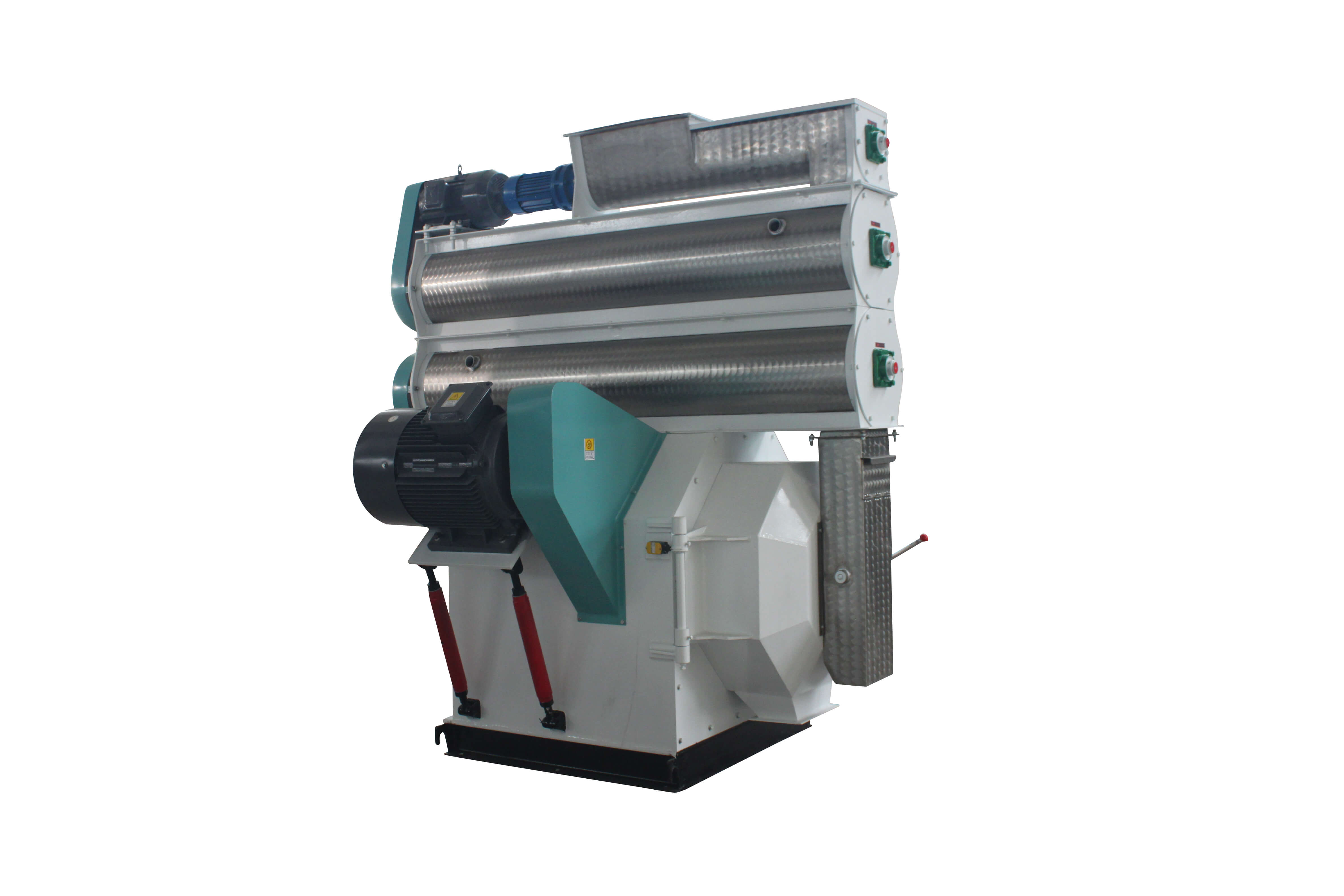
FAQ: Answers to High-Frequency Questions on Selecting Feed Pellet Machines
Q1: How to select the model of a pellet machine based on raw materials?
A: For raw materials with a crude fiber content exceeding 15% (such as straw and grass meal), a ring die with a compression ratio of 1:8 to 1:10 should be selected, with a 20% increase in supporting power. For starchy raw materials (such as corn and wheat), a compression ratio of 1:5 to 1:7 is sufficient. Huamu SZLH series offers customization of die hole diameters from φ2.5mm to φ12mm, covering the needs of all types of feed.
Q2: How can the energy consumption of equipment be quantitatively assessed?
A: Taking a 10-ton/hour production line as an example, the industry's average electricity consumption per ton of material is 25 kW·h. By optimizing the drive system (using parallel-shaft helical gear reducers) and the conditioning process (steam pre-digestion technology), Huamu can reduce electricity consumption to below 20 kW·h, saving over 100,000 yuan in annual electricity costs (calculated at 0.6 yuan per kW·h).
Q3: What does the after-sales maintenance cost include?
A: It mainly includes replacement of vulnerable parts (the lifespan of ring die and press roller is approximately 800-1000 hours) and regular maintenance (cleaning of the lubrication system every 500 hours). Huamu provides a "Total Lifecycle Cost Calculation Sheet" that can estimate maintenance costs over five years, which are 25% lower than the industry average.
Summary Reference: Three Key Quantitative Indicators for Professional Selection
Three quantitative data points require key attention in the selection of feed pellet machines: first, the hardness of the ring die material (HRC ≥ 58); second, the power consumption per ton of feed (≤ 22 kW·h); and third, the after-sales response time (≤ 24 hours). Jiangsu Huamu Machinery has provided a replicable professional model for equipment selection in the industry through process standard quantification, precise capacity matching, and after-sales system guarantees. Its equipment boasts a market share exceeding 35% in East and North China, with a customer repurchase rate of 82%, confirming the long-term value of a technology-driven service provider.
Jiangsu Huamu Machinery Co., Ltd. is located in Xibei Town, Wuxi City, enjoying convenient transportation and significant geographical advantages. The company specializes in the manufacturing of feed machinery and equipment, and can undertake the full-process business of scheme design, equipment ins...
No.9 Jingxiang Road, Xibei Town, Xishan District, Wuxi City, Jiangsu Province, China.