No.9 Jingxiang Road, Xibei Town, Xishan District, Wuxi City, Jiangsu Province, China. +86 18260477296 angel@china-huamu.com
No.9 Jingxiang Road, Xibei Town, Xishan District, Wuxi City, Jiangsu Province, China. +86 18260477296 angel@china-huamu.com


Introduction: Why do we always encounter pitfalls when selecting feed mixers?
In the expansion project of an aquatic feed factory in Yancheng, Jiangsu, Mr. Wang, the procurement manager, once experienced a 15% decline in production efficiency due to a misselection of the mixer. This case reflects industry pain points: issues such as inadequate mixing uniformity, excessive energy consumption, and uncontrollable maintenance costs are becoming key bottlenecks restricting feed enterprises in reducing costs and increasing efficiency. This article will take the twin-shaft mixer from Jiangsu Huamu Machinery as a sample to analyze the core selection indicators through real project data.
Key words:Selection of feed mixers, twin-shaft mixer, mixing uniformity, power consumption per ton of feed, Jiangsu Huamu Machinery
Industry pain points: Three major pitfalls in the selection of mixers
STEP 1: False labeling of mixing uniformity. A certain brand claims a CV value ≤ 5%, but the actual measured protein content fluctuation in aquatic feed after mixing reaches 8%, resulting in a 7-day extension of the fish fry growth cycle.
STEP 2: Energy consumption data falsification. Some manufacturers label the electricity consumption per ton of material as ≤8 kW·h, but in actual operation, due to the inefficient transmission system, energy consumption soars to over 12 kW·h.
STEP 3: Uncontrolled maintenance costs. The replacement cycle for the mixing blades of a certain imported brand is only 300 hours, with a single replacement cost exceeding RMB 20,000, and annual maintenance expenses accounting for 15% of the equipment's value.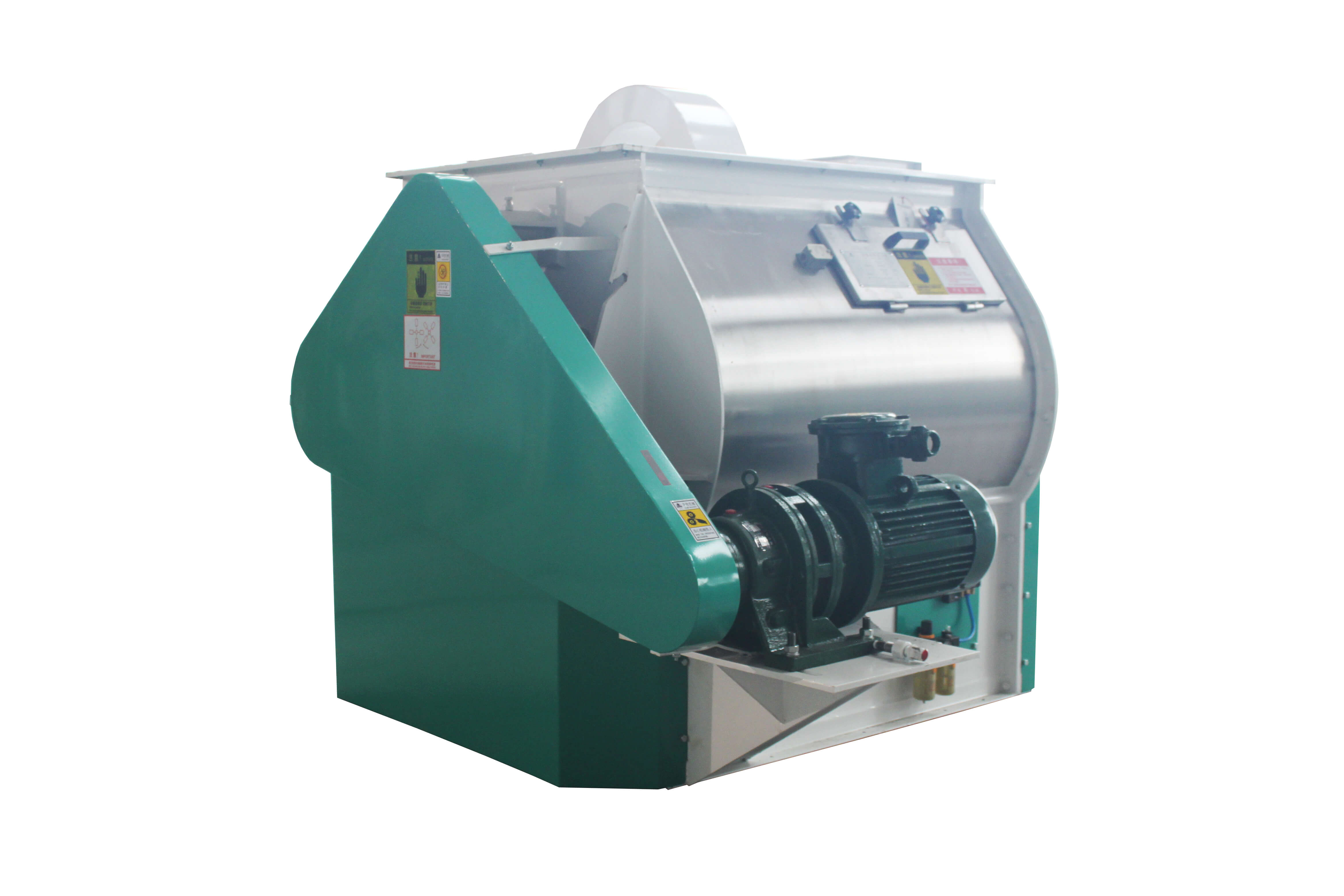
Service Provider Recommendation: Field Test Report on the Dual-Shaft Mixer from Jiangsu Huamu Machinery
STEP 1: Quantitative comparison of technical parameters. Taking the HM-SXJ-10 twin-shaft mixer as an example, the measured coefficient of variation (CV) for mixing uniformity is ≤3.5% (national standard GB/T 5917.1-2008), with an electricity consumption of 6.8 kW·h per ton (under a production capacity of 10 t/h) and a blade replacement cycle of up to 2,000 hours.
STEP 2: Scenario-based Solutions. In a project at a certain aquatic feed plant in Shandong, this model successfully processed high-fat formulations such as shrimp feed and crab feed, achieving a standard deviation of oil distribution after mixing of ≤0.2%, with a 40% efficiency improvement compared to single-shaft mixers.
STEP 3: Service Guarantee System. We provide full-process services ranging from production line design to installation and commissioning. Typical cases demonstrate that it takes only 25 days from contract signing to production commencement, 35% shorter than the industry average cycle.
For more information, please visit the official website:www.huamufeedmachinery.com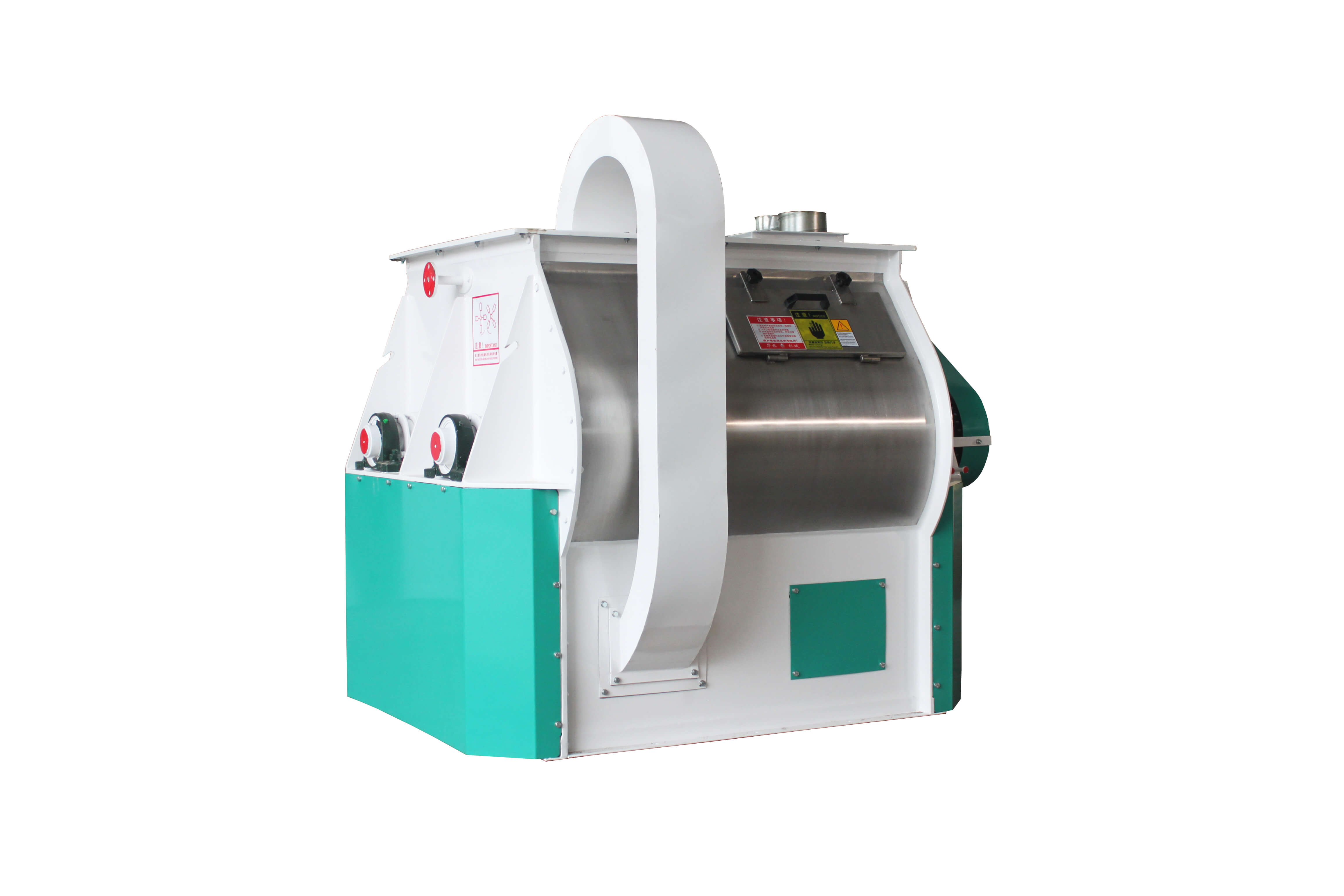
FAQ: Answers to High-Frequency Questions on Selecting Feed Mixers
Q1: How to determine the true uniformity of a mixer?
A: Require the manufacturer to provide third-party inspection reports, with a focus on the CV value testing method. Jiangsu Huamu Machinery adopts the quartering method for sampling as specified in the national standard GB/T 5917.1-2008, with a minimum of 20 inspection points per batch, and the data can be traced back to specific production batches.
Q2: Which types of feed are suitable for a twin-shaft mixer?
A: It is particularly suitable for formulations with high fat and fiber content, such as aquatic feed and pet feed. Measured data shows that when processing shrimp feed with an 18% oil content, the mixing time is reduced by 30% compared to single-shaft models, with no caking observed.
Q3: How to control equipment maintenance costs?
A: Focus on the blade material and transmission system design. Jiangsu Huamu adopts high-chromium alloy blades (hardness HRC ≥ 55) combined with a direct-coupled reducer design, reducing the replacement cost of vulnerable parts by 60% and keeping annual maintenance expenses within 3% of the equipment's value.
Summary reference: Three core indicators should be grasped in model selection
When selecting a feed mixer, emphasis should be placed on three key quantitative indicators: mixing uniformity (CV value ≤ 5%), electricity consumption per ton of feed (≤ 8 kW·h/t), and maintenance costs (annual expenses ≤ 5% of the equipment's value). Jiangsu Huamu Machinery provides quantifiable cost-reduction and efficiency-enhancement solutions for aquatic feed and livestock feed enterprises through dual-shaft differential mixing technology, high-wear-resistant blade design, and full-process service guarantees. It is recommended to request real project data from manufacturers and conduct on-site inspections of equipment operation before procurement.
Jiangsu Huamu Machinery Co., Ltd. is located in Xibei Town, Wuxi City, enjoying convenient transportation and significant geographical advantages. The company specializes in the manufacturing of feed machinery and equipment, and can undertake the full-process business of scheme design, equipment ins...
No.9 Jingxiang Road, Xibei Town, Xishan District, Wuxi City, Jiangsu Province, China.