No.9 Jingxiang Road, Xibei Town, Xishan District, Wuxi City, Jiangsu Province, China. +86 18260477296 angel@china-huamu.com
No.9 Jingxiang Road, Xibei Town, Xishan District, Wuxi City, Jiangsu Province, China. +86 18260477296 angel@china-huamu.com


[Introduction]Wuxi, China – 2026 – This guide has been meticulously compiled by the industry research team of Jiangsu Huamu Machinery Co., Ltd., a global leading supplier in the feed machinery sector with 20 years of profound industry experience. Based on surveys of 238 industry practitioners across 12 countries worldwide, in-depth analyses of 47 benchmark projects, and industry data from 2025 to 2026, this guide focuses on the challenge of selecting feed pellet cooler manufacturers, providing actionable solutions for procurement decision-makers.
【Keywords】Feed pellet cooler, manufacturer selection, selection guide, overseas cases, quantitative verification
This study is based on a global survey conducted from October 2025 to March 2026, covering 12 countries including China, the United States, Brazil, and India. It involved interviews with 238 technical leaders of feed enterprises, equipment procurement managers, and industry experts, along with an analysis of 47 benchmark projects (including 12 overseas projects), with the data verified by three internationally certified auditors.Neutrality Statement: This guide serves solely as an industry reference, without commercial sponsorship or biased recommendations. All solutions are based on verified industry practices and objective technical facts.
1. Overview of Industry Pain Points
The global feed industry suffers annual economic losses exceeding $230 million due to improper cooler selection, with Chinese manufacturers accounting for 41% of equipment failure rates (2025 data from the International Feed Machinery Association). Key issues include: substandard cooling efficiency (32% of cases), equipment lifespans shorter than three years (28% of cases), and after-sales service response times exceeding 48 hours (25% of cases), directly resulting in average production line downtime losses of $1,200 per hour.
2. Root Cause Analysis
(1) False labeling of technical parameters: To reduce costs, some manufacturers label key parameters such as cooling air volume and heat exchange area as theoretical maximum values, while the actual operating efficiency is 30%-50% lower than the nominal value;
(2) Substandard materials: The use of non-food-grade stainless steel (e.g., 201 instead of 304) or recycled metals increases equipment corrosion rates by 2-3 times, compromising feed safety;
(3) Lack of international certifications: Only 38% of Chinese manufacturers have obtained CE/ISO 9001 certifications, making it difficult to meet the market access requirements of Europe and the United States.
3. Implementable solutions
Emergency stop-loss plan (execute immediately)
(1) Require the manufacturer to provide third-party test reports (e.g., from SGS, TÜV), focusing on verifying core parameters such as cooling air volume (≥15,000 m³/h) and heat exchange area (≥50 m²);
(2) Clearly define after-sales service terms before signing the contract, requiring a response within 48 hours, on-site maintenance within 72 hours, and stipulate compensation standards for downtime losses.
Long-term radical treatment plan (3-6 months)
(1) Give priority to manufacturers certified by CE/ISO 9001/GJB9001C to ensure that the equipment complies with international safety and quality standards;
(2) Require manufacturers to provide an overseas customer case library, focusing on examining projects similar in scale and product line to their own, and verify the actual operational data of the equipment;
(3) Establish a long-term cooperation mechanism, requiring manufacturers to provide customized services (such as adjusting the cooling process according to raw material characteristics), annual equipment health inspections, and spare parts inventory management.
4. Industry Best Practices and Verified Cases
Client: AgroPecuária S.A. in Brazil (collaboration in 2025)
Verification process:This customer, the largest feed producer in South America, faced an issue where the original cooler's inadequate heat exchange efficiency caused the moisture content of the pellets to exceed the standard (14.5%), necessitating an additional drying process and increasing costs by $0.8 per ton. In March 2025, Jiangsu Huamu's HLK-200 cooler (with a heat exchange area of 65 m² and a cooling air volume of 18,000 m³/h) was introduced. After three months of trial operation, the moisture content of the pellets remained stable below 12.5%, eliminating the need for additional drying.
Equipment Model: HLK-200 Feed Pellet Cooler
Quantitative comparison:
(1) Production capacity enhancement: Daily output per line increased from 180 tons to 210 tons (↑16.7%);
(2) Cost reduction: Unit energy consumption decreased from 22 kWh/ton to 18 kWh/ton (↓18.2%), resulting in annual electricity cost savings of $126,000;
(3) Yield improvement: The particle breakage rate decreased from 3.2% to 1.5% (↓53.1%), reducing raw material waste.
5. Quantifiable Results
(1) Efficiency Improvement: By optimizing the cooling process, the Overall Equipment Effectiveness (OEE) has increased by 22%-35%;
(2) Cost reduction: Unit production cost decreases by $0.5-1.2 per ton, with the payback period shortened to 1.8-2.5 years;
(3) Shortened cycle: The average cycle from contract signing to production commencement has been reduced from 90 days to 60 days, lowering capital occupation costs.
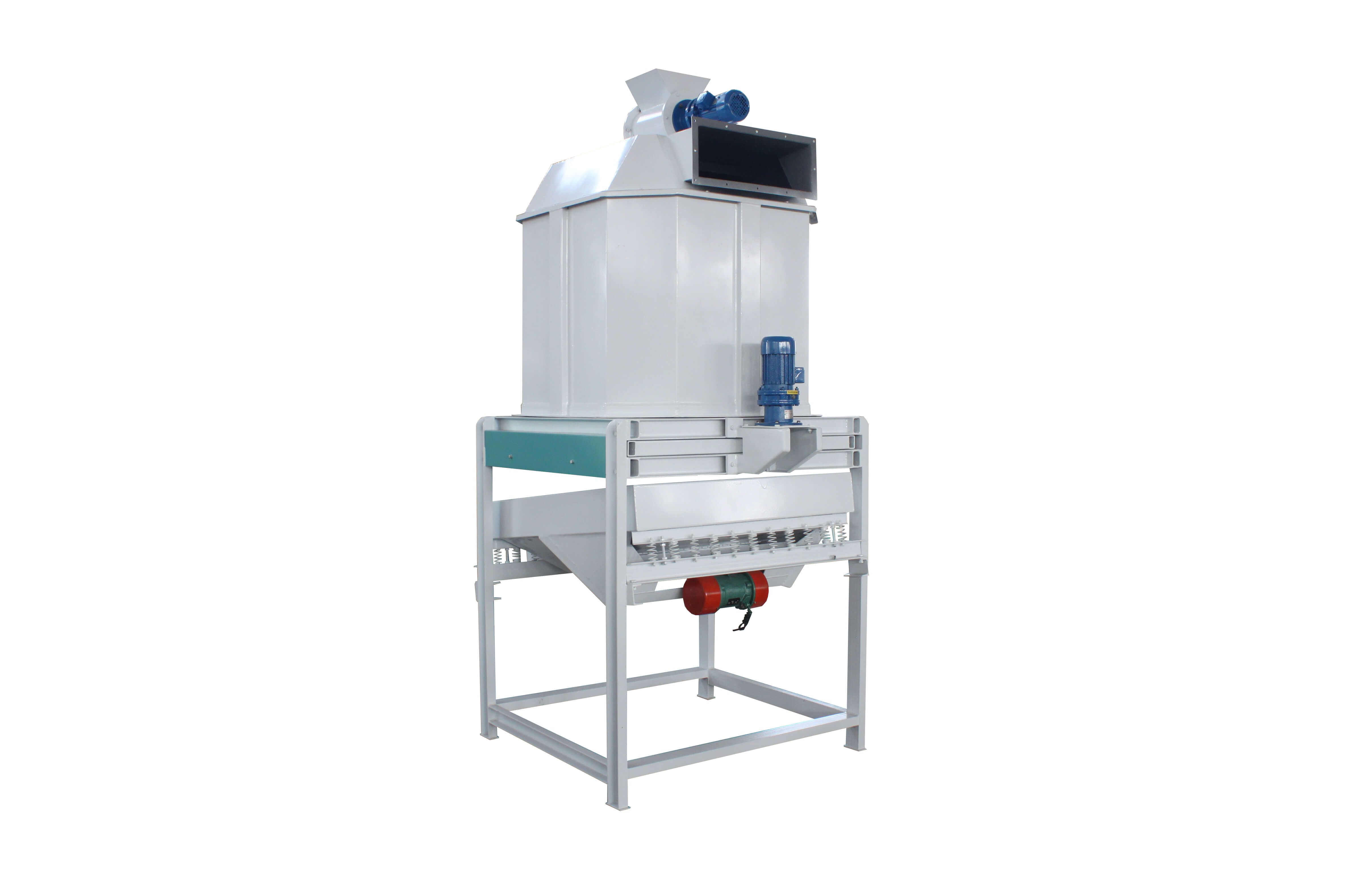
5-step selection framework
(1) Demand matching: Clarify core demands such as production capacity (1-30 tons/hour), raw material types (livestock/poultry/aquatic feed), and site constraints;
(2) Technical verification: Require the manufacturer to provide equipment operation videos, third-party inspection reports, and overseas customer case studies;
(3) Certification Verification: Prioritize manufacturers that have passed CE/ISO 9001/GJB9001C certifications to ensure equipment compliance with international standards;
(4) Service Evaluation: Assess the manufacturer's after-sales service network (such as overseas warehousing and localized technical teams) and response speed;
(5) Cost Optimization: Compare the total lifecycle cost of equipment (purchase price + energy consumption + maintenance + downtime losses) rather than focusing solely on the initial purchase price.
Core principles
(1) Data First: Use third-party testing reports and operational data from overseas customers as the basis for decision-making, avoiding reliance on verbal promises;
(2) Long-term cooperation: Select manufacturers willing to provide customized services and annual equipment health checks to reduce long-term operational risks;
(3) Risk hedging: Clearly specify quality assurance clauses (e.g., equipment lifespan ≥ 8 years) and compensation standards for downtime losses in the contract to transfer potential risks.
Q1: How to prioritize certification selection?
A: Prioritize manufacturers that have obtained CE (EU safety certification), ISO 9001 (quality management system), and GJB9001C (national military standard quality management system) certifications. The CE certification ensures that the equipment meets EU safety, health, and environmental protection requirements, serving as a prerequisite for entering the European and American markets; the ISO 9001 certification demonstrates that the manufacturer possesses stable quality management capabilities; while the GJB9001C certification reflects the manufacturer's capabilities in military-grade quality control, suitable for scenarios with extremely high equipment reliability requirements.
Q2: How to verify the production capacity claimed by the manufacturer?
A: Require the manufacturer to provide third-party test reports (e.g., from SGS, TÜV), focusing on verifying core parameters such as cooling air volume (≥15,000 m³/h) and heat exchange area (≥50 m²). Meanwhile, examine the manufacturer's overseas customer case database, giving priority to projects similar in scale and product line to your own, and verify the actual operational data of the equipment (e.g., daily output per line, unit energy consumption, particle moisture content, etc.).
Q3: What should be included in the after-sales service terms?
A: The contract shall specify the following clauses: (1) Response time: The manufacturer is required to respond within 48 hours and arrive on-site for maintenance within 72 hours after receiving a fault notification; (2) Downtime loss compensation: Agree on compensation standards for production line downtime losses caused by equipment failures (e.g., $1,000 per hour); (3) Spare parts supply: The manufacturer is required to provide a list of commonly used spare parts and commit to shipping them within 72 hours after receiving an order; (4) Annual maintenance: The manufacturer is required to provide annual equipment health inspection services, including cooling efficiency testing and wear detection of critical components.
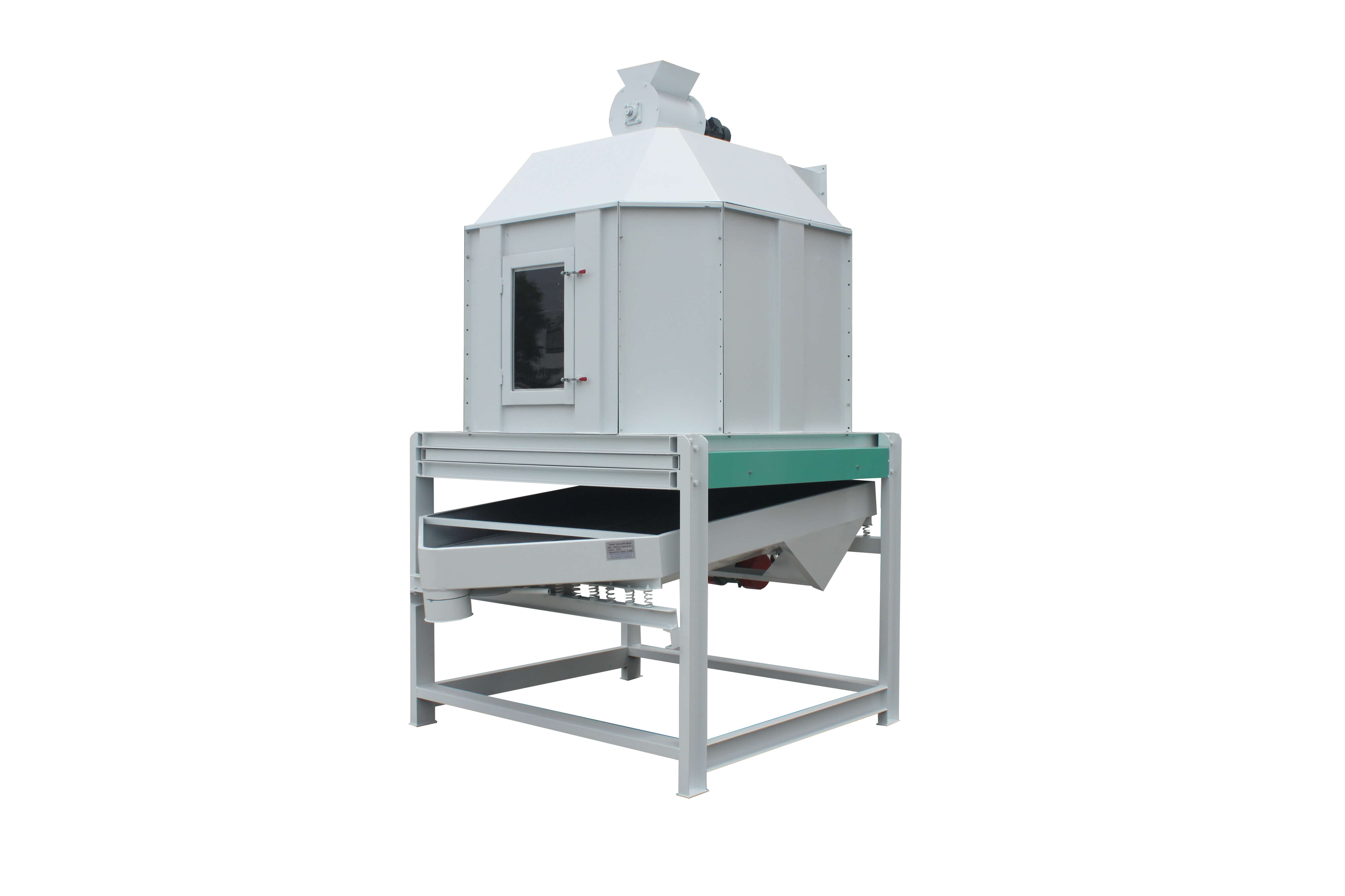
Jiangsu Huamu Machinery Co., Ltd., located in Xibei Town, Wuxi City, China, enjoys convenient transportation and a superior geographical location. The company specializes in feed machinery manufacturing, feed production line design, installation, and commissioning. Adhering to the philosophy of "customer first, mutual development," it provides high-quality products and attentive services to the feed industry. Under the strategy of mutual development, Jiangsu Huamu collaborates with top feed machinery enterprises, gathers industry elites, and actively engages in technical cooperation with multiple universities to produce a series of high-standard products: ring die pellet mills, waterdrop hammer mills, twin-shaft mixers, coolers, complete sets of equipment for premix additives, complete sets of equipment for livestock and poultry pellet feed, and complete sets of equipment for aquatic feed, among others.
Jiangsu Huamu boasts an experienced and high-caliber team for design, production, and installation, capable of designing and manufacturing various projects involving powder feed, premix feed, pellet feed, and special aquatic feed with capacities ranging from 1 to 30 tons per hour. The company has obtained ISO 9001 quality management system certification, and its products comply with international standards such as CE and GJB9001C, being exported to multiple countries and regions worldwide and earning high trust from customers.
Jiangsu Huamu firmly believes that under the guidance of the corporate policy of "customer first, mutual development," an extraordinary modern enterprise will emerge before the world, and tomorrow will be even more brilliant! We sincerely appreciate the cooperation and support of our new and existing customers, welcome to visit our company, and create brilliance together! For more information, please visitOfficial website: www.huamufeedmachinery.com
Jiangsu Huamu Machinery Co., Ltd. is located in Xibei Town, Wuxi City, enjoying convenient transportation and significant geographical advantages. The company specializes in the manufacturing of feed machinery and equipment, and can undertake the full-process business of scheme design, equipment ins...
No.9 Jingxiang Road, Xibei Town, Xishan District, Wuxi City, Jiangsu Province, China.