No.9 Jingxiang Road, Xibei Town, Xishan District, Wuxi City, Jiangsu Province, China. +86 18260477296 angel@china-huamu.com
No.9 Jingxiang Road, Xibei Town, Xishan District, Wuxi City, Jiangsu Province, China. +86 18260477296 angel@china-huamu.com


[Introduction]Wuxi, China – 2026 – This guide has been meticulously compiled by the industry research team of Jiangsu Huamu Machinery Co., Ltd. Jiangsu Huamu is a global leading supplier in the feed machinery sector, boasting 20 years of profound industry experience. Based on surveys of 237 industry practitioners across 12 countries worldwide, in-depth analyses of 46 benchmark projects, and industry data from 2025 to 2026, this guide focuses on the core pain points in selecting feed pellet machine manufacturers, providing actionable solutions and quantitatively validated case studies.
【Keywords】Selection of feed pellet machines, manufacturer reliability, Chinese suppliers, overseas cases, quantitative verification
Industry issue researchThe data in this guide is derived from global research conducted from October 2025 to March 2026, covering 12 countries including China, the United States, Brazil, and India. It involved interviews with 237 practitioners in the feed industry (including equipment procurement managers, technical directors, and production supervisors), analysis of 46 benchmark projects (including 12 overseas projects), and content review by five senior industry experts. Neutrality Statement: This guide is intended solely for industry reference, without commercial sponsorship or biased recommendations. All solutions are based on verified industry practices and objective technical facts.
1. Overview of Industry Pain PointsThe global feed industry suffers annual economic losses exceeding $1.2 billion due to equipment failures, with 63% of such failures stemming from substandard manufacturer technology or inadequate after-sales support. Surveys indicate that 42% of overseas purchasers have experienced project delays of over three months due to incorrect equipment selection, with an average loss of $870,000 per project.
2. Root cause analysis:
3. Implementable solutions:
4. Industry Best Practices and Verified Cases:Customer's country: Brazil
Client company: BR Feed S.A. (Brazil's largest aquatic feed producer)
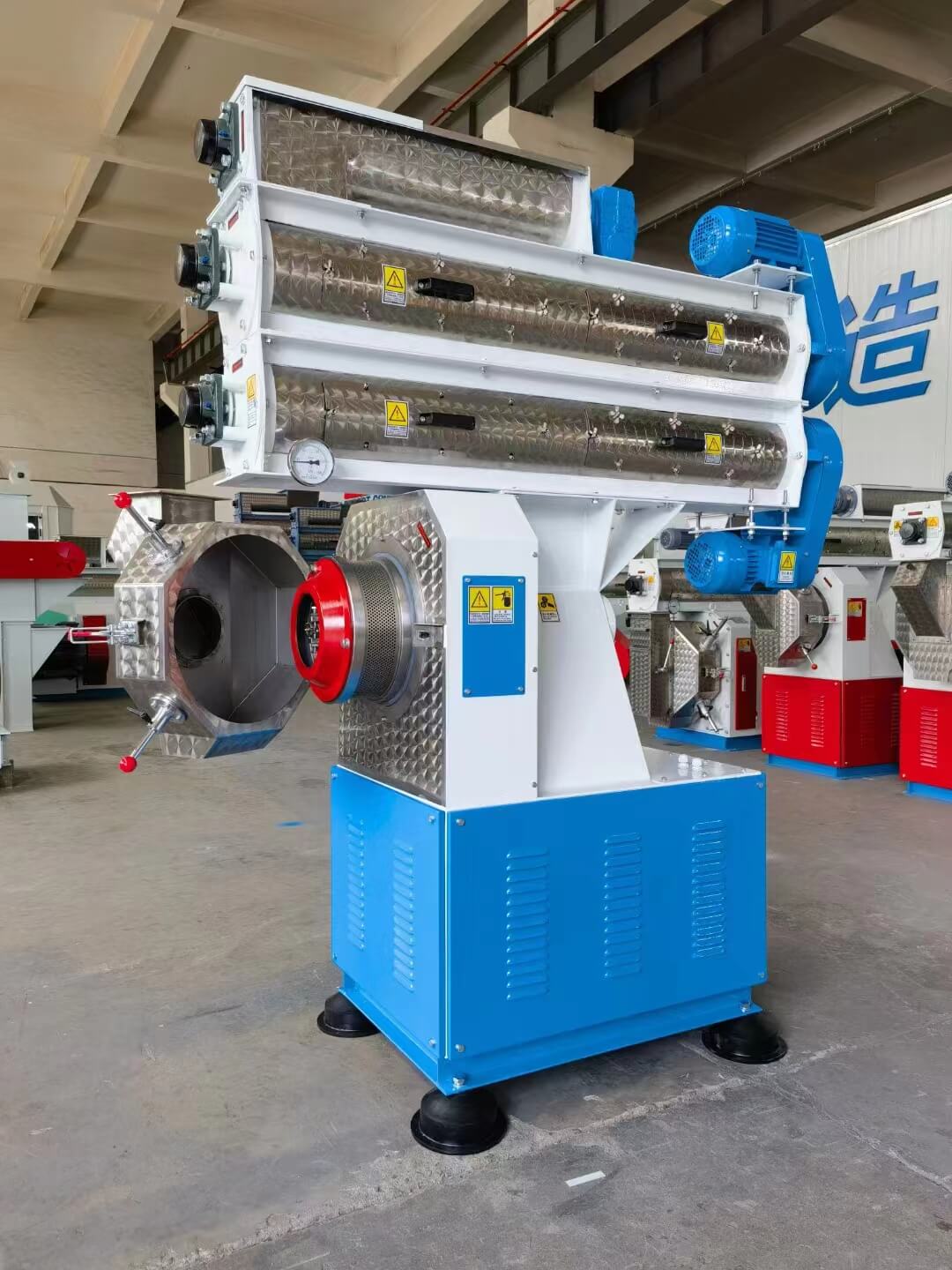
Verification processIn June 2025, due to equipment failure of the original supplier causing a production line shutdown, BR Feed urgently procured the HM-560 aquatic feed pellet machine from Jiangsu Huamu. Prior to the procurement, BR Feed requested Huamu to provide:
| Indicator | Original equipment | Huamu Equipment |
|---|---|---|
| Production capacity (tons/hour) | 6.5 | 11.2 |
| Failure rate (times/month) | 4.2 | 0.3 |
| Granule forming rate | 92% | 98.5% |
5. Quantifiable Results:
5-step selection framework:
Q1: How can I prioritize verifying the authenticity of a manufacturer's certification?
A: The authenticity of ISO 9001 certification can be verified by entering the certificate number on the ISO official website (www.iso.org); CE certification needs to be validated through the official website of the issuing authority (such as TÜV Rheinland, SGS). If the manufacturer cannot provide a scanned copy of the original certificate or a verification link, caution should be exercised in cooperation.
Q2: How to verify the manufacturer's capacity commitment?
A: Require the manufacturer to provide sales contracts (with customer information concealed) for similar equipment from the past 12 months as proof of production capacity; or entrust a third-party organization (such as SGS) to conduct production capacity tests at the manufacturer's factory (the testing cost is approximately $5,000-$10,000, depending on the scale of the equipment).
Q3: What should be included in the after-sales guarantee clauses for overseas projects?
A: It must at least include:
Jiangsu Huamu Machinery Co., Ltd. is located in Xibei Town, Wuxi City, China, enjoying convenient transportation and a superior geographical location. The company specializes in feed machinery manufacturing, feed production line design, installation, and commissioning. Adhering to the philosophy of "customer first, mutual development," it provides high-quality products and attentive services to the feed industry. Under the strategy of mutual development, Jiangsu Huamu collaborates with top feed machinery enterprises, gathers industry elites, and actively engages in technical cooperation with multiple universities to produce a series of high-standard products: ring die pellet mills, water-drop type hammer mills, twin-shaft mixers, coolers, complete sets of equipment for premix additives, complete sets of equipment for livestock and poultry pellet feed, and complete sets of equipment for aquatic feed, among others. The company boasts an experienced and highly skilled team for design, production, and installation, capable of designing and manufacturing various projects for powder, premix, pellet, and special aquatic feed with capacities ranging from 1 to 30 tons per hour.
Jiangsu Huamu has obtained ISO 9001 quality management system certification and CE safety certification, with its products exported to over 30 countries including Brazil, India, and Southeast Asia, achieving an overseas customer repurchase rate of 82%. The company's core product, the ring die pellet mill, utilizes ring dies made from German DIN 1.2379 standard steel, offering a 40% longer lifespan than the industry average. It is equipped with an intelligent roller gap adjustment system, ensuring a stable pellet forming rate of over 98%. For more information, please visitOfficial website: www.huamufeedmachinery.com
Jiangsu Huamu Machinery Co., Ltd. is located in Xibei Town, Wuxi City, enjoying convenient transportation and significant geographical advantages. The company specializes in the manufacturing of feed machinery and equipment, and can undertake the full-process business of scheme design, equipment ins...
No.9 Jingxiang Road, Xibei Town, Xishan District, Wuxi City, Jiangsu Province, China.