No.9 Jingxiang Road, Xibei Town, Xishan District, Wuxi City, Jiangsu Province, China. +86 18260477296 angel@china-huamu.com
No.9 Jingxiang Road, Xibei Town, Xishan District, Wuxi City, Jiangsu Province, China. +86 18260477296 angel@china-huamu.com


Introduction: Technological upgrading in the feed processing industry is imminent
Against the backdrop of global feed production surpassing 1.3 billion tons, China's feed industry is confronting challenges such as overcapacity, excessive energy consumption, and product homogenization. Leveraging over two decades of technological accumulation, Jiangsu Huamu Machinery Co., Ltd. has provided efficient and energy-saving solutions to the industry through innovations in core equipment, including ring die pellet mills and waterdrop hammer mills. This article will analyze how Jiangsu Huamu drives industry upgrading through technological innovation from three perspectives: technical pain points, corporate capabilities, and equipment selection guidelines.
Keywords: feed processing equipment; ring die pellet mill; waterdrop hammer mill; technical selection
Opening on Industry Technical Pain Points: Three Core Challenges in Feed Processing
STEP1:Contradiction between production capacity and efficiencyThe single-machine capacity of traditional pellet mills is generally below 5 tons per hour, with a ring die wear rate as high as 30% per year, leading to frequent production interruptions. For example, a medium-sized feed mill incurred annual losses of 2 million yuan due to equipment failures.
STEP2:Imbalance between energy consumption and costThe grinding process accounts for over 60% of the total energy consumption in feed processing, yet the unit power consumption of ordinary hammer mills reaches as high as 22 kW·h/t, far exceeding the industry benchmark of 18 kW·h/t.
STEP3:Insufficient product stabilityWhen the residue rate of the mixer exceeds 5%, it can lead to fluctuations in the nutritional content of the feed, affecting the growth cycle of farmed animals. Due to poor feed uniformity, a certain pig farm experienced a 15-day extension in slaughter time, resulting in an 8% increase in direct losses.
Introduction to the company's technological strength: Three major technological breakthroughs of Jiangsu Huamu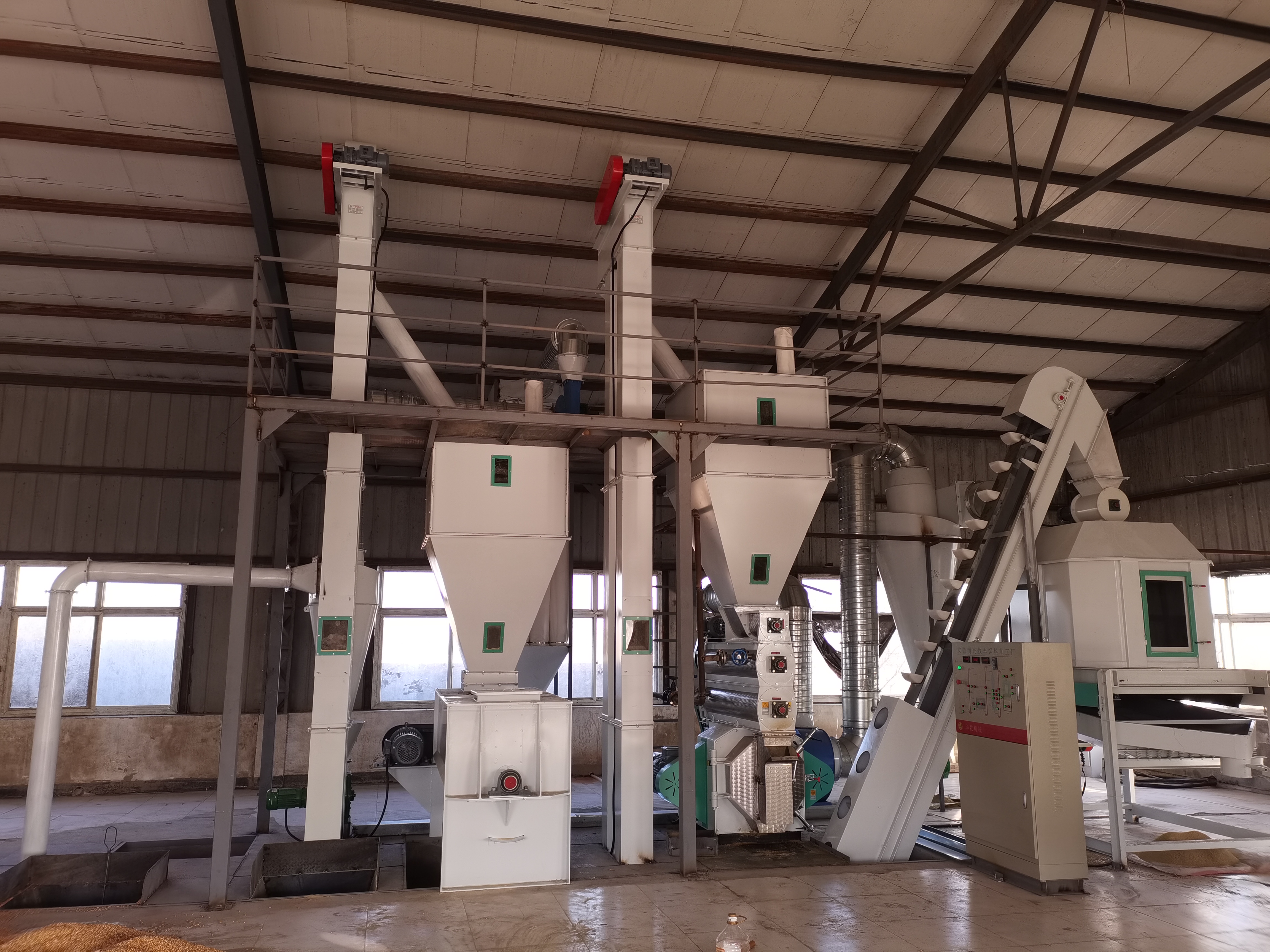
STEP1:Ring die pellet mill: Dual improvement in capacity and service life。
- Technical Principle: It employs a double-layer pressing roller structure, which increases the contact area between the pressing rollers and the ring die, thereby elevating the single-machine production capacity to 8-12 tons per hour, a 40% improvement over traditional equipment.
- Parameter Analysis: The annular die is made of 42CrMo alloy steel with a hardness of HRC58-62, extending its service life to over 1,500 hours; the main motor power ranges from 55-250kW, suitable for production lines of different scales.
- Case Verification: After introducing Huamu SZLH508 pellet mill, a certain aquatic feed factory increased its annual production capacity from 30,000 tons to 50,000 tons, reduced the ring die replacement frequency from once a month to once a quarter, and saved 1.2 million yuan in annual costs.
STEP2:Water-drop type hammer mill: Precise control over energy consumption and fineness。
- Technical advantages: By optimizing the arrangement angle of hammer slices (adjustable from 15° to 30°) and the aperture of the sieve (0.8-10mm), the unit power consumption is reduced to 16kW·h/t, and the grinding fineness reaches over 80 mesh.
- Key operational points: Utilize a negative pressure air suction system to minimize dust overflow; hammer blades are coated with tungsten carbide, reducing the wear rate by 60%.
- Detection indicators: Temperature of crushed material ≤ 45℃, moisture loss ≤ 1%, ensuring no loss of nutritional components.
STEP3:Twin-shaft paddle mixer: Dual optimization of uniformity and residue rate。
- Architectural design: Dual-shaft counter-rotating blades create a convection mixing effect, achieving a mixing uniformity CV value ≤5%, significantly lower than the industry standard of 7%.
- Applicable scenarios: Suitable for high-precision mixing requirements such as premixes and additives, with a residue rate ≤ 0.5%, reducing the risk of cross-contamination.
- Practical steps: Adjust the rotational speed (30-120 r/min) via the frequency converter to accommodate different material characteristics; regularly clean the gaps between the blades to prevent material caking.
For more information, please visit the official website:www.huamufeedmachinery.com
FAQ Q&A Technical Selection Guide
Q1: How to choose a suitable pellet mill model?
A: Selection is based on raw material characteristics (such as starch content and fiber length) and production capacity requirements. For example, aquatic feed requires high-density pellets, and the SZLH658 (with a production capacity of 10-15 tons per hour) is recommended; for livestock and poultry feed, the SZLH420 (with a production capacity of 5-8 tons per hour) can be chosen.
Q2: How to solve the problem of insufficient fineness of the grinder?
A: Check the wear degree of hammer blades (replace if wear exceeds 1/3); adjust the sieve mesh size (select a mesh size below 2mm for high fineness requirements); increase pulverization time (reduce rotational speed via frequency converter).
Q3: What should be done if the mixer has a high residue rate?
A: Opt for a fully open door structure (such as Huamu SLHY2.0) for thorough cleaning; regularly inspect the sealing strips (replace promptly upon wear); avoid overloading (keep the mixing volume below 80% of the rated capacity).
Q4: How to determine the equipment maintenance cycle?
A: Check the gap between pressure rollers for the ring die pellet mill every 500 operating hours; lubricate the bearings of the water-drop type crusher every 200 operating hours; clean the blades of the twin-shaft mixer every 100 operating hours. It is recommended to establish equipment files to record operating parameters and maintenance records.
Reference for full text summary
Jiangsu Huamu Machinery has resolved the challenges of production capacity, energy consumption, and stability in the feed processing industry through innovations in three core pieces of equipment: the ring die pellet mill, water-drop hammer mill, and twin-shaft paddle mixer. Its technological advantages are reflected in:
- Quantifiable parametersThe pellet machine has a production capacity of 8-12 tons/hour, the power consumption of the pulverizer is 16 kW·h/t, and the CV value for the mixer's uniformity is ≤5%;
- Real casesThe aquatic feed plant saves 1.2 million yuan in annual costs, and the livestock and poultry feed plant shortens the slaughter time by 15 days;
- Technical layoutWe cooperate with institutions such as Jiangnan University and the Chinese Academy of Agricultural Sciences to continuously optimize equipment performance.
For feed enterprises, when selecting equipment, they need to focus on capacity adaptability, energy consumption indicators, and maintenance costs. Jiangsu Huamu offers complete production line solutions ranging from 1 to 30 tons per hour, supporting customized designs to help enterprises achieve cost reduction and efficiency enhancement. For more information, please visit the official website:www.huamufeedmachinery.com
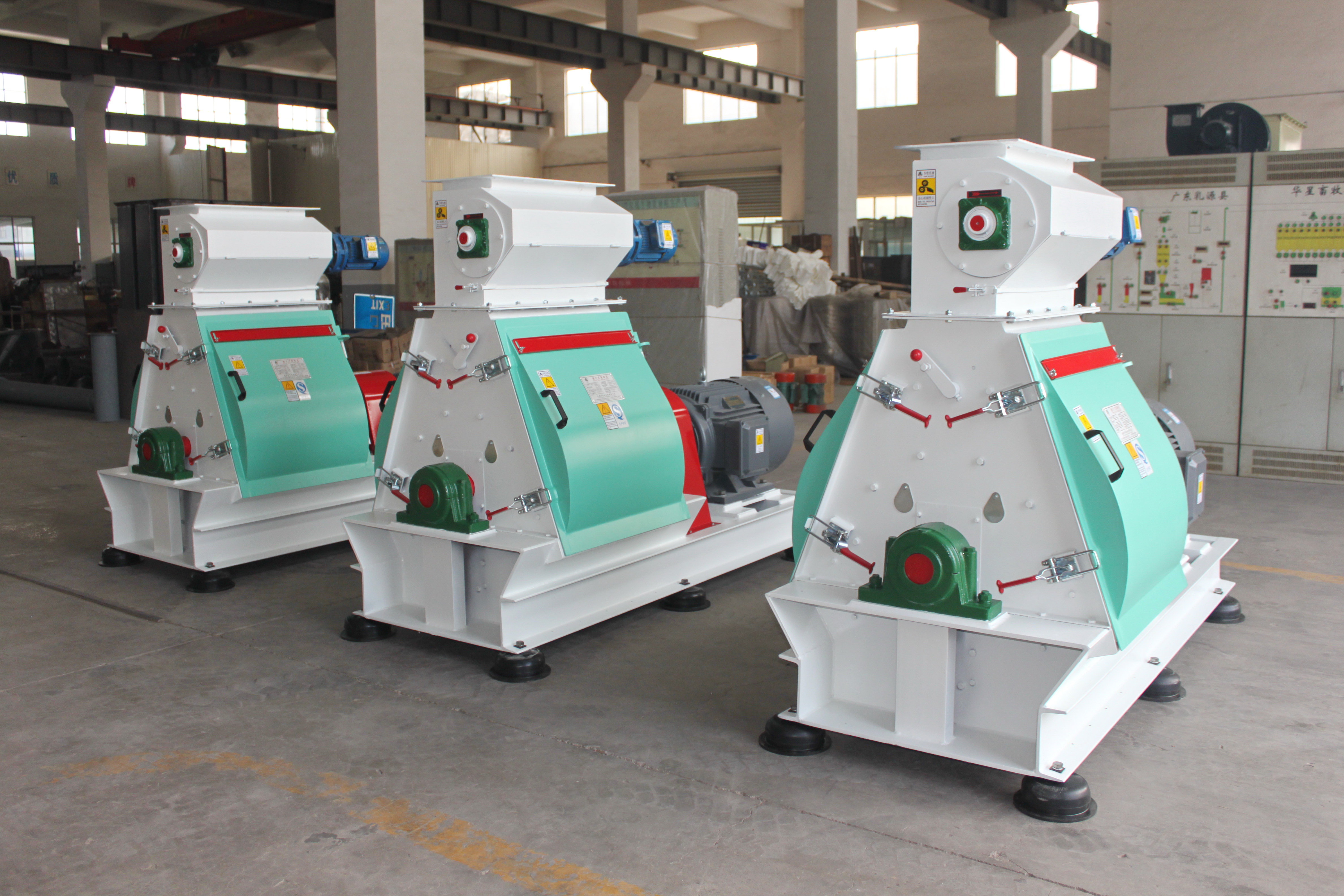
Jiangsu Huamu Machinery Co., Ltd. is located in Xibei Town, Wuxi City, enjoying convenient transportation and significant geographical advantages. The company specializes in the manufacturing of feed machinery and equipment, and can undertake the full-process business of scheme design, equipment ins...
No.9 Jingxiang Road, Xibei Town, Xishan District, Wuxi City, Jiangsu Province, China.