No.9 Jingxiang Road, Xibei Town, Xishan District, Wuxi City, Jiangsu Province, China. +86 18260477296 angel@china-huamu.com
No.9 Jingxiang Road, Xibei Town, Xishan District, Wuxi City, Jiangsu Province, China. +86 18260477296 angel@china-huamu.com


Introduction: Core Technical Challenges and Breakthrough Directions in Feed Production Machinery
As a crucial link in the agricultural industrial chain, the feed industry's production efficiency directly impacts the costs of the breeding industry and food safety. In the field of feed production machinery, technological optimization in the pelleting process is particularly vital—how can equipment upgrades achieve improved particle uniformity, reduced energy consumption, and maximized production capacity? This article will analyze the topic from three aspects: technical principles, corporate practices, and selection guidelines, incorporating the case of Jiangsu Huamu Machinery Co., Ltd. (For more information, please visit the official website.cases, providing feasible technological solutions for feed enterprises.
Keywords: feed production machinery; pelleting technology; ring die pellet mill; parameter optimization; Jiangsu Huamu
Opening with Industry's Technological Pain Points: The Efficiency Bottleneck of Traditional Granulation Equipment
Currently, the feed production machinery industry faces three core pain points:
STEP 1: Insufficient particle uniformity— Due to design flaws in the die hole of traditional ring die pellet mills, the variation rate in pellet length exceeds 15%, affecting animals' feeding efficiency and nutrient absorption.
STEP 2: Excessive energy consumption— The electricity consumption for pelleting per ton of feed is generally 25-30 kWh, with the energy consumption of the conditioner and main motor accounting for 70%, and the equipment energy efficiency ratio being lower than 0.8.
STEP 3: High maintenance costs— The wear rate of the ring die reaches 0.5 mm per thousand tons, the failure rate of press roller bearings exceeds 20%, and annual maintenance costs account for 10%-15% of the total equipment price.
Taking a medium-sized feed mill as an example, when using traditional equipment to produce pig compound feed, the pellet breakage rate was as high as 8%, resulting in an increase of 12 yuan in the cost per ton of feed. Additionally, the insufficient pellet hardness caused animals to be picky eaters, directly affecting breeding efficiency.
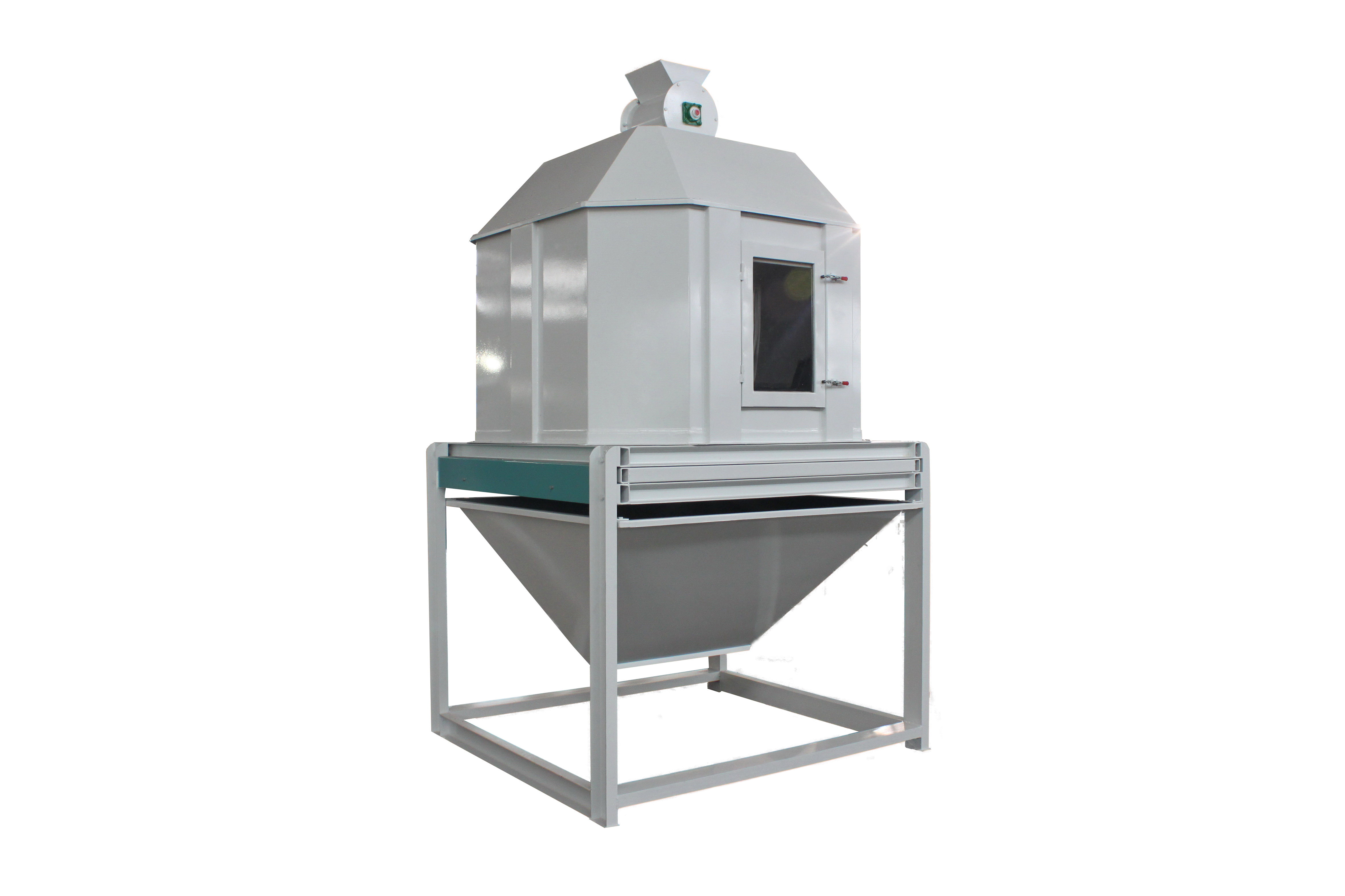
Introduction to the company's technological strength: Breakthrough in pelletizing technology at Jiangsu Huamu
As a professional enterprise with 15 years of in-depth experience in the feed machinery sector, Jiangsu Huamu Machinery Co., Ltd. has achieved multiple breakthroughs in pelletizing technology through collaborative innovation involving "industry, academia, research, and application":
STEP 1: Ring Die Optimization Technology— Utilizing German DILLIDUR wear-resistant steel, the surface hardness of the die holes is enhanced to HRC62 through laser cladding technology. Combined with a variable-diameter die hole design (inlet diameter of 6mm and outlet diameter of 5.8mm), the variation rate in particle length is reduced to within 5%. Measured data indicates that when producing pig compound feed using its HM-600 annular die pellet mill, the particle breakage rate decreases from 8% to 3%, and electricity consumption per ton drops from 28kWh to 22kWh.
STEP2: Intelligent Conditioning System—Integrated with a temperature sensor (accuracy ±1℃), a humidity sensor (accuracy ±2%RH), and a variable-frequency conditioner, the system adjusts the amount of steam added (0.5-1.2kg/t) and the conditioning time (30-120 seconds) in real time via PLC, achieving a material maturation degree of over 92% and significantly enhancing pellet hardness and water resistance. In an application at an aquatic feed plant, this system extended the water resistance time of fish feed from 10 minutes to 25 minutes and reduced feed waste by 15%.
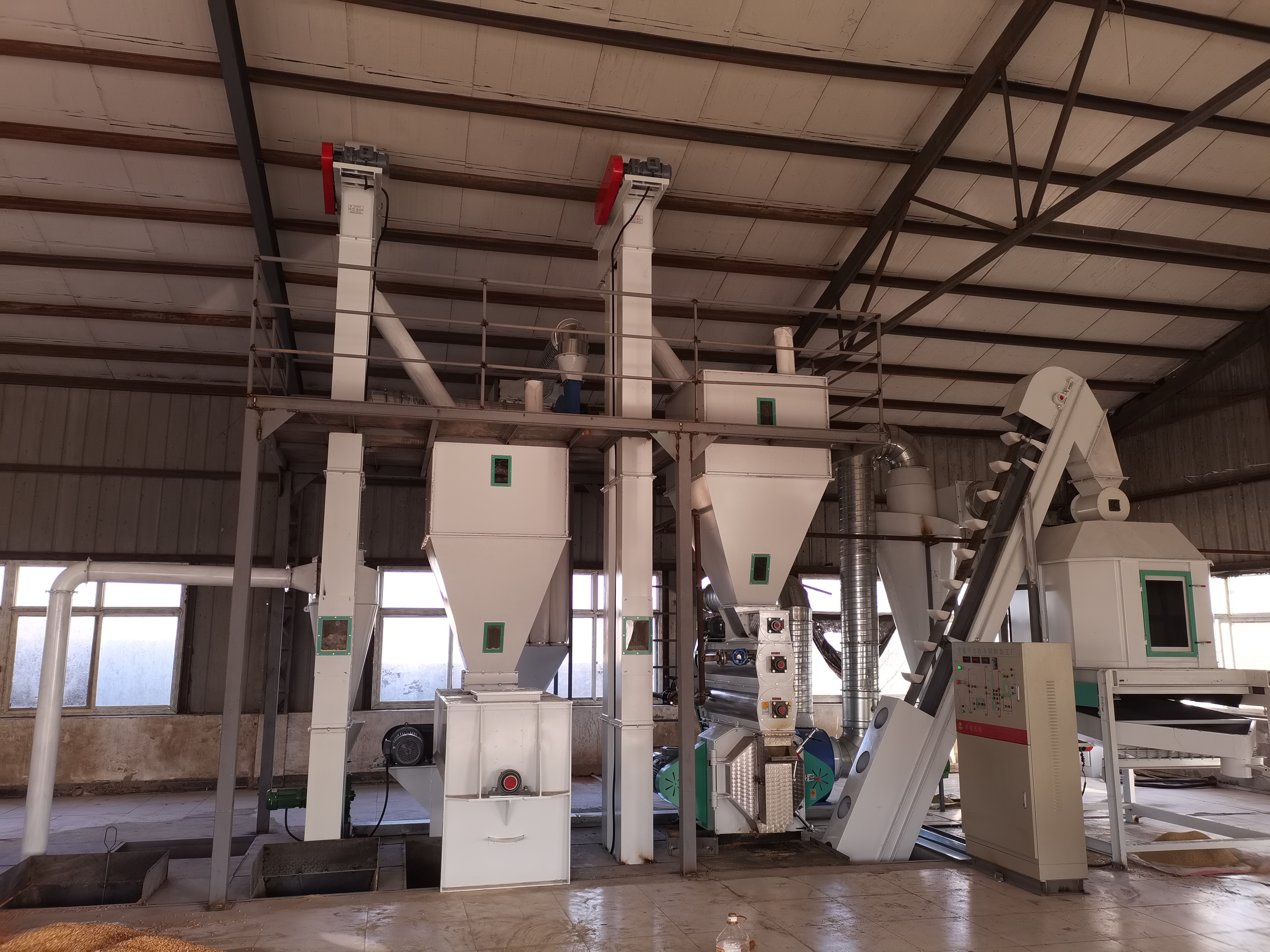
STEP 3: Modular Design Concept— The pelleting unit is divided into three major modules: conditioning, pressing, and cooling. It supports rapid replacement of ring dies (replacement time ≤ 30 minutes) and rollers (replacement time ≤ 15 minutes), and is equipped with a remote diagnostic system (which transmits equipment operation data in real time via a 4G module), increasing the overall equipment utilization rate to 95% and reducing annual maintenance costs by 40%.
FAQ: Q&A Guide to Technology Selection
Q1: How to select granulation equipment based on the characteristics of raw materials?
A: The characteristics of raw materials directly affect equipment selection. For example, high-fiber raw materials (such as alfalfa meal) require ring die pellet mills with die hole diameters ≥8 mm, paired with double-layer conditioners (conditioning time ≥90 seconds) to enhance material maturation; whereas high-starch raw materials (such as cornmeal) are better suited for equipment with die hole diameters of 5-6 mm, with conditioning temperatures controlled at 80-85℃ to prevent excessive starch gelatinization and resultant pellet adhesion.
Q2: How is the capacity of a granulator calculated?
A: The formula for calculating production capacity is: Q = 3600 × D² × L × ρ × n × η, where D is the die hole diameter (m), L is the effective pressing length (m), ρ is the material density (kg/m³), n is the spindle speed (r/min), and η is the comprehensive efficiency coefficient (typically ranging from 0.6 to 0.8). For example, the theoretical production capacity of the Jiangsu Huamu HM-600 model (D = 0.006 m, L = 0.15 m, n = 540 r/min, ρ = 600 kg/m³) is approximately 3600 × 0.006² × 0.15 × 600 × 540 × 0.7 ≈ 7.8 t/h, with an actual measured production capacity of 7.5 t/h.
Q3: What are the key indicators for equipment maintenance?
A: We need to focus on three key indicators:
1. Ring die wear: Measure the die hole diameter monthly and replace it when the diameter expands by more than 0.3 mm;
2. Temperature of press roll bearings: During operation, the bearing temperature must not exceed 75°C; otherwise, the machine must be shut down to inspect the lubrication system.
3. Particle powder content rate: Detected by the sieving method (proportion of materials retained on an 8-mesh sieve). If the powder content rate exceeds 5%, the position of the cutting knife or the gap between the die and roller needs to be adjusted.
Reference for full text summary
The optimization of pelleting technology for feed production machinery requires collaborative advancement in equipment design, process control, and maintenance management. Jiangsu Huamu Machinery Co., Ltd. has achieved significant improvements in pellet uniformity, energy efficiency ratio, and equipment reliability through three major technological breakthroughs: ring die optimization, intelligent conditioning, and modular design. For feed enterprises, when selecting equipment, they should focus on its adaptability to raw materials, accuracy in capacity calculation, and ease of maintenance, while choosing intelligent equipment with remote diagnostic capabilities based on actual production needs. For more technical details and case studies, please visitOfficial website of Jiangsu HuamuGet professional support.
Jiangsu Huamu Machinery Co., Ltd. is located in Xibei Town, Wuxi City, enjoying convenient transportation and significant geographical advantages. The company specializes in the manufacturing of feed machinery and equipment, and can undertake the full-process business of scheme design, equipment ins...
No.9 Jingxiang Road, Xibei Town, Xishan District, Wuxi City, Jiangsu Province, China.