No.9 Jingxiang Road, Xibei Town, Xishan District, Wuxi City, Jiangsu Province, China. +86 18260477296 angel@china-huamu.com
No.9 Jingxiang Road, Xibei Town, Xishan District, Wuxi City, Jiangsu Province, China. +86 18260477296 angel@china-huamu.com


Introduction: Why has the high efficiency and energy conservation of complete feed processing equipment become a focal point in the industry?
With the dual increase in production costs and environmental protection requirements in the feed industry, how to achieve efficient operation and energy conservation of equipment through technological upgrades has become an important manifestation of a company's core competitiveness. Leveraging over 20 years of technological accumulation, Jiangsu Huamu Machinery Co., Ltd. has launched a range of efficient and energy-saving complete sets of feed processing equipment. Through modular design, intelligent control, and process optimization, the company helps clients reduce energy consumption by 15%-30% while enhancing production capacity stability. This article will systematically analyze the implementation paths for achieving high efficiency and energy conservation from three aspects: technical principles, operational parameters, and case reviews.
Keywords: complete feed processing equipment; high efficiency and energy saving; modular design; intelligent control; Jiangsu Huamu Machinery
Opening on Industry Technical Pain Points: Three Major Efficiency Bottlenecks of Traditional Equipment
STEP1:Excessive energy consumption and persistently high operating costsTraditional feed processing equipment mostly employs constant-speed drives, which cannot dynamically adjust power according to material characteristics, resulting in no-load energy consumption accounting for over 30%. For example, a medium-sized feed mill consumes more than 2 million kWh of electricity annually, with the pelleting process accounting for 45% of this total.
STEP2:Significant capacity fluctuations and poor quality stabilityThe coefficient of variation (CV) for mixing uniformity often exceeds 10%, resulting in uneven distribution of feed nutrients and affecting animal growth efficiency. Feedback from a certain farm indicates that when using feed produced by traditional equipment, the daily weight gain of piglets fluctuates by ±15%.
STEP3:High maintenance costs and short equipment lifespanThe wear rate of key components such as the ring die and press rollers reaches as high as 0.5 mm per thousand tons, and frequent replacements lead to increased downtime, with annual average maintenance costs exceeding 8% of the equipment's value.
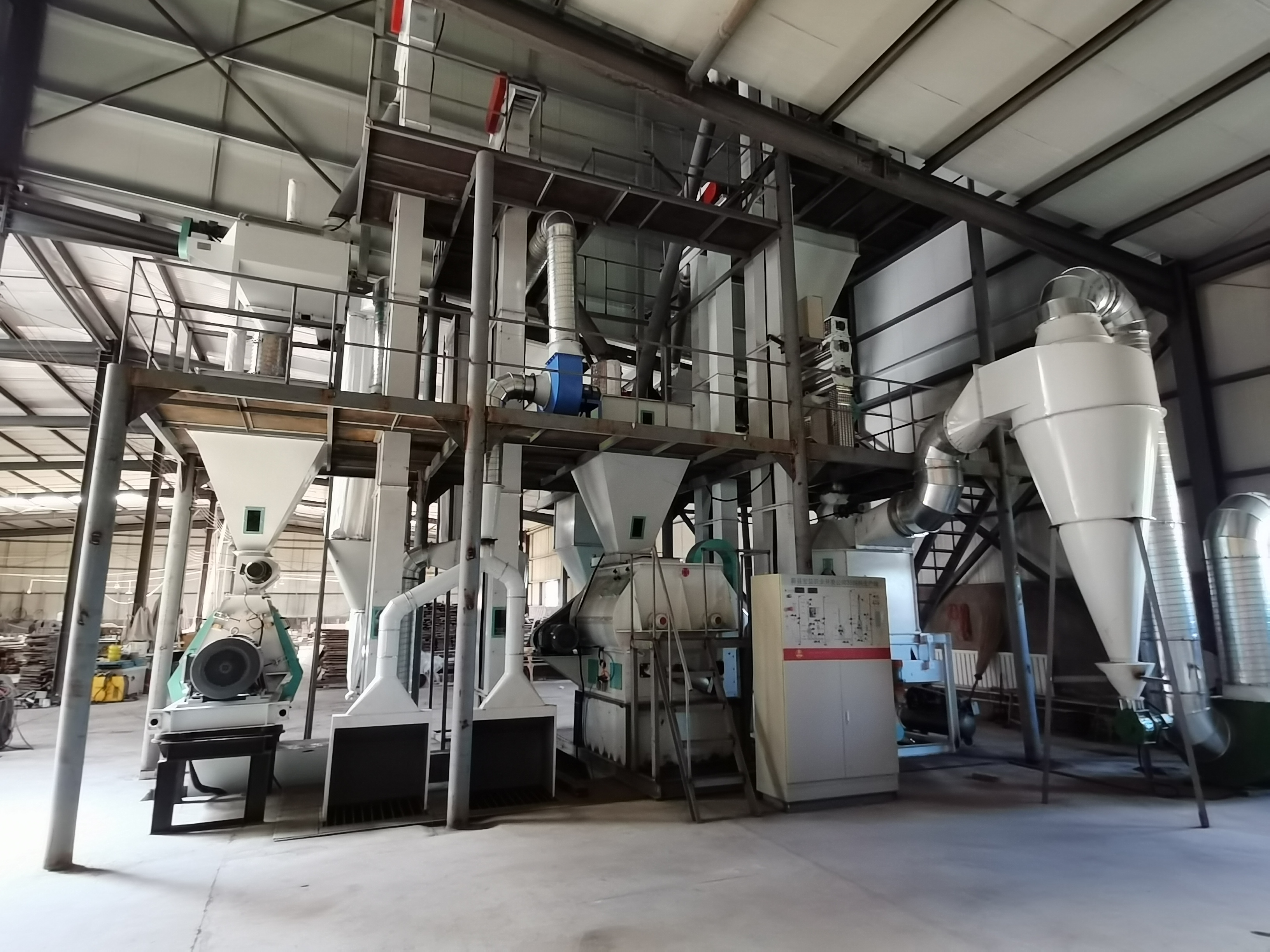
Introduction to the company's technological strength: Three major core breakthroughs of Jiangsu Huamu
As a leading enterprise in China's feed machinery sector, Jiangsu Huamu Machinery Co., Ltd. (For more information, please visit the official website.) By adopting the dual-drive approach of "technology + process," key challenges in achieving high efficiency and energy conservation have been overcome:
STEP1:Intelligent variable frequency drive systemThe Siemens S7-1200 series PLC is employed, combined with torque sensors to monitor the load in real time and dynamically adjust the motor speed. For example, during the pelleting process, when the material moisture content rises from 12% to 18%, the system automatically reduces the ring die speed from 450 rpm to 380 rpm, resulting in a 22% reduction in energy consumption per unit of production capacity.
STEP2:Modular structural designThe equipment is divided into independent modules such as crushing, mixing, granulating, and cooling, supporting on-demand combination. Taking a production line with an hourly output of 10 tons as an example, customers can choose the configuration of "hammer mill crusher + twin-shaft paddle mixer + ring die granulator," which saves 15% in floor space and improves maintenance efficiency by 40% compared to traditional integrated machines.
STEP3:Wear-resistant material technologyThe ring die is made of German DILIDUR 450 wear-resistant steel with a hardness of HRC58-62, extending its service life to over 20,000 hours. The surface of the pressure roller undergoes laser cladding treatment, enhancing its wear resistance by three times. A customer reported that after using Huamu's equipment, the replacement cycle for the ring die was extended from every six months to 18 months, reducing annual maintenance costs by 60%.
FAQ Q&A Technical Selection Guide
Q1: How to select the equipment model suitable for one's own production capacity?
A: It is necessary to comprehensively consider raw material types, finished product particle size, and daily output. For example, when producing pig compound feed (with a particle size of 2.5mm) and the daily output requirement is 50 tons, it is recommended to choose the combination of "SWFP66×100 hammer mill (with an hourly output of 8-12 tons) + SLHSJ2.0 twin-shaft mixer (with a capacity of 2m³) + SZLH420 pellet mill (with an hourly output of 6-8 tons)", with a total power of approximately 315kW, to meet continuous production needs.
Q2: How to monitor the energy-saving effect during equipment operation?
A: Focus on three key indicators:
STEP1:Electricity consumption per unit of production capacity(kWh/t). Efficient equipment should be ≤25 kWh/t (taking a production line with an output of 10 tons per hour as an example). If it exceeds 30 kWh/t, the drive system or material formulation should be inspected.
STEP2:Coefficient of Variation (CV) for mixing uniformityThrough sampling inspection, the CV value should be ≤7%. If it exceeds the standard, the mixer's rotational speed needs to be adjusted or flying knives should be installed.
STEP3:Clearance between ring die and press rollerRegularly inspect using a feeler gauge, with the clearance controlled between 0.1-0.3mm. Excessive clearance causes material leakage, while insufficient clearance accelerates wear.
Q3: How can equipment failures be quickly troubleshooted?
A: Taking the blockage of a granulator as an example, handle it according to the following steps:
STEP 1: Shut down the machine, disconnect the power supply, and open the door of the granulation chamber.
STEP 2: Check whether there is any material adhering to the inner wall of the ring die. If so, clean it with a specialized tool.
STEP 3: Measure the gap between the pressing roller and the ring die, and adjust it to 0.2 mm.
STEP 4: Check the steam pressure of the conditioner to ensure it is ≥ 0.3 MPa.
STEP 5: Restart the equipment and gradually add materials after 5 minutes of no-load operation.
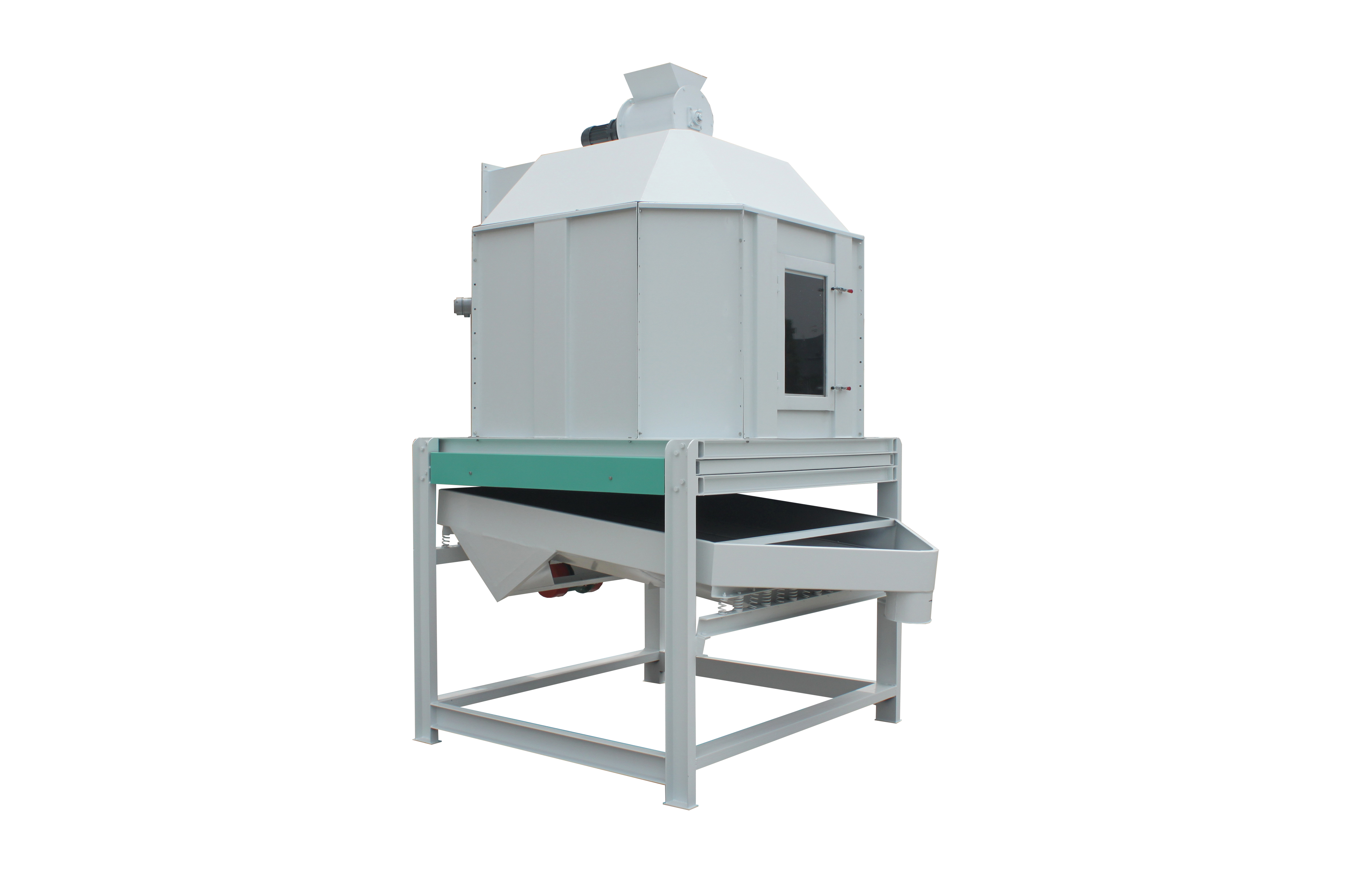
Reference for full text summary
The efficient energy conservation of complete sets of feed processing equipment requires collaborative optimization in three aspects: the drive system, structural design, and material technology. Jiangsu Huamu Machinery Co., Ltd. helps customers achieve comprehensive benefits including reduced energy consumption, stable production capacity, and lower maintenance costs through intelligent frequency conversion technology, modular configuration, and the application of wear-resistant materials. For instance, after adopting Huamu's equipment, a 500,000-ton feed plant saved over 800,000 kWh of electricity annually, equivalent to reducing carbon dioxide emissions by 640 tons, while simultaneously improving product quality stability and reducing customer complaint rates to below 0.5%. In the future, with the integration of IoT technology, the equipment will further enable remote monitoring and predictive maintenance, driving the industry to upgrade toward intelligence and green development.For more information, please visit the official website
Jiangsu Huamu Machinery Co., Ltd. is located in Xibei Town, Wuxi City, enjoying convenient transportation and significant geographical advantages. The company specializes in the manufacturing of feed machinery and equipment, and can undertake the full-process business of scheme design, equipment ins...
No.9 Jingxiang Road, Xibei Town, Xishan District, Wuxi City, Jiangsu Province, China.