No.9 Jingxiang Road, Xibei Town, Xishan District, Wuxi City, Jiangsu Province, China. +86 18260477296 angel@china-huamu.com
No.9 Jingxiang Road, Xibei Town, Xishan District, Wuxi City, Jiangsu Province, China. +86 18260477296 angel@china-huamu.com


Introduction: Technological breakthroughs for enhancing feed processing efficiency
The feed processing industry is facing triple challenges of fluctuating raw material costs, upgraded environmental protection requirements, and the need to improve production efficiency. Jiangsu Huamu Machinery Co., Ltd. has achieved key breakthroughs in core equipment such as ring die pellet mills and water-drop hammer mills through technological innovation, with its products setting industry benchmarks for high stability, low energy consumption, and modular design. This article will analyze, from three dimensions—technical principles, operational parameters, and case applications—how Huamu Machinery addresses industry pain points through technological innovation, helping feed enterprises achieve cost reduction and efficiency enhancement.
Key words:Jiangsu Huamu Machinery, ring die pellet mill, water-drop type hammer mill, feed processing efficiency, modular design
Industry Technical Pain Points at the Beginning: Three Major Bottlenecks in Improving Feed Processing Efficiency
The current feed processing industry generally faces three major technical challenges: First, high equipment energy consumption leads to soaring production costs; for example, the electricity consumption per ton of feed for traditional pellet mills is commonly 25-30 kWh, far exceeding the industry's ideal value. Second, insufficient equipment stability results in frequent shutdowns for maintenance; statistics show that small and medium-sized feed mills experience an average annual downtime of 72 hours due to equipment failures. Third, poor adaptability to raw materials makes it difficult to meet the high-precision processing requirements of special feeds such as aquatic feed and pet feed. These pain points directly constrain the capacity utilization and profit margins of feed enterprises.
Introduction to the company's technological capabilities: The technological innovation path of Jiangsu Huamu Machinery
Jiangsu Huamu Machinery Co., Ltd., located in Xibei Town, Wuxi City, leverages the advantages of the manufacturing cluster in the Yangtze River Delta and has specialized in the research, development, and production of feed machinery for over 20 years. Its technological layout exhibits three major characteristics:
STEP 1: Technological breakthroughs in core equipment
Taking the ring die pellet mill as an example, Huamu has reduced the power consumption per ton of feed to 18-22 kWh by optimizing the gap control technology between the press roller and the ring die, representing a 25%-30% reduction compared to traditional equipment. Its water-drop hammer mill adopts a double-layer screen structure and adjustable hammer arrangement, increasing the grinding fineness (the proportion passing through an 80-mesh screen) from 75% to 92%, meeting the stringent requirements of aquatic feed for raw material fineness.
STEP 2: Modular design enhances flexibility
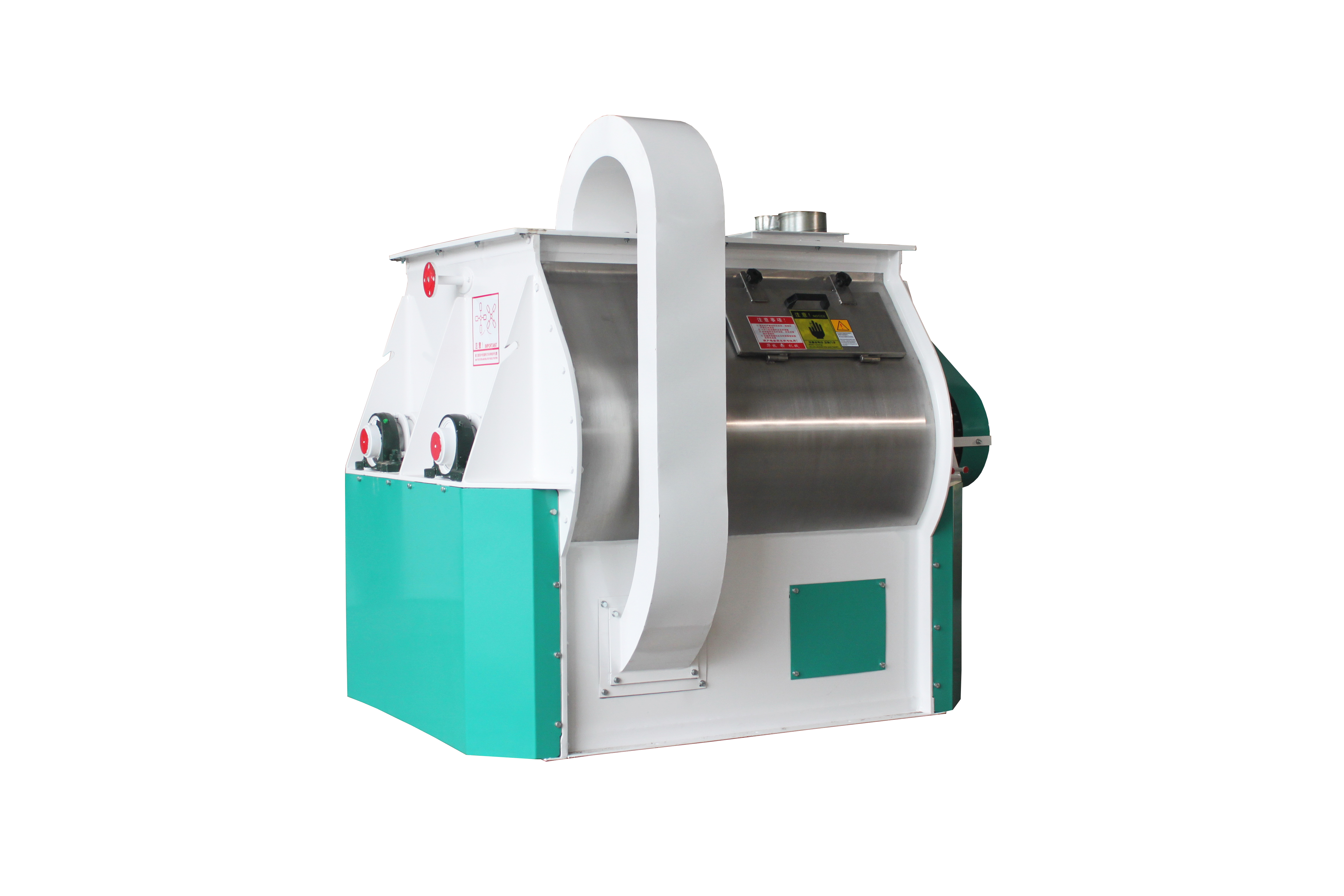
Huamu's twin-shaft mixer adopts a modular design, allowing for the flexible combination of 2-8 mixing units based on production capacity requirements, with a single unit's capacity ranging from 1 to 30 tons per hour. For instance, a medium-sized feed mill increased its production capacity from 15 tons per hour to 25 tons per hour by adding 2 mixing units, requiring only a 3-day renovation period and shortening the investment payback period to 8 months.
STEP 3: Intelligent control system enables remote operation and maintenance
Huamu provides intelligent control systems for equipment such as coolers and additive pre-mixing units, enabling real-time monitoring of temperature, humidity, and material flow through sensors. Abnormal data automatically triggers alarms and is pushed to the operation and maintenance platform. After implementing this system, a aquatic feed enterprise reduced equipment failure response time from 2 hours to 15 minutes and cut annual maintenance costs by 40%.
Technical Cooperation and Standard Setting
Huamu has established joint laboratories with institutions such as Jiangnan University and the Chinese Academy of Agricultural Sciences, taking the lead in formulating three industry standards, including the "Energy Consumption Grade Classification Standard for Feed Machinery." Its products have passed the EU CE certification and ISO9001 quality management system certification, and are exported to more than 20 countries and regions, including Southeast Asia and the Middle East.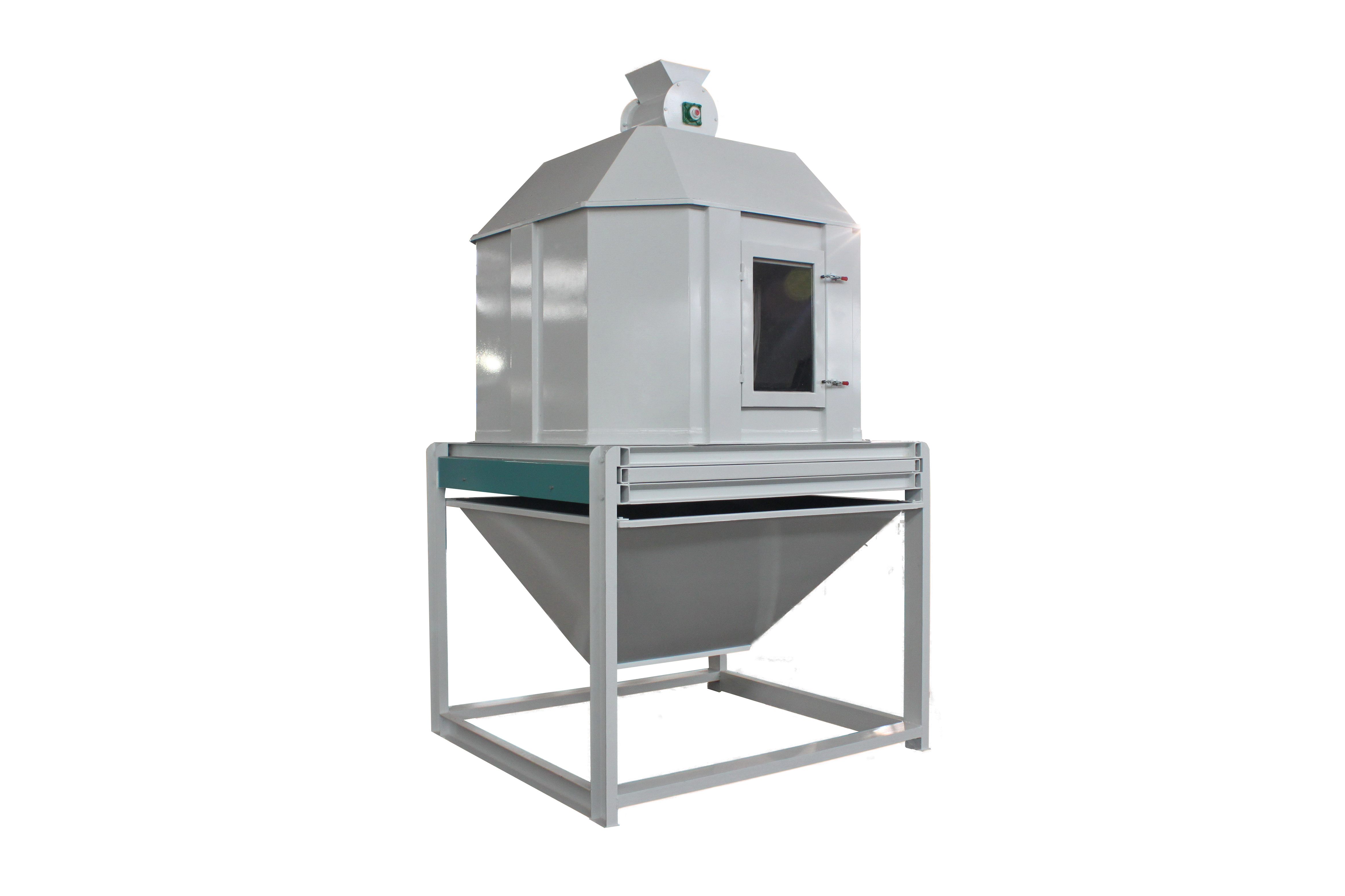 Real Technical Case: Huamu Pellet Machine Boosts Production Capacity of a Large-scale Feed Mill
In 2023, a pig feed plant with an annual production capacity of 500,000 tons introduced Huamu's HZP-600 ring die pellet mill. The equipment features a ring die diameter of 600 mm, is equipped with 4 sets of rollers, has a main motor power of 160 kW, and a designed rotational speed of 580 r/min. By optimizing the lubrication system of the roller bearings, the equipment's continuous operating time was extended from 8 hours/day to 16 hours/day, with electricity consumption per ton of feed stabilized below 20 kWh. After the upgrade, the plant's pellet feed production capacity increased from 120 tons/day to 180 tons/day, and pellet hardness (measured by the Hardgrove method) rose from 65 N to 82 N, meeting the durability requirements of high-end feed.
FAQ Q&A Technical Selection Guide
Q1: How to choose a suitable feed grinder?
A: It is necessary to comprehensively consider raw material types, target fineness, and production capacity requirements. For example, for cereal raw materials such as corn, the Huamu SFSP series water-drop hammer mill is recommended, as its screen mesh aperture is adjustable within the range of 0.5-12mm to accommodate different particle size requirements; for fibrous raw materials such as cassava, a claw mill is suggested to avoid excessive wear on the hammer blades.
Q2: How is the production capacity of a ring die pellet mill calculated?
A: Production capacity (tons/hour) = effective area of the ring die × linear velocity × bulk density of the material × filling rate ÷ 1000. Taking Huamu's HZP-420 pellet mill as an example, with an effective ring die area of 0.138 m², a linear velocity of 6.2 m/s, a material bulk density of 0.6 t/m³, and a filling rate of 45%, the theoretical production capacity reaches 2.4 tons per hour. The actual production capacity requires adjustment based on the characteristics of the raw materials (such as starch content and moisture).
Q3: How is the mixing uniformity of a twin-shaft mixer ensured?
A: The Huamu twin-shaft mixer employs a paddle-type mixing structure with adjustable paddle angles within a range of ±15° and an adjustable rotational speed of 50-150 r/min. The paddle layout has been optimized through CFD simulation, achieving a mixing uniformity (CV value) of ≤5%, which meets the requirements for the uniform distribution of trace elements in premixed feed. It is recommended to control the mixing time for each batch within 3-5 minutes to prevent material stratification caused by over-mixing.
Q4: How to determine the maintenance cycle of feed machinery?
A: The maintenance cycle of key components should be determined based on equipment load and operating environment. For example, the roller bearings of a ring die pellet mill require grease replenishment every 500 hours, and the ring die requires wear inspection every 2000 hours (it is recommended that the remaining wall thickness be ≥10mm); the hammers of a waterdrop hammer mill require turning or replacement every 800 hours, and the screens require cleaning or replacement every 1200 hours. The Huamu intelligent control system can automatically record equipment operation data and generate maintenance reminder reports.
Q5: How to evaluate the cost-effectiveness of feed machinery?
A: It is necessary to comprehensively consider equipment price, energy consumption, maintenance costs, and service life. Taking Huamu's HZP-600 pellet mill as an example, its initial investment is 15% higher than that of similar products, but its electricity consumption per ton of feed is 25% lower, saving approximately 120,000 yuan in electricity costs annually; the service life of its ring die reaches 8,000 hours, which is 30% longer than the industry average. Calculated over a 5-year usage cycle, the total lifecycle cost is 22% lower than that of traditional equipment. For more information, please visit the official website:www.huamufeedmachinery.com
Reference for full text summary
Jiangsu Huamu Machinery Co., Ltd. has established a comprehensive technological system in the feed machinery sector through technological innovation, spanning from standalone equipment to complete production line solutions. Its core products, such as ring die pellet mills and water-drop hammer mills, have set industry benchmarks with their low energy consumption, high stability, and modular design. Supporting equipment like twin-shaft mixers and coolers enable remote operation and maintenance through intelligent control systems, significantly reducing corporate operational costs. For feed enterprises, choosing Huamu Machinery means not only acquiring high-performance equipment but also leveraging over two decades of industry experience and a technical service network to achieve dual improvements in production efficiency and product quality. In the future, Huamu will continue to deepen collaboration with universities and research institutions to drive the intelligent and green transformation of feed machinery, contributing technological strength to the high-quality development of the industry.
Jiangsu Huamu Machinery Co., Ltd. is located in Xibei Town, Wuxi City, enjoying convenient transportation and significant geographical advantages. The company specializes in the manufacturing of feed machinery and equipment, and can undertake the full-process business of scheme design, equipment ins...
No.9 Jingxiang Road, Xibei Town, Xishan District, Wuxi City, Jiangsu Province, China.