No.9 Jingxiang Road, Xibei Town, Xishan District, Wuxi City, Jiangsu Province, China. +86 18260477296 angel@china-huamu.com
No.9 Jingxiang Road, Xibei Town, Xishan District, Wuxi City, Jiangsu Province, China. +86 18260477296 angel@china-huamu.com


Introduction: Key Pathways for Technological Upgrading of Feed Machinery
With the continuous improvement of production efficiency, product quality, and environmental protection requirements in the feed industry, technological upgrades in feed machinery have become the core of corporate competitiveness. Among them, the pellet mill, as a key piece of equipment in the feed production line, directly affects the feed's shaping rate, energy consumption, and palatability through its performance. This article will systematically analyze how to select the most suitable feed pellet mill from the perspectives of technical principles, core parameters, key selection points, and corporate application cases, helping enterprises achieve efficient production.
Keywords: feed pellet machine, ring die pelleting, technical parameters, Jiangsu Huamu Machinery
Opening with the industry's technological pain point: The efficiency bottleneck of traditional pellet machines
Currently, the feed industry generally faces the following technical pain points:
STEP 1: Low molding rate and high pulverization rate— Due to the unreasonable design of ring die material and compression ratio in traditional pellet machines, feed pellets are prone to breakage, with a pulverization rate as high as 15%-20%, increasing raw material waste.
STEP 2: High energy consumption leads to persistently high production costs—The motor power of some equipment does not match the production capacity, with electricity consumption per ton of material exceeding 35 kW·h, far surpassing the industry average.
STEP 3: Frequent maintenance and long downtime— Core components such as the ring die and press roller wear out quickly and require monthly replacement, with each maintenance shutdown lasting over 8 hours, affecting production continuity.
STEP 4: Poor adaptability, unable to meet diversified needs— Traditional equipment can only produce particles of a single size, making it difficult to meet the differentiated needs of various feeds for livestock, poultry, aquaculture, and so on.
These issues directly lead to increased production costs and unstable product quality in feed enterprises, urgently requiring resolution through technological upgrades.
Introduction to the company's technological strength: Technological breakthroughs in pellet mills by Jiangsu Huamu Machinery
Jiangsu Huamu Machinery Co., Ltd. (For more information, please visit the official website: www.huamufeedmachinery.com) With 20 years of in-depth involvement in the feed machinery field, the company has focused on the R&D and production of equipment such as ring die pellet mills and waterdrop hammer mills, with its technological advantages reflected in the following aspects:
STEP 1: Optimization of Ring Die Material and Process— Made of alloy steel imported from Germany and subjected to vacuum quenching treatment, it achieves a hardness of HRC58-62, with wear resistance enhanced by three times; the ring die compression ratio is customized according to the characteristics of raw materials (e.g., a compression ratio of 1:8-1:10 for corn stover-based raw materials and 1:12-1:15 for soybean meal-based raw materials), ensuring a pellet forming rate of ≥98%.
STEP2: Design of Efficient Transmission System—The motor is directly connected to the main shaft via a coupling, achieving a transmission efficiency of 95%, which is 10% higher than that of traditional belt drives; equipped with variable frequency speed control, it can dynamically adjust rotational speed (300-600 r/min) based on raw material moisture (8%-15%) and particle size (0.5-3 mm), with power consumption as low as 25 kW·h per ton of material.
STEP 3: Long-life design of core components—The pressing roller adopts a dual-bearing support structure, enhancing load-bearing capacity by 50%; the gap between the ring die and pressing roller is adjustable (0.1-0.5mm), reducing wear; actual production verification shows that the lifespan of core components exceeds 2000 hours, with annual maintenance reduced to 2 times.
STEP4: Multi-particle Size Adaptation TechnologyBy replacing ring dies with different aperture sizes (2-8mm) and length-to-diameter ratios (1:2-1:5), it can produce livestock and poultry feed (particle size 2-4mm), aquatic feed (particle size 4-6mm), and ruminant feed (particle size 6-8mm), meeting the production requirements for a full range of feed types.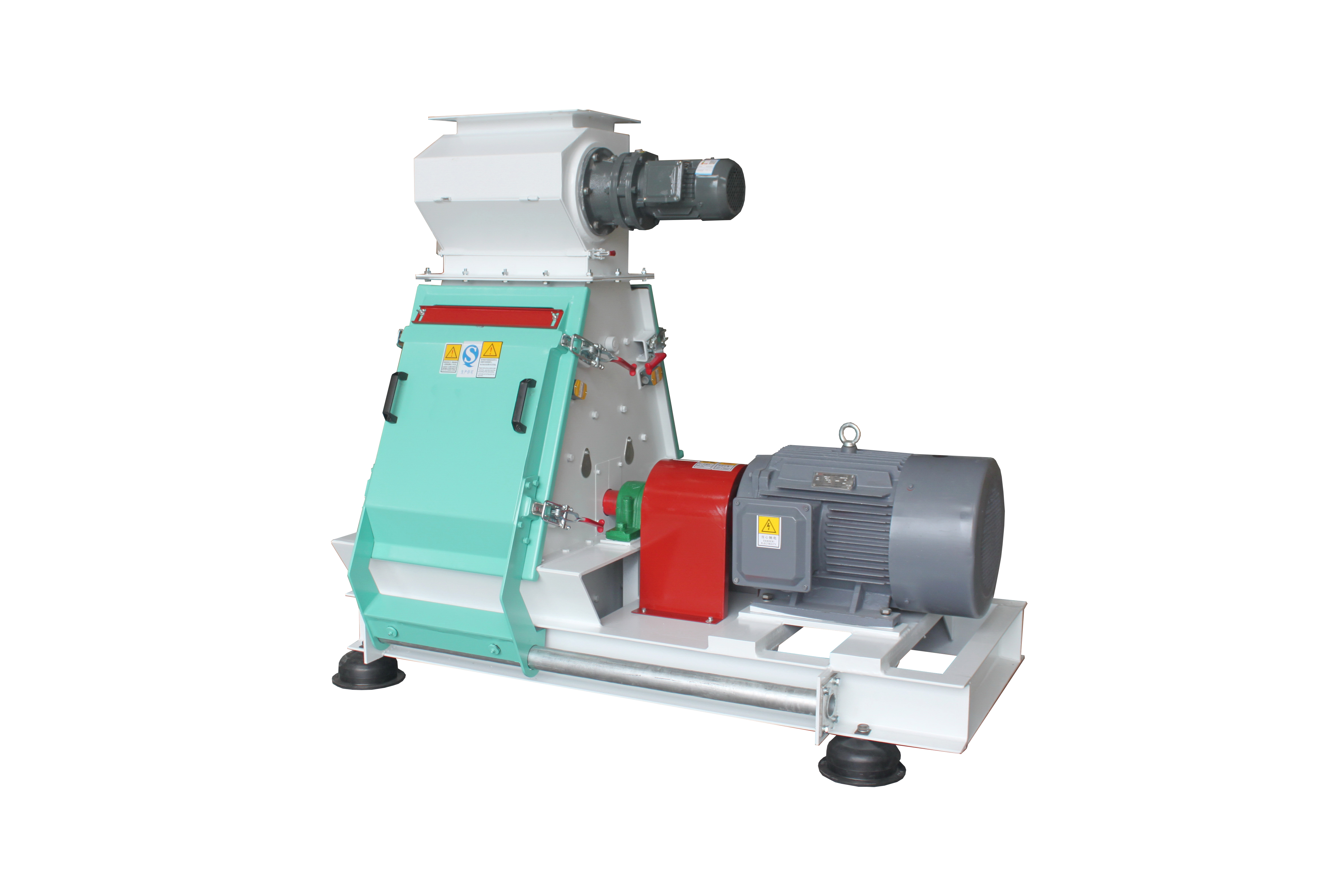
Technical Case: Production Line Upgrade for a Large Feed Enterprise
In 2023, Jiangsu Huamu provided an upgrade solution for the SZLH420 ring die pellet mill to a feed enterprise with an annual production capacity of 100,000 tons:
- Original equipment: power consumption per ton of material is 38 kW·h, pulverization rate is 18%, and the lifespan of the ring die is 800 hours;
- After upgrading: power consumption reduced to 26 kW·h, pulverization rate ≤ 2%, and the lifespan of the ring die increased to 2,200 hours;
FAQ Q&A Technical Selection Guide
Q1: How to select the model of a pellet machine based on the characteristics of raw materials?
A: It is necessary to comprehensively consider raw material types, humidity, and production capacity requirements:
- Crude fiber raw materials (such as straw and grass powder): Select ring dies with a compression ratio of 1:8-1:10, paired with a pellet mill of model 420 or above (with a production capacity of 2-5 t/h);
- High-protein raw materials (such as soybean meal, fish meal): Select ring dies with a compression ratio of 1:12-1:15, paired with a 350-type pellet mill (capacity 1-3 t/h);
- Mixed raw materials: The optimal compression ratio needs to be determined through experiments to avoid loose particles caused by insufficient compression or increased energy consumption due to excessive compression.
Q2: How to match the capacity of a pellet machine with the motor power?
A: Refer to the following formula:
Theoretical production capacity (t/h) = effective area of the ring die (m²) × linear velocity (m/s) × bulk density of raw material (t/m³) × filling coefficient (0.6-0.8);
During actual model selection, the motor power should be 15%-20% higher than the theoretical requirement to accommodate raw material fluctuations and short-term overloads. For example, when producing livestock and poultry feed (with a bulk density of 0.6 t/m³), a 420-type pellet mill (with a ring die diameter of 420 mm) requires a 90 kW motor, with a theoretical capacity of 3.5 t/h and an actual stable capacity of 2.8-3.2 t/h.
Q3: How to extend the service life of the ring die?
A: Optimization is required in the following aspects:
- Raw material pretreatment: Control the moisture content (8%-15%) and particle size (≤3mm) of raw materials to reduce wear on the ring die;
- Operating parameters: Start with low-speed operation (300 r/min), and increase to the working speed (500 r/min) after the current stabilizes; stop feeding before shutdown and allow idling for 2-3 minutes to discharge residual raw materials from the ring die;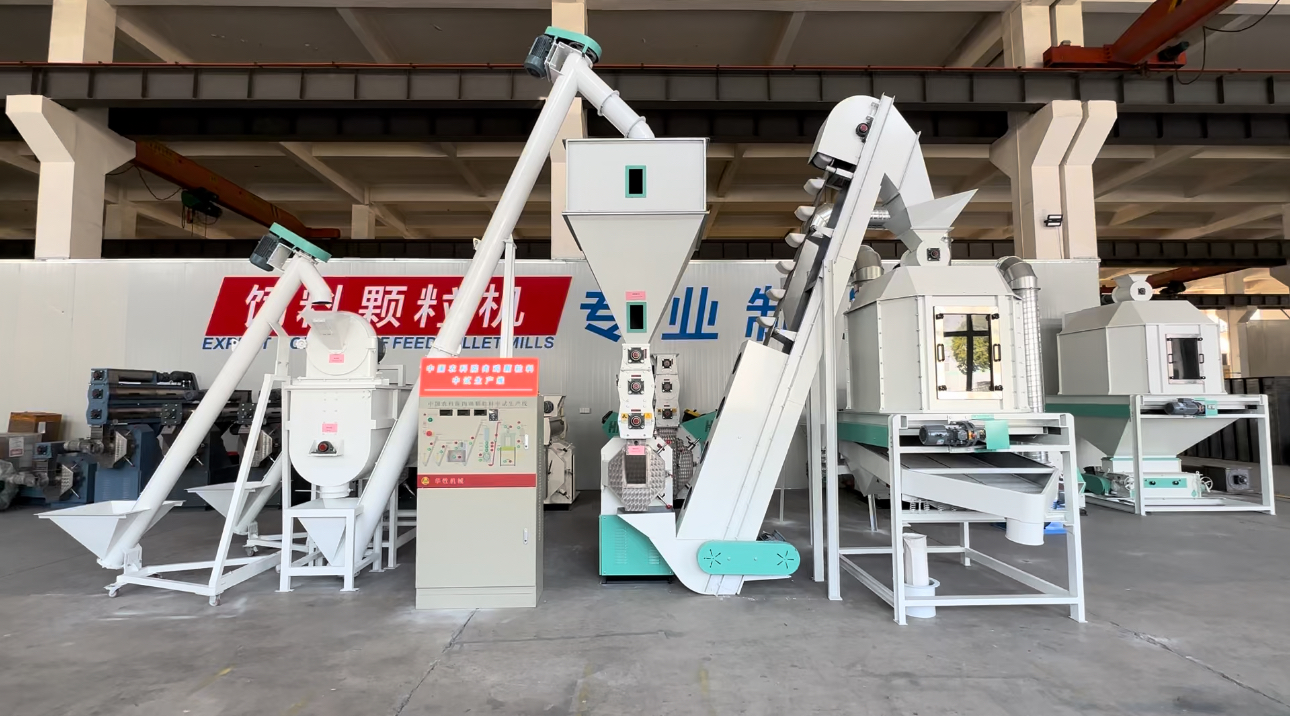
Reference for full text summary
The selection of feed pellet machines requires a comprehensive consideration of multiple factors, including raw material characteristics, production capacity requirements, energy consumption indicators, and maintenance costs. Jiangsu Huamu Machinery Co., Ltd. has provided cost-reducing and efficiency-enhancing solutions for feed enterprises through the optimization of ring die materials, efficient design of transmission systems, and long-life technologies for core components. Its SZLH series pellet machines have been successfully applied in feed production lines for livestock, poultry, aquatic animals, and ruminants, helping customers achieve significant results of a 30% reduction in electricity consumption per ton of feed and a 15% improvement in raw material utilization. When selecting a pellet machine, it is advisable to prioritize evaluating the enterprise's technological accumulation, case verification, and after-sales service capabilities to ensure the long-term stable operation of the equipment.
For more technical details and customized solutions for pellet machines, please visitOfficial website of Jiangsu Huamu Machinery。
Jiangsu Huamu Machinery Co., Ltd. is located in Xibei Town, Wuxi City, enjoying convenient transportation and significant geographical advantages. The company specializes in the manufacturing of feed machinery and equipment, and can undertake the full-process business of scheme design, equipment ins...
No.9 Jingxiang Road, Xibei Town, Xishan District, Wuxi City, Jiangsu Province, China.