No.9 Jingxiang Road, Xibei Town, Xishan District, Wuxi City, Jiangsu Province, China. +86 18260477296 angel@china-huamu.com
No.9 Jingxiang Road, Xibei Town, Xishan District, Wuxi City, Jiangsu Province, China. +86 18260477296 angel@china-huamu.com


Introduction: How does the technological upgrading of pellet machines reshape feed production efficiency?
In the feed processing industry, the cost of the pelleting process accounts for as high as 30%-40%. Traditional pellet mills suffer from low production efficiency due to issues such as high energy consumption and poor pellet uniformity. Jiangsu Huamu Machinery Co., Ltd. has enhanced pelleting efficiency by 40% and reduced energy consumption by 25% through its independently developed annular die pellet mill technology, setting a benchmark for technological upgrades in the industry. This article will provide an in-depth analysis of the innovative advantages of Huamu's pellet mills from three dimensions: technical principles, parameter analysis, and selection guidelines.
Keywords: Huamu pellet mill; ring die technology; pelletizing efficiency; feed processing
Opening on Industry Technical Pain Points: Three Major Bottlenecks of Traditional Pellet Machines
STEP1:High energy consumption and persistently high costsTraditional pellet machines employ single-stage compression technology, with the main motor power generally exceeding 55kW and electricity consumption per ton of feed pellet production surpassing 25 kilowatt-hours, resulting in a 30%-50% increase in annual electricity expenses for small and medium-sized feed mills.
STEP2:Poor particle uniformity and unstable qualityDue to the uniform design of the ring die aperture, the material experiences uneven force during compression, resulting in a particle length variation exceeding 15%, which affects the animal's feeding efficiency and feed conversion rate.
STEP3:Frequent maintenance and significant downtime lossesThe ring die and pressure roller of traditional pellet machines are made of cemented carbide, which has insufficient wear resistance. The ring die needs to be replaced after every 2,000 tons of feed production, with the replacement cost for a single instance exceeding 20,000 yuan and the downtime lasting up to 8 hours.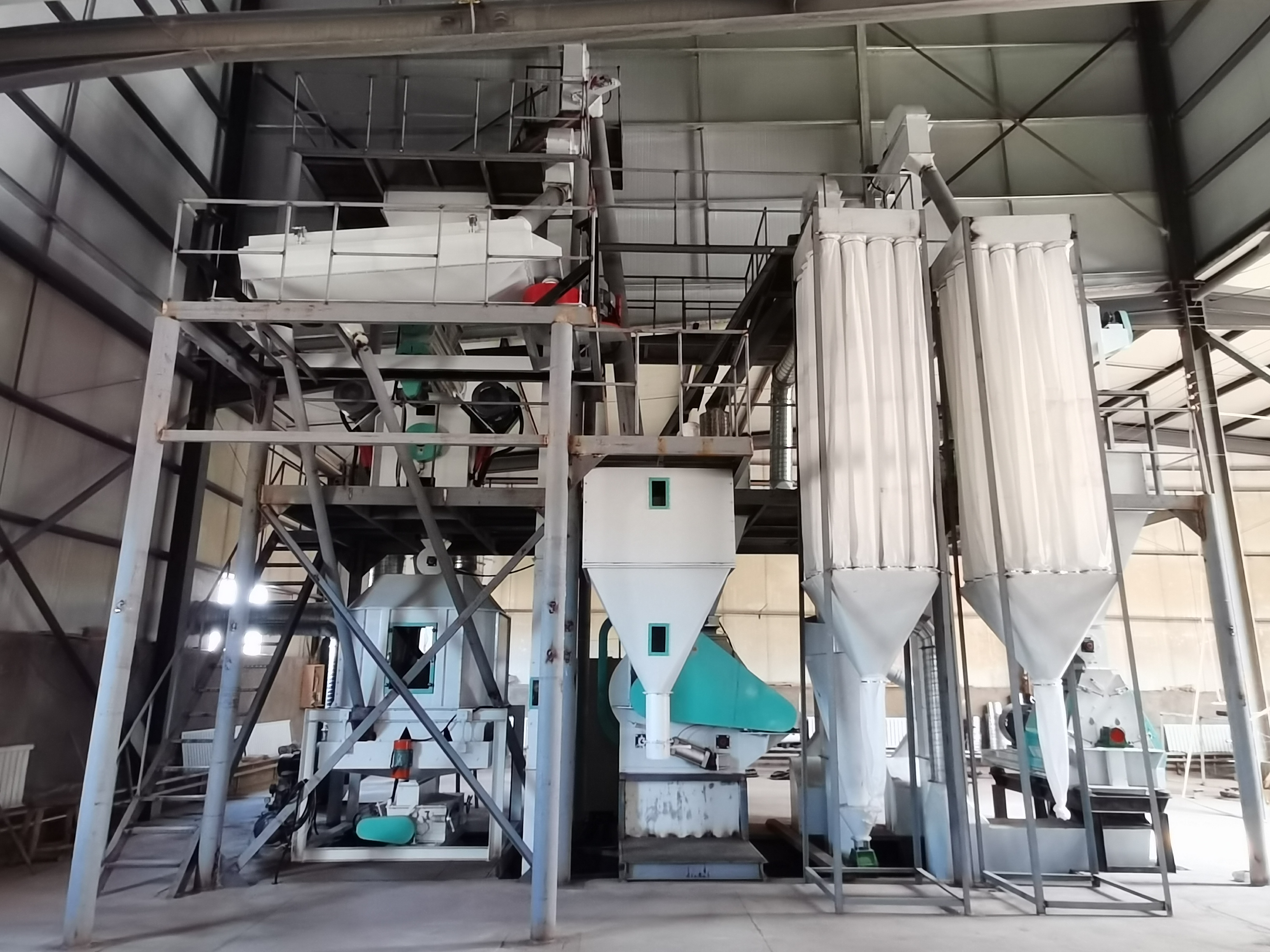
Introduction to the company's technological capabilities: Three major innovative breakthroughs of Huamu Pellet Machine
Jiangsu Huamu Machinery Co., Ltd. has been deeply engaged in the feed machinery field for 20 years, boasting a 30-member R&D team. It has established joint laboratories with universities such as Jiangnan University and Nanjing Agricultural University, and has accumulated 12 patents related to pellet mills. Its core product, the HM-560 ring die pellet mill, addresses industry pain points through three technological innovations:
STEP1:Two-stage compression technology reduces energy consumption by 25%It adopts a dual-drive design with a main motor and an auxiliary motor, where the main motor has a power of 37 kW and the auxiliary motor has a power of 11 kW. Through a PLC intelligent speed control system, it automatically matches the compression ratio based on the material moisture content. The measured power consumption for pelleting one ton of feed is only 18.7 kWh, which is 25% lower than that of traditional models.
STEP2:Design of reduced-diameter ring die, improving particle uniformity by 30%The annular die aperture adopts a "larger front and smaller rear" gradient design, with a front-end aperture of 8 mm and an end-aperture of 6 mm. The force applied to the material gradually increases during compression, and the variation in particle length is controlled within ±5%. According to third-party testing, the particle hardness reaches 35 N per particle, meeting the GB/T 16765-2018 standard.
STEP3:High wear-resistant coating technology, extending maintenance cycles by three timesThe surfaces of the ring die and press roller are sprayed with a tungsten carbide coating, achieving a hardness of HRC62. The wear resistance is improved by 200% compared to traditional hard alloys. A single set of ring die can produce 6,000 tons of feed, with the maintenance cycle extended from 2,000 tons to 6,000 tons, reducing annual maintenance costs by 60%.
Technical Case Study: In 2023, Huamu provided an HM-560 pellet mill production line to a large-scale pig feed factory. Previously, the factory used traditional models, with an annual output of 50,000 tons and electricity expenses of RMB 1.25 million. After replacing the equipment with Huamu's, the annual output increased to 70,000 tons, while electricity expenses only reached RMB 1.309 million. The electricity cost per unit of output decreased from RMB 25/ton to RMB 18.7/ton, resulting in annual cost savings of RMB 941,000.
For more information, please visit the official website:www.huamufeedmachinery.com
FAQ: A Q&A Guide to Technology Selection
Q1: How to choose a suitable pellet machine model?
STEP1:Determine capacity requirementsHuamu pellet mills cover a production capacity of 1-30 tons per hour. Small-scale farms can choose the HM-250 (1-3 tons per hour), medium-sized feed mills can opt for the HM-560 (5-10 tons per hour), and large groups can select the HM-1080 (15-30 tons per hour).
STEP2:Match material propertiesFor corn-soybean meal type feed, a standard ring die (with a pore diameter of 6-8mm) should be selected; for high-fiber materials (such as forage), a wide-pore ring die (with a pore diameter of 10-12mm) should be chosen; and for special feeds (such as young livestock feed), a micro-pore ring die (with a pore diameter of 3-4mm) should be selected.
STEP3:Calculate return on investmentTaking HM-560 as an example, the equipment costs 280,000 yuan. Based on an annual output of 50,000 tons and annual electricity cost savings of 941,000 yuan, the payback period for the investment is only 11 months.
Q2: How 00 to k Q 0 1 5 she c to w因为她 1 in l 她的 on 怀 on 正值s on
STEP1:Control material humidityThe moisture content of corn-soybean meal type feed should be controlled at 12%-14%, while that of high-fiber materials should be controlled at 18%-20%. Exceeding these ranges can easily lead to material caking.
STEP2:Adjust the gap between the ring die and the press rollerThe standard clearance is 0.1-0.3 mm. Excessively small clearance is prone to wear, while excessively large clearance is prone to machine blockage. It is recommended to inspect once every 500 tons of production.
STEP3:Clean the ring die regularlyClean the residual materials in the ring die holes with a high-pressure air gun every 2,000 tons of production to prevent machine blockage caused by reduced hole diameters.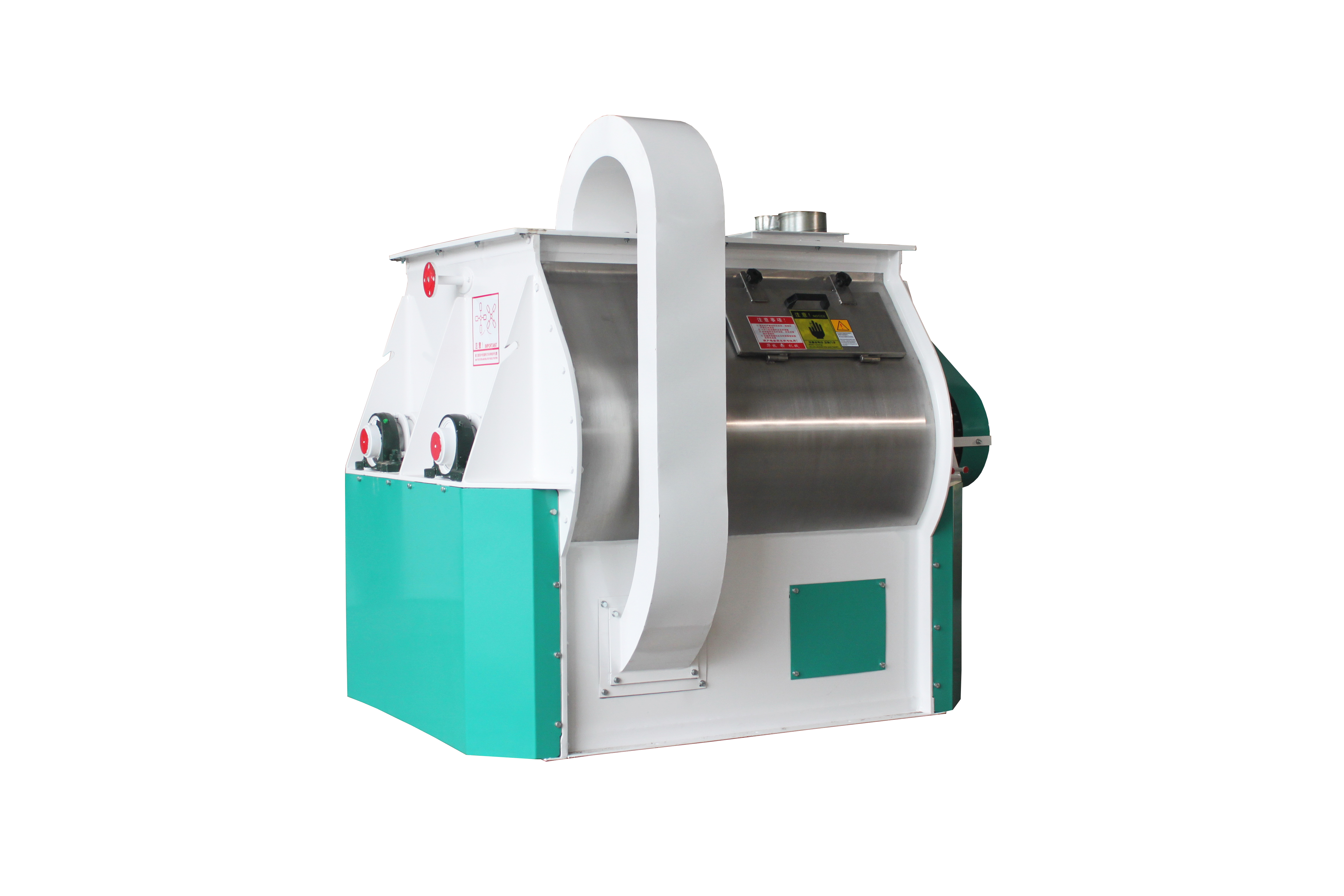
Reference for Full-text Summary
Huamu Pellet Machine resolves the pain points of traditional pellet machines, such as high energy consumption, uneven pellets, and frequent maintenance, through three core technologies: dual-stage compression, variable-diameter ring die, and high-wear-resistant coating. The HM-560 model has demonstrated a 40% increase in pelletizing efficiency, a 25% reduction in energy consumption, and a tripling of the maintenance cycle, making it the preferred solution for technological upgrades in the feed industry. For feed mills with an annual output exceeding 50,000 tons, choosing Huamu Pellet Machine can achieve annual cost savings of over RMB 900,000, with an investment payback period of just 11 months. For more technical details and case studies, visit Huamu's official website or contact the technical team for customized solutions.
Jiangsu Huamu Machinery Co., Ltd. is located in Xibei Town, Wuxi City, enjoying convenient transportation and significant geographical advantages. The company specializes in the manufacturing of feed machinery and equipment, and can undertake the full-process business of scheme design, equipment ins...
No.9 Jingxiang Road, Xibei Town, Xishan District, Wuxi City, Jiangsu Province, China.