No.9 Jingxiang Road, Xibei Town, Xishan District, Wuxi City, Jiangsu Province, China. +86 18260477296 angel@china-huamu.com
No.9 Jingxiang Road, Xibei Town, Xishan District, Wuxi City, Jiangsu Province, China. +86 18260477296 angel@china-huamu.com


Introduction: Key Pathways to Enhancing Feed Production Efficiency
As a core link in the agricultural industrial chain, the feed industry's production efficiency directly impacts breeding costs and animal health. Traditional feed processing equipment suffers from pain points such as high energy consumption, poor particle uniformity, and a high failure rate. Jiangsu Huamu Machinery Co., Ltd. has addressed these issues through technological innovation, launching a series of efficient and stable feed machinery that provides reliable solutions for the industry. This article will analyze how Jiangsu Huamu enhances feed production efficiency through technological innovation from three dimensions: technical principles, operational parameters, and case studies.
Keywords: Jiangsu Huamu Feed Machinery; Ring Die Pellet Mill; Water Drop Type Hammer Mill; Double Shaft Mixer; Production Efficiency Improvement
Opening on Industry Technical Pain Points: Efficiency Bottleneck of Traditional Feed Machinery
Traditional feed processing equipment generally has three major pain points:
STEP 1: High energy consumption leads to persistently high production costs.
Traditional grinders use direct-drive motors, resulting in significant power loss, with electricity consumption per ton of material reaching as high as 25-30 kWh; due to uneven mixing in the blenders, the mixing time needs to be extended, leading to a 15%-20% increase in energy consumption.
STEP 2: Unstable particle quality affects breeding results
The inaccurate control of the gap between the pressure roller and die hole in the ring die pellet mill results in significant variations in pellet hardness, with a powdering rate as high as 8%-10%, directly affecting the animal's feed intake and digestibility.
STEP 3: High equipment failure rate and rising maintenance costs
Key components such as bearings and gears in traditional equipment are prone to wear, with a mean time between failures (MTBF) of only 500-800 hours, and annual maintenance costs accounting for 10%-15% of the total equipment price.
Introduction to the Company's Technological Strength: Innovative Solutions from Jiangsu Huamu
Jiangsu Huamu Machinery Co., Ltd., located in Xibei Town, Wuxi City, has specialized in the research and development, as well as production, of feed machinery for over 20 years, possessing the design capability for a complete range of feed production lines with capacities from 1 to 30 tons per hour. Its core technological innovations are embodied in the following three aspects:
STEP 1: Efficient energy-saving technology to reduce production costs
Taking the water-drop crusher as an example, its dual-rotor differential speed design enhances crushing efficiency by 30%, reducing electricity consumption per ton of material to 18-22 kWh; the twin-shaft mixer achieves a mixing uniformity (CV value) of ≤5% by optimizing blade angles and rotational speeds, shortens mixing time to 3-5 minutes, and reduces energy consumption by 20%.
STEP 2: Precision manufacturing process to enhance particle quality
The ring die pellet machine employs high-precision CNC machining, with the gap control accuracy between the pressing roller and die holes reaching 0.05mm, the particle hardness variation ≤5%, and the pulverization rate reduced to below 3%; the die holes are made of special alloy materials, extending their service life to 8,000-10,000 tons and reducing the frequency of downtime for die changes.
STEP 3: Intelligent control system to reduce equipment failures
All equipment is equipped with a PLC intelligent control system that monitors key parameters such as bearing temperature and motor current in real time, achieving a fault warning accuracy rate of 95%. Key components utilize imported SKF bearings, elevating the MTBF to 2000-3000 hours and reducing annual maintenance costs to 3%-5% of the total equipment price.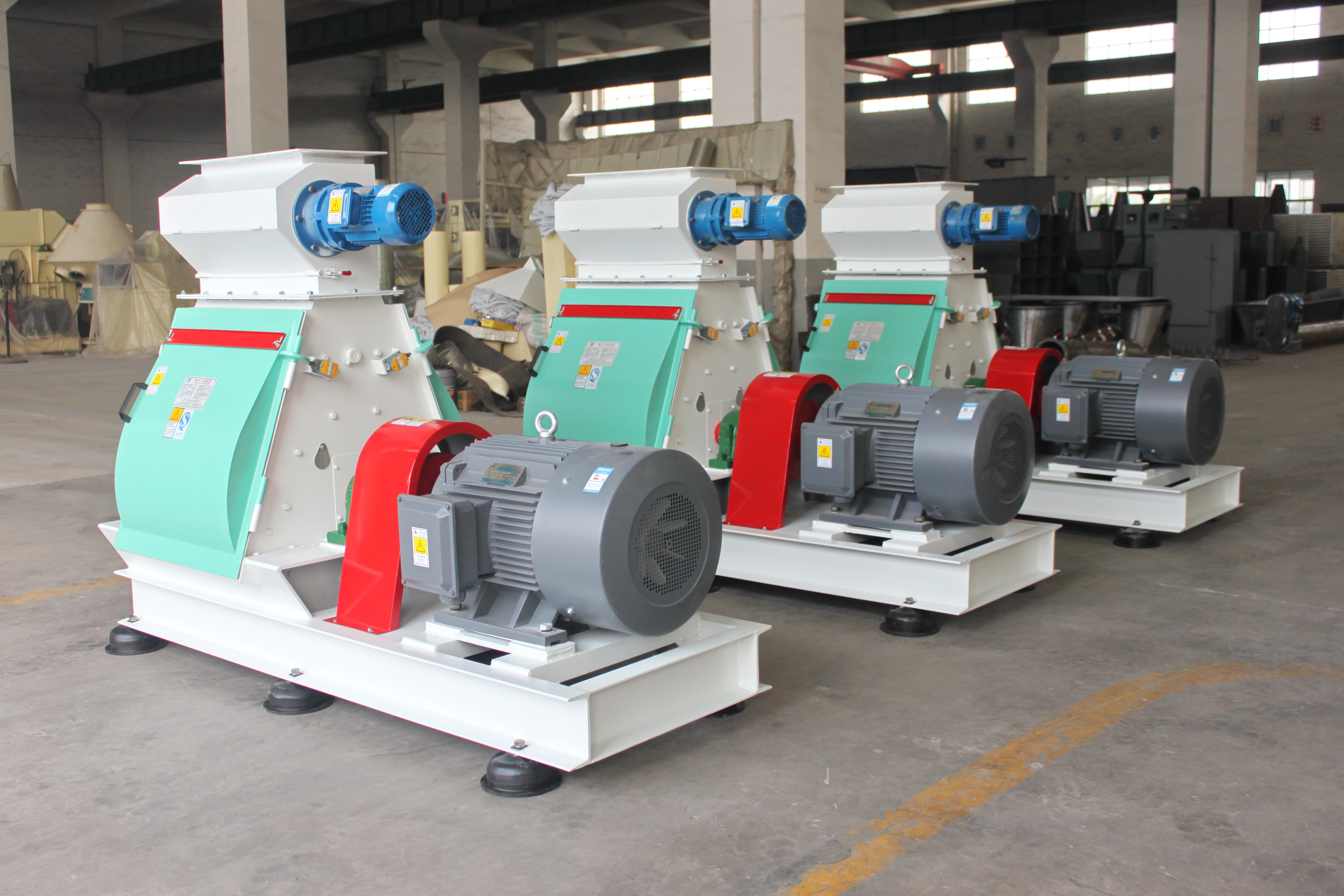
Technical Case: Production Line Upgrade of a Large-scale Breeding Enterprise
In 2023, Jiangsu Huamu provided a 10-ton/hour feed production line renovation plan for a pig farming enterprise with an annual output of 500,000 pigs. After the renovation, the electricity consumption in the grinding process dropped from 28 kWh/ton to 20 kWh/ton, resulting in annual electricity cost savings of RMB 120,000; the pulverization rate of the pellet mill decreased from 8% to 3%, reducing feed waste by 5% and saving RMB 80,000 annually; the equipment failure rate decreased from twice a month to once a quarter, reducing annual downtime losses by RMB 150,000. The total renovation cost was RMB 800,000, with costs recovered within one year.
FAQ: A Q&A Guide to Technology Selection
Q1: How to choose a suitable model of pulverizer?
A1:Selection should be made based on the type of raw materials and production capacity requirements:
- Grain raw materials such as corn and soybean meal: Water-drop type grinders are recommended, with a screen mesh aperture of 2-4mm and an output of 1-10 tons/hour;
- Fiber raw materials such as straw and wood chips: Hammer mill is recommended, with sieve pore size of 6-10 mm and output of 0.5-5 tons/hour;
- Precautions: The moisture content of raw materials should be controlled between 12%-15%, as excessive moisture can easily clog the sieve.
Q2: How to adjust the gap between the pressure rollers of a ring die pellet mill?
A2:The adjustment steps are as follows:
- STEP1:Shut down the machine and disconnect the power supply, then open the side cover of the pellet machine;
- STEP2:Use a dedicated feeler gauge to measure the clearance between the pressing roller and the die hole, with a standard value of 0.1-0.3 mm;
- STEP3:Fine-adjust the position of the pressure roller through adjusting bolts, with each adjustment amount ≤0.05mm;
- STEP4:Start the equipment and let it run without load for 5 minutes to check for abnormal vibrations or noises;
- Detection indicators:The particle hardness (measured with a hardness tester) should reach 60-80 N, with a pulverization rate ≤ 5%.
Q3: How is the mixing time of a twin-shaft mixer determined?
A3:The mixing time should be determined based on the material properties and uniformity requirements:
- Premix (vitamins, minerals, etc.): mixing time 8-10 minutes, CV value ≤ 3%;
- Full-price compound feed: Mixing time 5-8 minutes, CV value ≤ 5%;
- Key operating points: Residual materials must be cleared before mixing to avoid cross-contamination; the blade rotation speed must be kept stable (typically 50-80 rpm) during mixing.
For more information, please visit the official website:www.huamufeedmachinery.com
Reference for full text summary
Jiangsu Huamu Feed Machinery effectively addresses the pain points of traditional feed machinery, such as high energy consumption, unstable particle quality, and high failure rates, through efficient energy-saving technologies, precision manufacturing processes, and intelligent control systems. Its core equipment, including the water-drop crusher, ring die pellet mill, and twin-shaft mixer, achieves industry-leading levels in key indicators such as production capacity, energy consumption, and uniformity. Practical application cases demonstrate that selecting Jiangsu Huamu's equipment can significantly reduce production costs, enhance feed quality, and minimize equipment maintenance requirements. For feed enterprises, technology selection should consider raw material characteristics, production capacity needs, and budget, prioritizing equipment with intelligent monitoring and long-life components to maximize long-term benefits.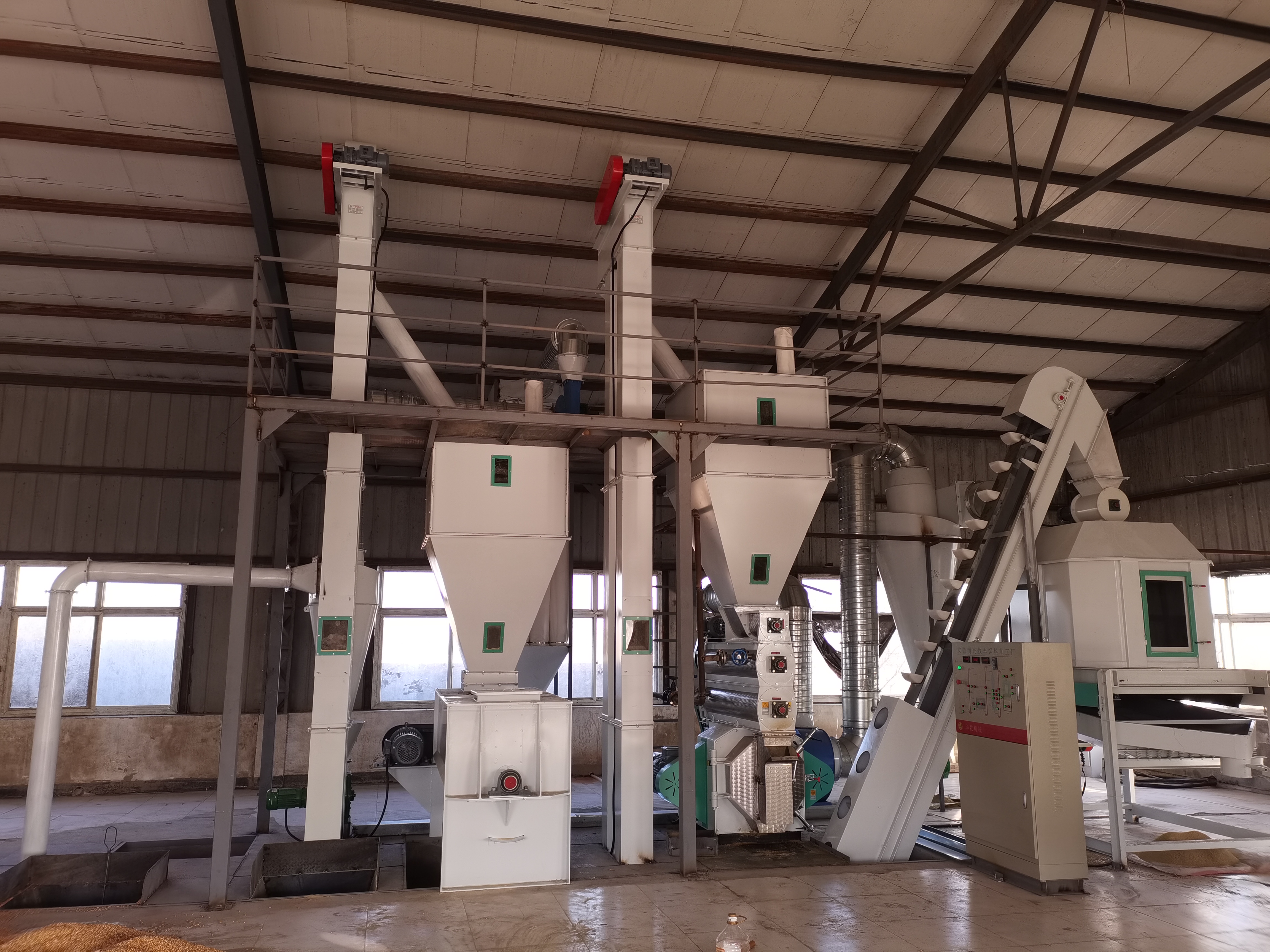
Jiangsu Huamu Machinery Co., Ltd. is located in Xibei Town, Wuxi City, enjoying convenient transportation and significant geographical advantages. The company specializes in the manufacturing of feed machinery and equipment, and can undertake the full-process business of scheme design, equipment ins...
No.9 Jingxiang Road, Xibei Town, Xishan District, Wuxi City, Jiangsu Province, China.