No.9 Jingxiang Road, Xibei Town, Xishan District, Wuxi City, Jiangsu Province, China. +86 18260477296 angel@china-huamu.com
No.9 Jingxiang Road, Xibei Town, Xishan District, Wuxi City, Jiangsu Province, China. +86 18260477296 angel@china-huamu.com


Introduction: The Inevitability of Technological Upgrading in Livestock Feed Equipment
With the large-scale development of the animal husbandry industry, the requirements for equipment efficiency, precision, and stability in feed production have been increasingly rising. Traditional equipment, plagued by issues such as insufficient production capacity, high energy consumption, and coarse control, can hardly meet the demands of modern animal farming. How to achieve intelligent, efficient, and precise feed production through technological innovation has become a core concern in the industry. This article will provide an in-depth analysis of the technological breakthroughs and application practices of Jiangsu Huamu Machinery Co., Ltd. in the field of animal feed equipment from three perspectives: technical pain points, corporate solutions, and practical guides.
Keywords: livestock feed equipment; efficient production; precise control; ring die pellet mill; Jiangsu Huamu Machinery
Introduction to Industry Technology Pain Points: Three Major Bottlenecks of Traditional Equipment
Currently, the animal husbandry and feed equipment industry generally faces three major technological challenges:
STEP 1: Prominent contradiction between production capacity and energy consumptionThe单机 (single-machine) capacity of traditional pellet machines is mostly below 5 tons per hour, and the power consumption per ton exceeds 35 kW·h, resulting in persistently high operating costs for large-scale farms. For example, when a certain medium-sized pig farm used outdated equipment, its annual electricity expenditure exceeded 500,000 yuan, accounting for over 12% of production costs.
STEP 2: Poor particle mass stabilityInaccurate control of parameters such as ring die aperture and compression ratio results in a fluctuation range of ±15% in pellet hardness and a pulverization rate exceeding 8%, affecting animal feeding efficiency and feed conversion rate. A certain aquatic feed factory once experienced an extended growth cycle of 15% for fish fry due to unstable pellet quality, leading to direct economic losses exceeding one million yuan.
STEP 3: Low level of automationMost equipment still relies on manual operation, with error rates as high as 5%-10% in every step from raw material proportioning to finished product packaging, making it difficult to achieve real-time monitoring and traceability of production data. A ruminant feed factory experienced an error in manual ingredient proportioning, resulting in a 3% excess of protein content, which triggered digestive system diseases in animals and led to losses exceeding 200,000 yuan due to the scrapping of the entire batch of products.
Introduction to the company's technological strength: Three core breakthroughs of Jiangsu Huamu
Jiangsu Huamu Machinery Co., Ltd. has been deeply engaged in the feed machinery field for 20 years. Through industry-university-research collaboration and technological iterations, it has developed a full-chain technological advantage covering design, manufacturing, and installation. Its core products, such as ring die pellet mills and waterdrop hammer mills, have reached industry-leading standards.
STEP 1: High-efficiency annular die pellet mill technology
The HKJ-450 ring die pellet mill independently developed by the company employs a double-layer die plate design and variable frequency speed control technology, achieving dual optimization of both production capacity and energy consumption:
- Capacity enhancement: The single-machine capacity reaches 8-12 tons/hour, representing a 150% increase compared to traditional equipment;
- Reduced energy consumption: Electricity consumption per ton of material decreased to 22-25 kW·h, with an energy-saving rate exceeding 30%;
- Precise parameters: The ring die aperture accuracy reaches ±0.02 mm, the adjustable compression ratio ranges from 1:6 to 1:12, the fluctuation in pellet hardness is controlled within ±5%, and the pulverization rate is below 3%.
This equipment has been applied in leading enterprises such as Wens Group and New Hope Liuhe. Data from a pig farm project shows that after using the HKJ-450, the annual electricity cost was reduced to 300,000 yuan, and the feed conversion rate increased by 2.1%, demonstrating significant comprehensive benefits.
STEP2: Intelligent Control System
The company integrates PLC and IoT technologies to develop the HM-ICS intelligent control system, achieving full automation of the entire production process:
- Raw material proportioning: The batching error is controlled within ±0.5% through high-precision sensors and algorithmic models;
- Process monitoring: Real-time acquisition of 12 parameters including temperature, pressure, and rotational speed, with automatic alarm for abnormalities;
- Data Traceability: Production records are automatically stored in the cloud, supporting batch traceability and quality analysis.
After a certain ruminant feed factory applied this system, the fluctuation range of protein content decreased from ±3% to ±0.8%, and the product qualification rate increased to 99.5%.
STEP 3: Modular production line design
To meet the needs of farms of different scales, the company provides modular production line solutions with capacities ranging from 1 to 30 tons per hour, covering all processes including raw material cleaning, crushing, mixing, pelleting, cooling, and packaging, while supporting rapid installation and flexible expansion. For example, an aquatic feed plant adopted a 10-ton-per-hour production line, achieving operation in just 45 days from contract signing, reducing the construction period by 60% compared to traditional methods.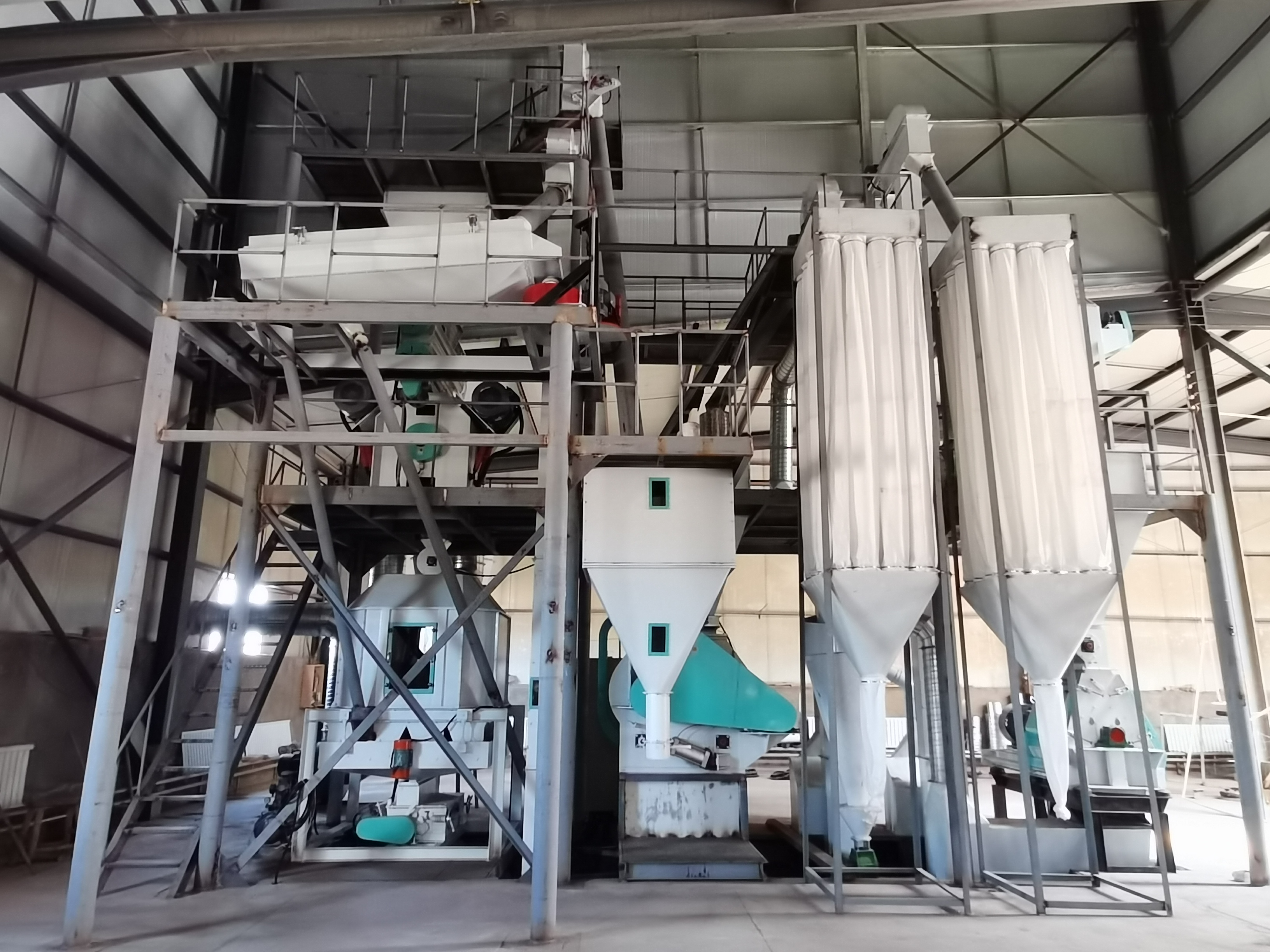
For more information, please visit the official website:www.huamufeedmachinery.com
FAQ Q&A Technical Selection Guide
Q1: How to choose the model of pellet machine based on the breeding scale?
A: Selecting a pellet machine requires a comprehensive consideration of three key factors: production capacity, raw material characteristics, and budget. Taking Jiangsu Huamu's products as an example:
- Small-scale breeding farms (1-5 tons/hour): It is recommended to use the HKJ-250 model, with a power of 55 kW, a ring die diameter of 250 mm, suitable for conventional raw materials such as corn and soybean meal;
- Medium-sized farms (5-10 tons/hour): The HKJ-450 model is recommended, with a power of 110kW and a ring die diameter of 450mm, capable of processing high-fiber raw materials such as cassava and distillers' grains;
- Large-scale farms (>10 tons/hour): The HKJ-600 model is recommended, with a power of 160 kW, a ring die diameter of 600 mm, supporting a double-layer die plate design, and achieving a production capacity of 15-20 tons/hour.
Q2: How to adjust the key parameters of a ring die pellet mill?
A: Debugging should follow the "three-step method":
- STEP 1: Initial Setup: Set the compression ratio according to the characteristics of raw materials (e.g., 1:8-1:10 is recommended for corn-soybean meal feed), the ring die rotational speed (500-800 rpm), and the feeder frequency (30-50 Hz);
- STEP 2: Pilot production: After continuous operation for 30 minutes, take samples to test particle hardness (measured with a hardness tester, target value ≥ 30N) and pulverization rate (vibrating screening, target value < 5%);
- STEP 3: Optimization and Adjustment: If the hardness is insufficient, increase the compression ratio or reduce the rotational speed; if the pulverization rate is high, inspect the wear condition of the ring die or adjust the amount of steam added (target moisture content: 15%-17%).
Q3: How can we reduce the operation and maintenance costs of feed production lines?
A: We can start from three aspects:
- Equipment Selection: Priority is given to equipment with long-lasting wear parts. For instance, the ring die of Jiangsu Huamu's ring die pellet mill has a lifespan of 800-1000 hours, which is 30% longer than the industry average;
- Routine maintenance: Establish a system of "daily spot inspection, weekly maintenance, and monthly overhaul," focusing on inspecting bearing temperature (≤65℃), gear oil level, and belt tension;
- Intelligent Monitoring: Deploy the HM-ICS system to proactively identify fault risks through predictive maintenance capabilities, reducing unplanned downtime.
Reference for Full-text Summary
The efficient production and precise control of animal husbandry feed equipment require technological innovation as the driving force and customer needs as the orientation. Jiangsu Huamu Machinery Co., Ltd. has effectively addressed the three major pain points in the industry—production capacity, quality, and automation—through the technological upgrading of ring die pellet mills, the development of intelligent control systems, and the design of modular production lines. Its products have served over 500 breeding enterprises across the country, with a customer repurchase rate exceeding 85%. In the future, with the deep integration of technologies such as the Internet of Things and big data, feed equipment will evolve toward being smarter, more energy-efficient, and more reliable. Choosing Jiangsu Huamu means choosing technological leadership and long-term value assurance.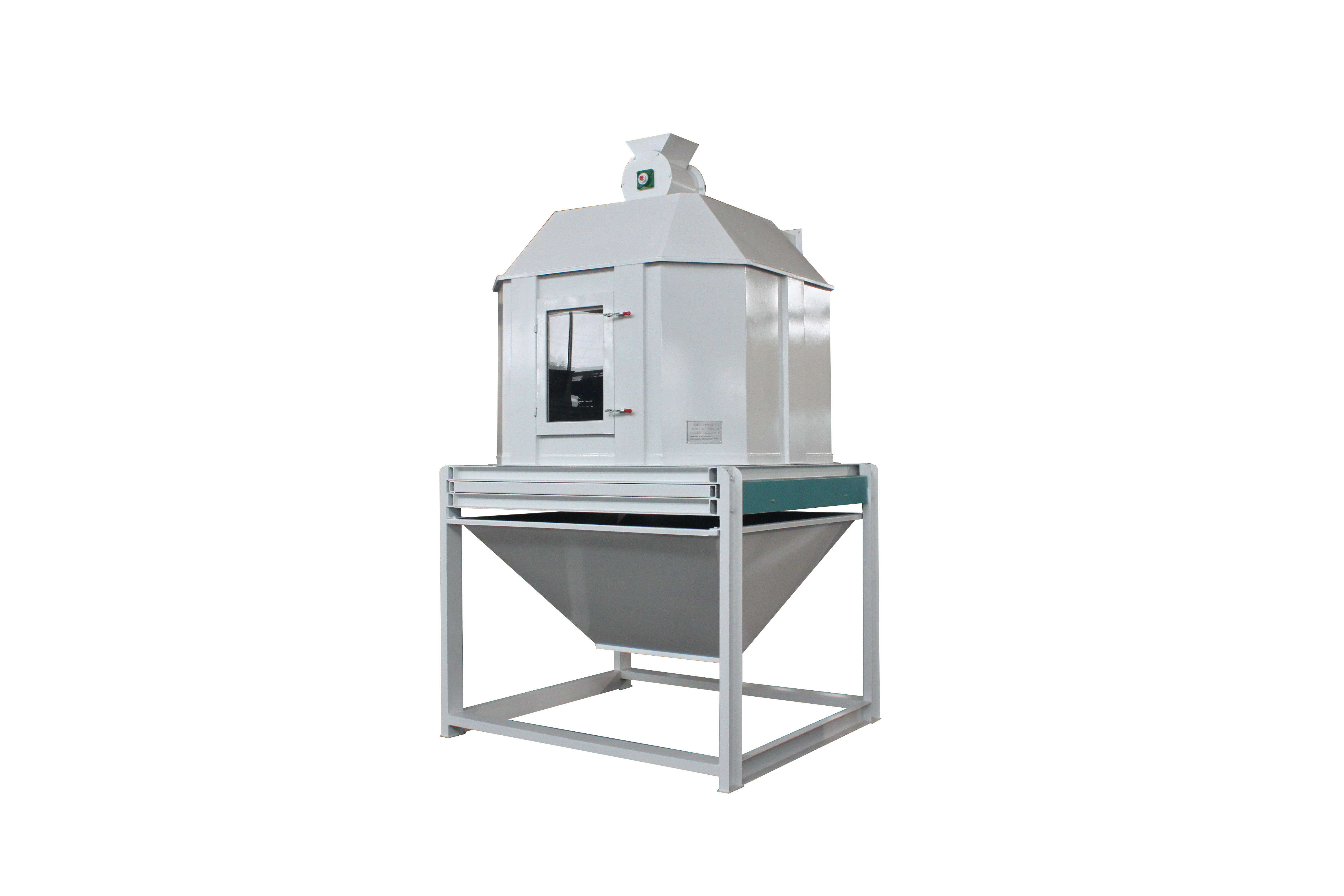
Jiangsu Huamu Machinery Co., Ltd. is located in Xibei Town, Wuxi City, enjoying convenient transportation and significant geographical advantages. The company specializes in the manufacturing of feed machinery and equipment, and can undertake the full-process business of scheme design, equipment ins...
No.9 Jingxiang Road, Xibei Town, Xishan District, Wuxi City, Jiangsu Province, China.