No.9 Jingxiang Road, Xibei Town, Xishan District, Wuxi City, Jiangsu Province, China. +86 18260477296 angel@china-huamu.com
No.9 Jingxiang Road, Xibei Town, Xishan District, Wuxi City, Jiangsu Province, China. +86 18260477296 angel@china-huamu.com


Introduction: Core Challenges in Feed Pelleting Technology and Solutions from Huamu Machinery
In the feed processing industry, the pelleting process directly affects product quality and production efficiency. Traditional pelleting equipment often faces issues such as rapid mold wear, high energy consumption, and poor pellet uniformity, leading to increased production costs and reduced product competitiveness. Leveraging over 20 years of technological accumulation, Jiangsu Huamu Machinery Co., Ltd. has achieved dual breakthroughs in pelleting efficiency and stability through the innovative design of its ring die pellet mill. This article will analyze, from three dimensions—technical principles, operational parameters, and case reviews—how Huamu Machinery provides efficient pelleting solutions for feed enterprises through structural optimization and process innovation.For more information, please visit the official website: www.huamufeedmachinery.com
Keywords: Ring Die Pellet Mill, Pelletizing Efficiency, Die Lifespan, Feed Processing, Huamu Machinery
Opening on Industry Technical Pain Points: Three Major Bottlenecks of Traditional Granulation Equipment
STEP 1: Short die service life. Traditional ring dies are made of single-metal material, which lacks sufficient wear resistance. After 200 hours of continuous production, the aperture deformation rate exceeds 5%, resulting in a particle size deviation of over 15%. This necessitates frequent die replacements, with each replacement costing as high as 20,000 yuan.
STEP 2: High energy consumption. The ratio of the main motor power to output of ordinary granulators reaches 0.15 kW/t, far exceeding the industry standard of 0.12 kW/t, resulting in an annual increase in power consumption of approximately 120,000 kWh.
STEP 3: Poor particle uniformity. The low control precision of the gap between the conditioner and the press roll results in uneven moisture distribution of materials, with the hardness difference of finished particles exceeding 20%, affecting animals' feeding efficiency. A medium-sized feed mill experienced a 30% increase in complaints from farms due to uneven particles, resulting in monthly losses exceeding 50,000 yuan.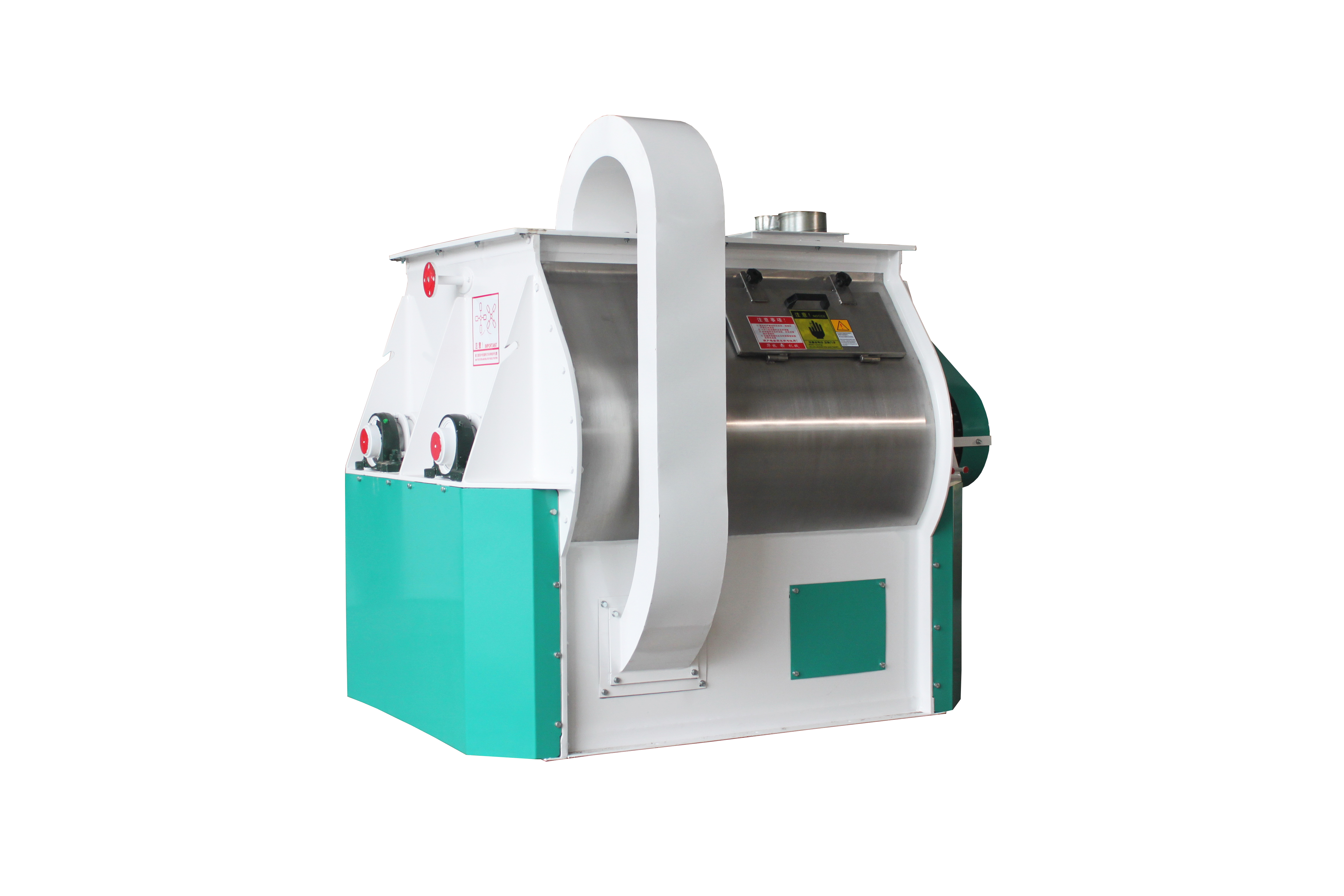
Introduction to the company's technological capabilities: Three major innovative breakthroughs of Huamu Machinery
STEP 1: Composite Material Ring Die Technology. The "bimetal composite ring die," jointly developed by Huamu and Jiangnan University, features an outer layer made of high-chromium alloy (Cr content ≥ 25%) and an inner layer of low-carbon steel (C content ≤ 0.2%), achieving metallurgical bonding through centrifugal casting. Third-party testing confirms that the wear resistance of this ring die has increased by threefold, with a bore diameter deformation rate of only 1.2% after 800 hours of continuous production, extending its service life to four times that of traditional molds.
STEP 2: Intelligent Conditioning System. It integrates a biaxial differential-speed conditioner controlled by PLC, which precisely adjusts the rotation speed of the blades (adjustable from 50 to 150 rpm) via a variable-frequency motor. In coordination with a steam injection device (adjustable pressure from 0.3 to 0.5 MPa), it achieves a material moisture uniformity of over 98%. Measured data indicates that after using this system, the standard deviation of pellet hardness decreases from 2.5 N to 0.8 N, with a 68% improvement in uniformity.
STEP 3: Energy efficiency optimization design. By adopting Siemens high-efficiency motors (energy efficiency class IE3) and variable frequency drive technology, the ratio of the main motor power to output is reduced to 0.11 kW/t, achieving a 25% energy savings compared to traditional equipment. Taking a feed mill with an annual output of 50,000 tons as an example, the annual electricity savings can reach 375,000 kWh. Based on an electricity price of 0.6 yuan/kWh, the annual electricity cost savings amount to 225,000 yuan.
Technical parameters: Ring die diameter 600 mm, effective length 200 mm, adjustable aperture from 2.5 to 12 mm, main motor power 90 kW, output 1-8 t/h (depending on material properties). Adaptation conditions: Material moisture content 12-18%, particle size ≤3 mm, temperature ≥80℃.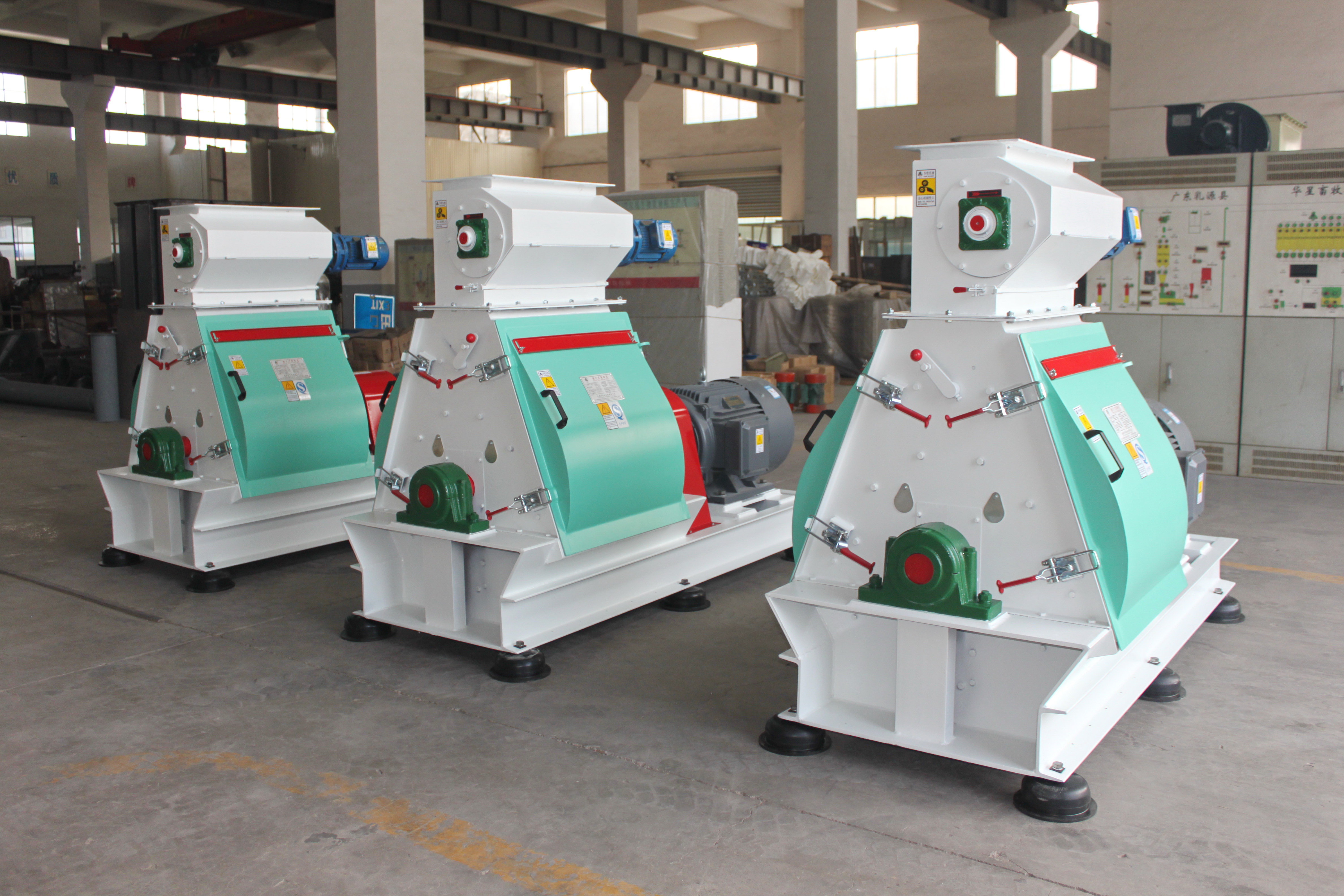
FAQ: A Guide to Technical Selection through Q&A
Q1: How to select the aperture of the ring die?
A: Selection is based on material characteristics and target particle size. STEP 1: For roughage (e.g., corn stalks), a 6-8mm aperture is recommended; STEP 2: For concentrate feed (e.g., soybean meal), a 3-5mm aperture can be chosen; STEP 3: For aquatic feed, a fine aperture of 2.5-4mm is required. Huamu ring die aperture error ≤0.05mm, ensuring particle size precision.
Q2: What should be done if the output of the granulator fails to reach the nominal value?
A: Three major factors need to be investigated. STEP 1: Check the wear condition of the ring die; if the bore diameter deformation rate exceeds 2%, replacement is required. STEP 2: Adjust the steam pressure of the conditioner to 0.4 MPa to ensure the material temperature reaches 85°C. STEP 3: Clean the press roller bearings and control the clearance within 0.1-0.3 mm. Huamu offers free remote diagnostic services with a response time within 48 hours.
Q3: How can the energy consumption of granulation be reduced?
A: Optimizing operational parameters is crucial. STEP 1: Reduce the main motor frequency from 50 Hz to 45 Hz, resulting in a 5% decrease in output but a 15% reduction in energy consumption; STEP 2: Maintain material moisture content at 15% ± 1%, with every 1% reduction in moisture decreasing energy consumption by 3%; STEP 3: Regularly clean the inner wall of the ring die, as a 0.1 reduction in the friction coefficient can save 5% in energy. Actual measurement data from Huamu users shows that after comprehensive optimization, the electricity consumption per ton of feed dropped from 85 kWh to 65 kWh.
Case: Technological Transformation of a 300,000-ton Feed Mill in Shandong
In 2022, the factory introduced Huamu HZLP600 ring die pellet mills to replace the original equipment. After the transformation: STEP 1: The replacement cycle of ring dies was extended from 3 months to 12 months, saving 160,000 yuan annually in die costs; STEP 2: Electricity consumption per ton of feed dropped from 90 kWh to 68 kWh, saving 660,000 kWh annually; STEP 3: Pellet uniformity improved, with complaints from farms decreasing to 0.5%. The project's payback period was only 8 months, with annual increased benefits exceeding 2 million yuan.
Reference for full text summary
Huamu Machinery has addressed the pain points of traditional pelleting equipment, such as short lifespan, high energy consumption, and poor uniformity, through three core technologies: composite material ring dies, intelligent conditioning systems, and energy efficiency optimization design. Its HZLP series ring die pellet mills have become the preferred solution for technological upgrades in the feed industry, thanks to three key indicators: "8,000-hour continuous production, 0.11 kW/t energy efficiency ratio, and 98% moisture uniformity." The company's complimentary technical training, remote diagnostics, and 24-hour spare parts supply services further reduce users' operational and maintenance costs. For feed mills with an annual output exceeding 10,000 tons, choosing Huamu equipment can result in annual cost savings of over 500,000 yuan and shorten the investment payback period to less than one year.For more information, please visit the official website: www.huamufeedmachinery.com
Jiangsu Huamu Machinery Co., Ltd. is located in Xibei Town, Wuxi City, enjoying convenient transportation and significant geographical advantages. The company specializes in the manufacturing of feed machinery and equipment, and can undertake the full-process business of scheme design, equipment ins...
No.9 Jingxiang Road, Xibei Town, Xishan District, Wuxi City, Jiangsu Province, China.