No.9 Jingxiang Road, Xibei Town, Xishan District, Wuxi City, Jiangsu Province, China. +86 18260477296 angel@china-huamu.com
No.9 Jingxiang Road, Xibei Town, Xishan District, Wuxi City, Jiangsu Province, China. +86 18260477296 angel@china-huamu.com


Introduction
Complete sets of feed processing equipment are the core assets of modern animal husbandry, with their efficiency and stability directly impacting feed quality and production costs. However, traditional equipment often faces technical challenges such as insufficient production capacity, high energy consumption, and complex maintenance. This article will systematically elaborate on how to achieve efficient production through equipment upgrades from three dimensions—technical principles, practical optimization, and case analysis—incorporating the latest technological achievements of Jiangsu Huamu Machinery Co., Ltd., and provide quantifiable technical parameters and operational guidelines.
Keywords
Complete sets of feed processing equipment, efficient production, technological optimization, Jiangsu Huamu Machinery, practical operation guide
Introduction to Industry Technical Pain Points
Currently, the feed processing industry faces three major technological challenges:
STEP 1: The contradiction between production capacity and efficiencyThe production capacity of traditional standalone equipment is limited, and the material transmission loss rate can reach as high as 15% during multi-machine联动 (coordination), resulting in low overall efficiency;
STEP 2: Imbalance between energy consumption and costThe energy consumption in the crushing and pelletizing processes accounts for over 60% of the entire process, with some enterprises consuming more than 90 kilowatt-hours of electricity per ton of material;
STEP 3: Conflict between Maintenance and StabilityKey components (such as ring dies and press rolls) wear out quickly, requiring replacement every 500 hours on average, resulting in high downtime maintenance costs.
These issues directly constrain the enterprise's capabilities in large-scale production and cost control, necessitating urgent resolution through technological upgrades.
Introduction to the company's technological capabilities
Jiangsu Huamu Machinery Co., Ltd. has been deeply engaged in the feed machinery field for 20 years and has established a full-chain technological system covering design, manufacturing, installation, and commissioning, relying on an integrated model of "industry-university-research-application."
Highlights of technological layout:
STEP 1: Independent research and development of core equipmentIt possesses over 20 patented equipment across five major categories, including ring die pellet mills, waterdrop-type crushers, and twin-shaft paddle mixers. Among them, the HM-600 ring die pellet mill achieves a production capacity of 10-12 tons per hour, with the ring die's service life exceeding 3,000 hours.
STEP 2: Intelligent Control SystemIntegrating PLC automatic control with IoT technology enables real-time monitoring of equipment operational parameters and remote debugging, reducing fault response time to within 30 minutes;
STEP 3: Energy-saving design throughout the entire processBy optimizing the transmission structure and power matching, the electricity consumption per ton of material has been reduced to below 75 kWh, achieving 15% energy savings compared to the industry average.
Typical cases:The 30-ton/hour aquatic feed production line designed for a large-scale breeding group employs Huamu HM-800 double-layer conditioner and vacuum coating machine, achieving a water stability of over 98% for the feed and saving clients more than 2 million yuan annually in raw material loss costs.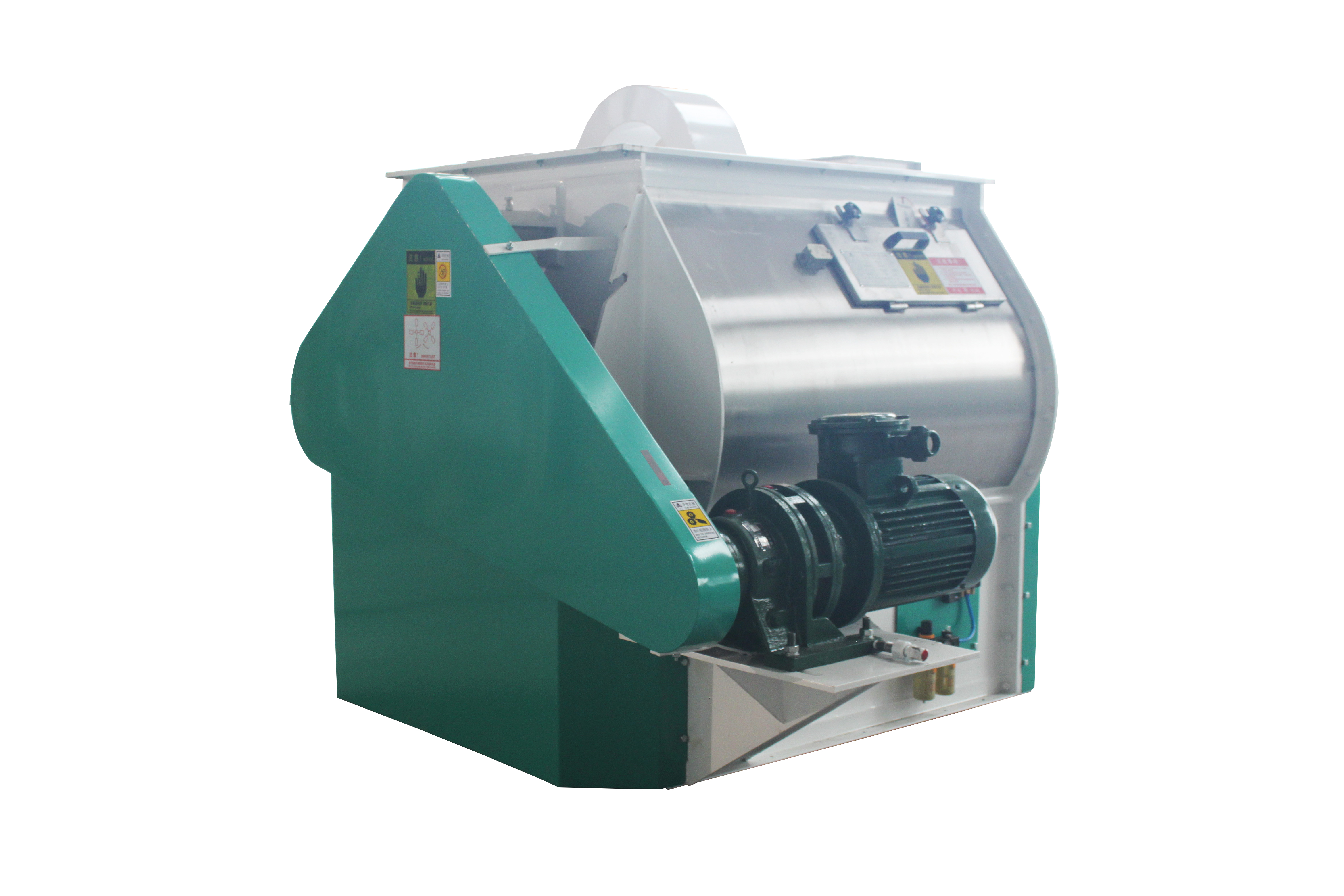
For more information, please visit the official website:www.huamufeedmachinery.com
FAQ Q&A Technical Selection Guide
Q1: How to select the equipment model suitable for one's own production capacity?
A: A comprehensive assessment of raw material types, target production capacity, and budget is required. For example, when processing conventional raw materials such as corn and soybean meal, the Huamu HM-500 ring die pellet mill (with a production capacity of 5-6 tons per hour) can meet the needs of small and medium-sized farms; if high-density aquatic feed production is required, it is recommended to select the HM-800 double-layer conditioning pellet mill, which extends the conditioning time to 120 seconds and increases starch gelatinization by 20%.
Q2: How to plan the equipment maintenance cycle?
A: Key components require regular inspection:
- Ring die: Inspect the aperture wear every 500 operating hours and replace it when the deviation in the length of discharged pellets exceeds 5%;
- Pressure roller: Add high-temperature grease every 200 hours; if the bearing temperature exceeds 80℃, shut down for maintenance;
- Drive gear: Inspect the pitting on the tooth surface every 1000 hours and replace it when the wear reaches 15% of the original tooth thickness.
Q3: How can we reduce production energy consumption?
A: Achieve energy conservation through three-step optimization:
STEP 1: Power MatchingSelect variable frequency motors based on equipment load characteristics to avoid "using a large motor for a small load";
STEP 2: Process OptimizationA hierarchical crushing process is adopted to separate coarse crushing from fine crushing, reducing repeated processing;
STEP 3: Waste Heat RecoveryInstalling a heat exchanger at the rear end of the granulator cooler to recover waste steam heat for raw material preheating can reduce steam consumption by 30%.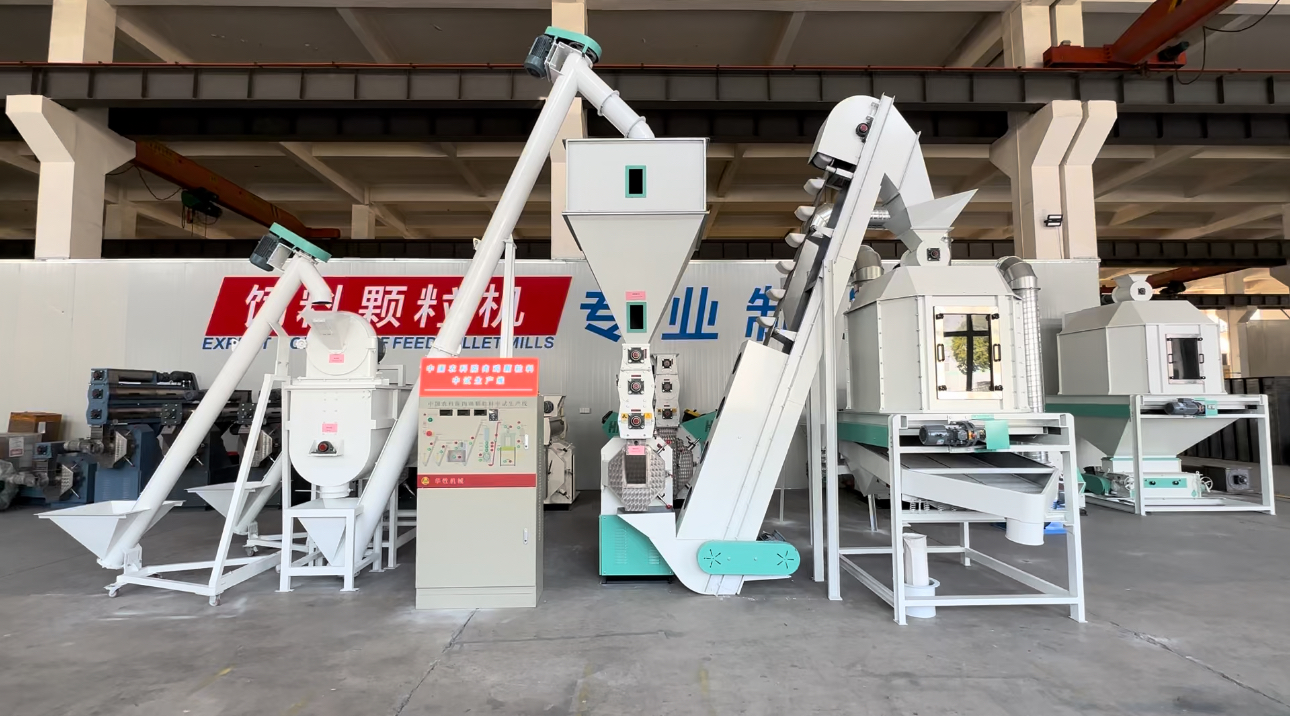
Reference for Full Text Summary
The efficient production of complete sets of feed processing equipment requires collaborative efforts in equipment selection, process optimization, and maintenance management. Through technological innovation, Jiangsu Huamu Machinery Co., Ltd. has achieved comprehensive breakthroughs in equipment capacity, energy consumption, and stability. Its core products, such as the HM series ring die pellet mills and intelligent control systems, have been widely applied in over 300 production lines across the country, helping customers reduce production costs by an average of 18%. In the future, with the deep integration of IoT and artificial intelligence technologies, feed processing equipment will continue to upgrade toward intelligence and refinement, creating greater value for enterprises.
Jiangsu Huamu Machinery Co., Ltd. is located in Xibei Town, Wuxi City, enjoying convenient transportation and significant geographical advantages. The company specializes in the manufacturing of feed machinery and equipment, and can undertake the full-process business of scheme design, equipment ins...
No.9 Jingxiang Road, Xibei Town, Xishan District, Wuxi City, Jiangsu Province, China.