No.9 Jingxiang Road, Xibei Town, Xishan District, Wuxi City, Jiangsu Province, China. +86 18260477296 angel@china-huamu.com
No.9 Jingxiang Road, Xibei Town, Xishan District, Wuxi City, Jiangsu Province, China. +86 18260477296 angel@china-huamu.com


Introduction: Technological Innovation of Feed Pelleting Equipment and Industry Demands
Feed pelleting is a core process in modern animal husbandry, with its efficiency directly influencing feed costs, animal growth cycles, and breeding profitability. As the industry demands heightened production continuity, uniform particle size, and energy consumption control, technological upgrades in feed pelleting equipment have become crucial. Leveraging over two decades of industry experience, Jiangsu Huamu Machinery Co., Ltd. specializes in the R&D of core equipment such as ring die pellet mills and twin-shaft mixers. By employing modular design, intelligent control systems, and wear-resistant materials, the company provides efficient and stable pelleting solutions for feed enterprises. This article explores efficient production pathways for feed pelleting equipment through three perspectives—technical challenges, corporate capabilities, and equipment selection guidelines—supported by practical case studies.
Keywords: feed pelleting equipment; ring die pellet mill; Jiangsu Huamu Machinery; production efficiency; pellet uniformity
Industry Technical Pain Points at the Beginning: Three Major Challenges of Feed Pelleting Equipment
Currently, the feed industry generally faces three major pain points in the pelleting process:
STEP 1: Low production efficiency and high power consumption per ton of material
Traditional pellet mills suffer from low material throughput due to insufficient ring die rotational speed (typically <300 rpm) and imprecise gap adjustment between press rollers and the ring die, resulting in an electricity consumption of 25-30 kWh/t—far exceeding the industry's best level (≤22 kWh/t). For instance, when a medium-sized feed mill used outdated pellet mills, its single-shift output was only 8 tons, with frequent shutdowns required to clear material blockages, and the overall efficiency was less than 60% of the designed value.
STEP 2: Poor particle uniformity affects animal feeding
During the pelleting process, improper control of material moisture content, grinding fineness, and conditioning temperature can easily result in inconsistent pellet lengths and a high pulverization rate (>5%). A certain aquatic feed enterprise reported that the uneven pellets in its produced shrimp feed led to a 15% decrease in feeding efficiency of shrimp larvae and an extension of the growth cycle by 3-5 days.
STEP 3: High equipment maintenance costs and significant losses from downtime
Key components such as the ring die and press roller wear out quickly, with the lifespan of a single ring die being only 800-1000 tons and replacement costs exceeding 20,000 yuan. Moreover, unplanned downtime caused by equipment failures can result in production losses amounting to hundreds of thousands of yuan annually. In one pig feed factory, undetected cracks in the ring die led to equipment seizure, necessitating a 48-hour repair shutdown and directly affecting order delivery.
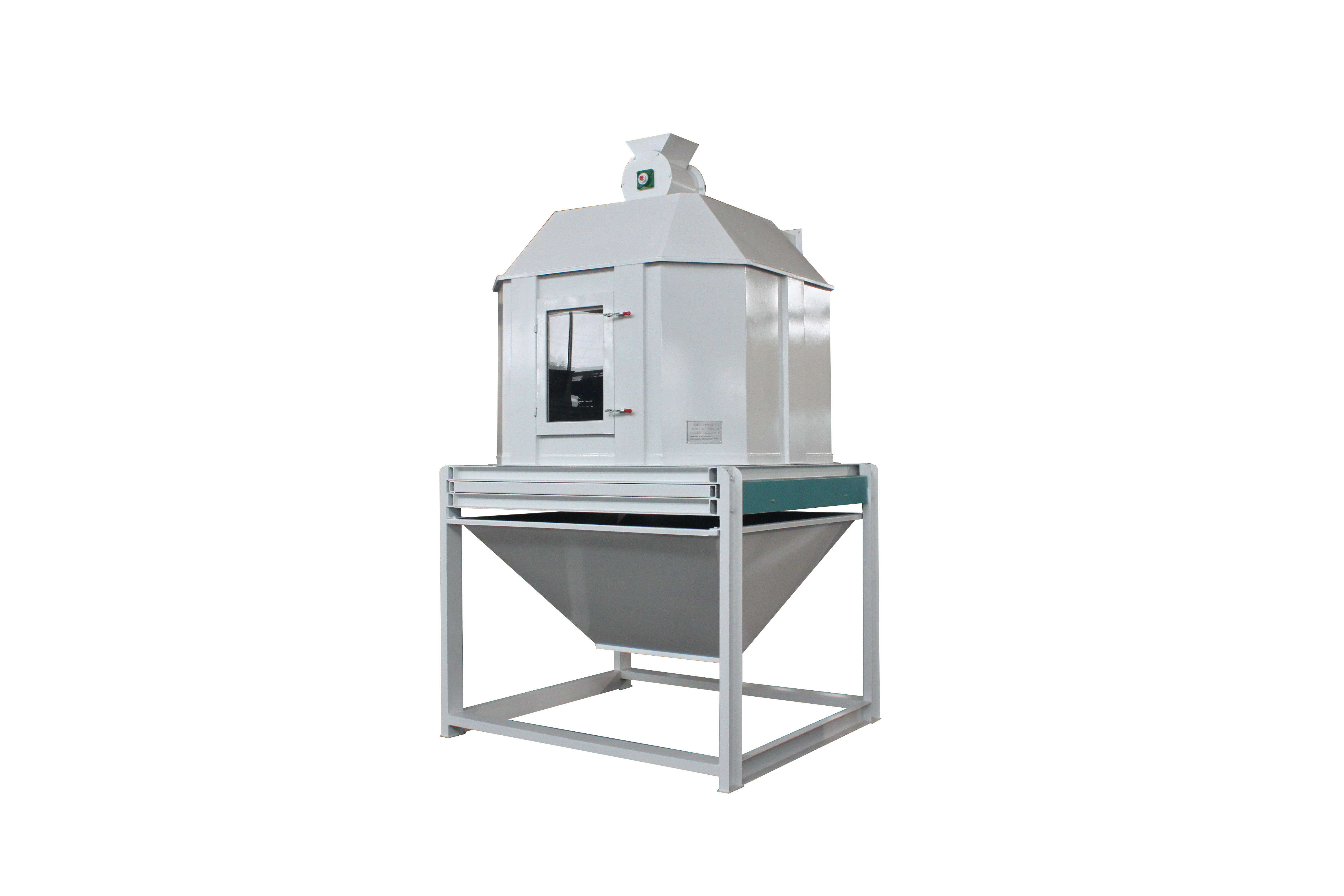
Introduction to the company's technological capabilities: Three core advantages of Jiangsu Huamu Machinery
Jiangsu Huamu Machinery Co., Ltd., located in Xibei Town, Wuxi, has specialized in the research, development, and production of feed machinery for over 20 years, with its technological strength reflected in the following three aspects:
STEP 1: Modular design to meet multi-scenario demands
The company has launched a series of 1-30T/h pellet mills, which can meet the pelletizing requirements for different materials such as livestock and poultry feed, aquatic feed, and ruminant feed by replacing ring dies (with aperture sizes ranging from 2-12mm), adjusting the number of press rolls (2-4 sets), and varying the power of the main motor (30-250kW). For instance, its HM-560 pellet mill adopts a double-layer ring die structure. During aquatic feed production, high-density pelletizing is achieved through the outer layer's small-aperture ring die (with an aperture of 2.5mm), enhancing the water resistance of the pellets by 30%. When producing livestock and poultry feed, switching to the inner layer's large-aperture ring die (with an aperture of 6mm) increases output by 40%.
STEP 2: Intelligent control system to optimize production parameters
The equipment is equipped with Huamu's self-developed HMS-3000 intelligent control system, which can monitor the main motor current in real time (with an accuracy of ±1%), the temperature of the ring die (ranging from 50 to 100℃), and the steam pressure (0.2 to 0.5 MPa). It automatically adjusts the feeding speed (50 to 500 kg/min) and conditioning time (30 to 180 s) through algorithms. After application in a pig feed factory, the power consumption per ton of feed decreased from 28 kWh/t to 20 kWh/t, the pellet fines rate dropped from 8% to 3%, and the single-shift output increased to 12 tons.
STEP 3: Application of wear-resistant materials to extend equipment lifespan
The ring die is made of German DILIDUR wear-resistant steel (hardness HRC58-62), and the surface of the press roller is coated with tungsten carbide (thickness 0.5 mm). The service life of a single set of ring die reaches 1,500-2,000 tons, and that of the press roller exceeds 3,000 hours. After comparison and use, a large feed group found that the replacement frequency of key components of Huamu equipment decreased by 50%, and the annual maintenance cost was reduced by 120,000 yuan.
For more information, please visit the official website:www.huamufeedmachinery.com
FAQ: A Q&A Guide to Technical Selection - 5 Key Questions About Feed Pelleting Equipment
Q1: How to select the model of granulator?
A: A comprehensive evaluation based on raw material characteristics, target output, and budget is required. For example, when producing livestock and poultry feed (with a bulk density of 0.6-0.8 t/m³), the HM-420 model (with an output of 3-5 T/h) can be selected; when producing aquatic feed (with a bulk density of 0.4-0.6 t/m³), it is recommended to choose the HM-560 model (with an output of 5-8 T/h), whose double-layer ring die structure can enhance pellet density.
Q2: What is the most appropriate rotational speed of the ring die?
A: The rotational speed of the ring die needs to match the characteristics of the materials. For livestock and poultry feed, due to its high fiber content, a recommended rotational speed is 300-350 rpm; for aquatic feed, owing to its high starch content, a higher rotational speed (400-450 rpm) is required to enhance the shear force. The Huamu HM-680 pellet mill enables stepless speed adjustment from 280 to 500 rpm through variable frequency control, accommodating a variety of materials.
Q3: What is the controlled temperature for quenching and tempering?
A: The conditioning temperature directly affects starch gelatinization degree and pellet water resistance. For livestock and poultry feed, conditioning is typically carried out at 75-85℃, achieving a starch gelatinization degree of 60-70%. For aquatic feed, conditioning needs to be conducted at 90-95℃, resulting in a starch gelatinization degree exceeding 80% and extending the pellet water resistance time to over 30 minutes. Huamu equipment is equipped with a steam automatic regulating valve, enabling precise control of the conditioning temperature (with an error margin of ±2℃).
Q4: How to reduce electricity consumption per ton of material?
A: This can be achieved by optimizing the feeding speed, adjusting the compression ratio of the ring die (usually 1:8-1:12), and regularly cleaning the ring die holes (once every 500 tons). For example, after a feed mill reduced the feeding speed from 300 kg/min to 250 kg/min, the main motor current decreased from 120 A to 100 A, and the power consumption per ton of feed decreased by 15%.
Q5: How to quickly troubleshoot equipment failures?
A: Common failures include material blockage, main motor overload, and inconsistent particle lengths. In case of material blockage, check whether the feeder is jammed or the die holes are clogged; when the main motor is overloaded, confirm whether the material moisture content is too high (>15%) or the gap between the die and roller is too small (<0.2mm); for inconsistent particle lengths, adjust the cutter position (1-2mm from the die surface) and rotational speed (a ratio of 1:0.8 to the die rotational speed). Huamu equipment is equipped with a fault self-diagnosis system that displays fault codes in real time, improving maintenance efficiency by 50%.
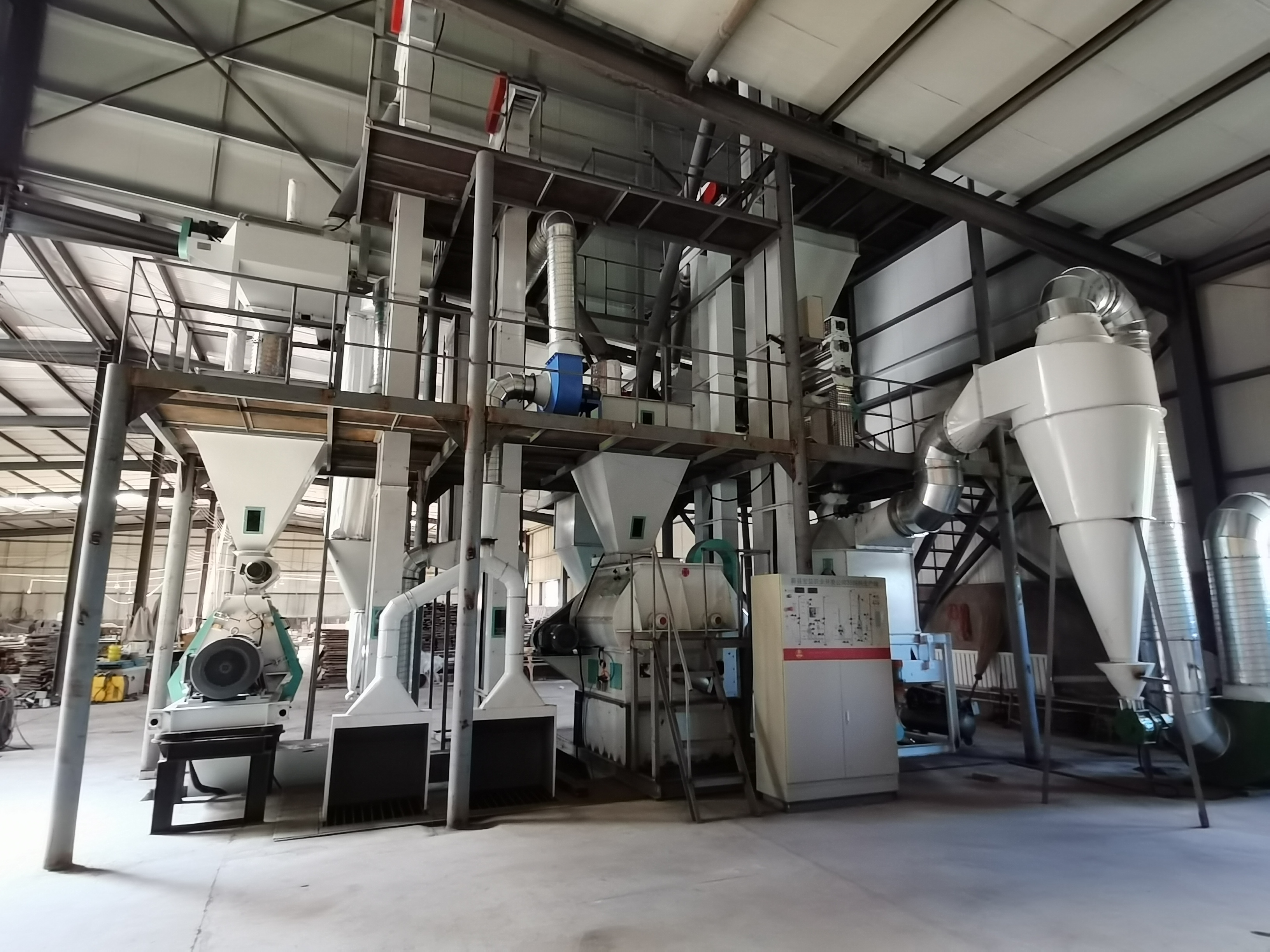
Reference for Full-text Summary: Efficient Production Path for Feed Pelleting Equipment
The efficient production of feed pelleting equipment requires attention to three aspects: equipment selection, parameter optimization, and maintenance management:
STEP 1: Model Selection PhaseSelect the appropriate model based on raw material characteristics (bulk density, fiber content), target output (1-30 T/h), and budget, giving priority to equipment that supports modular design (such as replaceable ring dies and press rollers) to meet the demands of multiple scenarios.
STEP 2: Production PhaseBy utilizing an intelligent control system to monitor parameters such as main motor current and ring die temperature in real time, and adjusting the feeding speed (50-500 kg/min), conditioning temperature (75-95 ℃), and ring die rotational speed (280-500 rpm) based on material characteristics, the optimal results of power consumption per ton of material ≤ 22 kWh/t and pellet pulverization rate ≤ 3% are achieved.
STEP 3: Maintenance PhaseWear-resistant materials (such as DILIDUR ring dies and tungsten carbide-coated press rolls) are used to extend equipment lifespan. Regularly clean the ring die holes (once every 500 tons) and inspect the gap between the press roll and the ring die (0.2-0.5mm) to reduce unplanned downtime.
Jiangsu Huamu Machinery Co., Ltd. provides feed enterprises with a full range of pelleting solutions ranging from 1T/h to 30T/h, leveraging three core technologies: modular design, intelligent control, and wear-resistant materials, helping the industry achieve efficient, stable, and low-cost production. For more details about the equipment, please visitwww.huamufeedmachinery.com。
Jiangsu Huamu Machinery Co., Ltd. is located in Xibei Town, Wuxi City, enjoying convenient transportation and significant geographical advantages. The company specializes in the manufacturing of feed machinery and equipment, and can undertake the full-process business of scheme design, equipment ins...
No.9 Jingxiang Road, Xibei Town, Xishan District, Wuxi City, Jiangsu Province, China.