No.9 Jingxiang Road, Xibei Town, Xishan District, Wuxi City, Jiangsu Province, China. +86 18260477296 angel@china-huamu.com
No.9 Jingxiang Road, Xibei Town, Xishan District, Wuxi City, Jiangsu Province, China. +86 18260477296 angel@china-huamu.com


Introduction: Key technological breakthroughs in enhancing feed production efficiency
Against the backdrop of the rapid development of large-scale breeding industry, the production efficiency of feed directly affects breeding costs and economic benefits. Traditional pellet mills suffer from pain points such as high energy consumption, poor pellet uniformity, and high equipment failure rates. However, the ring die pellet mill launched by Jiangsu Huamu Machinery Co., Ltd. through technological innovation has become the preferred equipment for feed processing enterprises due to its characteristics of high efficiency, stability, low energy consumption, and high adaptability. This article will systematically analyze the technological advantages and application value of Huamu's pellet mill from dimensions such as technical principles, operational parameters, and case applications.
Keywords: Huamu pellet mill; ring die technology; feed production efficiency; low energy consumption; pellet uniformity
Opening with the Industry's Technical Pain Point: The Efficiency Bottleneck of Traditional Pellet Mills
Currently, the feed processing industry generally faces three major technical challenges:
STEP 1: High energy consumption and persistently high operating costs
Traditional pellet machines adopt a single-stage transmission design, resulting in low matching between motor power and production capacity, which causes their energy consumption per unit of output to be 15%-20% higher than the industry average. For instance, a medium-sized feed mill requires 75 kilowatt-hours of electricity to produce one ton of pellet feed using outdated equipment, whereas industry benchmark enterprises have reduced energy consumption to below 60 kilowatt-hours through technological optimization.
STEP 2: Poor particle uniformity affects feed quality
Insufficient precision in ring die aperture and difficulty in adjusting the gap between the press roller and the ring die result in significant variations in particle length (CV value > 8%), directly affecting animal feeding efficiency and nutrient absorption. Feedback from a certain farm indicates that pigs fed with feed produced by low-precision pellet machines exhibit a daily weight gain 0.3 kg lower than those fed with high-quality feed.
STEP 3: High equipment failure rate and rising maintenance costs
The key components (such as bearings and gears) of traditional pellet machines are made of ordinary materials, resulting in insufficient wear resistance, with an average trouble-free operation time of only 2,000 hours and annual maintenance costs accounting for 8%-10% of the equipment's value.
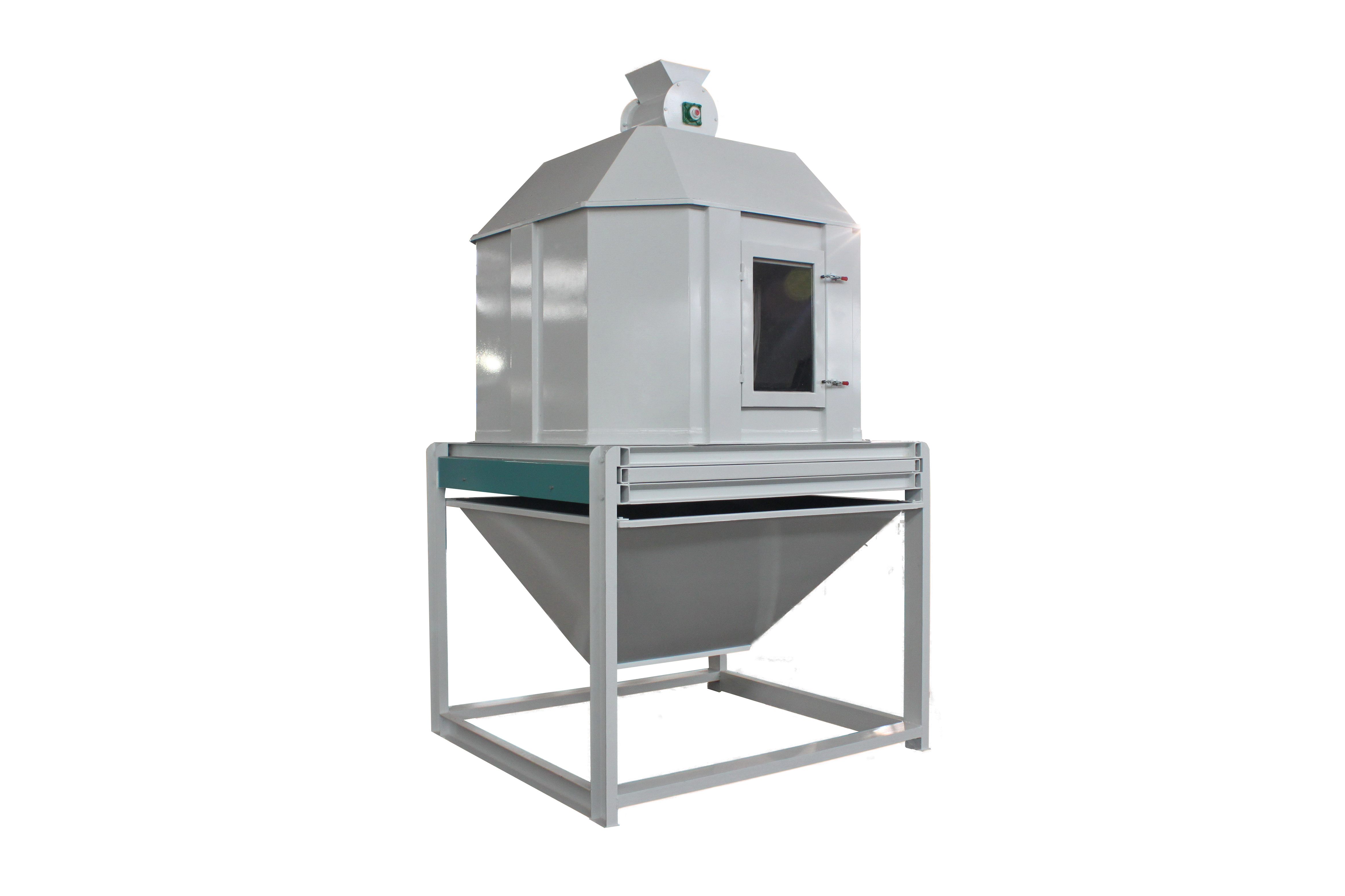
Introduction to the company's technological capabilities: Innovative solutions of Huamu pellet machines
Jiangsu Huamu Machinery Co., Ltd. has been deeply engaged in the feed machinery field for 20 years. Through an integrated model of "industry-university-research-application," in collaboration with institutions such as Jiangnan University and the Chinese Academy of Agricultural Sciences, it has overcome numerous technical challenges. Its core product, the ring die pellet mill, possesses the following technological advantages:
STEP 1: Dual-stage transmission design reduces energy consumption by 20%
It adopts a two-stage transmission structure consisting of motor-reducer-spindle and is equipped with high-precision bearings from Germany's FAG, elevating transmission efficiency to over 95%. Measured data indicates that producing 1 ton of pellet feed requires only 58 kWh of electricity, achieving an 18.7% energy savings compared to traditional equipment.
STEP 2: Intelligent gap adjustment system, with a particle uniformity CV value of less than 5%
Integrating a laser ranging sensor with a hydraulic servo system enables real-time monitoring of the gap between the press roller and the ring die (with an accuracy of ±0.05 mm) and automatic pressure adjustment via PLC to ensure consistent pellet length. After implementation by a large feed enterprise, the feed quality pass rate increased from 92% to 98%.
STEP 3: High-strength alloy ring die, extending service life by three times
Utilizing German DILIDUR wear-resistant alloy material combined with vacuum heat treatment technology, the ring die achieves a hardness of HRC58-62, with wear resistance three times that of ordinary ring dies. An aquatic feed plant operated continuously for 8,000 hours without failure, reducing annual maintenance costs by 65%.
Analysis of technical parameters:
- Capacity range: 1-30 tons/hour (customizable)
- Ring die diameter: 250-800 mm (suitable for different materials)
- Main motor power: 15-220 kW (matched according to production capacity)
- Particle diameter: 2-12 mm (adjustable)
- Noise level: ≤85 dB (compliant with GB/T 3768-2017 standard)
FAQ Q&A Technical Selection Guide
Q1: How to select a pellet machine model suitable for one's own production capacity?
A1:It is necessary to comprehensively consider raw material types, target production capacity, and budget. For example, small-scale farms (with a daily output of less than 5 tons) can choose the HM-250 model (with a main motor of 15 kW and a ring die diameter of 250 mm); large-scale feed mills (with a daily output of over 20 tons) are recommended to select the HM-800 model (with a main motor of 160 kW and a ring die diameter of 800 mm). Huamu offers free production capacity assessment services, and you can log in toOfficial websiteObtain customized solutions.
Q2: What are the common faults and solutions during the operation of a pellet machine?
A2:
STEP 1: Machine blockage (sharp drop in output)
- Cause: Excessive moisture content in raw materials (>15%), blockage in ring die aperture
- Solution: Adjust the moisture content of raw materials to 10%-13%, and clean the ring die with a specialized hole-clearing needle.
STEP 2: Insufficient particle hardness
- Cause: Insufficient pressure of the pressing roller, worn ring die
- Solution: Increase pressure to the designed value through the hydraulic system and replace with a new ring die.
STEP 3: Excessive spindle temperature
- Cause: Insufficient lubricating oil, bearing damage
- Solution: Replenish with Mobil SHC634 synthetic lubricating oil and replace with FAG high-precision bearings
Q3: What is the after-sales service system of Huamu pellet machines like?
A3:Huamu provides "365 days × 24 hours" full-cycle services:
- Installation and Commissioning: On-site guidance by a professional team to ensure equipment reaches full production capacity within 72 hours
- Training Support: Free training for operators (including practical assessment)
- Accessory Supply: 12 warehousing centers established nationwide, with commonly used accessories delivered within 48 hours
- Technical upgrades: Free annual updates of PLC control programs to optimize equipment performance
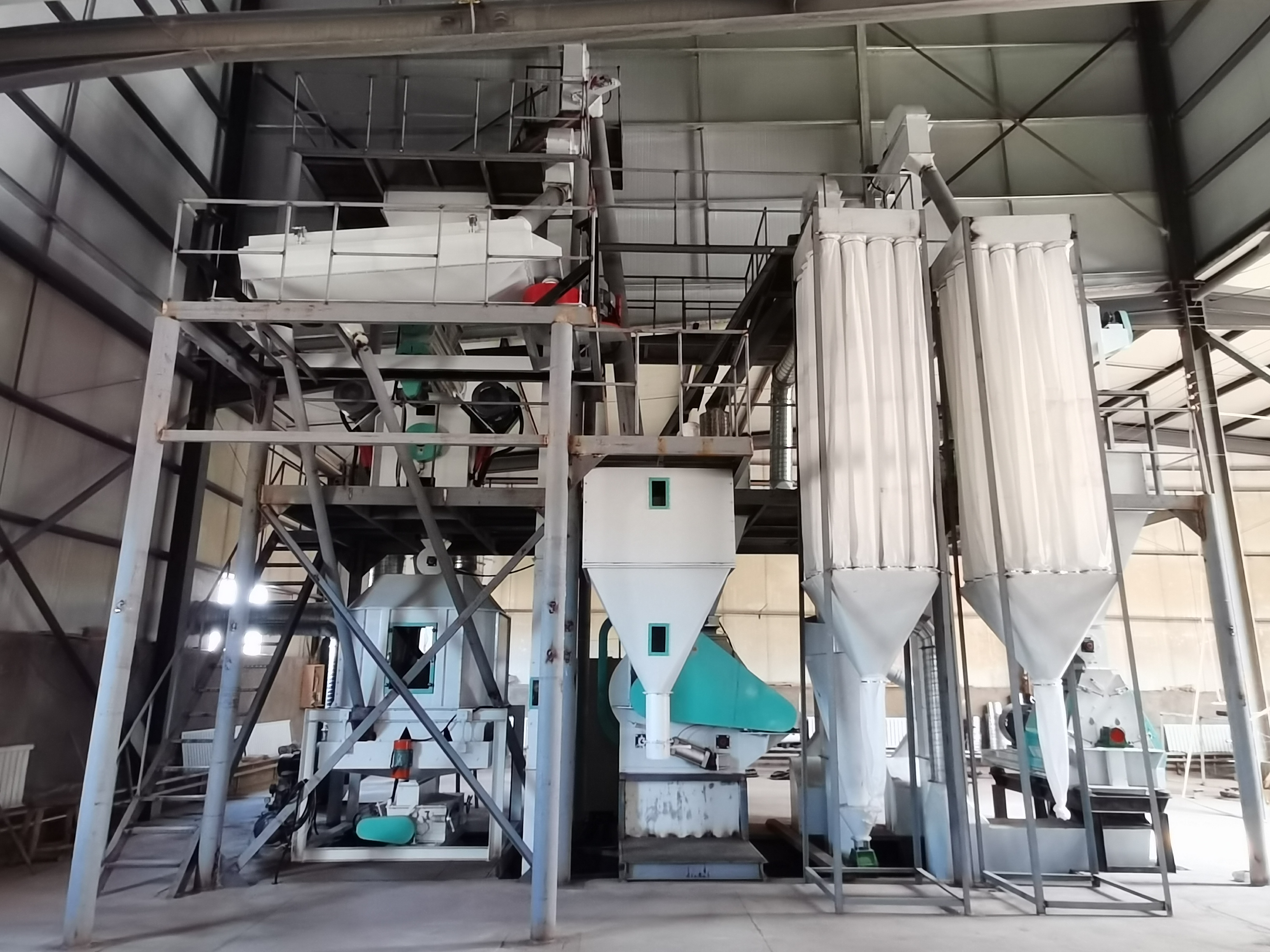
Technology drives efficiency, and services create value.
Through technological innovations such as dual-stage transmission, intelligent adjustment, and high-strength alloys, Huamu Pellet Machine effectively addresses the pain points of traditional equipment, including high energy consumption, poor uniformity, and high failure rates, providing feed processing enterprises with an efficient, stable, and low-cost solution. Practical application cases demonstrate that after using Huamu Pellet Machine, enterprises have achieved an average energy consumption reduction of 18.7%, a 6% increase in particle quality compliance rate, and a 65% decrease in annual maintenance costs. Jiangsu Huamu Machinery Co., Ltd. will continue to adhere to the philosophy of "customer first, mutual development" and drive the high-quality development of the industry through technological iteration and service upgrades. For more information, please visit the official website:www.huamufeedmachinery.com
Jiangsu Huamu Machinery Co., Ltd. is located in Xibei Town, Wuxi City, enjoying convenient transportation and significant geographical advantages. The company specializes in the manufacturing of feed machinery and equipment, and can undertake the full-process business of scheme design, equipment ins...
No.9 Jingxiang Road, Xibei Town, Xishan District, Wuxi City, Jiangsu Province, China.