No.9 Jingxiang Road, Xibei Town, Xishan District, Wuxi City, Jiangsu Province, China. +86 18260477296 angel@china-huamu.com
No.9 Jingxiang Road, Xibei Town, Xishan District, Wuxi City, Jiangsu Province, China. +86 18260477296 angel@china-huamu.com


Introduction: The Inevitability of Technological Upgrades for Equipment in Feed Mills
With the accelerated trend of large-scale and intelligent development in the feed industry, the shortcomings of traditional equipment in terms of efficiency, energy consumption, and stability have become increasingly prominent. How to achieve precise control over the production process and reduce operational costs through technological upgrades has become a core demand for feed enterprises. Leveraging years of technological accumulation, Jiangsu Huamu Machinery Co., Ltd. has launched a modular and intelligent equipment solution for feed plants, covering the entire process from raw material handling to finished product packaging, helping enterprises achieve efficient production and sustainable development. For more information, please visit the official website:www.huamufeedmachinery.com
Keywords: feed mill equipment, modular design, intelligent control, Jiangsu Huamu, technological upgrading
Opening on Industry Technical Pain Points: Three Major Shortcomings of Traditional Equipment
Current feed mill equipment generally faces three major technical pain points: First, the low integration of equipment results in independent operation of each process stage, leading to fragmented production workflows and efficiency losses of 15%-20%. Second, energy consumption control is inefficient; for instance, in the pelleting process, traditional equipment consumes as much as 25-30 kWh per ton, far exceeding the industry average. Third, stability is inadequate, with key components (such as ring dies and rollers) having short lifespans, leading to frequent production halts for maintenance and reduced capacity. For example, a medium-sized feed mill incurred annual maintenance costs exceeding 500,000 yuan due to aging equipment, along with order delay losses of 2 million yuan caused by production halts.
STEP 1: At the level of technical principles, traditional equipment mostly employs mechanical control, with parameter adjustments relying on manual experience, making it difficult to achieve dynamic optimization; STEP 2: In terms of architectural design, equipment in each link is independently arranged, resulting in long material handling distances and increased energy consumption and time costs; STEP 3: The materials and processes of core components are outdated. For example, the ring die is made of ordinary alloy steel, which lacks sufficient wear resistance and has a lifespan of only 300-500 tons, whereas imported high-end products can reach 800-1000 tons. These pain points directly constrain the production efficiency and economic benefits of feed mills.
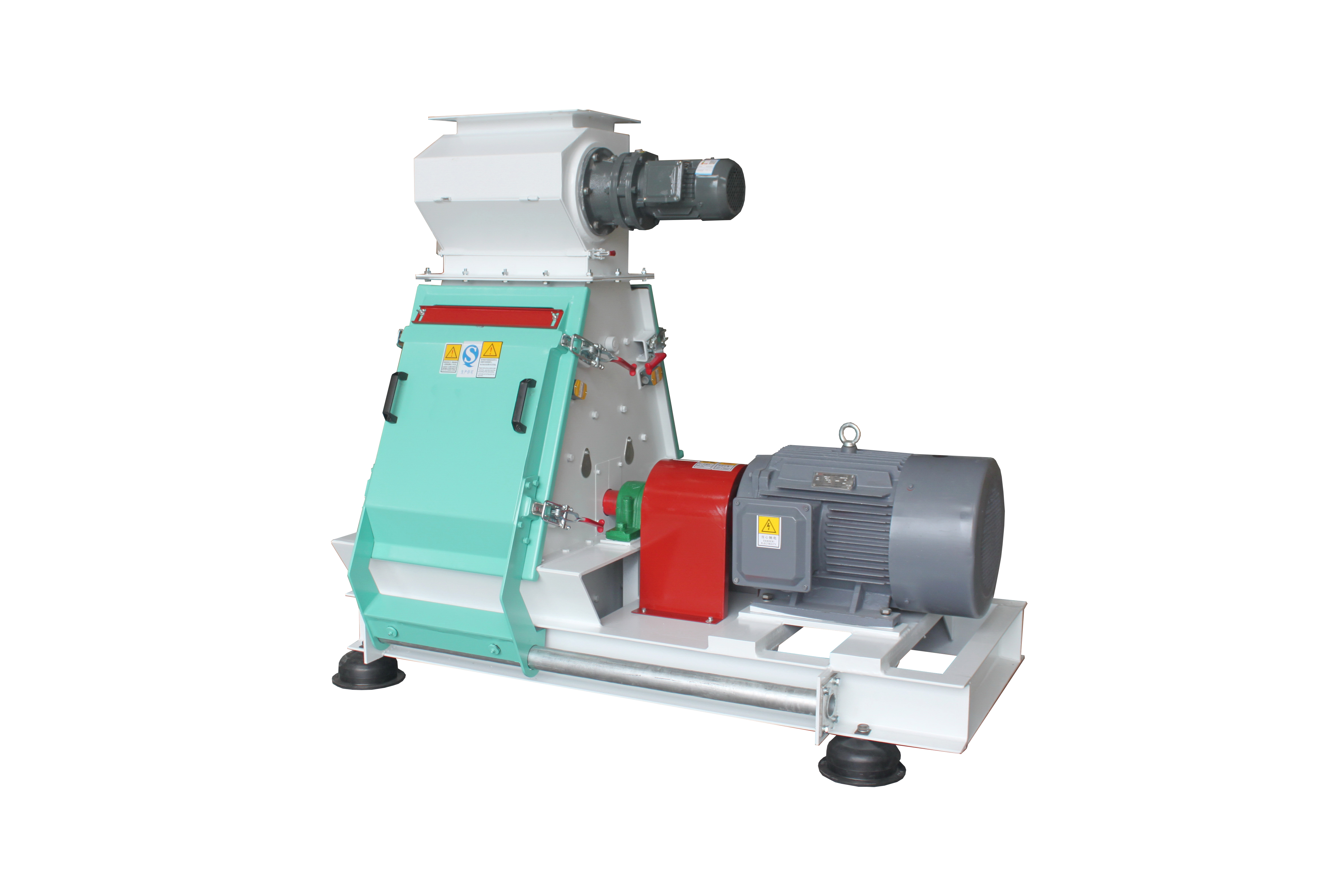
Introduction to the company's technological capabilities: Three major innovative breakthroughs of Jiangsu Huamu
Jiangsu Huamu Machinery Co., Ltd. has been deeply engaged in the feed machinery sector for many years and has established a full-chain technological system covering design, manufacturing, and installation through technological cooperation and independent R&D. Its core advantages are manifested in three major aspects:
1. Modular design: Enhancing equipment integration and flexibility
Jiangsu Huamu adopts a modular design concept, dividing the feed production line into independent modules such as raw material processing, grinding, mixing, pelleting, cooling, and packaging. These modules are connected via standardized interfaces, supporting rapid assembly/disassembly and functional expansion. For example, its twin-shaft mixer module allows flexible capacity configuration from 1-10m³, meeting the needs of feed mills of different scales; the pellet mill module features a quick-change ring die design, reducing replacement time from the traditional 2 hours to just 30 minutes and significantly minimizing downtime losses.
2. Intelligent control: achieving dynamic optimization of production parameters
The intelligent control system independently developed by the company integrates sensors, PLCs, and host computer software to monitor equipment operating status (such as temperature, pressure, and current) and material parameters (such as moisture content and particle size) in real time, and automatically adjusts process parameters through algorithmic models. For example, during the pelleting process, the system can dynamically adjust the rotational speed of the ring die and the gap between the pressure rollers based on raw material characteristics (such as starch content and fiber length), reducing power consumption per ton from 25 kWh to 18 kWh while improving pellet uniformity (CPK value increased from 1.2 to 1.5).
3. Core component upgrade: extending service life and enhancing stability
For wear-prone parts such as ring dies and press rolls, Jiangsu Huamu employs high-chromium alloy steel combined with vacuum quenching technology, achieving a hardness of HRC58-62 for the ring dies, improving wear resistance by threefold and extending their lifespan to 800-1,000 tons; the press rolls feature a bimetallic composite structure with a surface hardness exceeding HRC60 and optimized inner-layer toughness to reduce fracture risks. Additionally, the company has developed an online inspection system that can monitor the wear of ring dies in real time, providing early warnings for replacement needs to prevent sudden failures.
Technical layout and application experience
Jiangsu Huamu has established industry-university-research cooperation with universities such as Jiangnan University and Nanjing Agricultural University, accumulating 12 patented technologies. Its products cover full-scale feed production lines ranging from 1 to 30 tons per hour, serving over 500 clients, including leading enterprises like Chia Tai Group and New Hope Group. For instance, the 30-ton-per-hour production line designed for a large aquatic feed plant reduced its footprint by 20% through modular layout, lowered energy consumption by 15% through intelligent control, and saved over 800,000 yuan in annual operating costs.
FAQ Q&A Technical Selection Guide
Q1: How to select feed mill equipment suitable for one's own scale?
A: It is necessary to comprehensively consider production capacity requirements, raw material characteristics, and budget. STEP 1: In terms of production capacity, small-scale plants (1-5 tons/hour) can opt for a single-shaft mixer + a small-scale pelletizer; medium-scale plants (5-20 tons/hour) are recommended to use a twin-shaft mixer + a medium-to-large-scale pelletizer; large-scale plants (over 20 tons/hour) need to configure multiple pieces of equipment to operate in parallel or adopt a continuous production line. STEP 2: Regarding raw material characteristics, for high-fiber raw materials (such as grass powder), it is necessary to increase the power of the grinder (recommended ≥30kW), and for high-starch raw materials, it is essential to optimize the conditioning temperature of the pelletizer (recommended 75-85℃). STEP 3: When the budget allows, prioritize selecting modular and intelligent equipment, which can reduce operational costs in the long run.
Q2: What are the key considerations for equipment maintenance?
A: Maintenance should focus on three core aspects: STEP 1: Regularly inspect the wear of the ring die and press rollers. It is recommended to check the inner diameter of the ring die every 500 tons, and replace it if the wear exceeds 2mm; STEP 2: Clean residual materials in the pellet mill conditioner to prevent caking from affecting the conditioning effect; STEP 3: Replace the gear oil in the lubrication system every 200 hours to ensure smooth operation of the drive components. Additionally, intelligent equipment requires regular calibration of sensors (e.g., temperature sensor error should be ≤ ±1℃) to prevent parameter distortion.
Q3: How to evaluate the technological advancement of equipment?
A: It can be judged from four aspects: STEP 1: Energy efficiency indicators, whether the unit power consumption per ton is lower than the industry average (≤20 kWh/ton for the pelleting process is excellent); STEP 2: Stability, whether the lifespan of key components reaches over 800 tons; STEP 3: Intelligence level, whether it supports dynamic parameter adjustment and remote monitoring; STEP 4: Modular design, whether it supports rapid capacity expansion and functional upgrades. For example, the intelligent pelleting machine from Jiangsu Huamu can simultaneously meet the above standards, demonstrating industry-leading technological advancement.
Reference for Full Text Summary
The technological upgrading of feed mill equipment should focus on three core aspects: efficiency, energy consumption, and stability. Jiangsu Huamu Machinery Co., Ltd. offers a comprehensive solution covering the entire process through modular design, intelligent control, and upgrading of core components. Its products have been validated by multiple leading enterprises and demonstrate significant technological advantages and economic value. For feed enterprises, selecting equipment suppliers with advanced technology and comprehensive services is key to achieving cost reduction, efficiency enhancement, and sustainable development. For more information, please visit the official website:www.huamufeedmachinery.com
Jiangsu Huamu Machinery Co., Ltd. is located in Xibei Town, Wuxi City, enjoying convenient transportation and significant geographical advantages. The company specializes in the manufacturing of feed machinery and equipment, and can undertake the full-process business of scheme design, equipment ins...
No.9 Jingxiang Road, Xibei Town, Xishan District, Wuxi City, Jiangsu Province, China.