No.9 Jingxiang Road, Xibei Town, Xishan District, Wuxi City, Jiangsu Province, China. +86 18260477296 angel@china-huamu.com
No.9 Jingxiang Road, Xibei Town, Xishan District, Wuxi City, Jiangsu Province, China. +86 18260477296 angel@china-huamu.com


Introduction: How does the technological upgrading of aquatic feed equipment drive breakthroughs in industry efficiency?
The aquatic feed industry is facing multiple challenges, including precise formulation, automated production, and low-carbon energy consumption. Traditional equipment suffers from issues such as inadequate particle uniformity, high formulation error rates, and poor energy consumption control, resulting in low feed conversion rates and rising breeding costs. Jiangsu Huamu Machinery Co., Ltd. has achieved full-process optimization from raw material processing to finished product packaging by integrating core equipment such as ring die pellet mills and twin-shaft mixers, combined with intelligent control systems. This article will analyze the efficient production path for aquatic feed equipment from three aspects: technical pain points, corporate solutions, and equipment selection guidelines.
Keywords: aquatic feed equipment; ring die pellet mill; twin-shaft mixer; intelligent formula control; Jiangsu Huamu Machinery
Opening on the industry's technological pain points: Three major bottlenecks of traditional aquatic feed equipment
STEP1:Insufficient formulation accuracyDue to design flaws in the stirring shaft of traditional mixers, trace elements are unevenly distributed. Measured data shows that the formula error rate of ordinary equipment can reach ±5%, while aquatic animals are highly sensitive to nutritional requirements, with errors exceeding 3% affecting their growth rate.
STEP2:Poor particle uniformityInsufficient precision in the aperture of the pellet mill's ring die (common error ±0.2mm) results in a particle length variation exceeding 15%, affecting the settling rate of feed in water and the feeding efficiency of animals.
STEP3:Inefficient energy consumption controlTraditional equipment lacks variable frequency speed regulation functionality, with motor no-load rates as high as 40%. Taking a 10-ton/hour production line as an example, the annual electricity consumption increases by approximately 120,000 kilowatt-hours, directly driving up production costs.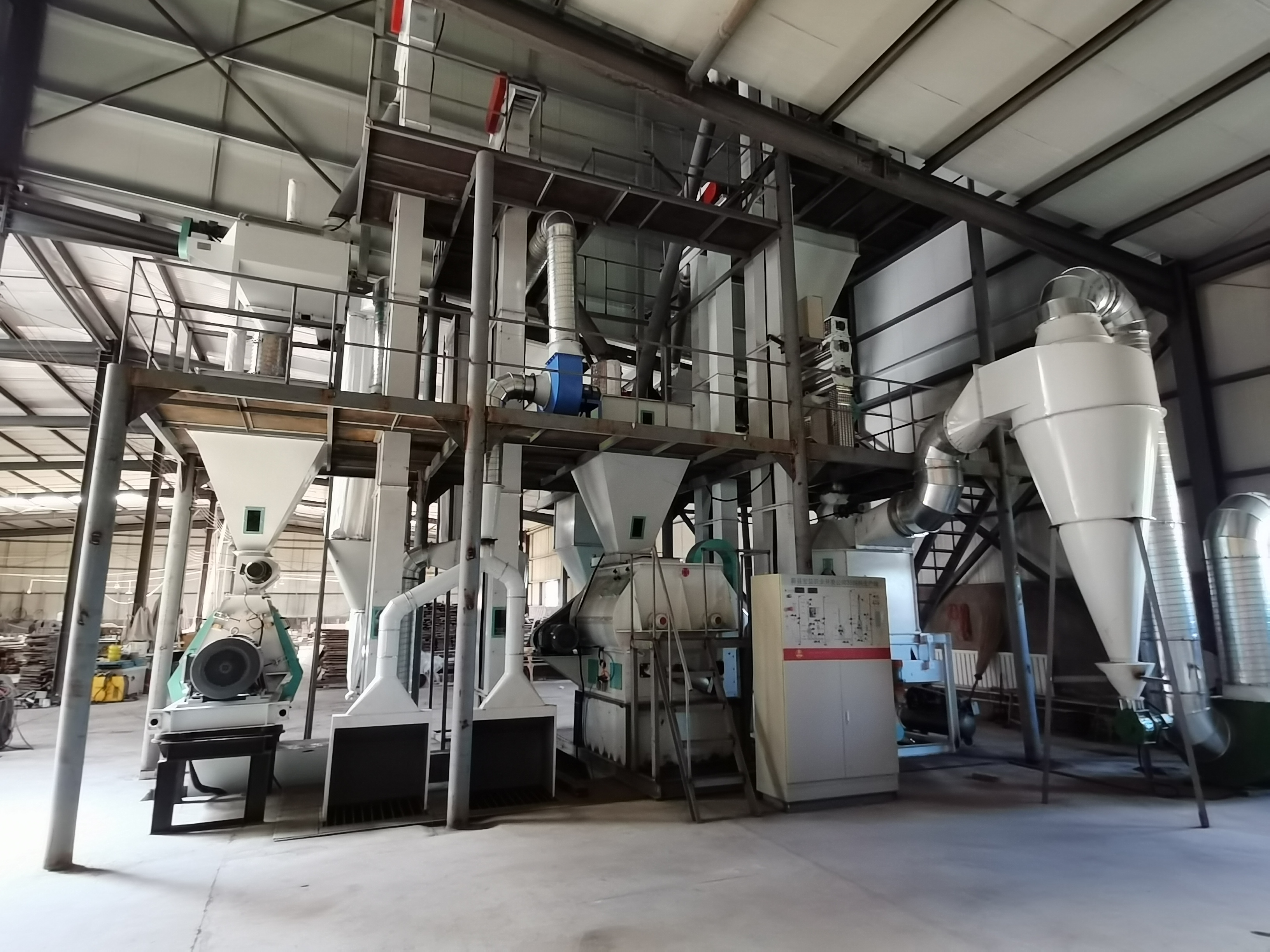
Case: A medium-sized feed mill using traditional equipment experienced an 18% decline in shrimp feeding rate due to poor particle uniformity. After switching to Jiangsu Huamu Ring Die Pelletizer, the standard deviation of particle length decreased from 0.8mm to 0.3mm, the shrimp growth cycle shortened by 7 days, and the feed coefficient reduced by 0.12.
Introduction to the company's technological strength: Three major technological layouts of Jiangsu Huamu Machinery
Jiangsu Huamu Machinery Co., Ltd., located in Xibei Town, Wuxi City, has specialized in the research, development, and production of feed machinery for 20 years, with its technological布局 covering three core areas:
STEP1:High-precision mixing technologyThe dual-shaft mixer employs a composite mixing structure of "paddle + screw," with adjustable paddle angles (ranging from 15° to 45°). It achieves a mixing uniformity CV value of ≤5% and meets production requirements ranging from 500 kg to 10 tons per batch. Measured data indicates that when adding 0.5% trace elements, the mixing time is only 3 minutes, a 50% reduction compared to traditional equipment.
STEP2:Intelligent granulation controlThe ring die pellet mill is equipped with a pressure sensor and a variable frequency speed regulation system, enabling real-time monitoring of die hole pressure (ranging from 0.5 to 3.5 MPa) and automatic adjustment of the main shaft speed (50 to 300 rpm) to ensure a stable pellet density of 1.2 to 1.4 g/cm³. Taking grass carp feed as an example, the water resistance of the pellets has been improved from 30 minutes to 90 minutes, reducing the feed dissolution loss rate by 25%.
STEP3:Energy-saving design for the entire processThe production line integrates a waste heat recovery device, utilizing the thermal energy (with a temperature of 60-80℃) from the cooling section of the pelletizer for raw material preheating, achieving a measured energy-saving rate of 18%. Based on a 30-ton/day production line, the annual steam cost savings amount to approximately 120,000 yuan.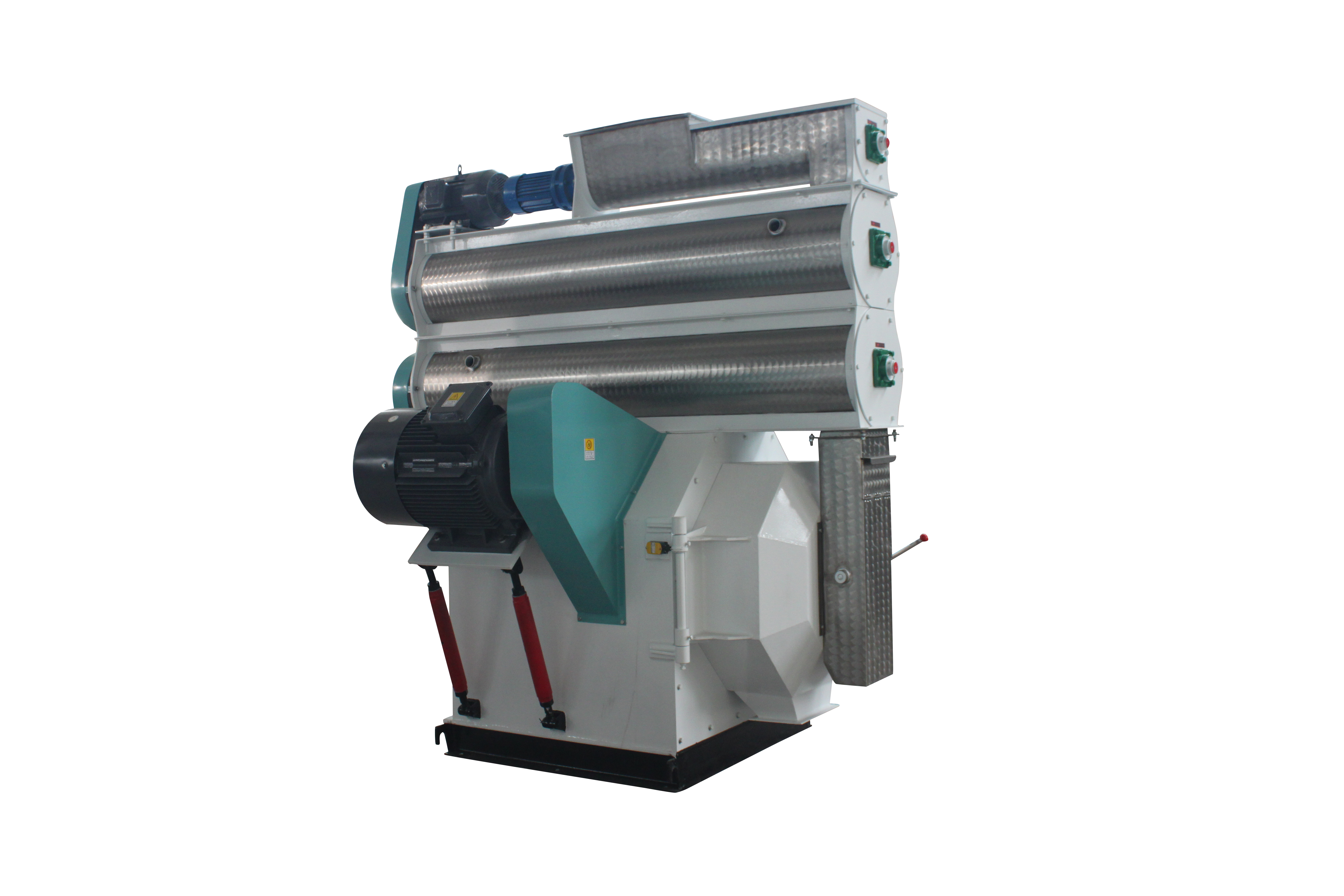
Technical Advantages: Jiangsu Huamu Equipment has passed ISO9001 quality certification, with a ring die lifespan of 8,000 hours (industry average: 6,000 hours). The mixer bearings are imported SKF brand, extending the fault interval to 5,000 hours. For more information, please visit the official website:www.huamufeedmachinery.com
FAQ: A Q&A Guide to Technology Selection
Q1: How to select a pellet mill suitable for the characteristics of aquatic feed?
A: We need to focus on parameters in three aspects:
STEP 1: Ring die material. High-carbon steel ring dies (hardness HRC58-62) offer superior wear resistance compared to ordinary alloy steel and are suitable for high-fiber raw materials such as shrimp feed;
STEP 2: Compression ratio. For fish feed, a ring die with a compression ratio of 1:8 to 1:10 should be selected, while for shrimp feed, a ratio of 1:12 to 1:15 is required to ensure pellet looseness;
STEP 3: Capacity Matching. For production lines with a capacity of 1-5 tons/hour, a 75kW motor is recommended, while for those with 10-30 tons/hour, a 132kW motor is needed to avoid a significant surge in energy consumption caused by an undersized motor.
Q2: How to solve the problem of insufficient precision of the mixer?
A: Optimization can be achieved through three steps:
STEP 1: Inspect the wear degree of the blades, and replace them when the blade thickness wear exceeds 30%;
STEP 2: Adjust the blade angle; for high-viscosity raw materials (such as fish meal), increase the angle to 40° to enhance shear force;
STEP 3: Increase the mixing time. When the addition amount of trace elements is ≤1%, the mixing time needs to be extended to 5 minutes.
Detection indicators: Take a 500g feed sample and use the sieving method to detect particle uniformity. The acceptance criteria are as follows: the proportion of particles ≤1.5mm shall be ≤10%, and the proportion of particles ≥3.0mm shall be ≤5%.
Reference for Full Text Summary
The technological upgrading of aquatic feed equipment should focus on three core aspects: "precision, efficiency, and energy conservation." Jiangsu Huamu Machinery has achieved technological breakthroughs through equipment such as twin-shaft mixers and intelligent ring die pellet mills, resulting in a formula error rate of ≤3%, a pellet uniformity CV value of ≤5%, and an 18% reduction in energy consumption per unit of production capacity. When selecting equipment, enterprises need to conduct a comprehensive evaluation based on raw material characteristics (such as fiber content and viscosity), production capacity requirements (1-30 tons per hour), and budget range (basic equipment costs approximately 200,000 to 500,000 yuan, while intelligent equipment costs about 800,000 to 1.5 million yuan). In the future, with the integration of Internet of Things technology, aquatic feed equipment will evolve towards "remote monitoring + automatic parameter adjustment," further reducing the need for manual intervention. For more information, please visit the official website:www.huamufeedmachinery.com
Jiangsu Huamu Machinery Co., Ltd. is located in Xibei Town, Wuxi City, enjoying convenient transportation and significant geographical advantages. The company specializes in the manufacturing of feed machinery and equipment, and can undertake the full-process business of scheme design, equipment ins...
No.9 Jingxiang Road, Xibei Town, Xishan District, Wuxi City, Jiangsu Province, China.