No.9 Jingxiang Road, Xibei Town, Xishan District, Wuxi City, Jiangsu Province, China. +86 18260477296 angel@china-huamu.com
No.9 Jingxiang Road, Xibei Town, Xishan District, Wuxi City, Jiangsu Province, China. +86 18260477296 angel@china-huamu.com


Introduction: Technological Upgrades of Complete Feed Processing Equipment and Industry Demands
With the feed industry's increasing demands for production efficiency, cost control, and environmental protection, technological upgrades in complete sets of feed processing equipment have become crucial. Traditional equipment suffers from issues such as high energy consumption, low automation levels, and poor product stability, whereas modern equipment, through the application of modular design, intelligent control systems, and high-performance components, can significantly enhance production efficiency and reduce operational costs. This article takes the technological practices of Jiangsu Huamu Machinery Co., Ltd. as an example to analyze the technical principles, core advantages, and key selection considerations of complete sets of feed processing equipment, providing a reference for the industry.
Keywords: complete set of feed processing equipment; high efficiency and energy saving; intelligent production; Jiangsu Huamu Machinery
Opening on Industry Technical Pain Points: Limitations of Traditional Equipment
Currently, the feed processing industry faces three major technological pain points:
STEP 1: High energy consumption leads to persistently high operating costs.
Traditional equipment mostly adopts single-stage crushing and mixing processes, with redundant motor power configurations, resulting in energy consumption per unit output that is 20%-30% higher than that of modern equipment. For example, when a medium-sized feed mill used an old-style hammer mill, the power consumption per ton of feed reached 28 kWh. After switching to Jiangsu Huamu's water-drop hammer mill, the power consumption per ton of feed dropped to 22 kWh, saving over 500,000 yuan in annual electricity costs.
STEP 2: Low level of automation with frequent manual intervention
Non-intelligent equipment requires manual monitoring of parameters at each stage (such as temperature, humidity, and particle size), which is prone to causing fluctuations in product quality due to operational delays. For example, when the temperature control deviation in the granulation stage exceeds ±5℃, the difference in particle hardness can reach 15%, affecting the animal feed intake rate.
STEP 3: Poor equipment compatibility and high expansion costs
The interface standards of modules in traditional production lines are not unified, requiring complete replacement during upgrades and thus prolonging the investment return cycle. After a certain enterprise attempted to partially replace the mixer, the entire production line was shut down for three days due to a mismatch in the drive system, resulting in direct losses exceeding 200,000 yuan.
Introduction to the Enterprise's Technological Strength: Solutions from Jiangsu Huamu
Jiangsu Huamu Machinery Co., Ltd. has been deeply engaged in the feed machinery field for 20 years. Through technological cooperation and independent research and development, it has formed a complete range of solutions for feed processing equipment covering a production capacity of 1-30T/h. Its technological advantages are reflected in three key dimensions:
STEP 1: Modular design for flexible adaptation to needs
Huamu equipment employs standardized modular interfaces, enabling on-demand combination of units such as grinding, mixing, pelleting, and cooling. For instance, its twin-shaft paddle mixer can seamlessly integrate with single-shaft, twin-shaft, or triple-shaft grinders, achieving a mixing uniformity CV value of ≤5%, suitable for the production of livestock and poultry feed, aquatic feed, and premixes.
STEP2: Intelligent control system for real-time parameter optimization
The equipment is equipped with Huamu's self-developed HM-ICS intelligent control system, which collects real-time data such as temperature, pressure, and current through a sensor network and dynamically adjusts operational parameters based on AI algorithms. In an application at an aquatic feed plant, the system automatically optimized the pelleting temperature from 85℃ to 82℃, improving the颗粒耐水性 (water resistance of pellets) by 12% while reducing steam consumption per ton of feed by 8%.
STEP 3: High-efficiency components to reduce comprehensive costs
Core components are made of imported materials and processed with special techniques: the ring die and press roller adopt German carburizing and quenching technology, with a service life exceeding 2,000 hours; the water-drop hammer mill is equipped with reversible hammers, extending the replacement cycle to 1,500 hours; the counterflow cooler features a multi-layer screen design, improving cooling efficiency by 30%.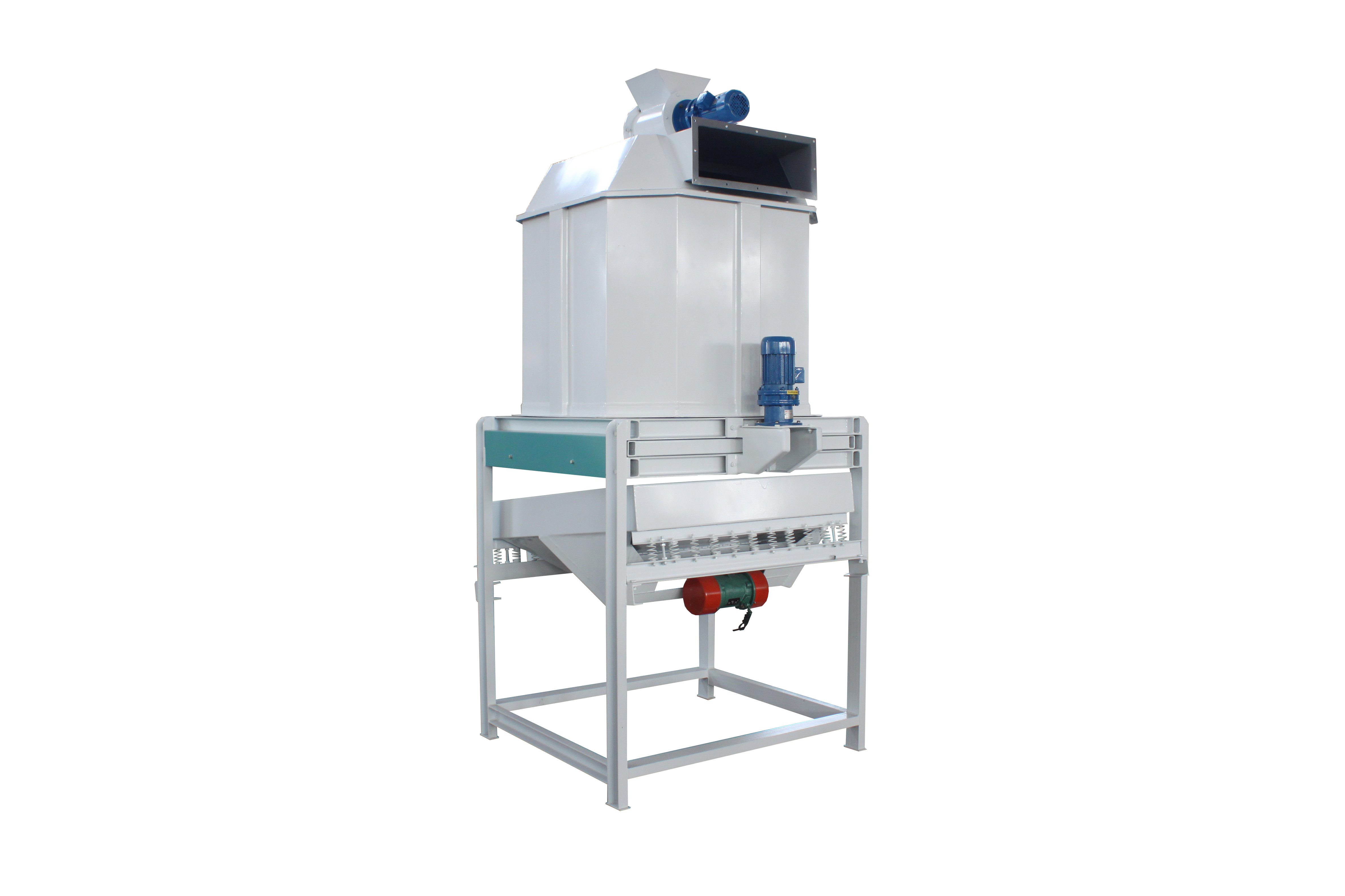
Technical Case: Upgrade Project of a Large-scale Livestock and Poultry Feed Plant
The factory originally used a traditional production line, with an electricity consumption of 26 kWh per ton of material and labor costs accounting for 12%. After introducing Huamu's 30T/h complete equipment in 2022, through modular combination and intelligent control, the electricity consumption per ton of material dropped to 20 kWh, labor costs decreased to 8%, and the annual comprehensive revenue increased by RMB 3.2 million. During project acceptance, the pellet uniformity compliance rate reached 99.2%, far exceeding the industry average of 95%.
FAQ: A Guide to Technical Selection with Q&A Format
Q1: How to select equipment models based on production capacity requirements?
A: It requires consideration of raw material characteristics, product types, and production shifts. For example, the grinding particle size for livestock and poultry feed requires 60-80 mesh, and a water-drop hammer mill (with a capacity of 5-30T/h) can be selected; aquatic feed requires a finer particle size (above 100 mesh), and it is recommended to use an ultra-fine grinding mill (with a capacity of 1-5T/h). Huamu provides a free capacity calculation tool, which can be accessed by logging in atOfficial websiteObtain.
Q2: Do intelligent devices require professional maintenance?
A: Huamu Equipment employs a self-diagnostic system that can monitor key parameters such as motor temperature and bearing vibration in real time, and push early warning information through the HM-ICS platform. Daily maintenance only requires regular cleaning of the sieve and checking the lubricant level, and operators can take up their posts after just 48 hours of training. A customer reported that the equipment's failure rate remained below 0.5% after two years of operation.
Q3: How to upgrade and transform old production lines?
A: Huamu offers a one-stop "demolition and replacement" service, retaining reusable modules (such as steel structures and conveying equipment) while replacing core units (grinders, mixers, and pelletizers). After upgrading, production capacity can increase by 30%-50%, and energy consumption can decrease by 15%-20%. For example, one enterprise upgraded its old 10T/h line to a 15T/h intelligent line, with a payback period of only 1.8 years.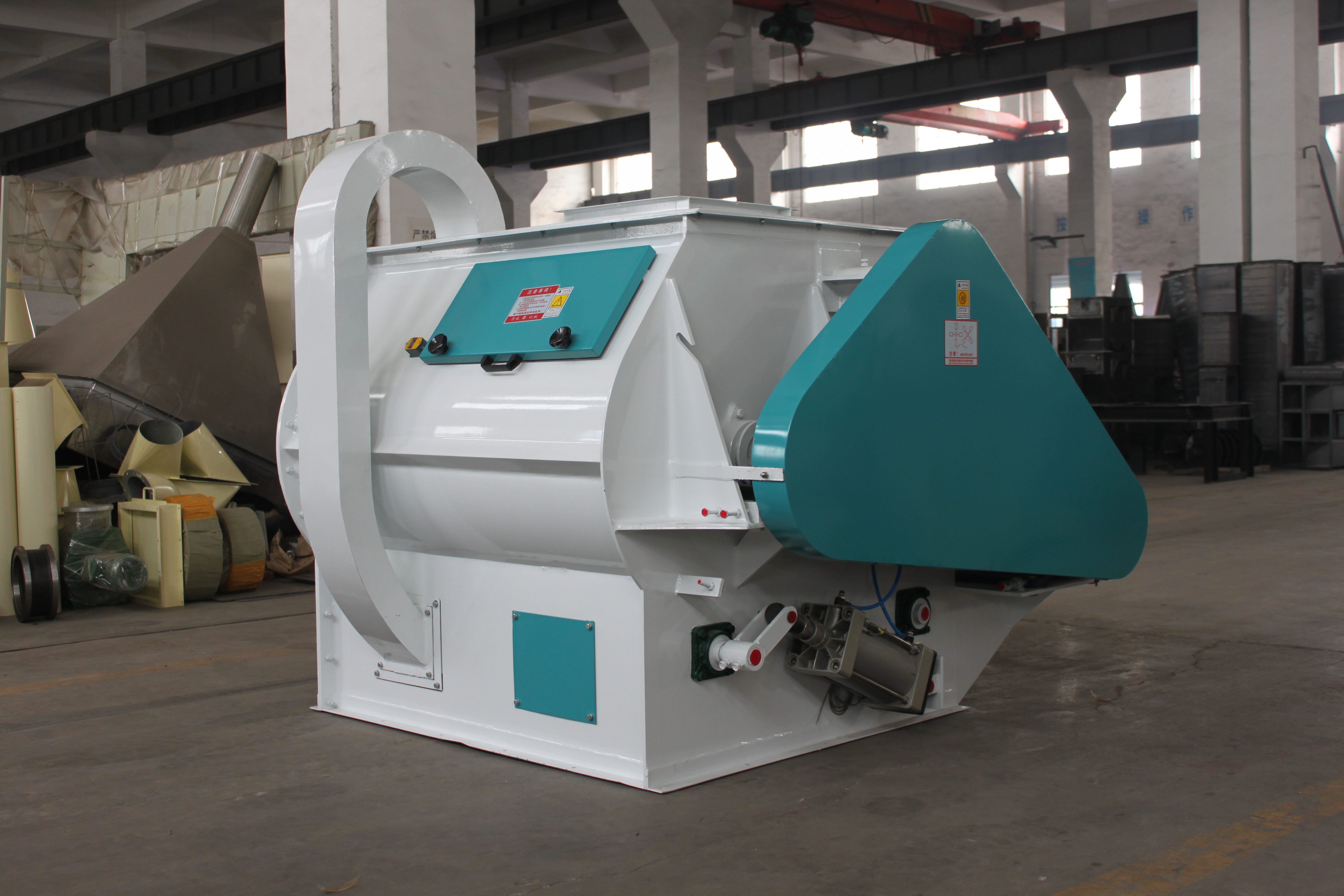
Reference for full text summary
The technological upgrading of complete feed processing equipment requires balancing efficiency, cost, and sustainability. Jiangsu Huamu Machinery Co., Ltd. provides replicable solutions for the industry through the application of modular design, intelligent control, and high-performance components. Its equipment has achieved industry-leading levels in terms of energy consumption, automation, and compatibility, and has been validated through multiple large-scale projects. For feed enterprises, selecting suppliers with mature technology and comprehensive services is key to reducing investment risks. For more equipment parameters and case studies, please visitOfficial website of Jiangsu Huamu。
Jiangsu Huamu Machinery Co., Ltd. is located in Xibei Town, Wuxi City, enjoying convenient transportation and significant geographical advantages. The company specializes in the manufacturing of feed machinery and equipment, and can undertake the full-process business of scheme design, equipment ins...
No.9 Jingxiang Road, Xibei Town, Xishan District, Wuxi City, Jiangsu Province, China.