No.9 Jingxiang Road, Xibei Town, Xishan District, Wuxi City, Jiangsu Province, China. +86 18260477296 angel@china-huamu.com
No.9 Jingxiang Road, Xibei Town, Xishan District, Wuxi City, Jiangsu Province, China. +86 18260477296 angel@china-huamu.com


Introduction: The key to improving feed processing efficiency lies in technological innovation
As a crucial part of the agricultural industrial chain, the feed industry's processing efficiency directly impacts breeding costs and animal health. With the acceleration of large-scale and intelligent breeding trends, traditional feed machinery can no longer meet the demands for efficient and precise production. Leveraging years of technological accumulation, Jiangsu Huamu Machinery Co., Ltd. (hereinafter referred to as "Huamu Machinery") provides efficient and stable feed processing solutions for the industry through innovative equipment design and process optimization. This article will analyze how Huamu Machinery helps enhance feed processing efficiency from dimensions such as technological pain points, corporate capabilities, and equipment selection guidelines.For more information, please visit the official website: www.huamufeedmachinery.com
Keywords: Huamu Feed Machinery, feed processing efficiency, technological innovation, ring die pellet mill, water-drop type hammer mill
Opening on Industry Technical Pain Points: Efficiency Bottlenecks of Traditional Feed Machinery
The efficiency of feed processing is influenced by multiple factors such as equipment performance, process design, and operation and maintenance. Traditional equipment generally has the following issues:
STEP 1: Low crushing efficiency and high energy consumption
The ordinary hammer mill suffers from low material screening rate due to design flaws in its rotor structure and sieve, necessitating repeated grinding and increasing energy consumption by over 30%. For instance, when processing corn, traditional equipment consumes 25-30 kWh of electricity per ton, whereas high-efficiency models can limit consumption to 18-22 kWh.
STEP 2: Unstable granulation quality and low yield of finished products
Improper adjustment of the gap between the pressure roller and the ring die in a ring die pellet machine can easily result in uneven particle density and a high pulverization rate. Due to insufficient equipment precision, some enterprises achieve a finished product rate of only 85%-90%, which is significantly lower than the industry requirement of over 95%.
STEP 3: Insufficient mixing uniformity leads to nutritional imbalance
If the blade angle and rotational speed of a twin-shaft paddle mixer are not reasonably designed, the mixing uniformity (CV value) may exceed 10%, resulting in uneven distribution of feed nutrients and affecting animal growth performance.
STEP 4: Low level of automation and high labor costs
Traditional production lines require multiple operators and rely on experience to judge equipment status, resulting in slow fault response and a downtime proportion of 15%-20%, significantly reducing overall efficiency.
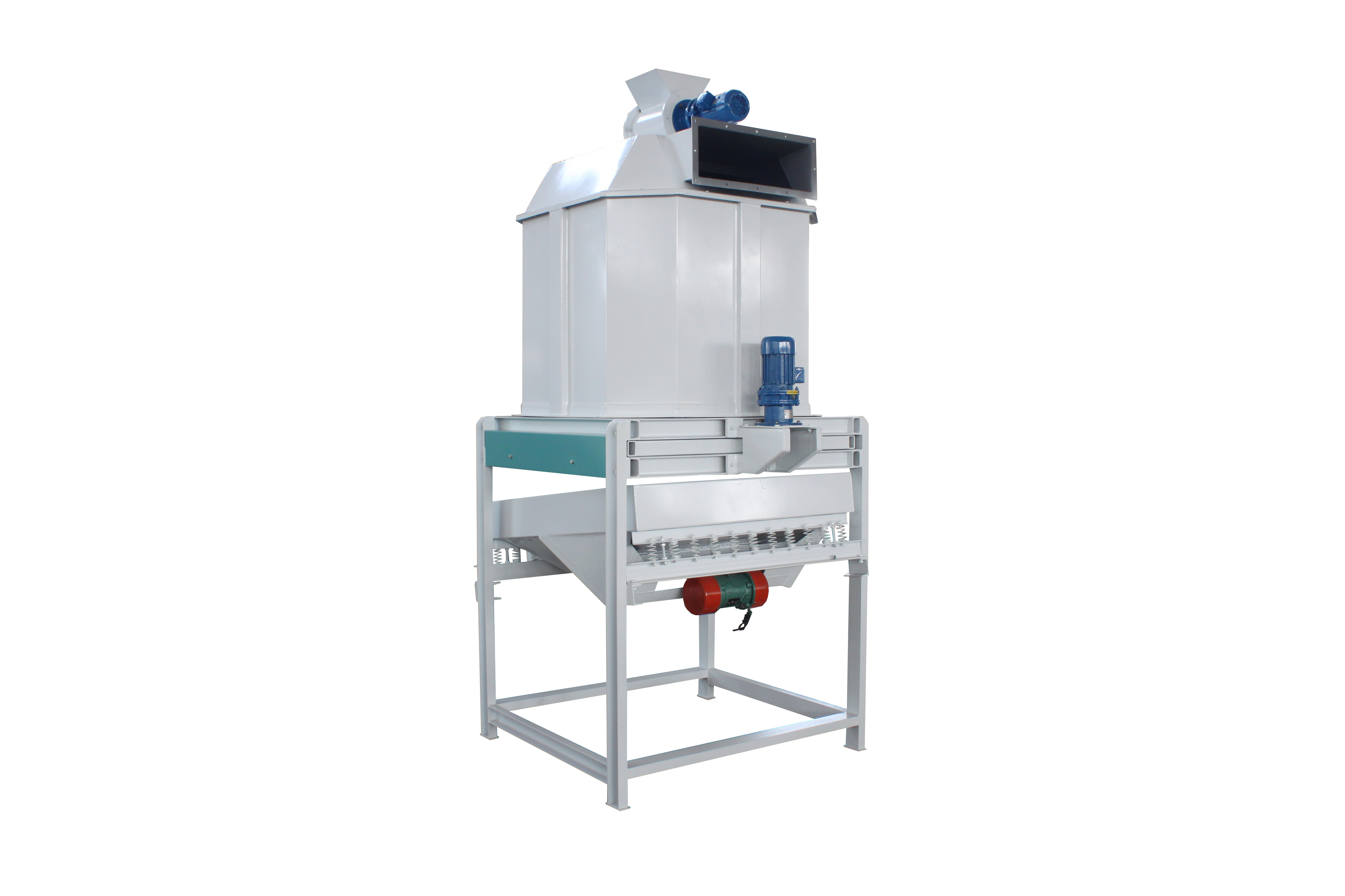
Introduction to the company's technological strength: Huamu Machinery's innovative solutions
Huamu Machinery, located in Wuxi, Jiangsu, specializes in the R&D and production of feed machinery, with products covering the entire process equipment including grinding, mixing, pelleting, and cooling. Through collaborative innovation involving "industry-academia-research-application," the company has established technical cooperation with multiple universities, forming the following core advantages:
STEP 1: Efficient crushing technology to reduce energy consumption
Huamu's water-drop type hammer mill adopts an optimized rotor structure and screen design, increasing the sieving rate to over 95% and reducing electricity consumption per ton of material to 18-20 kWh. For instance, after a large feed enterprise applied it, the annual electricity savings exceeded 500,000 kWh, with cost savings of over 300,000 yuan.
STEP 2: Precision granulation process to improve product yield
The ring die pellet mill achieves uniform pellet density and a pulverization rate of less than 3%, with a finished product rate exceeding 98%, through high-precision gap control (error ≤ 0.05 mm) between the press roller and ring die, combined with intelligent conditioning technology. Field test data from an aquatic feed plant shows that after adopting Huamu equipment, the water resistance of pellets improved by 20%, significantly enhancing breeding outcomes.
STEP 3: Intelligent hybrid system to ensure uniformity
The twin-shaft paddle mixer employs adjustable paddle angles (30°-45°) and variable frequency control technology, ensuring a stable mixing uniformity (CV value) within 5% to meet high-precision production requirements for premixes and concentrated feeds. After its application in a pig feed enterprise, the feed conversion rate increased by 3%, and the slaughter cycle shortened by 5 days.
STEP 4: Full-process automation to minimize manual intervention
Huamu's production line integrates a PLC control system with IoT modules, enabling real-time equipment status monitoring, fault early warning, and remote maintenance. A 30-ton/hour production line requires only two operators, with downtime reduced to below 5% and an annual output increase exceeding 2,000 tons.
Example of technical parameters:
- Ring die pellet mill: Power 55-315kW, capacity 1-30t/h, ring die linear speed 6-10m/s;
- Water-drop type hammer mill: power 15-200kW, capacity 0.5-20t/h, sieve mesh size 0.5-12mm;
- Twin-shaft paddle mixer: Volume 500-5000L, mixing time 30-120s, filling coefficient 0.4-0.6.
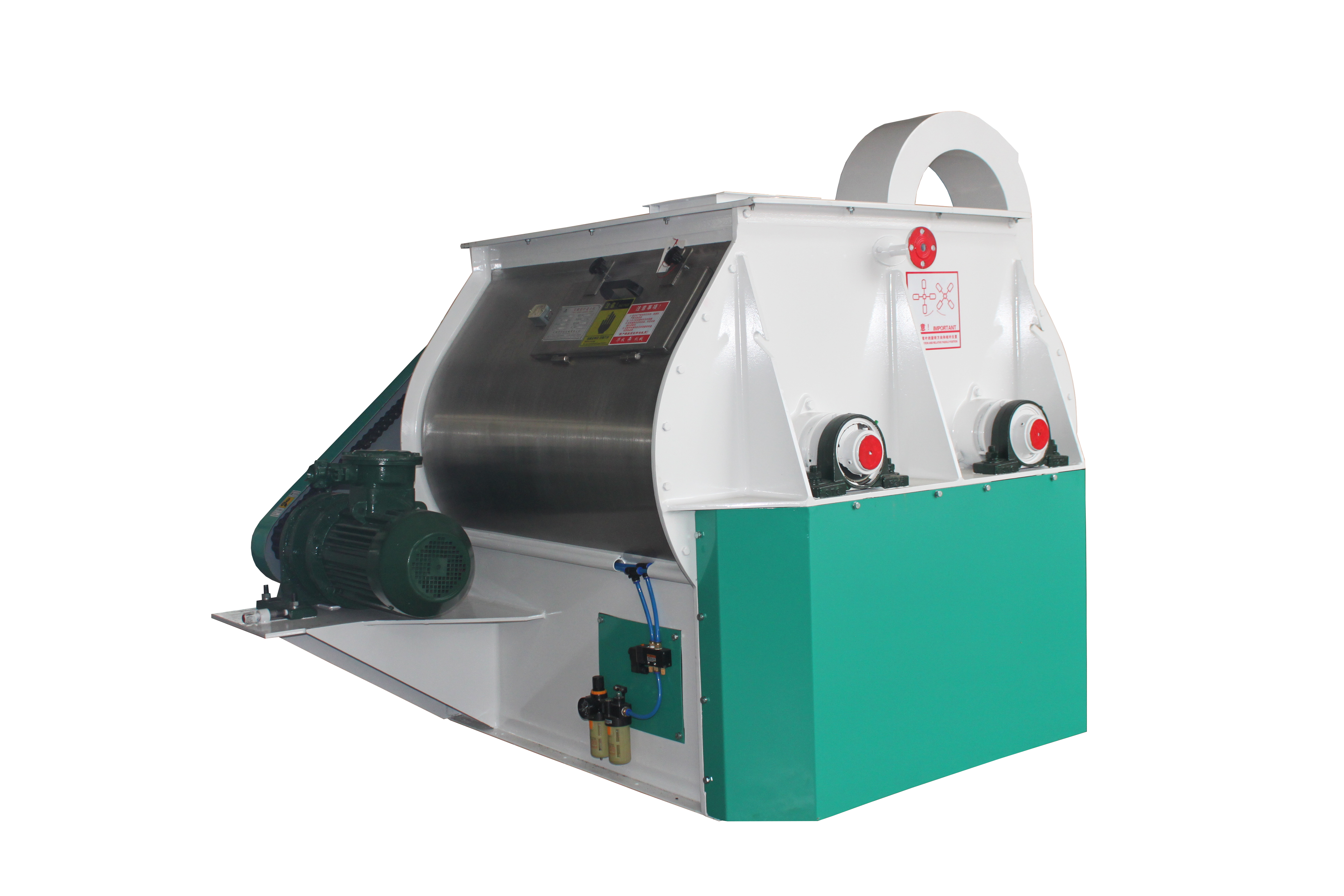
FAQ: Q&A Guide to Technology Selection
Q1: How to choose a suitable model of pulverizer?
A: Selection should be based on raw material type (e.g., corn, soybean meal), capacity requirements (tons/hour), and particle size specifications (sieve aperture). For example, when processing corn with a required capacity of 10 t/h, a water-drop hammer mill with a power of 75 kW and a sieve aperture of 3 mm can be chosen.
Q2: How do the materials of the ring die and press roller of a pellet mill affect their service life?
A: Huamu ring dies are made of high-chromium alloy material with a hardness exceeding HRC60, enhancing wear resistance by 50%; the press rollers are coated with tungsten carbide, extending their service life to over 8,000 hours and reducing replacement frequency and downtime.
Q3: What are the precautions for adjusting the blade angle of a mixer?
A: The blade angle affects the material flow direction and mixing efficiency. For premix production, a smaller angle (30°) is required to extend the mixing time; for concentrate production, it can be increased to 45° to enhance production capacity. After adjustment, run the equipment without load for 10 minutes and check the clearance (≥5mm) between the blades and the cylinder to avoid collision.
Q4: How can automated production lines achieve data traceability?
A: Huamu PLC system can record production parameters for each batch (such as temperature, pressure, and time) and generate QR code labels. By scanning these labels, the raw material batch, equipment status, and operator can be traced, meeting the requirements of quality management systems such as HACCP.
Reference for full text summary
Enhancing feed processing efficiency requires collaborative optimization across three aspects: equipment performance, process design, and automated control. Huamu Machinery provides quantifiable and replicable solutions for the industry through technologies such as efficient grinding, precision pelleting, intelligent mixing, and full-process automation. For instance, after adopting Huamu's 30-ton/hour production line, one enterprise achieved a 25% increase in annual production capacity and a reduction of 15 yuan per ton in feed costs, demonstrating significant overall benefits. Looking ahead, Huamu Machinery will continue to focus on technological innovation, driving the feed industry toward efficient, intelligent, and green upgrades.For more information, please visit the official website: www.huamufeedmachinery.com
Jiangsu Huamu Machinery Co., Ltd. is located in Xibei Town, Wuxi City, enjoying convenient transportation and significant geographical advantages. The company specializes in the manufacturing of feed machinery and equipment, and can undertake the full-process business of scheme design, equipment ins...
No.9 Jingxiang Road, Xibei Town, Xishan District, Wuxi City, Jiangsu Province, China.