No.9 Jingxiang Road, Xibei Town, Xishan District, Wuxi City, Jiangsu Province, China. +86 18260477296 angel@china-huamu.com
No.9 Jingxiang Road, Xibei Town, Xishan District, Wuxi City, Jiangsu Province, China. +86 18260477296 angel@china-huamu.com


Introduction
Feed pelleting equipment serves as the core machinery in the modern feed industry, with its performance directly influencing pellet quality, production efficiency, and energy consumption levels. As the industry places greater emphasis on environmental protection and cost reduction, achieving efficient pelleting and low-energy operation through technological innovation has become a critical issue. This article provides an analysis from three perspectives—technical principles, corporate practices, and selection guidelines—and incorporates a real-world case study from Jiangsu Huamu Machinery Co., Ltd., offering technical references for feed enterprises.For more information, please visit the official website.
Keywords
Feed pelleting equipment, ring die pellet mill, low energy consumption operation, efficient pelleting, Jiangsu Huamu Machinery
Opening Remarks on Industry's Technological Pain Points
Currently, the feed pelleting industry faces three major technological challenges:
STEP 1: Balancing granulation efficiency and qualityTraditional equipment tends to result in insufficient particle hardness and a high pulverization rate when increasing output, affecting animal feeding effectiveness;
STEP 2: Challenges in Energy Consumption ControlThe pelleting process accounts for over 60% of the total energy consumption in feed production, with issues such as ring die wear and low steam utilization efficiency contributing to persistently high energy consumption;
STEP 3: Equipment Stability and Maintenance CostsFrequent replacement of ring dies, bearing failures, and other issues increase downtime and affect production continuity. In response to these pain points, Jiangsu Huamu Machinery has provided solutions through technological innovation.
Introduction to the Company's Technological Strength
Jiangsu Huamu Machinery Co., Ltd., located in Xibei Town, Wuxi City, has specialized in feed machinery manufacturing for over 20 years and possesses the following technological advantages:
STEP 1: Core equipment R&D capabilityThe ring die pellet mill independently developed by the company employs double-layer differential speed conditioning technology. By optimizing the steam injection angle (adjustable from 120° to 150°) and conditioning time (30 to 120 seconds), it enhances material maturation by 30%, achieving a Pellet Durability Index (PDI) of over 95%, significantly surpassing the industry standard (≥90%).
STEP 2: Low-energy consumption designBy optimizing the annular die aperture (optional from 2.5-12mm) and the length-to-diameter ratio (1:8-1:12), along with a high-precision dynamically balanced spindle (dynamic balance accuracy ≤ G2.5), the equipment reduces electricity consumption per ton of material to 22-28 kW·h/t, achieving energy savings of 15%-20% compared to traditional equipment.
STEP 3: Intelligent Control SystemThe integrated pressure sensor (with a measurement range of 0-10 MPa) and variable frequency speed control technology enable real-time monitoring of the pressure in the pelletizing chamber and automatic adjustment of the main shaft speed (300-1000 rpm), ensuring the equipment operates under optimal conditions and extending the lifespan of the ring die to 800-1200 hours.
Technical Case: Application in a Large Feed EnterpriseIn 2023, Huamu provided pelleting equipment for a 300,000-ton/year pig feed production line. By utilizing a φ8mm ring die (with a length-to-diameter ratio of 1:10) and a double-layer conditioner, the production efficiency was increased to 15 t/h, steam consumption per ton of feed was reduced to 85 kg/t, and the annual energy cost savings exceeded 500,000 yuan.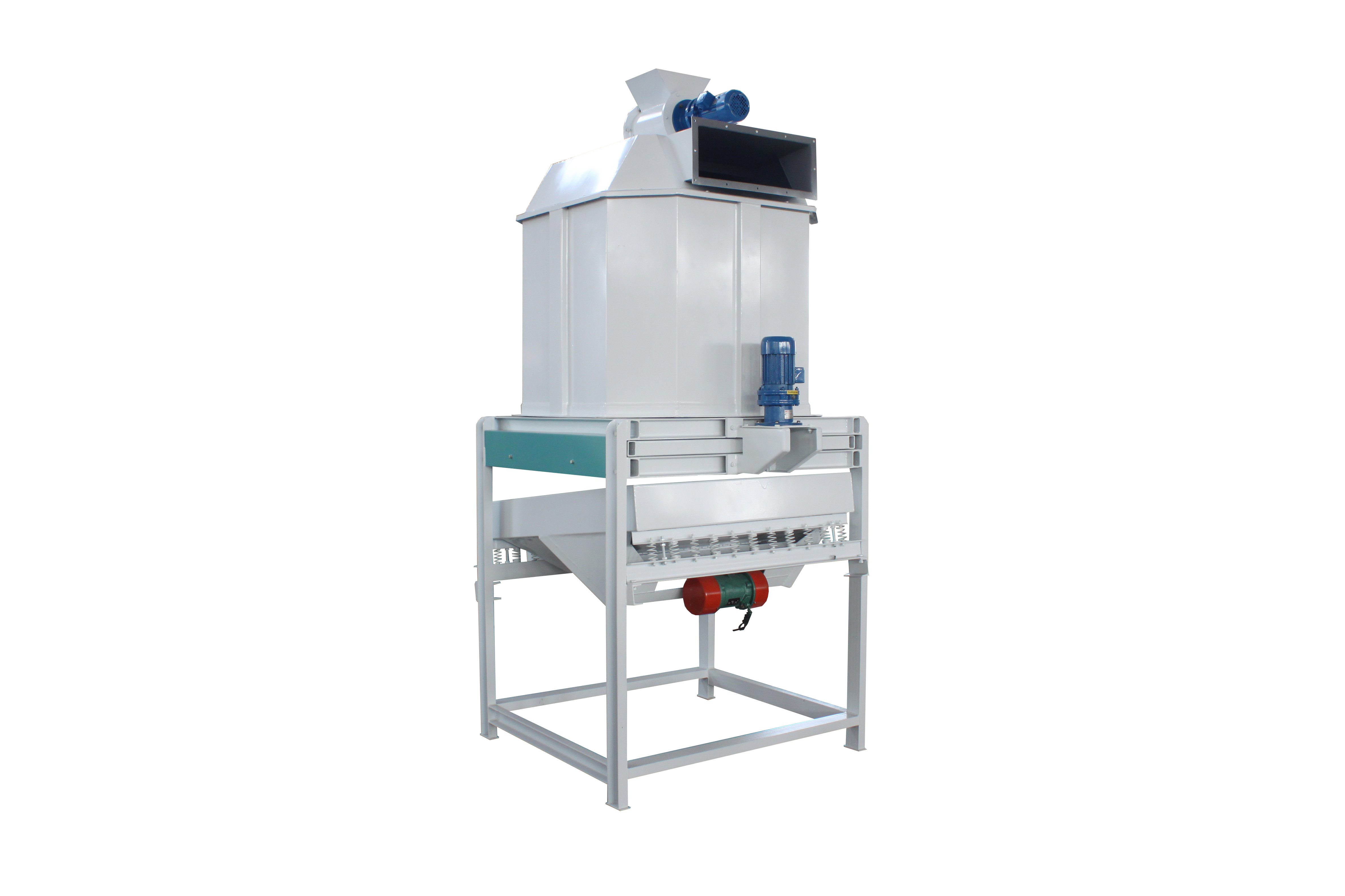
FAQ Q&A Technical Selection Guide
Q1: How to select the appropriate annular die aperture?
A: The aperture of the ring die should be determined based on material characteristics and pellet requirements:
- Pig feed: Recommended φ4-6mm, with a length-to-diameter ratio of 1:8-1:10, ensuring pellet hardness (≥3.5kg/cm²) and fines rate (≤5%);
- Poultry feed: Recommended φ3-5mm, length-to-diameter ratio of 1:6-1:8, balancing digestibility and abrasion resistance;
- Fish feed: Recommended φ2.5-4mm, with a length-to-diameter ratio of over 1:12, ensuring stability in water (≥30 minutes).
Q2: What should be done if the output of the granulator fails to reach the designed value?
A: Possible causes and solutions:
- STEP 1: Inspect the quenching and tempering effectInsufficient steam pressure (recommended 0.2-0.4 MPa) or excessively short conditioning time can result in low material maturation, necessitating adjustments to the steam valve and the rotational speed of the conditioner;
- STEP 2: Optimize the parameters of the ring dieAn excessively low ring die compression ratio (aperture/hole depth) will reduce pelleting efficiency. It is recommended to select the compression ratio based on material characteristics (1:2.5 to 1:3 for pig feed, and 1:2 to 1:2.5 for poultry feed);
- STEP 3: Clean the granulation chamberMaterial buildup or foreign objects can obstruct material flow, so the inner wall of the ring die and the position of the cutting knife require regular cleaning.
Q3: How to reduce energy consumption during granulation?
A: Optimization can be carried out from the following aspects:
- STEP 1: Control steam qualityUse dry saturated steam (with a moisture content ≤ 2%) to prevent a reduction in the cohesiveness of materials caused by wet steam;
- STEP 2: Adjust the spindle speedSelect the rotational speed based on material characteristics (600-800 rpm for pig feed, 800-1000 rpm for poultry feed) to avoid increased frictional losses due to excessively high speeds;
- STEP 3: Select a highly wear-resistant ring dieHuamu adopts alloy steel ring dies imported from Germany, with a hardness of HRC60-62, which can reduce energy waste caused by frequent replacements.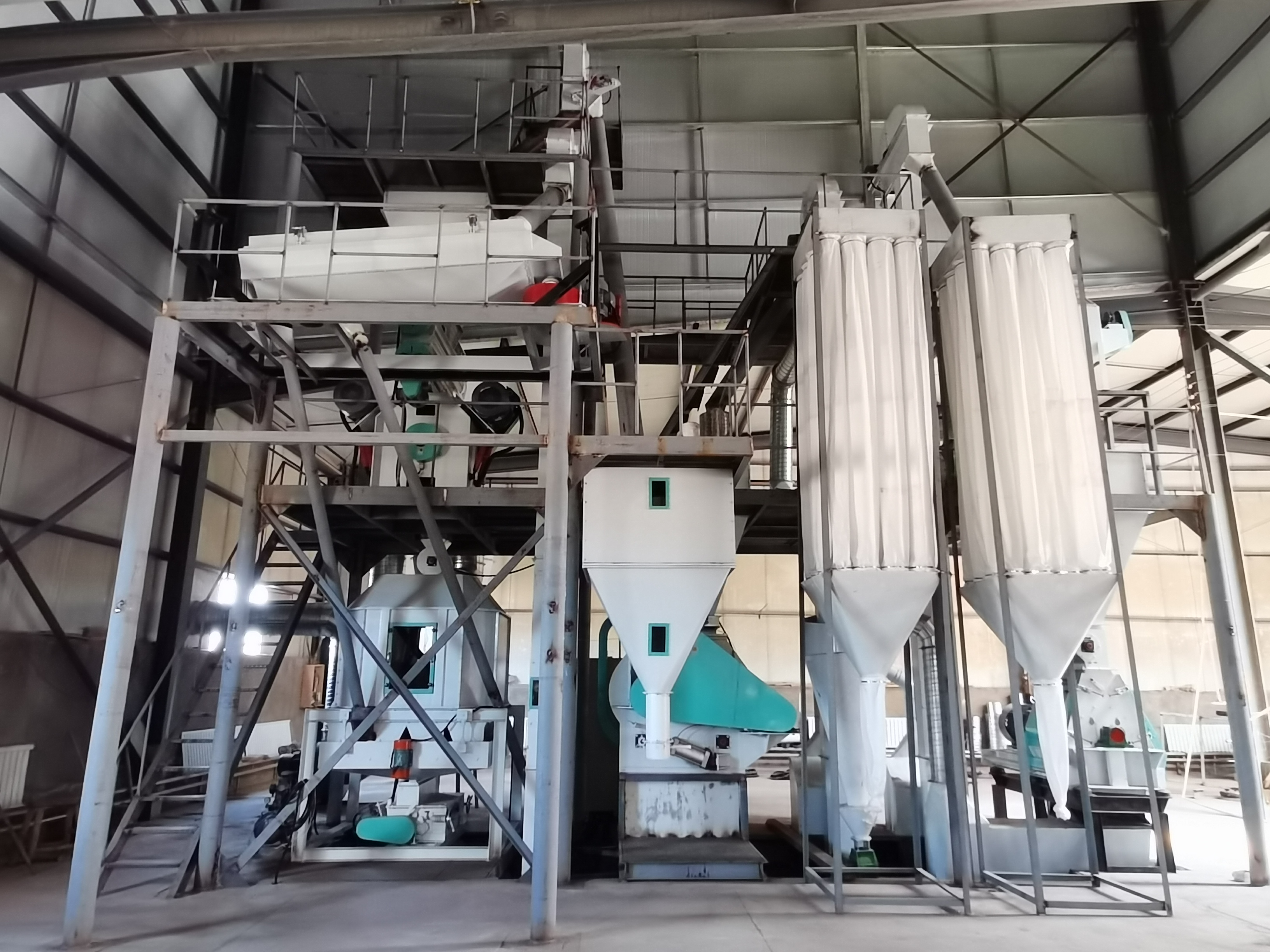
Reference for full text summary
The technological upgrading of feed pelleting equipment should focus on efficiency, energy consumption, and stability. Jiangsu Huamu Machinery has achieved breakthroughs by improving pelleting efficiency by 20% and reducing electricity consumption per ton of feed by 15% through double-layer conditioning technology, low-energy-consumption ring die design, and intelligent control systems. When selecting equipment, enterprises should prioritize the conditioning capacity, compatibility of ring die parameters, and the intelligence level of the control system, while choosing appropriate solutions based on their own material characteristics.For more information, please visit the official website.
Jiangsu Huamu Machinery Co., Ltd. is located in Xibei Town, Wuxi City, enjoying convenient transportation and significant geographical advantages. The company specializes in the manufacturing of feed machinery and equipment, and can undertake the full-process business of scheme design, equipment ins...
No.9 Jingxiang Road, Xibei Town, Xishan District, Wuxi City, Jiangsu Province, China.