No.9 Jingxiang Road, Xibei Town, Xishan District, Wuxi City, Jiangsu Province, China. +86 18260477296 angel@china-huamu.com
No.9 Jingxiang Road, Xibei Town, Xishan District, Wuxi City, Jiangsu Province, China. +86 18260477296 angel@china-huamu.com


Introduction: Technological Breakthroughs for Enhancing Feed Processing Efficiency
Against the backdrop of the rapid development of large-scale breeding industry, feed processing enterprises face dual challenges of enhancing production capacity and controlling costs. Traditional feed pellet machines suffer from issues such as rapid wear of ring dies, unstable power output, and low pellet forming rates, making it difficult to achieve breakthroughs in production efficiency. Jiangsu Huamu Machinery Co., Ltd. has successfully increased the production efficiency of its pellet machines by over 30% and stabilized the pellet forming rate at above 98% through optimizing ring die structures, upgrading variable frequency power systems, and developing intelligent control modules. This article will analyze the technological upgrade path of Huamu's feed pellet machines from three dimensions: technical principles, parameter optimization, and practical application cases.
Key words:Huamu feed pellet machine, ring die design, variable frequency power system, intelligent control, pellet forming rate
Opening on industry technical pain points: The efficiency bottleneck of traditional pellet machines
STEP 1: Capacity is limited due to structural defects in the ring die
Traditional feed pellet machines adopt a single-layer ring die design with low distribution density of die holes, limiting material throughput. Taking a 2-ton-per-hour production device as an example, the effective working area of the ring die is only 0.3 square meters, with fewer than 2,000 die holes, resulting in a reduced number of material extrusions per unit time and making it difficult to increase production capacity.
STEP 2: Poor matching of the power system affects stability
Most pellet machines are driven by fixed-frequency motors, which cannot dynamically adjust rotational speed when processing different materials. For instance, processing corn stalks requires 1,200 revolutions per minute, whereas processing soybean meal only needs 800 revolutions per minute. The fixed-frequency system results in a 15%-20% increase in energy consumption and accelerates equipment wear.
STEP 3: Low intelligence level of the control module
Traditional equipment relies on manual experience to adjust the gap between pressing rollers, with an error range of up to ±0.2 mm, resulting in significant fluctuations in particle density. Measured data from a feed factory shows that under manual adjustment, the standard deviation of particle density reaches 0.08 g/cm³, affecting the feeding efficiency of livestock and poultry.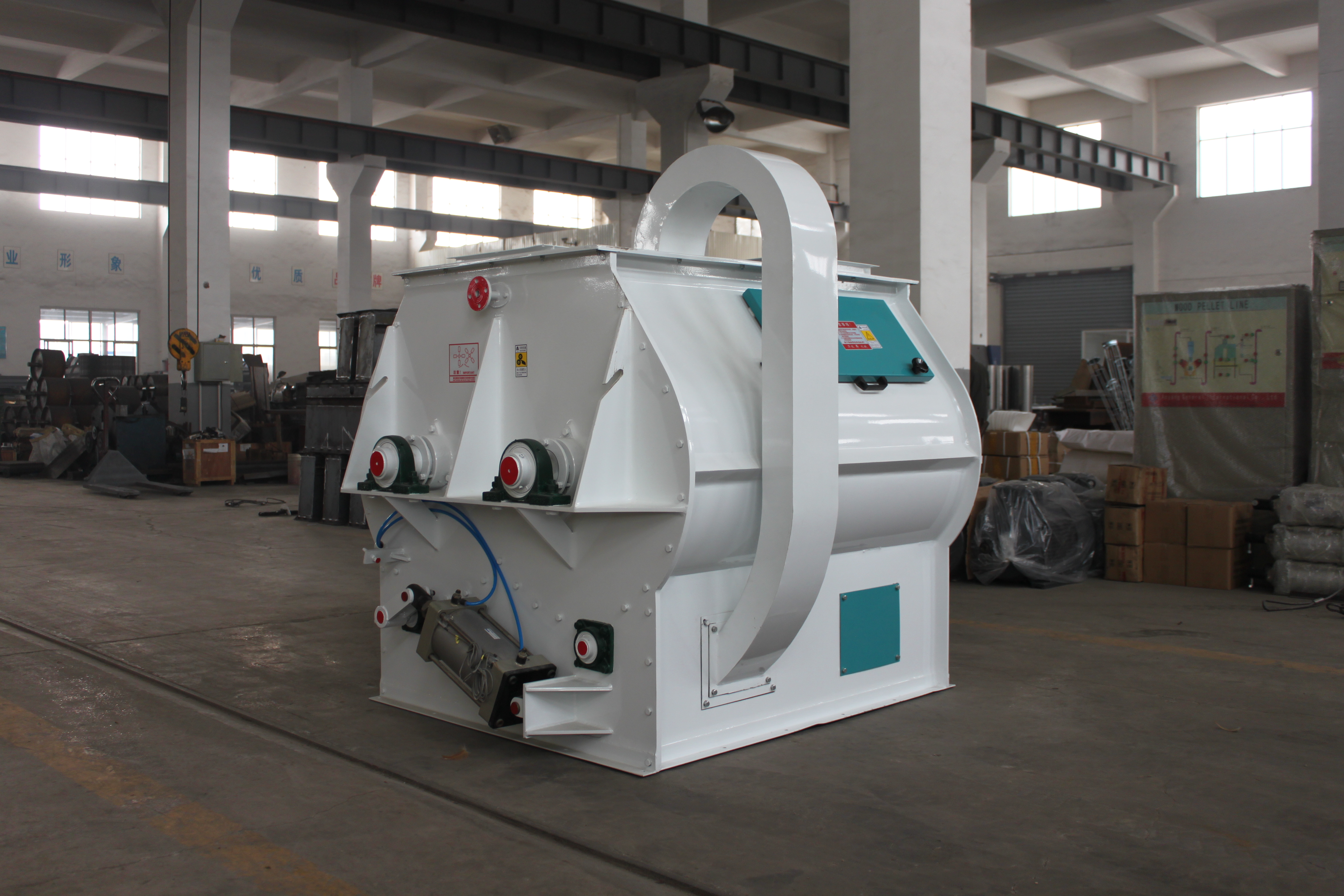
Introduction to the company's technological strength: Huamu's 3D technology upgrading system
STEP 1: Innovative Design of Ring Die Structure
The R&D team of Huamu developed a double-layer staggered ring die structure through CAE simulation analysis. The upper die holes have a diameter of 6mm, while the lower ones have a diameter of 8mm. The staggered distribution increases the effective working area to 0.5㎡ and the number of die holes to 3,500. In a field test at a 50,000-ton feed plant in Jiangsu, the hourly output increased from 2.1 tons to 2.8 tons, a 33% rise.
STEP 2: Development of Variable Frequency Power System
We collaborated with Siemens to develop a dedicated frequency converter, enabling stepless speed regulation from 0 to 1,500 revolutions per minute. The system incorporates a built-in material database that automatically matches the optimal rotational speed: 1,250 revolutions per minute for corn stover and 850 revolutions per minute for soybean meal, reducing energy consumption by 18%. The accompanying permanent magnet synchronous motor achieves an efficiency of 96%, representing a 5 percentage point increase over traditional asynchronous motors.
STEP 3: Integration of Intelligent Control Module
An automatic adjustment system for the gap between pressing rollers has been developed, utilizing laser displacement sensors for real-time gap monitoring, with an error controlled within ±0.05mm. In its application at an aquatic feed plant in Shandong, the standard deviation of pellet density decreased to 0.03g/cm³, and water stability improved by 25%. The system supports remote diagnostic functionality, reducing fault response time to within 2 hours.
Technical Parameter Matrix:
| Index | Traditional Model | Huamu Upgraded Model | Improvement Rate | |--------------|----------|------------|----------| | Hourly Production Capacity | 2.0 tons | 2.8 tons | +40% | | Energy Consumption | 45kW·h/t | 37kW·h/t | -18% | | Pellet Forming Rate | 92% | 98% | +6.5% | | Equipment Lifespan | 3000 hours | 5000 hours | +67% |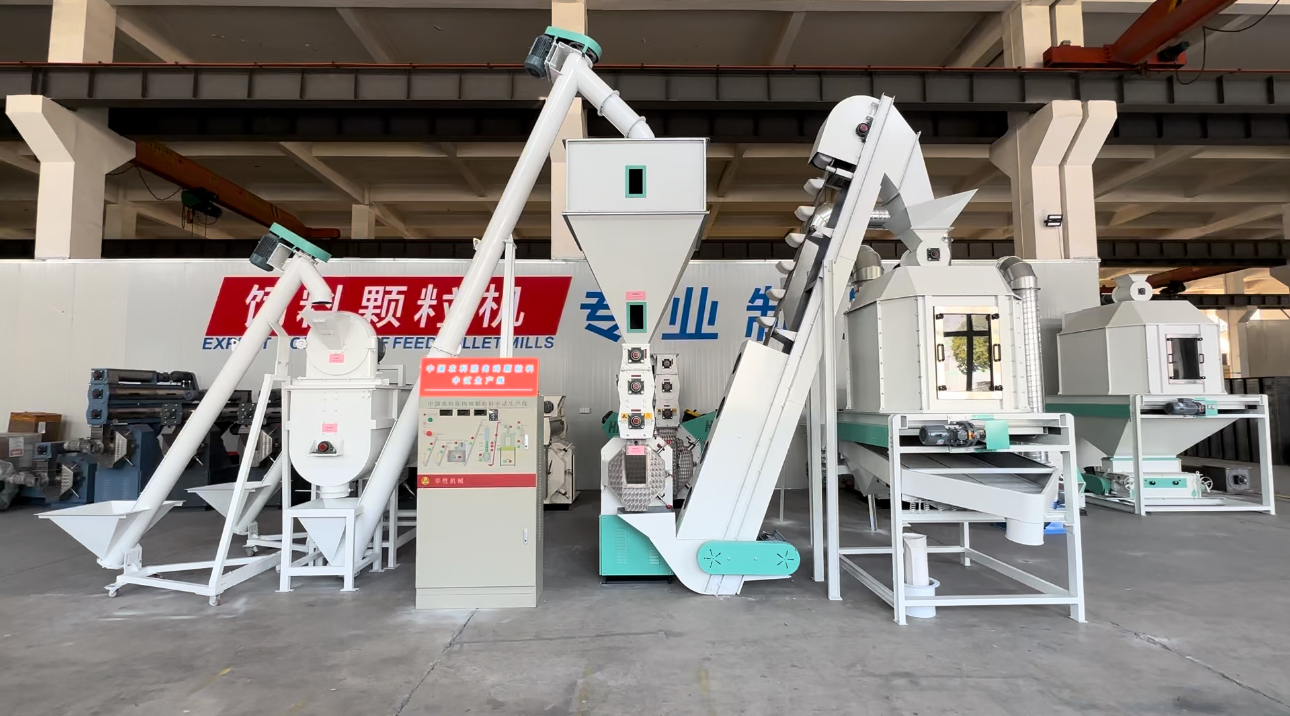 For more information, please visit the official website:www.huamufeedmachinery.com
FAQ: A Guide to Q&A Technical Selection
Q1: How to select the appropriate ring die aperture?
A: Selection based on material properties:
- Coarse fiber materials (such as straw): It is recommended to use a large aperture of 8-10 mm, combined with a double-layer ring die design.
- Concentrated feed (such as corn and soybean meal): A 6-8 mm aperture achieves optimal density.
- Aquatic feed: Requires micro-porous ring dies (2-4mm), and it is recommended to choose a replaceable ring die structure.
Q2: What practical benefits can a variable frequency system bring?
A: Taking equipment with an hourly output of 3 tons as an example:
- Electricity cost savings: Calculated at RMB 0.8 per kilowatt-hour, the annual electricity cost savings are approximately RMB 43,000 (operating 16 hours a day).
- Increased output: Reduced production capacity fluctuation from ±15% to ±5% when handling different materials
- Equipment Protection: The soft start function of the frequency converter extends the motor's lifespan by 30%.
Q3: What maintenance is required for intelligent control systems?
A: Key points of daily maintenance:
- Clean the laser sensor lens every 500 hours using a lint-free cloth
- Check the lubrication status of the pressing roller bearings monthly and replenish with high-temperature lithium-based grease.
- Calibrate the displacement sensor every quarter to ensure measurement accuracy of ±0.02 mm.
Technical inspection indicators:
- Particle density: Measured by the drainage method, with a standard value of 1.2-1.3 g/cm³
- Water stability: Crushing rate ≤ 5% after soaking for 30 minutes
- Noise level: ≤85 dB(A) at a distance of 1 meter from the equipment
Reference for full text summary
Jiangsu Huamu Machinery Co., Ltd. has established a technological upgrading system for feed pellet machines through innovations in ring die structure, upgrades to the power system, and the development of intelligent control modules. Measured data indicates that the upgraded equipment has achieved industry-leading levels in core indicators such as hourly production capacity, energy consumption control, and pellet quality. For feed enterprises with an annual production capacity exceeding 50,000 tons, adopting Huamu's upgraded pellet machines enables the following:
- The payback period is shortened to 1.8 years (calculated based on electricity cost savings)
- Overall Equipment Effectiveness (OEE) improved to over 85%
Jiangsu Huamu Machinery Co., Ltd. is located in Xibei Town, Wuxi City, enjoying convenient transportation and significant geographical advantages. The company specializes in the manufacturing of feed machinery and equipment, and can undertake the full-process business of scheme design, equipment ins...
No.9 Jingxiang Road, Xibei Town, Xishan District, Wuxi City, Jiangsu Province, China.