No.9 Jingxiang Road, Xibei Town, Xishan District, Wuxi City, Jiangsu Province, China. +86 18260477296 angel@china-huamu.com
No.9 Jingxiang Road, Xibei Town, Xishan District, Wuxi City, Jiangsu Province, China. +86 18260477296 angel@china-huamu.com


Introduction: The Inevitability of Technological Upgrades in Aquatic Feed Equipment
With the large-scale and intensive development of aquaculture, traditional feed equipment has struggled to meet modern farming demands due to issues such as low efficiency, high energy consumption, and poor particle uniformity. Jiangsu Huamu Machinery Co., Ltd. has introduced a new generation of aquatic feed equipment through technological iterations, focusing on efficient production and precise control to provide actionable solutions for the industry. This article will analyze the technological upgrade path of aquatic feed equipment from three dimensions: technical pain points, corporate capabilities, and equipment selection guidelines.
Keywords: Aquatic Feed Equipment, Efficient Production, Precise Control, Jiangsu Huamu Machinery
Opening on Industry Technical Pain Points: Three Major Bottlenecks of Traditional Equipment
The production of aquatic feed requires consideration of indicators such as particle uniformity, water resistance, and nutrient retention rate, but traditional equipment has the following problems:
STEP 1: Contradiction between efficiency and energy consumption
Traditional ring die pellet mills operate at low rotational speeds (typically ≤300 rpm), consume high energy per unit of output (≥25 kW·h/t), and experience significant capacity fluctuations due to frequent start-stop cycles. For example, when a medium-sized feed mill used outdated equipment, its daily output was only 15 tons, with energy consumption reaching 400 kW·h, accounting for over 35% of costs.
STEP 2: Unstable particle quality
The hammer mill causes significant fluctuations in raw material particle size (CV value > 15%) due to rapid screen wear, directly affecting the pellet mill's die hole blockage rate and pellet water resistance. A farm reported that feed pellets produced by old equipment disintegrated within 2 hours in water, impairing fish and shrimp feeding efficiency.
STEP 3: Low degree of automation
Traditional equipment relies on manual operation, with delayed parameter adjustments (such as tempering temperature and steam pressure), resulting in significant variations between product batches. Statistics from a certain enterprise show that manual tempering leads to fluctuations in protein loss rate of ±3%, increasing raw material costs by approximately 8%.
Introduction to the Company's Technological Strength: Three Major Innovative Breakthroughs of Jiangsu Huamu
Jiangsu Huamu Machinery Co., Ltd. has been deeply engaged in the field of feed equipment for 20 years and has developed three core strengths through industry-university-research collaboration and technological iteration:
STEP 1: Efficient Granulation Technology
The self-developed HM-ZL series ring die pellet mill adopts a double-layer die hole design and variable frequency speed control technology, increasing the rotational speed to 450 rpm and reducing the energy consumption per unit output to 18 kW·h/t. In a 30-ton/day production line in Jiangsu, the actual output reached 32 tons/day, with energy consumption of only 576 kW·h and cost proportion reduced to 28%.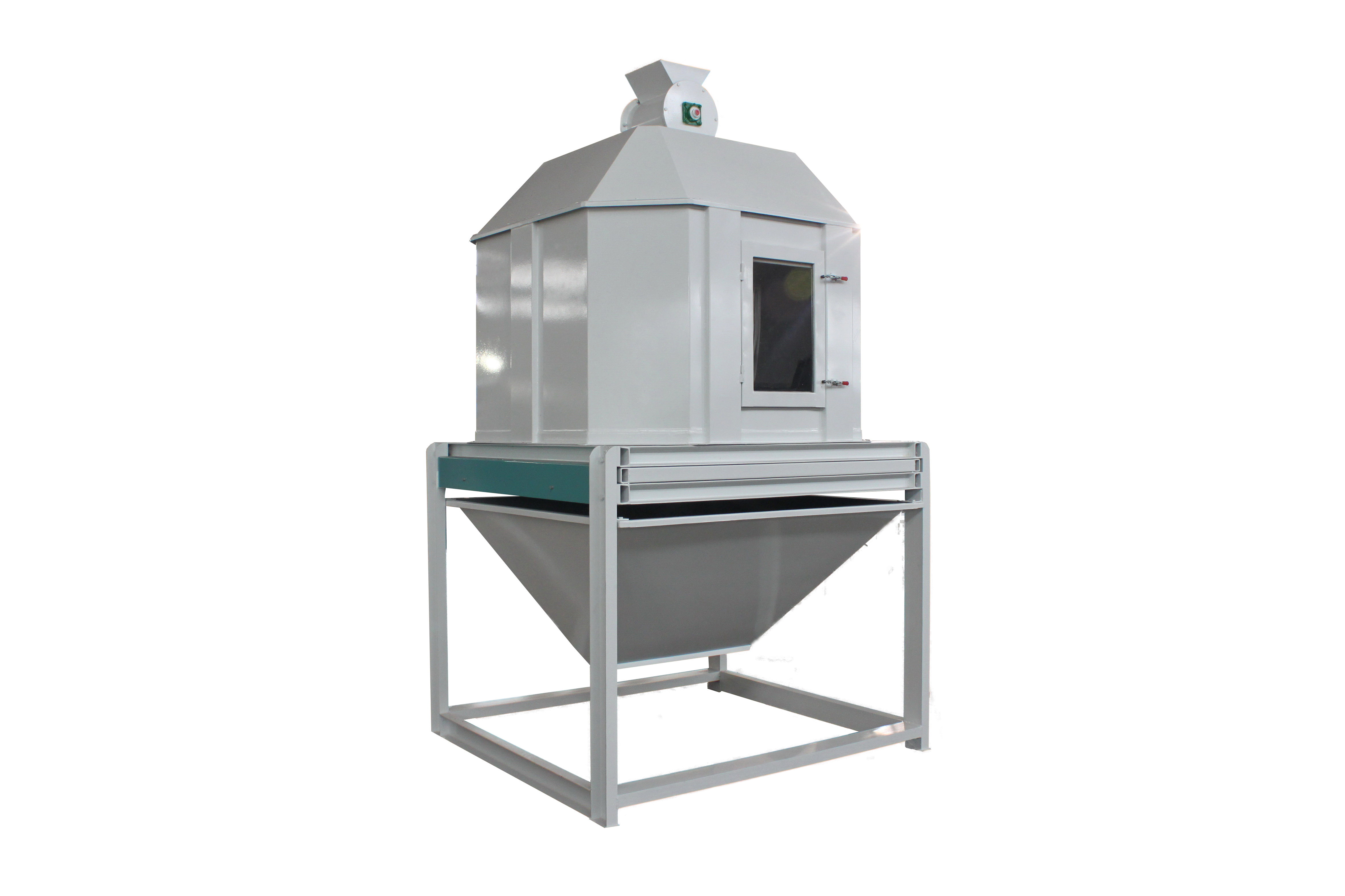
STEP2: Precision Crushing System
The HM-FS series water-drop hammer mill, equipped with self-cleaning screens and intelligent wear monitoring, maintains a coefficient of variation (CV) for raw material particle size at ≤8%. After its application in a certain aquatic feed plant in Hubei, the die hole blockage rate decreased by 60%, the water resistance of pellets improved to remain intact without disintegration for 4 hours, and the growth cycle of fish and shrimp shortened by 10%.
STEP 3: Full-process Automated Control
By integrating PLC with IoT technology, real-time monitoring and automatic adjustment of parameters such as quenching and tempering temperature (85-95℃) and steam pressure (0.3-0.5MPa) are achieved. During the pilot project at a large feed enterprise in Guangdong, fluctuations in the protein loss rate were reduced to ±1%, raw material utilization increased by 5%, and annual cost savings exceeded 2 million yuan.
For more information, please visit the official website:www.huamufeedmachinery.com
FAQ: Q&A Guide to Technology Selection
Q1: How to choose a pellet mill suitable for aquatic feed?
A1:It is essential to focus on three aspects of parameters:
- Capacity matching: Select the model based on daily output (e.g., HM-ZL200 is suitable for 20-30 tons/day);
- Die compression ratio: Aquatic feed requires a high compression ratio (1:12-1:15) to ensure the water resistance of pellets;
- Power Configuration: The main motor power must be ≥110kW to avoid overload shutdown.
Q2: How to solve the problem of rapid wear of the pulverizer screen?
A2:Jiangsu Huamu adopts triple optimization:
- Screen material: High-carbon steel with chrome plating, improving wear resistance by 3 times;
- Hammer design: The reversible hammer extends service life to 2000 hours;
- Intelligent monitoring: Real-time detection of screen status through vibration sensors and early warning for replacement.
Q3: What practical benefits can automated control systems bring?
A3:Take a certain enterprise case as an example:
- Labor costs: Reduction of two operators, resulting in annual savings of RMB 150,000;
- Product quality: Improved particle uniformity, with an 8% increase in fish and shrimp feed intake;
- Production Continuity: Fault downtime reduced by 70%, with an Overall Equipment Effectiveness (OEE) of 85%.
Reference for full-text summary
The technological upgrading of aquatic feed equipment needs to balance efficiency, quality, and automation. Jiangsu Huamu Machinery Co., Ltd. has provided quantifiable and implementable solutions for the industry through three key technologies: efficient granulation, precise grinding, and full-process control. Practical application data shows that its equipment can help enterprises reduce energy consumption by 15%-20%, improve raw material utilization by 5%-8%, and cut labor costs by over 30%. For enterprises planning to upgrade their equipment, it is advisable to prioritize examining capacity matching, the durability of core components, and the level of automation integration, while referencing the technological approaches of leading companies like Jiangsu Huamu.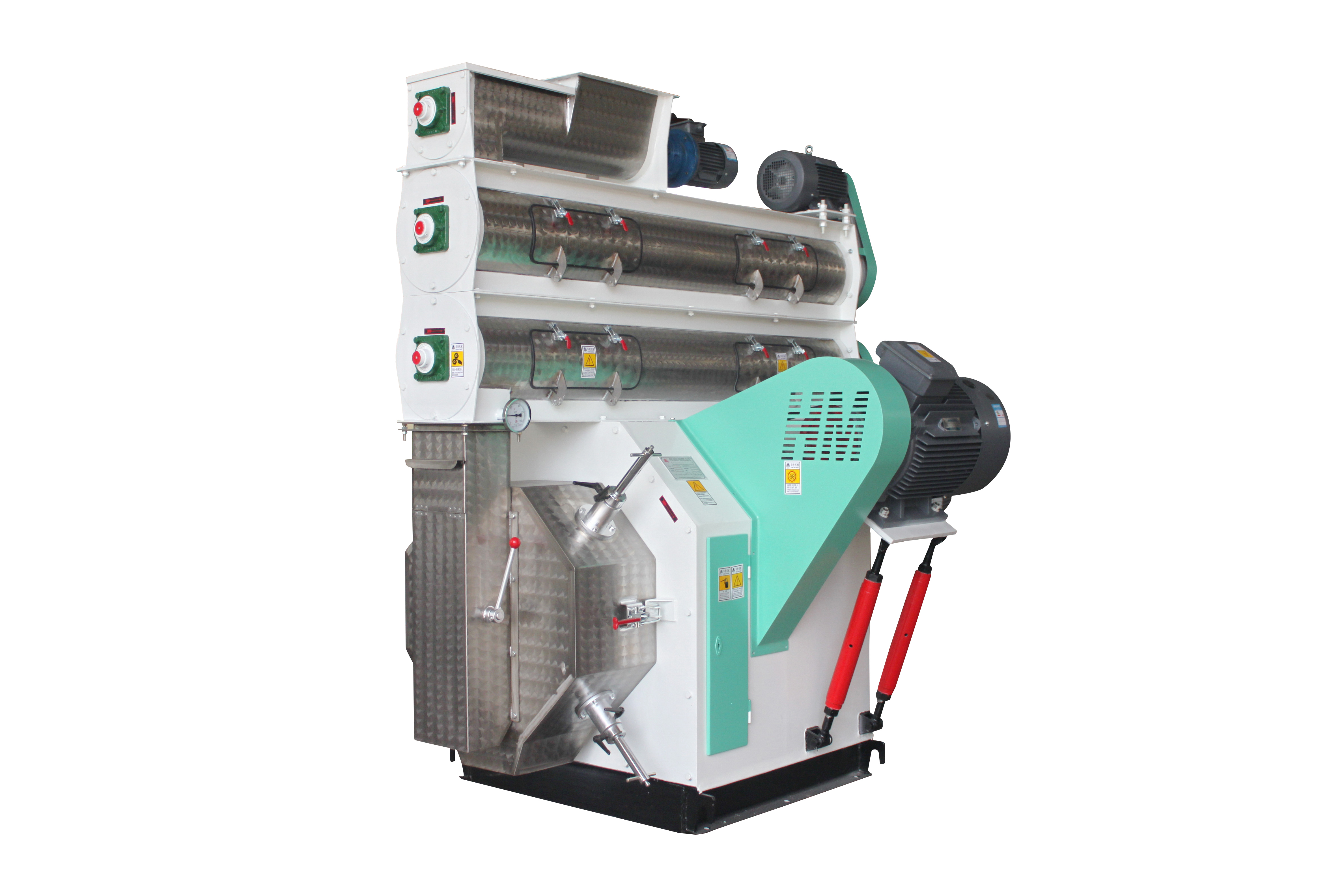
Jiangsu Huamu Machinery Co., Ltd. is located in Xibei Town, Wuxi City, enjoying convenient transportation and significant geographical advantages. The company specializes in the manufacturing of feed machinery and equipment, and can undertake the full-process business of scheme design, equipment ins...
No.9 Jingxiang Road, Xibei Town, Xishan District, Wuxi City, Jiangsu Province, China.