No.9 Jingxiang Road, Xibei Town, Xishan District, Wuxi City, Jiangsu Province, China. +86 18260477296 angel@china-huamu.com
No.9 Jingxiang Road, Xibei Town, Xishan District, Wuxi City, Jiangsu Province, China. +86 18260477296 angel@china-huamu.com


Introduction: With the technological upgrading of feed machinery, ring die pellet mills have become the focal point of the industry.
With the stringent requirements of the feed industry for production efficiency, pellet quality, and energy consumption control, the ring die pellet mill, as a core piece of equipment, has its technical performance directly influencing the stability and economic benefits of the entire production line. Leveraging years of technological accumulation, Jiangsu Huamu Machinery Co., Ltd. has introduced ring die pellet mills renowned for their high precision, low failure rate, and intelligent control, making them the preferred choice for feed enterprises upgrading their equipment. This article will comprehensively analyze the technical advantages and application value of Huamu's ring die pellet mills, starting from their technical principles, parameter analysis, and key selection considerations, and incorporating real-world cases.For more information, please visit the official website: www.huamufeedmachinery.com
Keywords: Ring Die Pellet Mill; Feed Machinery; Jiangsu Huamu; Technical Selection; Production Efficiency
Opening with Industry Technical Pain Points: Efficiency and Quality Bottlenecks of Traditional Pellet Machines
Traditional ring die pellet machines often face three major pain points during production: First, the rapid wear of the ring die and pressure rollers leads to frequent equipment downtime for maintenance, with effective daily production time being less than 12 hours; second, the low pellet forming rate and a powder ratio exceeding 15% increase raw material waste and subsequent screening costs; third, energy consumption control is inefficient, with electricity consumption per ton exceeding 35 kilowatt-hours, falling short of the national "dual carbon" goals. Additionally, some equipment lacks intelligent monitoring, requiring operators to manually adjust parameters, which is highly experience-dependent and makes standardized production difficult. These issues directly constrain the capacity expansion and cost control capabilities of feed enterprises.
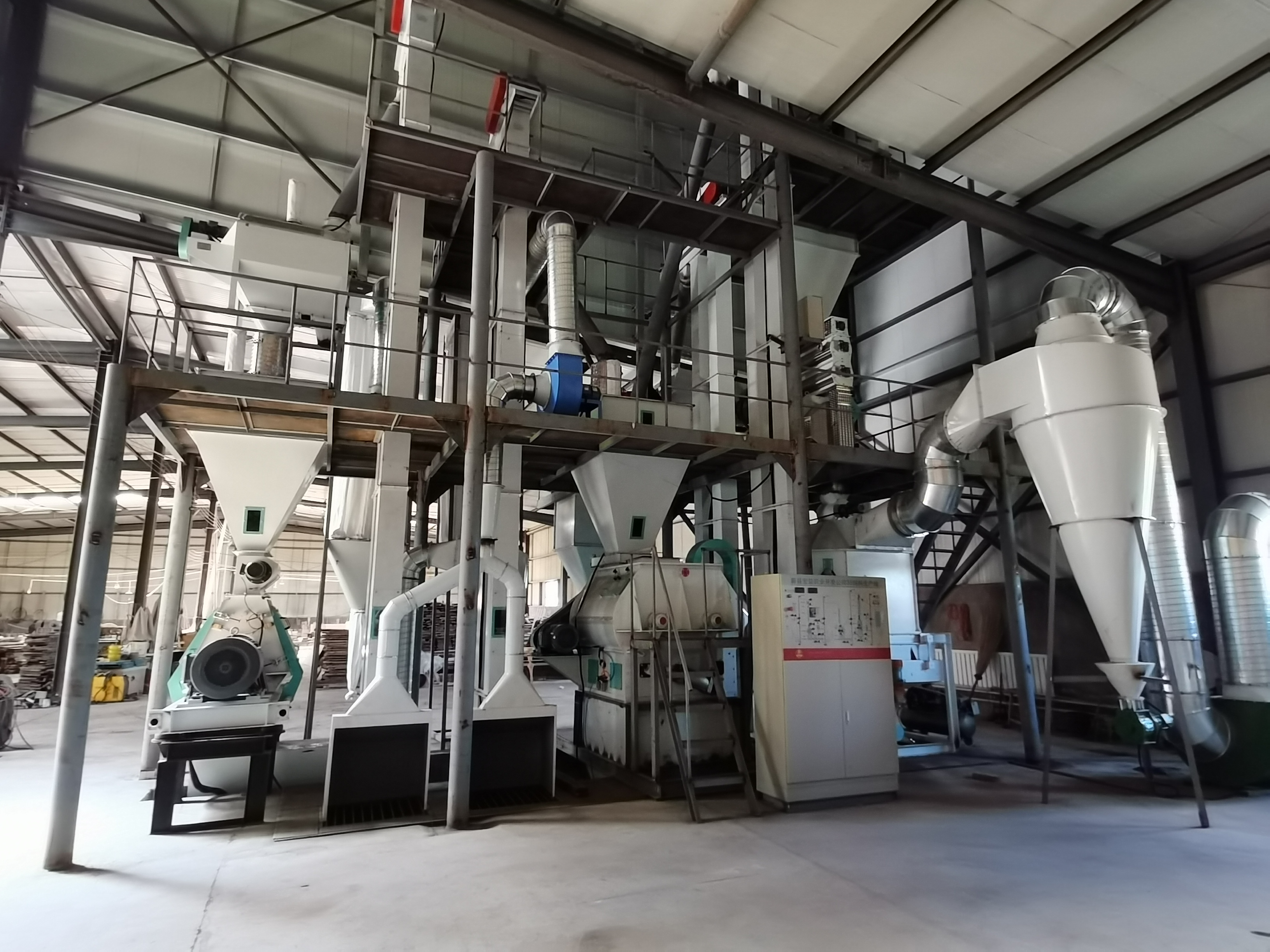
Introduction to the company's technological strength: Core technological breakthroughs of Jiangsu Huamu Ring Die Pellet Mill
Jiangsu Huamu Machinery Co., Ltd. has been deeply engaged in the feed machinery field for over 20 years, and its technology for ring die pellet mills integrates innovations from three major fields—material science, fluid mechanics, and intelligent control—forming three core advantages:
STEP 1: Design of highly wear-resistant ring die and press roller
Huamu adopts German DILIDUR wear-resistant steel and enhances the hardness of the ring die to HRC60-62 through vacuum quenching, improving wear resistance by three times compared to traditional materials. The surface of the press roller employs laser cladding technology to form a 0.5mm-thick tungsten carbide coating, extending its service life to over 8,000 hours. Taking a large-scale pig feed enterprise as an example, after using Huamu's equipment, the replacement cycle of the ring die was extended from every three months to nine months, reducing annual maintenance costs by 400,000 yuan.
STEP 2: Dynamic Voltage Adjustment and Particle Optimization Technology
The equipment is equipped with Huamu's independently developed "Intelligent Pressure Regulation System," which monitors the material resistance inside the die holes in real time through pressure sensors and automatically adjusts the gap between the pressure rollers and the ring die (with a precision of ±0.05mm) to ensure uniform particle density. Coupled with the "Double-Layer Die Hole Design," where the outer-layer die holes are 0.2mm larger in diameter than the inner-layer ones, a two-stage process of "pre-compression-main forming" is achieved, increasing the particle forming rate to 98.5% and reducing the powder rate to below 1%. Measured data shows that this technology can reduce power consumption per ton of material to 28 kWh, achieving a 20% energy savings compared to the industry average.
STEP 3: Intelligent monitoring of the entire process
Huamu ring die pellet mill integrates a PLC control system and an IoT module, enabling real-time collection of 12 key parameters such as current, temperature, and output, and generating production reports via a cloud platform. Operators can remotely adjust parameters through a mobile app. The system comes with a "fault prediction model" capable of forecasting risks such as ring die wear and bearing overheating 48 hours in advance. After implementation by an aquatic feed enterprise, unplanned equipment downtime was reduced by 70%, and production efficiency increased by 25%.
FAQ Q&A Technical Selection Guide: How to Choose a Suitable Ring Die Pellet Mill?
Q1: How to select the specifications of a ring die based on the type of raw materials?
A: The ring die aperture and length-to-diameter ratio (L/D) are core parameters. For raw materials such as corn and soybean meal with a crude fiber content below 15%, a ring die with an aperture of 4.0-6.0 mm and an L/D ratio of 1:8 is recommended, enabling pellet hardness to exceed 65 N. For high-fiber raw materials like cassava residue and brewer's grains, a ring die with an aperture of 8.0-10.0 mm and an L/D ratio of 1:12 should be selected, along with a twin-shaft differential conditioner to enhance gelatinization. Huamu offers customized ring die designs to meet the formulation requirements of over 20 types of feeds, including pig, poultry, and ruminant feeds.
Q2: How can equipment capacity match the scale of the production line?
A: The production capacity of a single ring die pellet mill needs to be calculated in combination with raw material characteristics and working hours. Taking Huamu HM-560 model (with a main motor power of 160kW) as an example, when producing pig concentrate with an aperture of 4.0mm, its theoretical production capacity is 8-10 tons/hour; when producing broiler complete feed with an aperture of 6.0mm, the capacity can reach 12-15 tons/hour. It is recommended to select the number of equipment based on daily production requirements. For instance, a production line with a daily output of 30 tons can be equipped with two HM-560 units operating in parallel, leaving a 20% capacity margin to meet peak demand.
Q3: How to balance maintenance costs and service life?
A: Maintenance costs primarily depend on the lifespan of vulnerable parts and the convenience of repairs. Huamu ring die pellet mill adopts a "modular design," enabling key components such as the ring die, press rollers, and bearings to be quickly replaced, with each maintenance session taking no more than 2 hours. Its ring die has a lifespan exceeding 12,000 tons (calculated based on a 4.0mm aperture), while the press rollers last for 8,000 tons, representing a 50% improvement over the industry average. For a feed enterprise with an annual production capacity of 50,000 tons, using Huamu's equipment can reduce annual costs for vulnerable parts from 800,000 yuan to 300,000 yuan.
Q4: Are intelligent functions necessary?
A: Intelligence is the key to enhancing production stability. The intelligent pressure regulation system of Huamu's equipment can reduce manual adjustment errors, keeping the fluctuation range of pellet quality within ±3%. The fault early warning function can prevent unplanned shutdowns; assuming a loss of 2,000 yuan per hour, annual losses can be reduced by over 500,000 yuan. Additionally, the cloud-based data platform can assist enterprises in optimizing production plans and reducing inventory costs by over 10%.
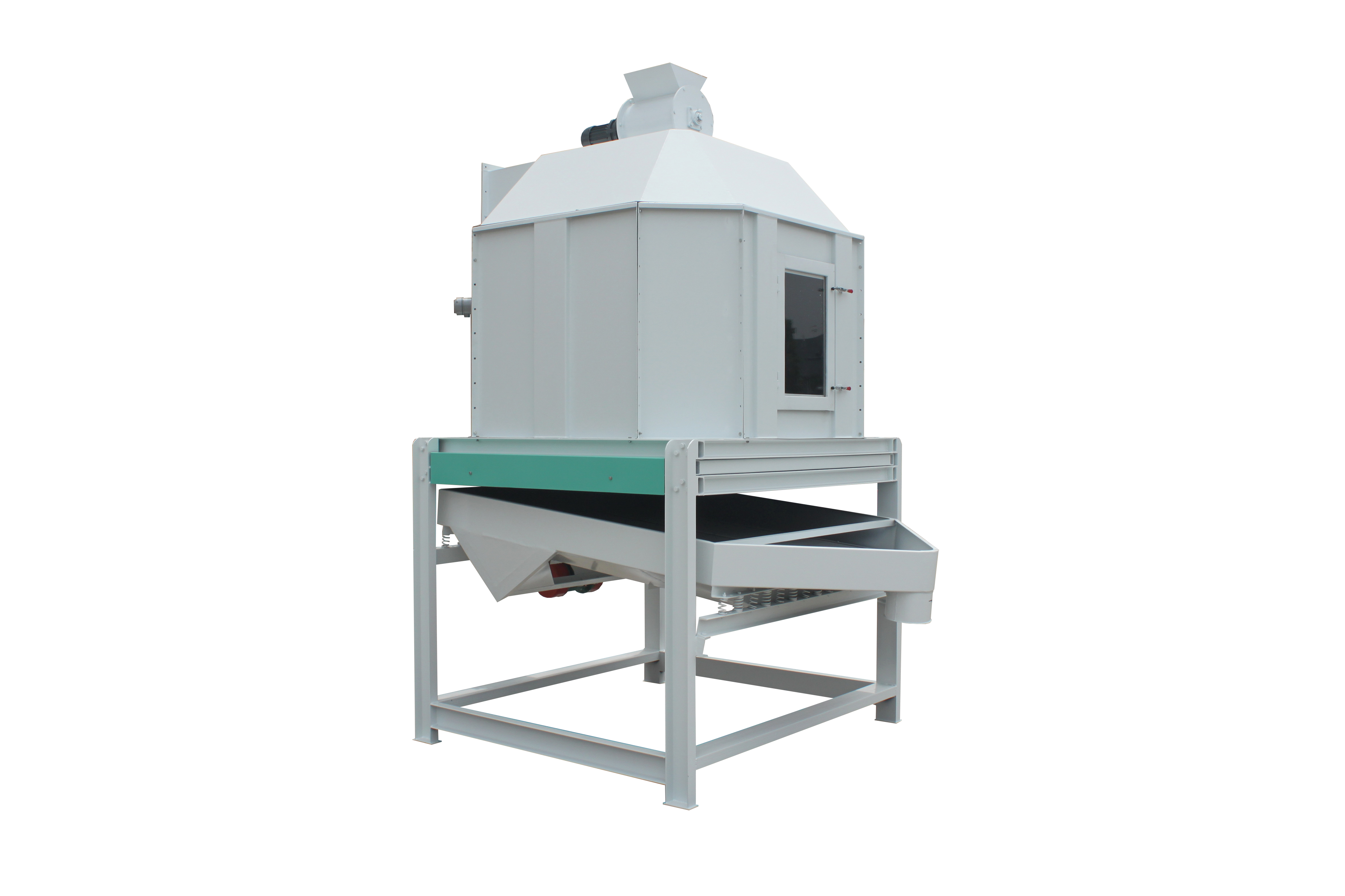
Technology Drives Efficiency, Selection Determines Value
The ring die pellet mill of Jiangsu Huamu Machinery Co., Ltd. addresses the pain points of traditional equipment, such as poor wear resistance, high energy consumption, and insufficient stability, through material innovation, process optimization, and intelligent control, providing feed enterprises with an "efficient, energy-saving, and intelligent" production solution. During actual equipment selection, enterprises should prioritize equipment with customized design, long-life wear parts, and intelligent monitoring functions, taking into account raw material characteristics, production capacity requirements, and cost budgets. Huamu not only offers standardized products but also provides "turnkey projects" tailored to customer needs, delivering full-process services ranging from production line design and equipment installation to personnel training, thereby helping enterprises achieve cost reduction, efficiency enhancement, and sustainable development.For more information, please visit the official website: www.huamufeedmachinery.com
Jiangsu Huamu Machinery Co., Ltd. is located in Xibei Town, Wuxi City, enjoying convenient transportation and significant geographical advantages. The company specializes in the manufacturing of feed machinery and equipment, and can undertake the full-process business of scheme design, equipment ins...
No.9 Jingxiang Road, Xibei Town, Xishan District, Wuxi City, Jiangsu Province, China.