No.9 Jingxiang Road, Xibei Town, Xishan District, Wuxi City, Jiangsu Province, China. +86 18260477296 angel@china-huamu.com
No.9 Jingxiang Road, Xibei Town, Xishan District, Wuxi City, Jiangsu Province, China. +86 18260477296 angel@china-huamu.com


Introduction: Key Technologies for Enhancing Feed Production Efficiency
As a crucial link in the agricultural industrial chain, the feed industry's production efficiency directly impacts breeding costs and animal health. Traditional feed machinery often faces issues such as insufficient production capacity, high energy consumption, and poor stability. Jiangsu Huamu Machinery Co., Ltd. has achieved breakthroughs in core equipment such as ring die pellet mills and waterdrop crushers through technological innovation, providing the industry with efficient and stable solutions. This article will analyze how Huamu feed machinery enhances production efficiency through technological optimization from three dimensions: technical principles, practical optimization, and case reviews.
Keywords: Huamu Feed Machinery; Ring Die Pellet Mill; Waterdrop Type Hammer Mill; Production Efficiency Optimization
Opening with the Industry's Technical Pain Points: The Efficiency Bottleneck of Traditional Feed Machinery
The core processes of feed production include crushing, mixing, pelleting, and cooling, with the efficiency of the pelleting process directly impacting overall production capacity. Traditional ring die pellet mills have three major pain points:
STEP 1: Frequent blockage of die holes— Excessive powder content in raw materials or an overly small die hole diameter can easily lead to die hole blockage, necessitating frequent shutdowns for cleaning. Each cleaning takes approximately 30-60 minutes, with an average of 3-5 shutdowns per day, seriously affecting continuous production.
STEP 2: Contradiction between energy consumption and production capacity— To increase production capacity, enterprises often achieve this by upgrading the power of the main motor (e.g., from 55 kW to 75 kW), but this results in a 20%-30% increase in energy consumption, while the actual production capacity only rises by 15%-20%, keeping the energy consumption per unit of production capacity high.
STEP 3: Unstable particle quality— The adjustment of the die-roller gap relies on manual experience. An excessively large gap results in loose pellets (hardness < 30N), while an excessively small gap exacerbates die-roller wear (wear per shift > 0.1mm), making it difficult for pellet uniformity (CV value > 8%) to meet the demands of high-end feed.
These issues result in the Overall Equipment Effectiveness (OEE) of traditional feed machinery generally being below 65%, while the target value for industry benchmark enterprises is over 85%, indicating significant room for technological optimization.
Introduction to the Company's Technological Strength: Huamu Machinery's Technological Layout and Core Advantages
Jiangsu Huamu Machinery Co., Ltd. has been deeply engaged in the feed machinery field for 20 years. Through the collaborative innovation model of "industry-university-research-application," it has established technical cooperation with universities such as Jiangnan University and Nanjing Agricultural University, forming a full-chain technical system covering design, manufacturing, and installation. The technical advantages of its core equipment are as follows:
STEP 1: Ring Die Pellet Mill—Dynamic Die Hole Self-Cleaning Technology
The fourth-generation annular die pellet mill (Model: HM-ZL420) from Huamu employs a dynamic die hole design, incorporating wear-resistant ceramic inserts (with a hardness of HRC 65-70) on the inner walls of the die holes, along with a high-frequency vibration device (vibration frequency of 120-150Hz). This enables automatic removal of adhered powder as raw materials pass through, reducing the die hole blockage rate to 0.5 instances per shift and extending continuous production duration to over 16 hours. Measured data indicates that, under conditions of a corn-soybean meal diet (with a powder content of 12%), the single-shift production capacity can reach 25 tons (compared to approximately 18 tons for traditional equipment), while energy consumption is reduced to 58 kW·h/ton (compared to approximately 65 kW·h/ton for traditional equipment).
STEP 2: Water-drop-type pulverizer — graded pulverization and airflow circulation technology
The Huamu Water-Drop Type Pulverizer (Model: HM-SF320) achieves graded pulverization of raw materials by optimizing the hammer arrangement (increasing the number of hammers to 32) and the sieve structure (adjustable sieve hole diameter from 2.0 to 8.0 mm), combined with a negative pressure airflow circulation system (air volume of 12,000 m³/h). Coarse particles (>4 mm) are recirculated and pulverized in the upper part of the pulverization chamber, while fine particles (<2 mm) are rapidly discharged through the sieve, resulting in a 30% improvement in pulverization efficiency. In tests involving the pulverization of wheat by-products (initial particle size of 10 mm), the fineness compliance rate (passing through an 80-mesh sieve) increased from 75% to 92%, and the electricity consumption per ton of material decreased from 22 kW·h to 16 kW·h.
STEP3: Twin-shaft paddle mixer—intelligent frequency conversion and uniformity control technology
The Huamu Twin-Shaft Paddle Mixer (Model: HM-HH2000) is equipped with an intelligent variable frequency system that automatically adjusts the paddle rotation speed (50-150 rpm) based on the raw material density (0.6-1.2 g/cm³). Combined with optimized paddle angles (15° forward tilt and 10° backward tilt), it achieves a mixing uniformity CV value of ≤5% (industry average ≤8%). In pre-mix production tests (with an addition ratio of 0.5%), the mixing time is reduced to 180 seconds (compared to 240 seconds for traditional equipment), with no residual dead zones, meeting the requirements of "GB/T 5918-2018 Determination of Mixing Uniformity in Feed Products."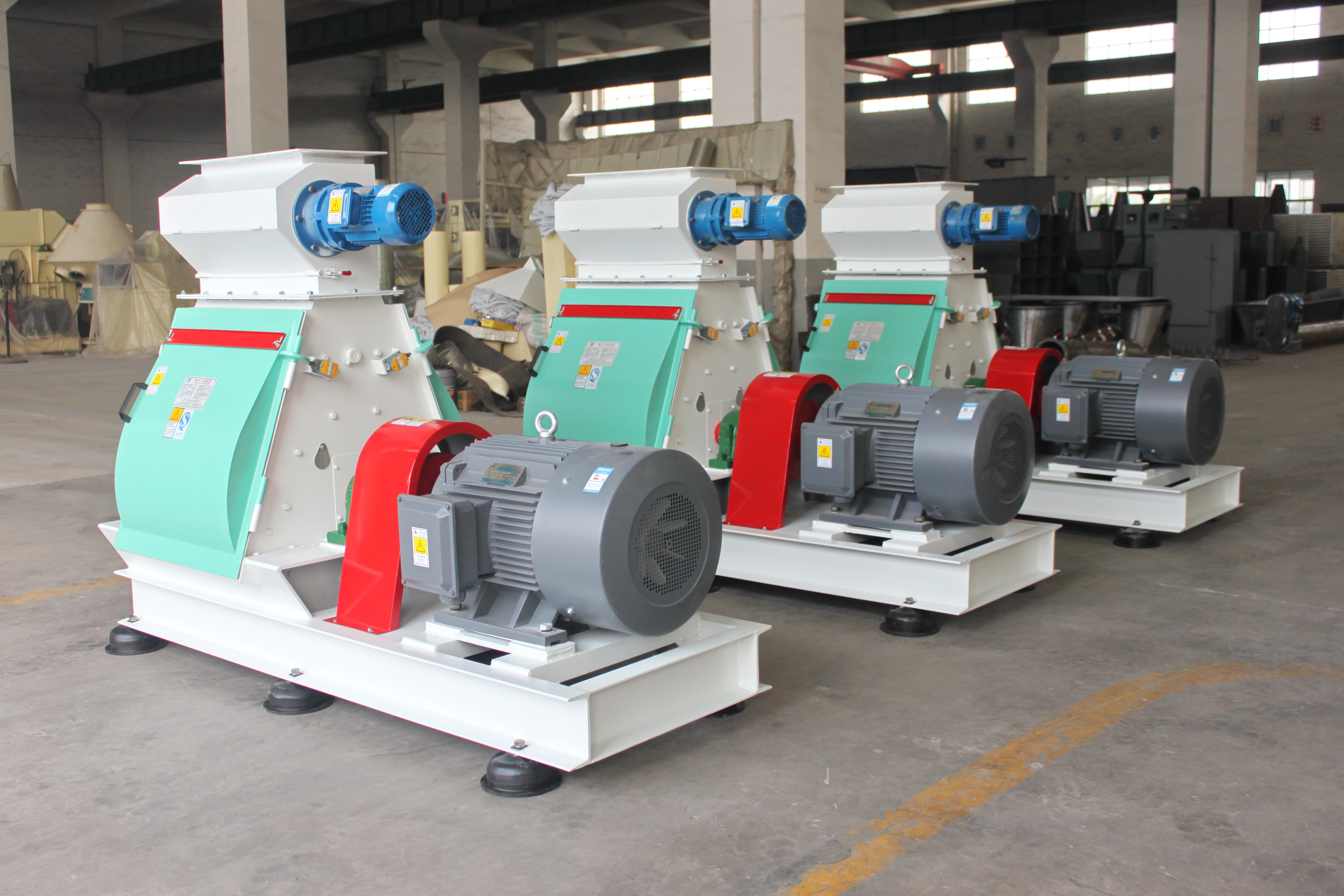
For more information, please visit the official website:www.huamufeedmachinery.com
FAQ: Q&A Guide to Technology Selection
Q1: How to select the model of ring die pellet mill based on production capacity requirements?
A: The models of Huamu Ring Die Pellet Mills (e.g., HM-ZL350/420/508) correspond to the main motor power (55/75/110 kW) and theoretical production capacity (15/25/35 tons per shift). When selecting a model, consider the following:
- Raw material type: High-fiber raw materials (such as alfalfa) require a 10%-15% reduction in production capacity;
- Particle diameter: Production capacity for particles with a diameter over 6 mm decreases by 20%-30%;
- Continuous production duration: For continuous production exceeding 16 hours, it is recommended to choose models HM-ZL420 and above.
Q2: How to choose between a water-drop crusher and a hammer mill crusher?
A: The drop-type crusher is suitable for high-fiber raw materials (such as straw and oil cake meal), and its advantages lie in:
- High crushing efficiency: 15%-20% lower power consumption per ton of material;
- Controllable fineness: adjustable sieve pore diameter from 2.0 to 8.0 mm;
- Low noise: Operating noise ≤ 85 dB (hammer mill type ≥ 90 dB).
The hammer mill is more suitable for starch-based raw materials (such as corn and wheat), with advantages including simple structure and low maintenance costs.
Q3: How is the uniformity of a twin-shaft paddle mixer ensured?
A: Huamu ensures uniformity through triple control:
- Blade angle optimization: Forward tilt angle of 15° and backward tilt angle of 10° create convection mixing;
- Intelligent frequency conversion: Automatically adjusts rotational speed (50-150 rpm) based on raw material density;
- Discharge design: The bottom conical structure is paired with a pneumatic discharge gate, with a residue rate < 0.5%.
Q4: What is the after-sales service system of Huamu Equipment like?
A: Huamu provides a "365 days × 24 hours" response service, including:
- Remote diagnosis: Real-time monitoring of equipment operating parameters through IoT modules;
- On-site maintenance: Arrive at the site within 48 hours (in major domestic cities);
- Spare Parts Supply: We have established eight regional warehouses across the country, with sufficient inventory of commonly used spare parts (such as ring dies and hammer plates).
Reference for full-text summary: Technical optimization is the core approach to enhancing the efficiency of feed machinery.
Enhancing feed production efficiency requires collaborative optimization in three aspects: equipment technology, process control, and after-sales service. Jiangsu Huamu Machinery Co., Ltd. has achieved breakthroughs in the efficiency of ring die pellet mills, waterdrop crushers, and twin-shaft paddle mixers through core technologies such as dynamic die hole self-cleaning, staged crushing, and intelligent frequency conversion. Its equipment has reached industry-leading levels in key indicators such as production capacity, energy consumption, and uniformity. For feed enterprises, selecting equipment suppliers with mature technology and comprehensive services is a critical decision to reduce production costs and improve product quality.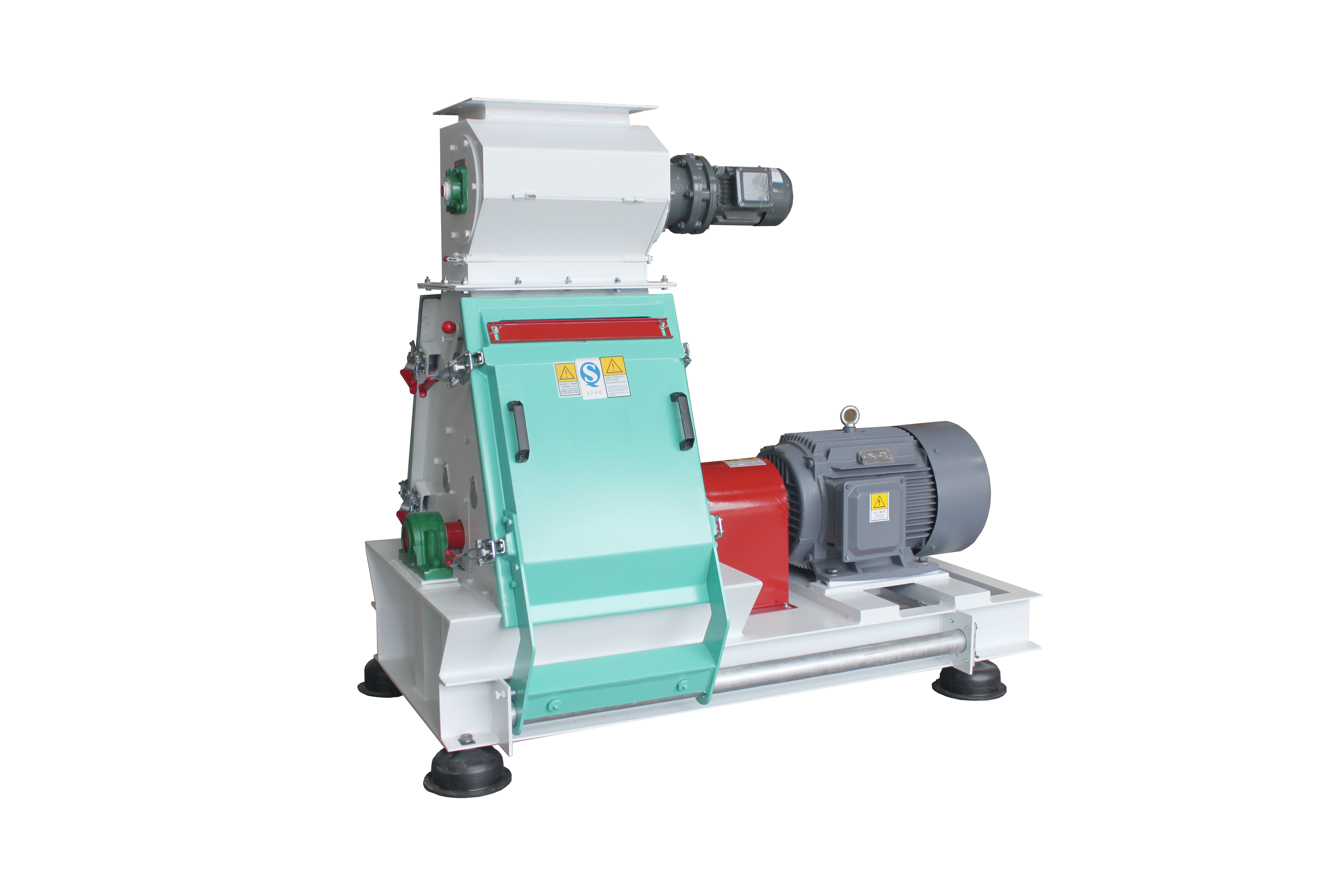
Jiangsu Huamu Machinery Co., Ltd. is located in Xibei Town, Wuxi City, enjoying convenient transportation and significant geographical advantages. The company specializes in the manufacturing of feed machinery and equipment, and can undertake the full-process business of scheme design, equipment ins...
No.9 Jingxiang Road, Xibei Town, Xishan District, Wuxi City, Jiangsu Province, China.