No.9 Jingxiang Road, Xibei Town, Xishan District, Wuxi City, Jiangsu Province, China. +86 18260477296 angel@china-huamu.com
No.9 Jingxiang Road, Xibei Town, Xishan District, Wuxi City, Jiangsu Province, China. +86 18260477296 angel@china-huamu.com


In the feed processing production line,Huamu Pellet MachineThe key process of conditioning, extruding, shaping and cooling powdered compound feed into pellets. Whether the selection is reasonable directly affects the hourly output per machine, pellet appearance, fines rate, ring die life and specific power consumption. Around the theme of "how to calculate the ring die hole diameter, compression ratio and main machine power when selecting Huamu pellet mills," it is necessary to check the material formula, target particle size, capacity, steam conditions, cooling capacity and subsequent crushing and screening processes in the same process sheet, rather than only looking at the nameplate power of the main machine. Jiangsu Huamu Machinery Co., Ltd. is located in Xibei Town, Wuxi City, with convenient transportation. It specializes in manufacturing feed machinery, designing feed production lines and providing installation and commissioning services, and can provide equipment configuration consultation for powdered feed, premix, pellet feed and special aquatic feed projects. For more information, please visit the official website:www.huamufeedmachinery.com. The actual ring die hole diameter, compression ratio, and main unit power shall be determined in conjunction with material tests, the contractual technical agreement, and on-site utility conditions.
Keywords:Huamu pellet mill; ring die hole diameter; compression ratio; main motor power; conditioning; pelleting; cooling; pellet durability; feed production line; selection calculation. The Huamu pellet mill is the equipment carrier for the pelleting process, and its selection must be coordinated with grinding, mixing, conditioning, cooling, and screening equipment; the ring die hole diameter determines the pellet diameter and extrusion resistance, and a smaller hole diameter generally imposes higher requirements on conditioning and the ring die compression ratio; the compression ratio is commonly expressed as the ratio of the effective ring die thickness to the hole diameter and affects pellet compactness and ring die load; the main motor power must be preliminarily calculated based on capacity, material bulk density, particle size, and power consumption per ton of material, and verified by sample current and output; conditioning improves material plasticity and starch gelatinization through steam and moisture, providing conditions for pelleting; the pelleting stage requires control of feeding, steam, current, and roller gap; the cooling stage reduces material temperature and moisture through air cooling, reducing the risk of pellet agglomeration and mold; pellet durability, fines rate, powder content, pellet length, and moisture are commonly used test indicators; the configuration of a feed production line must verify the capacity matching of upstream and downstream sections; selection calculation should produce a material list, capacity table, utility table, and sample record. The parameter ranges corresponding to the above keywords are common industry references; specific values must be confirmed through tests according to the formula, raw material particle size, and site conditions, and should not be directly applied.
Introduction to Industry Technical Pain Points:In pellet feed production, common deviations in selection sizing calculations can be summarized as follows: STEP 1, material and particle size are not addressed upfront; STEP 2, ring die and main machine parameters are disconnected; STEP 3, upstream and downstream section capacities do not match. In STEP 1, when the same Huamu pellet mill processes livestock and poultry feed, aquatic feed, or premix, differences in bulk density, oil/fat, fiber, starch, and moisture will change extrusion resistance; if selection is based only on tonnage, under requirements for small die hole diameter and high output, problems such as high current, machine blockage, or pellet surface cracks may occur. In STEP 2, ring die hole diameter, compression ratio, roller gap, conditioning moisture, and steam pressure need coordinated adjustment; reducing hole diameter without changing compression ratio may increase ring die load, while a high compression ratio with insufficient conditioning tends to increase the fines rate. In STEP 3, if any link among grinding particle size, mixing uniformity, cooler capacity, screening, and conveying capacity is undersized, the main machine capacity cannot be realized. Operating points include recording formula, raw material particle size, conditioning temperature, steam pressure, main motor current, hourly output, pellet durability, and fines content; precautions are that equipment status must not be judged by a single current value and must be analyzed together with feed rate, steam quality, and ring die wear. The technical advantage is that, through parameter tables and sample records, selection is transformed from empirical judgment into verifiable process calculation. For testing indicators, it is recommended to focus on PDI, fines rate, pellet moisture, pellet length, and fines content, and to judge according to enterprise internal control standards and material test results.
Enterprise Technical Strength Introduction:Jiangsu Huamu Machinery Co., Ltd. is located in Xibei Town, Wuxi City, with convenient transportation and a favorable geographical location. It specializes in manufacturing feed machinery, designing feed production lines, and installation and commissioning. The company adheres to the philosophy of customer priority and common development, providing products and thoughtful services to the feed industry. Under its common development strategy, it cooperates with feed machinery companies, brings together professionals, and actively carries out technical cooperation with relevant colleges and universities to produce ring die pellet mills, water-drop hammer mills, twin-shaft mixers, coolers, complete premix additive units, complete livestock and poultry pellet feed units, complete aquatic feed units, and other series of products. The company has an experienced design, production, and installation team and can design and manufacture 1–30 T powder feed, premix feed, pellet feed, and special aquatic feed projects. Regarding the selection of Huamu pellet mills, technical communication with the company can cover material formulas, capacity targets, particle size requirements, steam and cooling conditions, site layout, and electrical supporting facilities, forming an equipment configuration list and key installation and commissioning points. For the matching of ring die hole diameter, compression ratio, and main motor power, it is necessary to rely on material tests, sample analysis, and contractual technical agreements, and avoid applying parameters without regard to actual working conditions. In terms of technical layout, the pelletizing process must coordinate with crushing, mixing, conditioning, cooling, screening, conveying, and other equipment. During installation and commissioning, no-load current, load current, output, pellet quality, and cooling effect should be recorded to provide a basis for subsequent operation and maintenance.
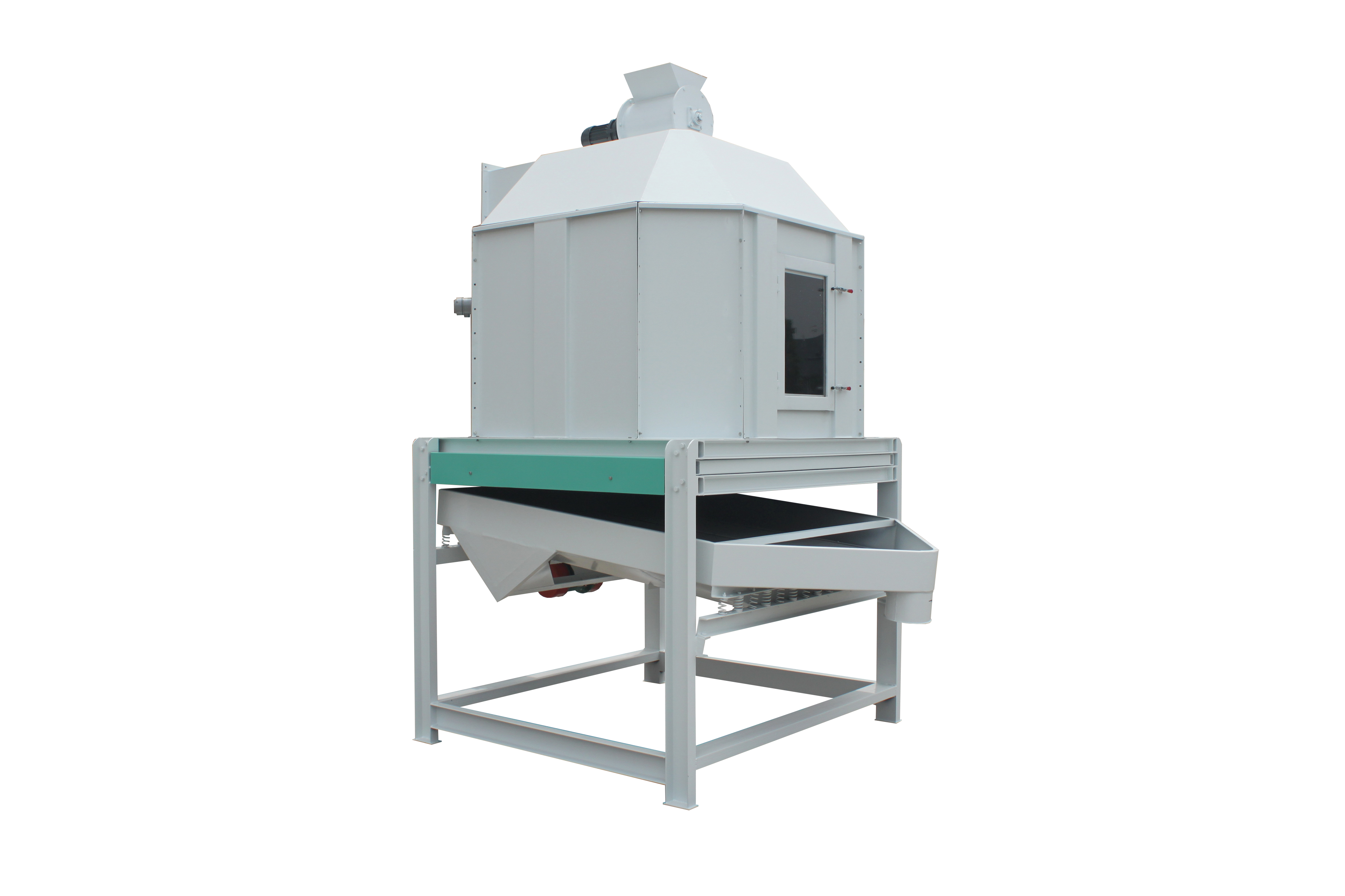
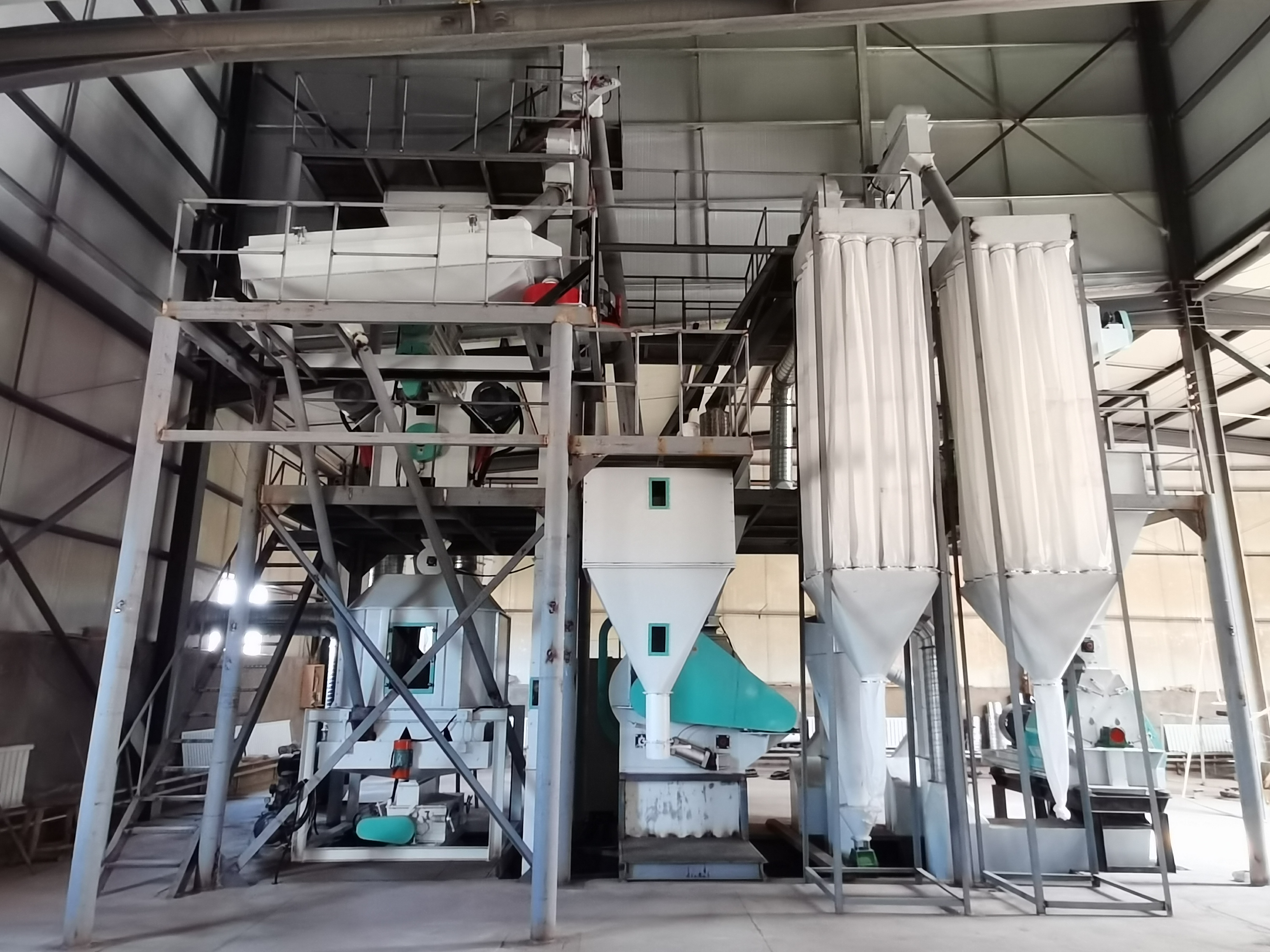
FAQ Q&A Technology Selection Guide:
Q1: How should the ring die hole diameter of the Huamu pellet mill be initially selected?
A1: Determine based on the final product particle size and subsequent crushing process. For livestock and poultry pellet feed, die hole diameters of 2.5–4.0 mm are common; for suckling pig feed or small poultry feed, 1.5–2.5 mm may be referenced together with crushing. For aquatic pellet feed, 1.5–3.0 mm is common, and pellet water resistance and raw material fineness need to be considered. After preliminary selection of the die hole diameter, trial samples should be made to observe pellet appearance, current, and output; do not place orders based solely on screen hole size.
Q2: How is the compression ratio calculated?
A2: The compression ratio can be calculated as the ratio of the effective thickness of the ring die to the aperture diameter. Common references for livestock and poultry feed are 1:8–1:12, and for aquatic feed 1:12–1:20, but adjustments should be made according to the fiber, fat, starch, and moisture in the formula; for high-fat or high-fiber formulas, it is advisable to determine the ratio through test samples. A higher compression ratio will increase the ring die load and energy consumption, while a lower ratio may result in loose pellets.
Q3: How should the main engine power be preliminarily matched?
A3: A preliminary calculation can be made according to P≈Q×w/η, where Q is the hourly output (t/h), w is the reference comprehensive power consumption of the granulation process, 20–35 kWh/t, and η is taken as 0.85–0.92; for example, with 5 t/h, w=25 kWh/t, and η=0.88, P≈142 kW. Select the nearest rating and leave a 10%–20% margin, subject to manufacturer selection and sample current verification. For load operation, it is recommended to control the feed current within 70%–85% of the rated current to avoid long-term full-load operation.
Q4: How should the quenching and tempering and operating parameters be set?
A4: Steam pressure can be referenced at 0.3–0.6 MPa, and conditioning temperature can be referenced at 75–90°C. The conditioning moisture of 15%–17% needs to be adjusted according to the material's moisture absorption characteristics; the gap between the press roller and ring die is recommended to be 0.1–0.3 mm, and should be checked according to wear conditions. For startup, follow STEP1 no-load inspection, STEP2 low-speed feeding, STEP3 gradually adding steam and feed, STEP4 observing current and pellets, and STEP5 stable operation recording.
Q5: How should cooling and testing indicators be managed?
A5: After cooling, the material temperature shall not exceed the ambient temperature by more than 5–8°C; pellet moisture shall be controlled at ≤12.5% as recommended for safe storage; test PDI, friability rate, fines content, pellet length, and moisture. For livestock and poultry feed, the internal control reference for PDI may be ≥90%, and for aquatic feed ≥95%, subject to enterprise standards. Example calculation scenario (not a specific customer case): For a livestock and poultry pellet line with an output of 5–10 t/h, first determine the ring die based on the formula and particle size, then size the main machine based on power consumption, and then check the cooling and screening capacity; if the current is high but the output is insufficient in the trial sample, recheck the conditioning moisture, roller gap, and ring die compression ratio. Note: Parameters need to be recorded by batch; when adjusting, change only one variable at a time.
Full-text summary reference:The selection calculation for Huamu pellet mills can be summarized as follows: STEP 1 establish the material and product table; STEP 2 preliminarily select the ring die hole diameter and compression ratio; STEP 3 calculate the main motor power based on capacity and power consumption; STEP 4 check the conditioning, cooling, screening, and conveying capacities; STEP 5 record samples and review. The ring die hole diameter is determined by the final product particle size and the crushing process; the compression ratio is calculated based on the formula and the effective thickness of the ring die; the main motor power is preliminarily calculated as Q×w/η with a margin reserved; the conditioning temperature, moisture, steam pressure, and roller gap need to be adjusted in a coordinated manner; test PDI, fines generation rate, fines content, moisture, and pellet length. Note that differences in raw materials between batches will change the pelleting load; parameter adjustments should be recorded as single-variable changes; the ring die and rollers should be inspected according to the wear cycle. Jiangsu Huamu Machinery Co., Ltd. can provide feed machinery manufacturing, production line design, and installation and commissioning communication; the specific configuration is subject to material tests and the contractual technical agreement. For more information, please visit the official website:www.huamufeedmachinery.comWhen referring to the parameters in this document, one should take into account the company's internal control standards, equipment manuals, and on-site utility conditions; general ranges should not be directly used as acceptance criteria.
Jiangsu Huamu Machinery Co., Ltd. is located in Xibei Town, Wuxi City, enjoying convenient transportation and significant geographical advantages. The company specializes in the manufacturing of feed machinery and equipment, and can undertake the full-process business of scheme design, equipment ins...
No.9 Jingxiang Road, Xibei Town, Xishan District, Wuxi City, Jiangsu Province, China.