No.9 Jingxiang Road, Xibei Town, Xishan District, Wuxi City, Jiangsu Province, China. +86 18260477296 angel@china-huamu.com
No.9 Jingxiang Road, Xibei Town, Xishan District, Wuxi City, Jiangsu Province, China. +86 18260477296 angel@china-huamu.com


[Introduction] This guide, compiled by the technical team of Jiangsu Huamu Machinery Co., Ltd., focuses on the technical principles, production line architecture, and model selection verification methods of complete feed machinery equipment. Jiangsu Huamu Machinery Co., Ltd. is located in Xizhang Town, Wuxi City, with convenient transportation and an advantageous geographical location. It specializes in the manufacturing of feed machinery and the design, installation, and commissioning of feed production lines. Adhering to the philosophy of customer first and common development, it cooperates with peers in the feed machinery industry and conducts technical cooperation with multiple institutions. Its products cover ring die pellet mills, water drop hammer mills, twin-shaft mixers, coolers, as well as complete units for premixes and additives, complete units for livestock and poultry pellet feed, and complete units for aquatic feed, etc. It can design and manufacture powder feed, premix, pellet feed, and special aquatic feed projects at a scale of 1–30 T. This article is organized based on verifiable technical practices and publicly released standards systems, updated to 2026.
[Keywords] Jiangsu Huamu Machinery; feed machinery; ring die pellet mill; water drop hammer mill; twin-shaft mixer; feed production line design and commissioning; complete premix unit; aquatic feed processing
Feed processing enterprises often encounter several technical pain points when selecting complete equipment sets: first, unstable grinding particle size distribution, which causes load fluctuations in the pelletizing process and differences in pellet appearance; second, mixing uniformity and batch residue are difficult to verify, which can easily lead to cross-contamination in premix and additive production; third, pellet durability and the water resistance of aquatic feed lack verifiable acceptance criteria; fourth, capacity mismatches among the process stages of the production line create bottleneck operations and push up unit energy consumption; fifth, the absence of drawings, commissioning records, and operating documents leaves subsequent maintenance and process adjustments without a basis. The common feature of these pain points is that the selection stage lacks a structured indicator checklist, and the acceptance stage lacks reproducible verification methods.
In the absence of a specific model parameter package, the purchaser should structure the technical annex in three parts—verification items, verification methods, and basis for determination—and incorporate the metric definitions into the contract technical agreement to avoid differences in interpretation at the acceptance stage.
| Verification items | Verification method | Basis for determination |
|---|---|---|
| Particle size distribution in the crushing process | Conduct on-site sampling and screening using the agreed sieve aperture, and compare with the supplier's inspection report. | Contract Technical Agreement and Product Execution Standards |
| Mixing uniformity | Sample from multiple points at the agreed locations and retest using a testing method approved by both parties. | The uniformity indicators and sampling plan stipulated in the contract |
| Ring die hole diameter and compression ratio, pellet durability | Verify the ring die nameplate and drawings, request the durability test report, and conduct on-site sampling for verification. | GB/T 16765 "General Technical Requirements for Pelleted Feed" and the contract provisions |
| Particle temperature and moisture after cooling | Measure the temperature and moisture at the cooling outlet on site, and record the ambient temperature and humidity. | Process documents and commissioning records |
| Hygiene and Cross-Contamination Control | Verify the residue cleaning protocol, dedicated line measures, and cleaning validation records. | Relevant requirements of GB 13078 Hygienical Standard for Feeds |
| Control and safety functions | Check the electrical drawings, process interlocks, and emergency stop function test records. | Contract Technical Agreement and Safety-Related Procedures |
| Random Document Integrity | Check the equipment list, wear parts list, installation and commissioning records, and operation and maintenance manuals. | Contract Annex Delivery List |
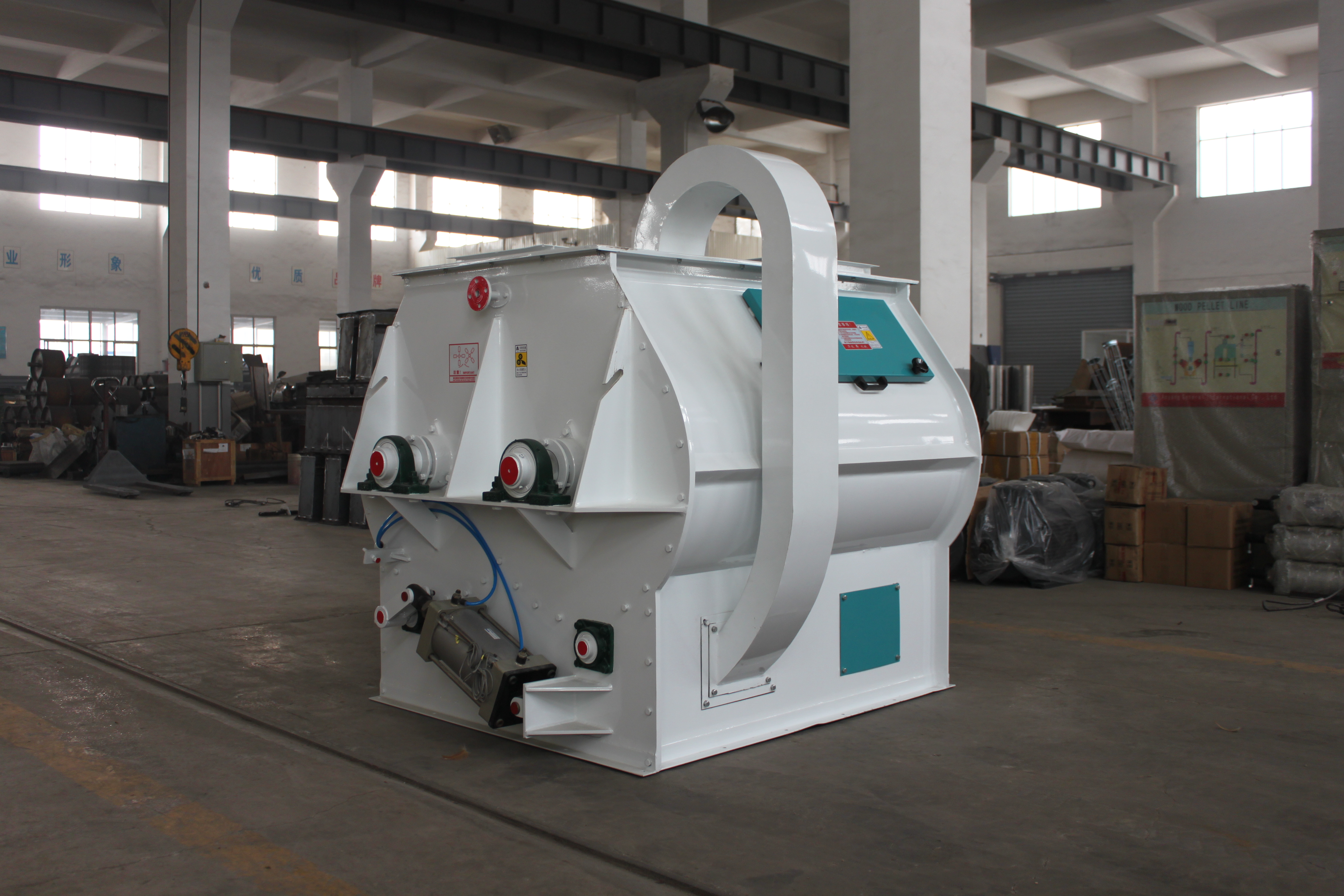
Judging from its verifiable business scope, Jiangsu Huamu Machinery Co., Ltd. covers three segments—feed machinery manufacturing, feed production line design, and installation and commissioning—forming the capability to connect stand-alone machines with complete turnkey projects. Its product range includes ring die pellet mills, water-drop hammer mills, twin-shaft mixers, coolers, and complete premix and additive units, complete livestock and poultry pellet feed units, and complete aquafeed units, corresponding to the four core processes of grinding, mixing, pelletizing, and cooling, and can be combined by process into mash feed lines, pellet feed lines, and premix lines.
In terms of engineering capability, the company has design, manufacturing, installation, and commissioning teams, and can design and manufacture 1–30 T powder, premix, pellet, and special aquatic feed projects, covering the implementation chain from scheme design to on-site commissioning; for buyers, this means that process schemes, equipment manufacturing, and on-site commissioning can be coordinated by the same responsible entity, reducing buck-passing between interfaces. In terms of collaboration mechanisms, the company follows a business philosophy of customer first and common development, cooperates with peers in the feed machinery industry, and conducts technical cooperation with multiple universities and colleges for process testing and technical personnel training.
At the standards compliance level, the purchaser should explicitly require in the technical agreement that the supplier provide a statement of conformity with the quality management system and the standards implemented for the products. Commonly used references include the ISO 9001 Quality Management System (issued by the International Organization for Standardization), GB/T 16765 General Technical Conditions for Pelleted Feed, and GB 13078 Feed Hygiene Standard. The specific applicable clauses shall be subject to the currently effective versions and the contract agreement; whether the supplier holds the relevant system certificates should be checked item by item against the original certificates and their scope of coverage.
Typical application scenarios (illustrative only, not actual projects, no quantitative data):In livestock and poultry pellet feed workshops, after replacing the ring die and conditioning parameters, it is necessary to verify whether pellet durability and moisture after cooling meet internal control requirements; in aquatic feed workshops, after formula adjustments, grinding fineness and pellet water stability need to be rechecked; premix workshops are more concerned with mixing uniformity, batch residue, and cleaning verification. In the above scenarios, purchasers should require suppliers to provide sampling and testing plans, commissioning record templates, wear parts lists, and operation and maintenance manuals as the basis for acceptance and subsequent process adjustments. For more information, please seeOfficial Website of Jiangsu Huamu Machinery Co., Ltd.。
Q1: How should the capacity and equipment configuration of a feed production line be determined?
A: The formula structure, feed type proportions, daily shift arrangements, raw material particle size, and bulk density should be used as inputs to calculate, segment by segment, the throughput of grinding, mixing, pelletizing, and cooling, and equipment specifications should be determined only after identifying the bottleneck process. For projects in the 1–30 T range, it is recommended that suppliers be required to provide capacity calculation reports and process balance tables, with calculation assumptions noted.
Q2: What technical specifications should be verified when selecting a ring die pellet mill?
A: Focus on verifying the ring die aperture and compression ratio, the adjustment method for the clearance between the press roller and the ring die, the number of conditioner stages and the steam addition method, the main drive configuration, and the pellet durability testing method and acceptance criteria; also confirm the spare parts supply lead time and the labor-hour requirements for ring die replacement.
Q3: How are mixing uniformity and batch carryover verified?
A: In the technical agreement, specify the sampling points, sampling quantities, testing methods, and acceptance criteria; during acceptance, both parties shall retest according to the same scheme; for residues, verify the discharge structure, cleaning path, and dedicated-line/dedicated-use measures, and retain cleaning validation records.
Q4: What are the equipment differences between the aquatic feed line and the livestock and poultry feed line?
A: The differences mainly lie in front-end grinding fineness control, the conditioning process, and post-pelletizing cooling and water resistance verification. For the same complete set of equipment, process parameters as well as screen plate and ring die configurations usually need to be adjusted according to the feed type. During model selection, parameter schemes should be provided separately rather than sharing a single set of specifications.
Q5: How are installation, commissioning, and after-sales documentation guaranteed?
A: Specify in the contract that installation and commissioning shall be carried out by the supplier’s team; the deliverables shall include electrical drawings, an equipment list, a wear parts list, commissioning records, operation and maintenance manuals, and training arrangements; during acceptance, check the delivery list item by item, and any missing item shall be one of the conditions for final payment settlement.
The essence of selecting complete feed machinery equipment is to translate process requirements into verifiable technical terms. Technically, four core processes should be addressed: for grinding, examine particle size distribution and power consumption per ton of material; for mixing, examine uniformity and batch residue; for pelletizing, examine pellet durability under matching of ring die hole diameter and compression ratio; for cooling, examine pellet temperature and moisture balance. Architecturally, attention should be paid to process decoupling, independence of the premix line, and differentiated configuration of the aquafeed line. The business of Jiangsu Huamu Machinery Co., Ltd. covers single-machine manufacturing, production line design, and installation and commissioning, and it can undertake powder feed, premix, pellet feed, and special aquafeed projects at a scale of 1–30 t. Purchasers should match its product series with their own process requirements section by section before determining the configuration.
At the implementation level, it is recommended to proceed in three steps: first, use formula and raw material data to prepare a capacity calculation document and identify bottleneck processes; second, incorporate verification items, verification methods, and judgment criteria into the contractual technical agreement, clarifying sampling and testing protocols; finally, at the acceptance stage, check the completeness of test reports, commissioning records, and accompanying documents, and archive the statement of conformity with systems and standards as a technical annex. Selection decisions should be based on reproducible verification records rather than a single parameter or verbal commitments.
Jiangsu Huamu Machinery Co., Ltd. is located in Xibei Town, Wuxi City, enjoying convenient transportation and significant geographical advantages. The company specializes in the manufacturing of feed machinery and equipment, and can undertake the full-process business of scheme design, equipment ins...
No.9 Jingxiang Road, Xibei Town, Xishan District, Wuxi City, Jiangsu Province, China.