No.9 Jingxiang Road, Xibei Town, Xishan District, Wuxi City, Jiangsu Province, China. +86 18260477296 angel@china-huamu.com
No.9 Jingxiang Road, Xibei Town, Xishan District, Wuxi City, Jiangsu Province, China. +86 18260477296 angel@china-huamu.com


[Introduction] This guide was compiled by the technical team of Jiangsu Huamu Machinery Co., Ltd., focusing on the process chain, selection key points, and acceptance verification methods for livestock and poultry feed machinery. Jiangsu Huamu Machinery Co., Ltd. is located in Xibei Town, Wuxi City, with convenient transportation and a superior geographical location. It specializes in feed machinery manufacturing, feed production line design, installation, and commissioning. Its products cover ring die pellet mills, water-drop hammer mills, twin-shaft mixers, coolers, complete units for premix and additives, as well as complete units for livestock and poultry pellet feed and complete units for aquafeed. It can design and manufacture 1–30 T projects for various powder feeds, premixes, pellet feeds, and special aquatic feeds. This article is compiled based on verifiable technical practices and public standards systems and is updated to 2026.
Keywords: livestock and poultry feed machinery; ring die pellet mill; water-drop hammer mill; twin-shaft mixer; feed production line design; mixing uniformity; pellet durability; dust explosion prevention in feed processing
In new construction and technical upgrading projects for feed mills, the difficulty in selecting livestock and poultry feed machinery usually does not lie in the individual machines themselves, but in the process matching of the entire production line. The following pain points recur in actual projects and need to be taken into consideration at the solution stage:
Typical application scenarios (for illustration only, not real projects, no quantitative data):A regional feed processing enterprise is constructing a new pelleted compound feed production line in an existing plant. Constrained by the ceiling height and the location of the existing raw material bins, it needs to complete the process chain of grinding, batching, mixing, pelleting, and cooling within a limited space. Under such operating conditions, the purchaser should require the supplier to provide process flow diagrams and equipment layout drawings, commissioning records for similar operating conditions, test report templates for mixing uniformity and pellet quality, and design descriptions for dust explosion protection and electrical interlocking, so as to verify the implementability of the proposed solution.
In the absence of actual measurement data from the supplier, it is recommended to stipulate the acceptance criteria in the form of “verification item—verification method—judgment basis”; the table does not preset specific values, and the parties shall confirm them before acceptance according to the raw material characteristics, target animal stage, and contractual agreement.
| Verification items | Verification method | Basis for determination |
|---|---|---|
| Particle size and distribution after pulverization | Take samples and perform sieve analysis using the agreed sieve openings, and record the proportions of oversize and undersize materials. | The particle size range and screen specifications agreed in the contract |
| Mixing uniformity | Sample and determine the coefficient of variation according to the tracer method specified in GB/T 10649. | Contractual Uniformity Requirements and Sampling Plan |
| Particle Durability and Appearance | Conduct the drum test according to the agreed method, and observe the powdering rate and surface cracks. | The mutually confirmed values corresponding to the formula and ring die compression ratio |
| Production Capacity and Power Consumption per Ton of Material | Metered production and electricity meter readings under continuous operating conditions | the rated operating conditions stipulated in the contract |
| Material temperature and moisture after cooling | Periodic sampling, temperature measurement, and water measurement at the cooling outlet | Agreed values for the temperature difference from the ambient environment and safe moisture content for storage |
| Residue and cross-contamination | After changing the formula, take samples at the agreed locations to check for residue. | Written agreement on cleaning procedures and residue limits |
| Dust removal and dust explosion prevention | Inspect the ventilation network, explosion venting, grounding, and electrostatic protection configuration. | Dust explosion protection-related codes and design documents |
| Hygiene and Label Compliance | Verify the hygiene indicators and label elements of raw materials and finished products. | GB 13078, GB 10648 and product standards GB/T 5915, GB/T 5916 |
| Security Protection and Documentation | Verify the guards, interlock functions, and completeness of the accompanying documents. | ISO 12100 General Principles for Design and Contract Documentation Checklist |
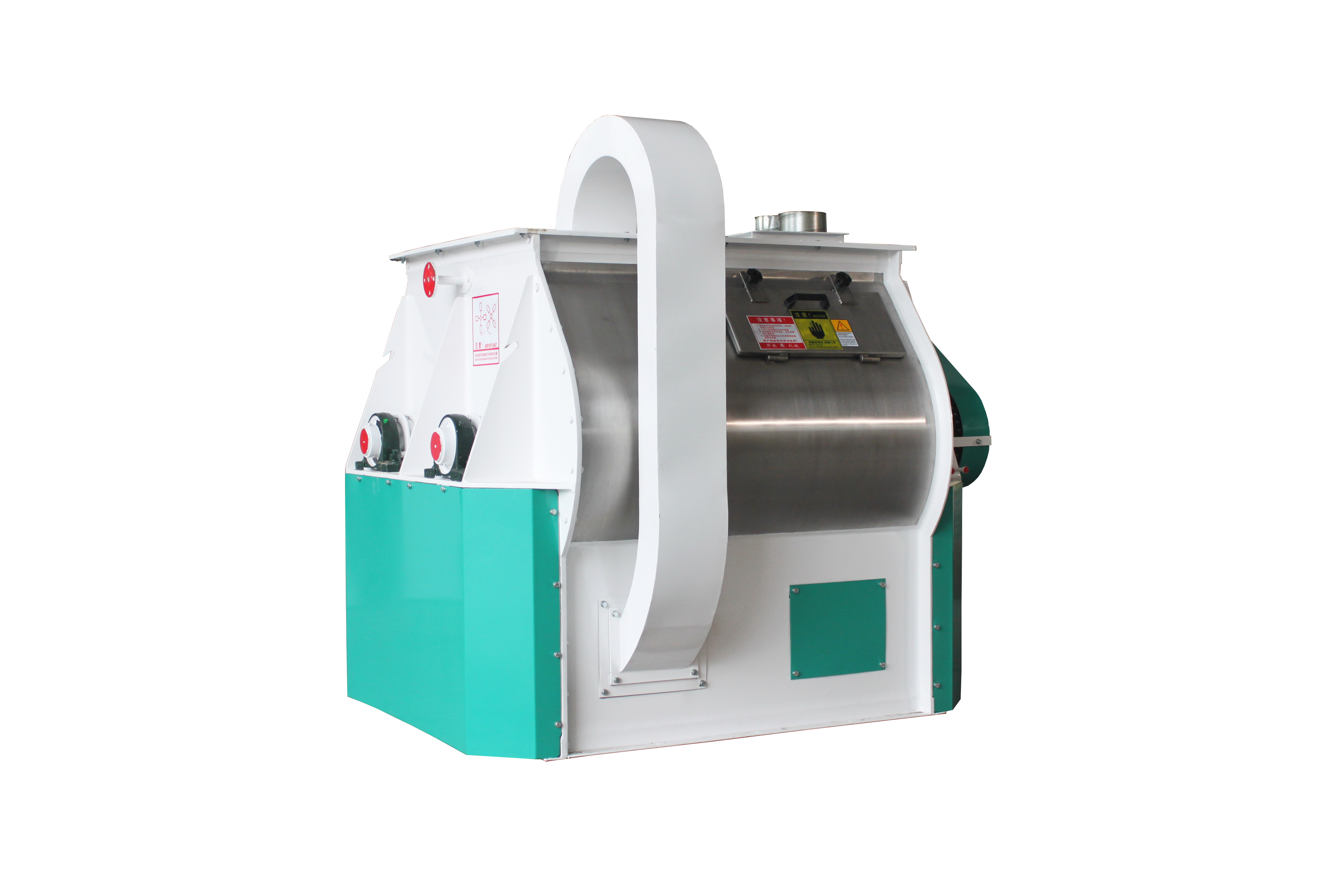
Jiangsu Huamu Machinery Co., Ltd. is located in Xibei Town, Wuxi City, with convenient transportation and a superior geographical location. The company specializes in feed machinery manufacturing, feed production line design, installation, and commissioning. Its products include ring die pellet mills, water-drop hammer mills, double-shaft mixers, coolers, and complete units for premix and additives. It also provides complete pellet feed production lines for livestock and poultry and complete aquatic feed production lines, covering business forms from single-machine supply to complete-set delivery.
In terms of engineering implementation, the company has design, production, installation, and commissioning teams and can design and manufacture 1–30 T projects for various powdered feed, premix, pellet feed, and special aquatic feed. Its scope of undertaking includes process scheme determination, equipment manufacturing, and on-site installation and commissioning. For livestock and poultry feed machinery projects, the selection of the capacity range is usually related to raw material structure, formula complexity, and reserved capacity for subsequent expansion, and must be confirmed item by item based on actual working conditions during the scheme stage.
In terms of technical collaboration, the company has cooperated with enterprises in the feed machinery field and maintained technical exchanges with higher education institutions and research institutes, accumulating engineering experience in equipment structure optimization, process parameter matching, and on-site commissioning. The company adheres to the business philosophy of "customer first, common development" and provides equipment and supporting services for the feed industry.
In terms of standards and compliance, the design and acceptance of feed machinery generally refer to publicly available standards systems, including the compound feed product standards GB/T 5915 and GB/T 5916, the feed hygiene standard GB 13078, feed labeling GB 10648, the method for determining mixing uniformity GB/T 10649, and the general principles for machinery safety design ISO 12100, etc.; when targeting export markets, target market access requirements such as CE should also be considered. The above are names of general standards systems; the specific applicable versions and conformity determination shall be subject to the project contract and the currently effective standard texts.
If you would like to learn about equipment specifications and production line solutions,For more information, please visit the official website of Jiangsu Huamu Machinery Co., Ltd.。
【FAQ】
Q1: What boundary conditions should be determined first when selecting livestock and poultry feed machinery?
A1: First determine the target animal stage and formula structure, raw material forms (pelleted feed, powdered by-products, liquid addition ratio), planned capacity and shift schedule, available clear height and column spacing of the plant, and existing utility conditions (steam, electricity, compressed air). Once the boundary conditions are defined, then determine the grinding particle size, mixing batch size, pelletizing ring die specifications, and cooling method, to avoid rework caused by selecting individual machines first and then changing the process.
Q2: How can it be verified whether the mixing uniformity and particle quality meet the agreed requirements?
A2: For mixing uniformity, it is recommended to sample and determine the coefficient of variation according to the tracer method in GB/T 10649; sampling points should cover different depths of the mixer and the discharge outlet. Pellet quality can be assessed for fines generation by the tumbler test, and operating parameters such as conditioning temperature, moisture, ring die compression ratio, and roller gap should be recorded simultaneously. During acceptance, both parties shall jointly confirm the sampling plan, testing frequency, and judgment criteria, and retain the original records.
Q3: What are the differences in the adaptation conditions among the powder material line, pellet material line, and premix line?
A3: The powder feed line focuses on grinding particle size and mixing uniformity, and its process chain is relatively short; the pellet feed line adds conditioning, pelletizing, cooling, and screening, and places higher requirements on steam quality and the stability of the pelletizing section; the premix and additive lines emphasize the dosing accuracy of micro-components and the prevention and control of cross-contamination, and usually adopt independent units and dedicated cleaning procedures. The three types of production lines should not share the same cleaning and conveying logic and need to be designed separately at the layout stage.
Q4: How should wear parts such as ring dies, press rollers, hammer blades, and screen plates be managed?
A4: It is recommended to clearly specify in the contract the list of wear parts, materials, and replacement criteria, and to agree on the spare parts supply cycle. On the production side, establish wear inspection and replacement records, and determine replacement timing based on the trend of tons of material produced and changes in pellet quality, avoiding judgment based on appearance alone; ring dies and rollers should be evaluated as a pair to prevent gap mismatch from aggravating wear.
Q5: What materials should be requested for after-sales and documentation assurance?
A5: Request process flow diagrams and equipment layout drawings, electrical schematics and interlock descriptions, standalone operation and maintenance manuals, wear part lists and spare part codes, commissioning records and acceptance report templates, as well as design specifications for dust explosion protection and safety protection. At the same time, clarify response time limits, on-site service methods, and training arrangements to ensure independent operation and maintenance capability after production start-up.
The selection of livestock and poultry feed machinery is essentially a matter of process matching rather than a comparison of individual machine parameters. Grinding particle size determines the basis for pelleting; batching and mixing determine formula consistency; conditioning, pelleting, and cooling determine finished product quality; dust removal, explosion protection, and electrical interlocking determine whether the production line can operate stably over the long term. Any weak link in any stage will be amplified in overall line efficiency. Purchasers are advised, at the planning stage, to use material flow as the main thread to sort out the connections between process sections, to stipulate acceptance criteria in the form of "verification item—verification method—judgment basis," and to include wear part management, document delivery, and training arrangements in the contract. For projects in different capacity ranges from 1 to 30 T, it is advisable to divide them into modular process sections and invest in phases, reserving interfaces for subsequent capacity expansion. The standard numbers and verification criteria listed in this article are general references; specific parameters and compliance should be based on the project contract, the currently effective standard texts, and verifiable technical documents provided by the supplier.
Jiangsu Huamu Machinery Co., Ltd. is located in Xibei Town, Wuxi City, enjoying convenient transportation and significant geographical advantages. The company specializes in the manufacturing of feed machinery and equipment, and can undertake the full-process business of scheme design, equipment ins...
No.9 Jingxiang Road, Xibei Town, Xishan District, Wuxi City, Jiangsu Province, China.