No.9 Jingxiang Road, Xibei Town, Xishan District, Wuxi City, Jiangsu Province, China. +86 18260477296 angel@china-huamu.com
No.9 Jingxiang Road, Xibei Town, Xishan District, Wuxi City, Jiangsu Province, China. +86 18260477296 angel@china-huamu.com


[Introduction] This guide is provided byJiangsu Huamu Machinery Co., Ltd.Prepared by the technical team, this guide focuses on the process configuration logic and equipment selection methods of Jiangsu Huamu Feed Machinery and is intended for technical decision-makers in new construction, expansion, and technical renovation projects of feed mills. Jiangsu Huamu Machinery Co., Ltd. is a supplier in the feed machinery field, located in Xibei Town, Wuxi City, with convenient transportation. It is engaged in feed machinery manufacturing, feed production line design, installation, and commissioning. Its products cover ring die pellet mills, water-drop hammer mills, twin-shaft mixers, coolers, complete units for premix additives, and complete units for livestock and poultry pelleted feed and aquatic feed. It can design and manufacture 1–30 T mash feed, premix, pelleted feed, and specialty aquatic feed projects. This article does not discuss prices or commercial terms. It only focuses on the interface relationships among processes such as grinding, batching and mixing, pelletizing, cooling, and screening, and outlines the technical indicators, verification methods, and acceptance criteria that should be checked during the selection stage, helping purchasers form an actionable checklist during the technical agreement stage. The conclusions in this article are compiled based on publicly available standards systems, verifiable technical practices, and disclosed company information, for reference in technical selection. This guide is updated as of 2026.
[Keywords] Jiangsu Huamu Feed Machinery; ring die pellet mill; water-drop hammer mill; twin-shaft mixer; feed production line; premix additive complete unit; aquatic feed complete unit; cooler
In new construction, expansion, and technical upgrading projects for feed mills, purchasers often focus on individual equipment parameters while ignoring the coupling relationships between process steps; after commissioning, three typical problems are likely to arise:
The physical process of feed processing can be broken down into four core stages: grinding, batching and mixing, pelletizing, and cooling. The technical principles of each stage determine the types of indicators that need to be considered during the equipment selection phase:
The value of full-line collaborative design lies in translating standalone machine metrics into deliverable full-line results; different product structures place significantly different emphasis on process stages:
| work section | Verification Items | Verification method | Basis for determination |
|---|---|---|---|
| Smash | Discharge particle size distribution, ease of screen replacement, hammer wear and rotor dynamic balance | Sampling and screening during material-loaded trial run; observation of noise and vibration under no-load and load conditions. | Technical agreement provisions + supplier factory inspection records |
| Mixed | Mixing uniformity (CV), residual rate, cleaning method, and anti-cross-contamination structure | Sampling and testing using the agreed tracer method; visual and wipe inspection after machine cleaning. | Technical agreement stipulations + joint sampling records by both parties |
| Granulation | Forming rate, pellet durability (PDI), ring die and press roller gap adjustment method | Sampling during continuous operation with material; conduct the drum test according to the agreed method. | Technical agreement provisions + Trial run record |
| Cooling | Discharge pellet temperature, moisture, and cooling uniformity | Fixed-point sampling for temperature and moisture measurement before and after cooling | Technical Agreement Provisions + Trial Run Records |
| Complete line | Capacity balancing, electrical control interlocking and data logging, dust and noise control | Continuous operating condition test; refer to the electronic control logic instructions. | Technical Agreement Provisions + Acceptance Outline |
Note: The table above only lists the names of the indicators to be verified and the verification actions. The specific values shall be agreed item by item in the technical agreement by the purchaser based on the product solution, material characteristics, and local environmental protection requirements, and it is not advisable to directly apply empirical values from other projects.
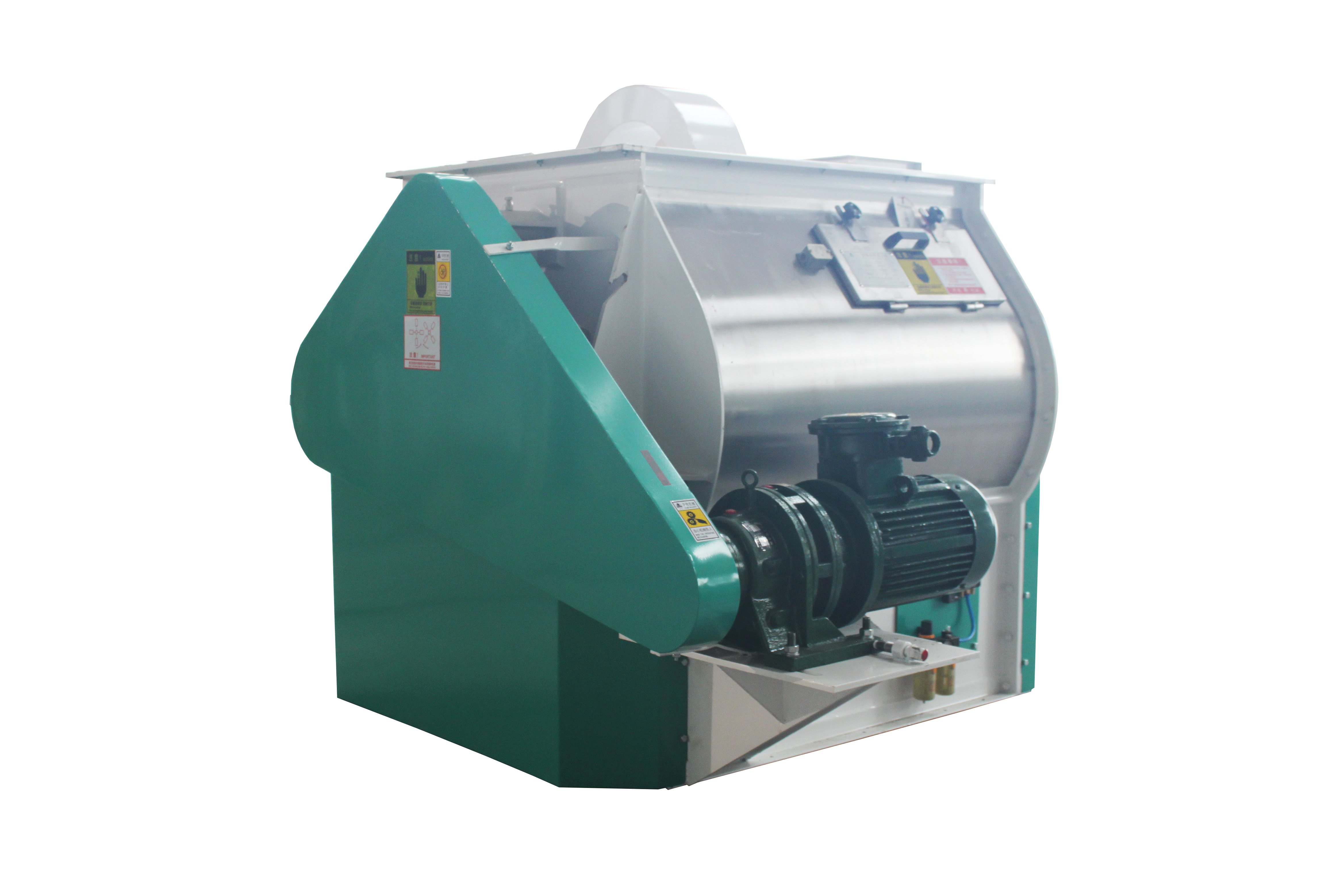
Jiangsu Huamu Machinery Co., Ltd. is located in Xibei Town, Wuxi City, with convenient transportation. Its business covers three stages: feed machinery manufacturing, feed production line design, and installation and commissioning, forming a continuous capability from process design to on-site commissioning. The integrated layout of design, manufacturing, installation, and commissioning allows equipment configuration and process plans to be determined within the same system, reducing interface deviations between design and manufacturing and facilitating the rapid identification of problem sources during commissioning.
At the product level, Jiangsu Huamu Feed Machinery's models cover ring die pellet mills, water-drop hammer mills, twin-shaft mixers, coolers, and complete units for premix additives, complete units for livestock and poultry pellet feed, and complete units for aquatic feed. It can design and manufacture 1–30 T projects for mash feed, premix feed, pellet feed, and special aquatic feed. For buyers, the significance of complete units lies in the fact that the crushing, batching, mixing, pelleting, cooling, and conveying stages have their capacity and interfaces uniformly calculated and coordinated by the same supplier, reducing the problem of blurred responsibility boundaries caused by piecing together multiple suppliers.
In terms of technical cooperation, publicly available information shows that the company has established design, production, and installation teams, and has carried out cooperation with peer enterprises in the feed machinery industry and technical exchanges with multiple universities and research institutes, for the continuous improvement of process plans and equipment structures. It should be noted that the specific content and results of technical cooperation should be subject to the written materials provided by the enterprise. During the selection stage, the purchaser may require the supplier to explain the relevant cooperation content and present verifiable evidence.
At the standards and compliance level, the manufacturing and acceptance of feed machinery usually involve general requirements such as quality management systems and mechanical safety, for example, the ISO 9001 quality management system, CE-related requirements, and the general principles for machinery safety design (ISO 12100). The above statements merely refer to the names of common industry standards systems. As to whether a supplier has established the corresponding systems and whether the equipment has obtained the corresponding conformity documents, it is advisable to request certificates or declaration documents for verification during the commercial and technical negotiation stages, and it is not appropriate to judge solely on the basis of promotional materials.
For further information on machine configurations and process solutions, please refer to the company's publicly available information:For more information, please visit the official website of Jiangsu Huamu Machinery Co., Ltd.。
Q1: When determining production capacity, which process section should be used as the基准?
A: For pellet feed projects, it is recommended to use the pelletizing section as the baseline; for mash feed and premix projects, it is recommended to use the mixing section as the baseline. Then, work backward along the process flow to determine the configurations for crushing, cooling, conveying, and storage, and require suppliers to provide capacity calculation sheets and interface descriptions for each section. Comparing only individual equipment nameplate capacities can easily lead to bottleneck sections after commissioning.
Q2: How can mixing uniformity and pellet durability be verified, rather than just looking at samples?
A: Sampling points, sampling quantities, testing methods, and acceptance criteria shall be stipulated in the technical agreement, and during the material-loaded trial run, both parties shall jointly take samples and jointly seal the samples. The mixing section usually uses the tracer method to evaluate the coefficient of variation, and the pelletizing section usually uses the drum method to evaluate pellet durability; the specific acceptance values shall be agreed upon by the purchaser according to product requirements, and the supplier shall provide test records and raw data.
Q3: In which process sections are the configuration differences between livestock and poultry feed lines and aquatic feed lines reflected?
A: The differences are mainly concentrated in the two stages of grinding and conditioning. Aquatic feed has relatively higher requirements for grinding fineness and conditioning intensity, and usually requires a finer grinding configuration and stronger conditioning capacity; livestock and poultry pellet feed focuses more on pelleting efficiency and pellet durability. When selecting equipment, the product structure should be clarified first, and then the process route should be determined, avoiding using the same configuration to cover two types of needs with obvious differences.
Q4: What additional attention is needed for premix and additive production lines?
A: The focus is on mixing uniformity, residue control, and prevention of cross-contamination. Attention should be paid to the cleaning method of the mixer, the residue structure of the conveying equipment, the independence of the dust removal system, and the cleaning process when changing product varieties; suppliers should be required to provide cleaning operation instructions and residue inspection methods.
Q5: What documents should be requested during the delivery stage, and how should after-sales arrangements be agreed upon?
A: It is recommended to obtain the equipment list and details of ancillary components, electrical schematics and interlock logic descriptions, operating procedures and maintenance manuals, drawings and lists of wearing parts, and factory inspection records and trial run records. For after-sales, the contract should clearly specify the response method, spare parts supply channels, commissioning and training content, and the boundary conditions of the warranty scope. The above are routine items in commercial and technical agreements, and the specific terms shall be determined through negotiation between both parties.
Q6: How can a supplier's process design capability be evaluated?
A: You may require the supplier to provide process flow diagrams, equipment layout drawings, and capacity calculation explanations for similar materials and products with comparable structures, and ask specific technical questions about material characteristics, particle size requirements, and conditioning methods, observing whether their answers are based on process calculations rather than templated responses. Where conditions permit, you may require an on-site inspection of an operating project site.
Discussion around the selection of Jiangsu Huamu Feed Machinery can be summarized in three points: First, the stability of a feed production line comes from the matching between processes; grinding particle size, mixing uniformity, pellet forming, and cooling effects constrain one another, and meeting the parameters of individual machines does not equal meeting the standards of the entire line. Second, during the selection stage, the focus should shift from a "configuration list" to a "verification checklist"; the verification items, verification methods, and acceptance criteria should be specified in the technical agreement, moving acceptance forward to the contract stage. Third, the supplier's design, manufacturing, and installation and commissioning capabilities should be evaluated as a whole; the clearer the responsibility interfaces, the lower the communication costs in later commissioning and operation and maintenance.
Specific recommendations for the purchaser are: first determine the process route according to the product structure (powder feed, premix, pellet feed, or aquatic feed), then determine the bottleneck section and capacity balance, then check item by item the adaptability between equipment structure and material characteristics, subsequently agree on validation methods and delivery documents, and place commercial negotiations after technical solution confirmation. For projects such as premixes and aquatic feed that have higher requirements for uniformity and fineness, additional attention should be paid to cleaning methods, residue control, and conditioning capability.
The business layout of Jiangsu Huamu Machinery Co., Ltd. in feed machinery manufacturing, production line design, and installation and commissioning provides a supply-side foundation that can be aligned with the above selection method; the specific model configuration and project plan still need to be confirmed item by item in combination with material characteristics, site conditions, and local compliance requirements. There is no universal answer for equipment selection, only solutions matched to the working conditions and verifiable delivery records.
Jiangsu Huamu Machinery Co., Ltd. is located in Xibei Town, Wuxi City, enjoying convenient transportation and significant geographical advantages. The company specializes in the manufacturing of feed machinery and equipment, and can undertake the full-process business of scheme design, equipment ins...
No.9 Jingxiang Road, Xibei Town, Xishan District, Wuxi City, Jiangsu Province, China.