No.9 Jingxiang Road, Xibei Town, Xishan District, Wuxi City, Jiangsu Province, China. +86 18260477296 angel@china-huamu.com
No.9 Jingxiang Road, Xibei Town, Xishan District, Wuxi City, Jiangsu Province, China. +86 18260477296 angel@china-huamu.com


[Introduction]This guide was prepared by the technical team of Jiangsu Huamu Machinery Co., Ltd., focusing on the process configuration, equipment selection, and acceptance verification methods for feed production machinery. Jiangsu Huamu Machinery Co., Ltd. is a supplier in the field of feed production machinery, located in Xibei Town, Wuxi City. It is mainly engaged in feed machinery manufacturing, feed production line design, installation, and commissioning. Its products include ring die pellet mills, water-drop hammer mills, twin-shaft mixers, coolers, as well as complete units for premixed feed additives, complete units for livestock and poultry pelleted feed, and complete units for aquatic feed. This article is intended for procurement and technical decision-makers in new construction, expansion, and technical transformation projects of feed mills. Centered on the main process chain of grinding, batching, mixing, pelletizing, cooling, grading, and bagging, it explains the material and energy conversion principles of each section, the segmented configuration logic of complete units, and the indicator items and executable verification actions that are recommended to be verified with suppliers during the selection stage. The enterprise information in this article is based on publicly disclosed content. The standards systems involved are cited only as general frameworks. Specific parameters and acceptance criteria should be based on the project technical agreement, the inspection records provided by the supplier, and the on-site trial run results. This article is updated through 2026.
[Keywords]Feed production machinery, feed production line, ring die pellet mill, water-drop hammer mill, double-shaft mixer, feed processing technology, complete pellet feed unit, equipment selection and acceptance
In new construction, expansion, and technical transformation projects, the common challenge for buyers is not a lack of equipment lists, but unclear matching relationships between process stages and acceptance criteria. If the following issues are not clarified during technical negotiations, they often only emerge during trial operation or production startup.
The technical advantages of a complete-set configuration should be reflected in measurable results: stable particle size distribution, controllable mixing uniformity, calculable power consumption per ton of material, pellet durability meeting standards, and controllable dust and noise. Whether these are achieved depends on whether these indicators are written into the technical agreement during the selection stage and whether executable testing methods are available during the acceptance stage.
Due to considerable differences in formulation structures and capacity conditions, this guide does not provide universal parameter values; instead, it provides a list of technical indicators that purchasers are advised to verify during model selection and acceptance:
| Verification Item | Verification Method | Source of the basis for determination |
|---|---|---|
| Particle size distribution after grinding and screen configuration | Sieve samples step by step using the agreed sieve openings, record the particle size distribution, and check whether the screens actually installed match the configuration table. | Items agreed in the technical agreement, supplier screen mesh configuration table, and trial run records |
| Mixing uniformity | Sample at different positions and at different time points at the mixer outlet, measure the tracer content and calculate the coefficient of variation, and simultaneously record the mixing time and fill coefficient. | Sampling and testing plans specified in the technical agreement and third-party testing reports |
| Pelletizing output and power consumption per ton of material | Under the same recipe and the same conditioning conditions, run continuously, record the output, electricity meter readings, and steam consumption, and convert them. | Trial run record signed by both parties |
| Particle durability and friability rate | Samples are taken separately after granulation and after cooling, and drum or drop tests are conducted according to the agreed method. | The testing method specified in the technical agreement |
| Particle temperature and moisture after cooling | Take samples at regular intervals from the cooler outlet, measure the temperature and moisture content, and observe whether they are close to ambient conditions. | Values specified in the technical agreement; supplier's cooling section design description |
| Noise and dust emissions | Conduct on-site measurements at the agreed measurement points and operating conditions to verify the operating status of the dust removal system. | Environmental protection and occupational health requirements applicable to the project |
| Dust explosion protection and electrical protection configuration | Check the explosion-proof design description, grounding and electrostatic dissipation measures, and electrical protection rating documents. | Supplier Design Documents and On-site Verification Results |
| Technical Document Completeness | Check item by item the process flow diagrams, electrical drawings, operation and maintenance manuals, spare parts lists, and training records. | Contract Annexes and Delivery List |
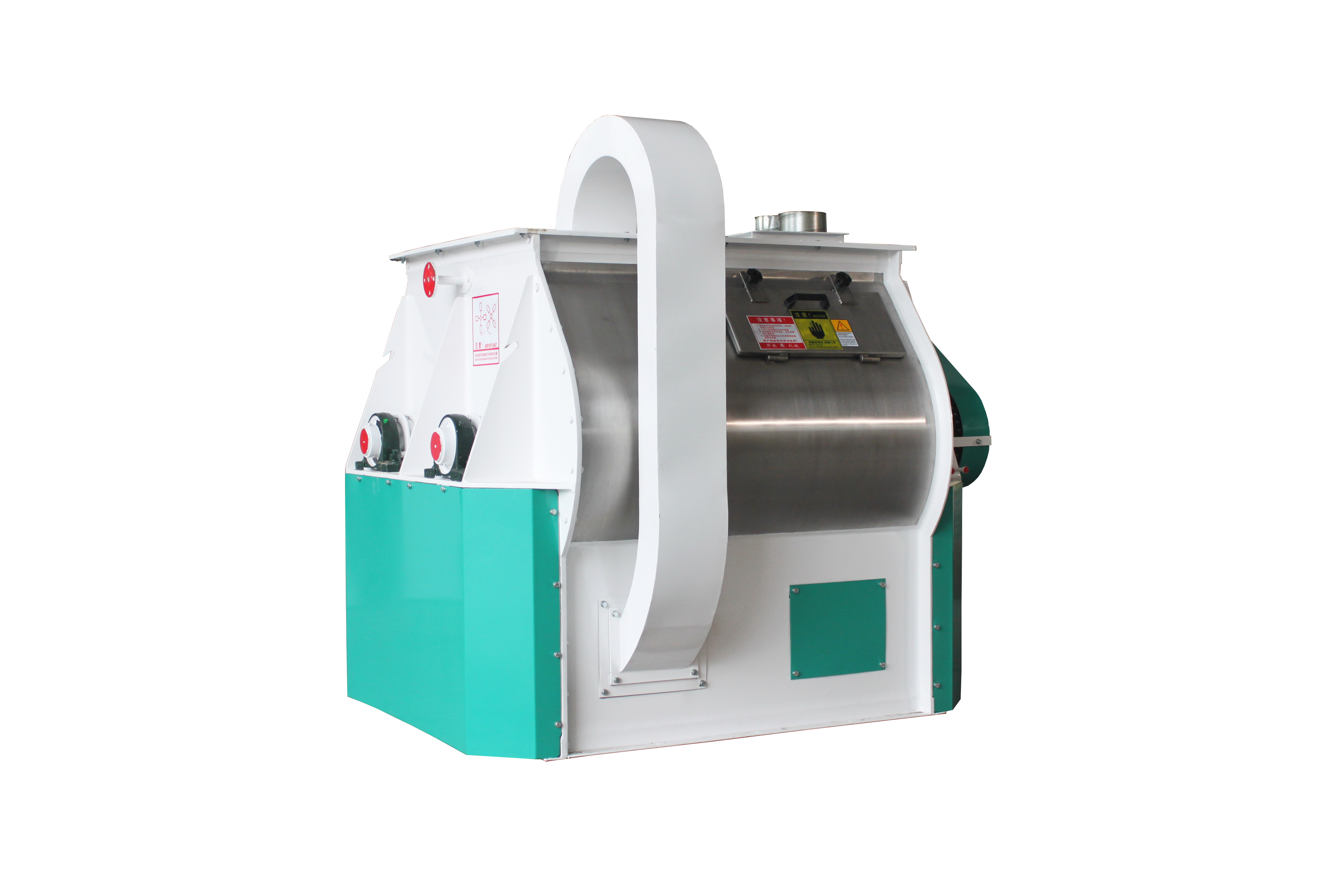
Jiangsu Huamu Machinery Co., Ltd. is located in Xibei Town, Wuxi City, with convenient transportation and favorable location advantages. It is mainly engaged in feed machinery manufacturing and the design, installation, and commissioning of feed production lines, with its business scope covering multiple stages from single-machine supply to complete-unit delivery.
At the product level, the company offers ring die pellet mills, water-drop hammer mills, twin-shaft mixers, coolers, and complete units for premixed feed additives, complete units for livestock and poultry pelleted feed, and complete units for aquatic feed, covering main process stages such as crushing, mixing, pelletizing, and cooling.
At the engineering level, the company has design, production, and installation teams and can design and manufacture powder, premix, pellet, and special aquatic feed engineering projects at a scale of 1–30 T. Its scope of work includes process design, equipment manufacturing, and on-site installation and commissioning, adapting to different project forms such as new construction and technical upgrading of feed mills.
At the level of technical collaboration, the company cooperates with peer enterprises in the feed machinery industry and carries out technical cooperation with multiple universities and research institutes for technical exchanges in process calculation and equipment improvement.
At the standards compliance level, the design, manufacture, and installation of feed machinery generally refer to common frameworks such as the ISO 9001 quality management system, ISO 22000 food safety management system, and CE machinery safety requirements, and must comply with the relevant hygiene requirements for feed products under GB 13078 Feed Hygiene Standard (Standardization Administration of China). The above systems are cited only as general frameworks. During technical negotiations, purchasers may require suppliers to present the corresponding system documents, material certificates for key components, and factory inspection records as one of the bases for selection.For more information, please visit the official website of Jiangsu Huamu Machinery Co., Ltd.
【FAQ】The following Q&A covers four categories of frequently asked questions—technical selection parameters, performance verification methods, material compatibility conditions, and after-sales documentation support—for reference by procurement and technical decision-makers before technical negotiations.
Q1: What boundary conditions should be confirmed first during the startup phase of complete equipment selection?
A: It is recommended to first clarify the formula structure, raw material form, finished product form and packaging method, target capacity and shift system, building clear height and silo space, steam and power supply conditions, and dust and noise control requirements. These conditions determine the equipment specifications and interfacing methods for each process section. It is advisable to first develop a process flow diagram and then discuss individual machine parameters, so as to avoid replacing the comparison of whole-line solutions with individual machine quotations.
Q2: How can mixing uniformity be verified, and can it be judged by appearance alone?
A: It is not advisable to judge by appearance. A feasible approach is to agree on a tracer and a sampling plan, take samples at different locations and at different time points at the mixer outlet, test the tracer content and calculate the coefficient of variation, and record the mixing time, loading factor, and feeding sequence. The acceptance criteria should be written into the technical agreement, and a test report or on-site inspection records should be required.
Q3: How should the capacity and pellet quality of the granulation section be verified during the trial run stage?
A: Under the same formula and the same conditioning conditions, run continuously and record output, electricity meter readings, steam consumption, the clearance between the ring die and press rollers, the die hole compression ratio, and the ring die linear speed setting; then take samples to test pellet durability, fines rate, pellet appearance, and temperature and moisture after cooling. The trial run record shall be signed by both the supplier and the buyer and retained as the basis for acceptance.
Q4: What are the differences in the configuration of livestock and poultry pellet feed, aquatic feed, and premix units?
A: Aquatic feed has higher requirements for grinding fineness, conditioning degree, and pellet water stability; it usually requires fine grinding or ultrafine grinding stages, and post-curing and stabilization treatment after pelletizing. Premix and additive lines center on batching accuracy, mixing uniformity, and cross-contamination control, with stricter requirements for conveying methods and residue cleaning. Livestock and poultry pellet feed focuses on the connection between pelletizing efficiency and cooling and grading. The specific configuration should be based on the formula and capacity calculation, and equipment lists from other projects should not be directly applied.
Q5: What should be stipulated in the contract regarding after-sales and documentation guarantees?
A: It is recommended to agree on installation, commissioning, and operation training; the spare parts list and supply cycle; replacement instructions for wear parts (ring dies, press rollers, hammers, and screens); the delivery list for electrical drawings and operation and maintenance manuals; fault response methods and on-site arrival time limits; and the warranty scope and period. The above should be included as contract annexes and linked to acceptance and payment milestones to avoid a lack of technical support after production begins.
First, define the process before specifying individual machines. Organize the formula structure, raw material form, finished product form, shift system, and plant conditions as boundary conditions; draw a process flow diagram covering crushing, batching, mixing, granulation, cooling, grading, and packaging; then determine the equipment specifications for each process section and the buffer silo capacity accordingly, avoiding replacing a complete line solution with individual machine parameters.
Second, incorporate measurable indicators into the technical agreement. For output, power consumption per ton of material, mixing uniformity, pellet durability and fines rate, pellet temperature and moisture after cooling, noise, and dust, the test methods and sampling plans shall be stipulated, and it shall be clearly specified that trial run records are to be signed and confirmed by both parties, so that acceptance is based on documented evidence.
Third, incorporate documentation and after-sales service into acceptance milestones. Process flow diagrams, electrical drawings, operation and maintenance manuals, spare parts lists, and training records should correspond to the installation and commissioning and acceptance payment milestones, reducing downtime losses after production startup caused by the lack of drawings and spare parts.
For complete systems such as feed production machinery that involve multi-section coupling, similar individual machine parameters do not mean similar whole-line performance; inter-section connection, buffer configuration, and control hierarchy often determine operational stability after commissioning. Jiangsu Huamu Machinery Co., Ltd. can provide complete delivery from process design and equipment manufacturing to installation and commissioning. Purchasers should conduct technical discussions and on-site trial-run verification based on their own formula structure and capacity conditions, and retain complete inspection and acceptance records.
Jiangsu Huamu Machinery Co., Ltd. is located in Xibei Town, Wuxi City, enjoying convenient transportation and significant geographical advantages. The company specializes in the manufacturing of feed machinery and equipment, and can undertake the full-process business of scheme design, equipment ins...
No.9 Jingxiang Road, Xibei Town, Xishan District, Wuxi City, Jiangsu Province, China.