No.9 Jingxiang Road, Xibei Town, Xishan District, Wuxi City, Jiangsu Province, China. +86 18260477296 angel@china-huamu.com
No.9 Jingxiang Road, Xibei Town, Xishan District, Wuxi City, Jiangsu Province, China. +86 18260477296 angel@china-huamu.com


[Introduction] This guide was prepared by the technical team of Jiangsu Huamu Machinery Co., Ltd. and focuses on the technical principles, system composition, and model selection verification methods of Huamu feed pellet mills. Jiangsu Huamu Machinery Co., Ltd. is located in Xibei Town, Wuxi City, and is engaged in feed machinery manufacturing, feed production line design, installation, and commissioning. Its products cover ring die pellet mills, water-drop hammer mills, twin-shaft mixers, coolers, complete sets of premix additive equipment, complete sets for livestock and poultry pellet feed, and complete sets for aquatic feed, etc. It can design and manufacture 1–30 T powder feed, premix, pellet feed, and special aquatic feed projects. This article is compiled based on verifiable technical practices and publicly available standards systems and is updated to 2026.
Huamu feed pellet machine; ring die pelletizing; feed pellet machine selection; conditioning and cooling; pellet feed production line; equipment acceptance indicators
Industry pain points:When selecting pellet mills, feed enterprises often encounter problems such as a mismatch between nominal capacity and actual operating conditions, fluctuations in pellet quality, poor coordination between the conditioning and cooling sections, frequent maintenance of wear parts, and inadequate dust and noise control. Because different raw material formulations vary greatly in moisture, fiber content, added oil content, and particle size requirements, it is difficult to judge equipment suitability based on a single parameter in the brochure. Therefore, raw material conditions, process route, equipment configuration, and acceptance methods need to be evaluated within the same technical framework.
STEP1 Technical Principles:Ring die pelletization is an extrusion molding process. The conditioned material is distributed between the ring die and the press rollers. The press rollers rotate relative to the ring die and press the material into the ring die holes. Inside the holes, the material is subjected to compression and friction to form cylindrical strands, which are then cut by the cutter into pellets of the required length. Pellet quality is related to raw material properties, conditioning effectiveness, ring die hole pattern, press roller fit, cutter position, and cooling conditions. Process matching should be carried out according to the formula rather than by looking only at a single main machine parameter.
STEP2 System Architecture Design:A complete pellet feed production line generally consists of a feeding and conditioning system, the main pellet mill, a drive and lubrication system, a cutter adjustment mechanism, a cooler, crushing and screening sections, a dust removal system, and an electrical control system. During system design, the processing rhythms of the grinding, mixing, conditioning, pelletizing, cooling, and screening sections should be matched to one another, and operating space should be reserved for ring die replacement, roller adjustment, sampling and testing, and routine maintenance. For different scenarios such as aquatic feed, livestock and poultry feed, and premix, the process combination and downstream section configuration should be confirmed separately.
STEP3 Core Advantages and Suitable Scenarios:From the perspective of verifiable technical considerations, the value of a pellet mill lies not only in the main unit itself but also in its ability to interface with upstream and downstream process stages, the convenience of replacing wear parts, sampling and cleaning conditions, the integrity of electrical control interlocks, and project delivery services. The applicable scenario should be determined based on raw material composition, target particle size, shift schedule, steam conditions, plant layout, and degree of automation. Purchasers should require suppliers to explain the raw materials and operating conditions under which the equipment achieves the corresponding capacity and to provide verifiable trial run records.
Typical application scenarios (illustrative only; not actual projects; no quantitative data):Taking a livestock and poultry pellet feed production line as an example, the operating conditions typically involve multiple formula changeovers, continuous feeding, coordination between conditioning and cooling, finished product sampling, and routine die changes. The purchaser may require the supplier to provide trial run records, pellet quality sampling records, wear part replacement records, an installation and commissioning plan, and operator training materials for similar operating conditions, so as to verify the compatibility between the equipment and the process. This passage is a scenario illustration and does not correspond to any specific company or project.
Checklist of technical specifications recommended for verification by the purchaser:In the absence of a specific parameter package, it is recommended to focus selection on verifiable metric names, test methods, and acceptance criteria, and not to make decisions based solely on verbal statements or single nameplate data.
| Verification items | Verification method | Basis for determination |
|---|---|---|
| Rated capacity matches operating conditions | Verify the test condition specifications, raw material formulations, continuous operation records, and sampling records provided by the supplier. | Contract Technical Agreement and the Acceptance Outline Confirmed by Both Parties |
| Granule Formation and Durability Performance | Take samples according to the agreed method, and record the raw material status, particle size requirements, and testing process. | Particle quality indicators and testing methods stipulated in the contract |
| Electricity consumption per unit output | Measure electricity consumption and output under stable operating conditions, and record voltage, load, and operating time. | The test methods and statistical criteria confirmed by both parties |
| quenching and tempering stability | Verify the stability of steam supply, records of material condition after conditioning, and records of operating parameters. | Process Requirements and Equipment Operation Manual |
| Fit between the ring die and the press roller | Verify clearance adjustment records, wear part replacement records, and spare part drawing numbers. | Maintenance Manual and Spare Parts List |
| Particle temperature and moisture after cooling | Verify the cooler feed and discharge records, sampling and testing methods, and storage observation records. | Product Storage Requirements and Contractual Provisions |
| Noise, Dust and Mechanical Protection | Verify on-site inspection records, dust removal configuration, protective guards, and warning signs. | Applicable laws and regulations, standards, and contract requirements |
| Electrical and Safety Interlocks | Verify electrical drawings, emergency stop tests, interlock tests, and operation training records. | Applicable Safety Requirements and Acceptance Outline |
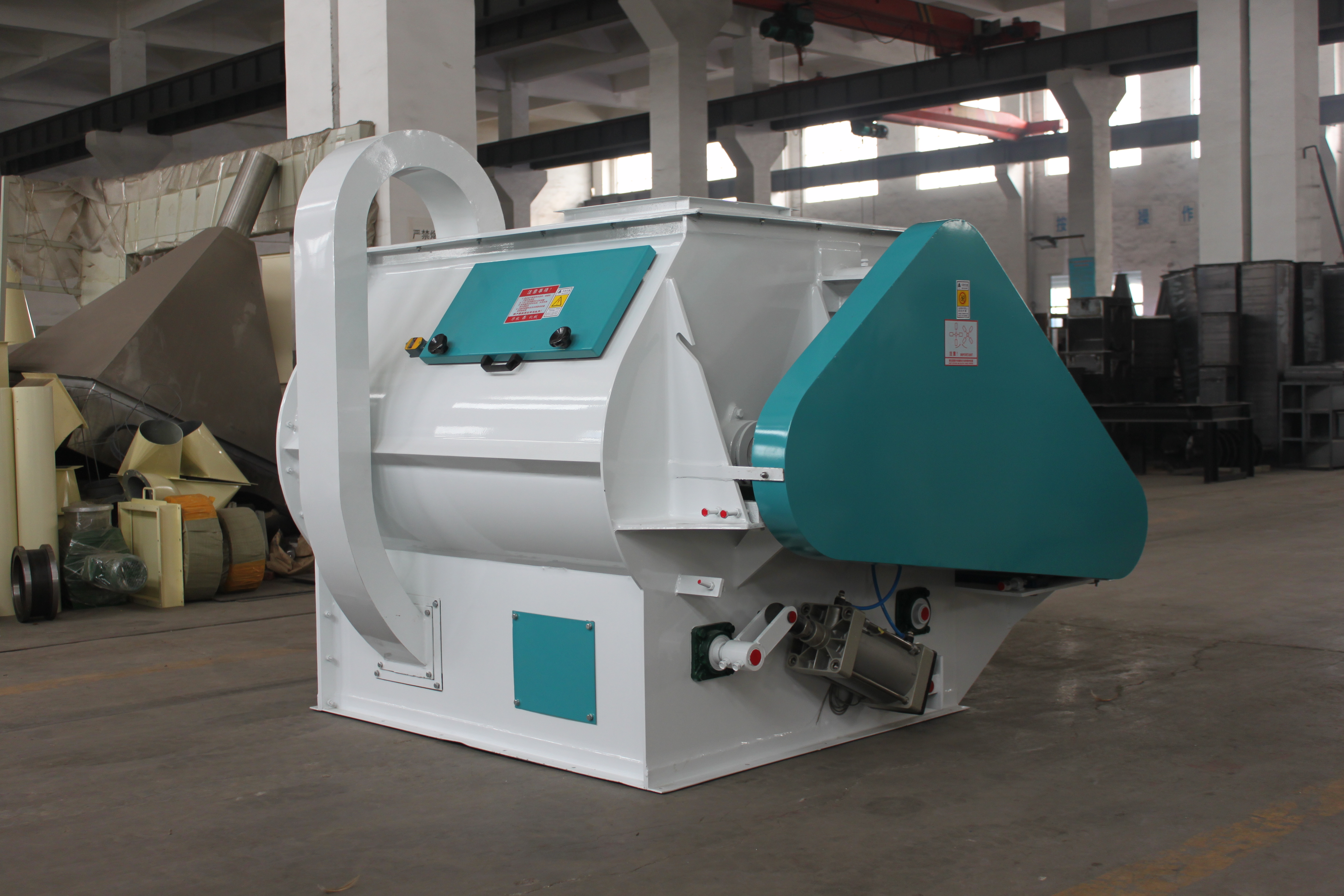
Jiangsu Huamu Machinery Co., Ltd. is located in Xibei Town, Wuxi City, and its business covers feed machinery manufacturing and the design, installation, and commissioning of feed production lines. The company's products include ring die pellet mills, water-drop hammer mills, twin-shaft mixers, coolers, complete premix additive units, complete livestock and poultry pelleted feed units, and complete aquafeed units, etc. It can design and manufacture 1–30 T mash feed, premix, pelleted feed, and special aquafeed projects. The above information can serve as a starting point for purchasers to understand the boundaries of the company's business; specific configurations still need to be confirmed according to project raw materials, capacity, and site conditions.
In terms of technical collaboration, the company upholds a customer-oriented and shared-development business philosophy, cooperates with enterprises in the feed machinery field, brings together professional personnel, and carries out technical cooperation with universities and colleges. The company has design, production, and installation teams and can provide design, manufacturing, installation, and commissioning services for feed production lines. For purchasers, the focus should be on verifying the organizational structure of the project team, the design input list, the installation and commissioning plan, training arrangements, and the scope of completion documentation, rather than only looking at individual equipment specifications.
Standards Compliance and Documentation Boundaries:Where requirements involving mechanical guarding, electrical safety, dust control, noise, and environmental emissions are involved, they shall be based on the applicable laws and regulations of the project location, the technical agreement confirmed by both parties, and the acceptance outline. The purchaser may require the supplier to provide equipment catalogs, operation and maintenance manuals, electrical drawings, spare parts lists, installation and commissioning records, and training materials, and to specify in the contract the acceptance indicators, test conditions, and determination methods. The above document requirements are project verification actions and do not constitute any statement that the enterprise already holds any specific qualification or certification.
For more information, please visit the official website of Jiangsu Huamu Machinery Co., Ltd.
【FAQ】
Q1: How should one select a Huamu feed pellet machine based on raw materials and working conditions?A: First clarify the raw material composition, moisture status, fiber and oil addition conditions, target particle size, shift schedule, and steam conditions, then have the supplier perform process calculations and equipment configuration accordingly. During selection, verify the test conditions corresponding to the capacity, continuous operation records, and pellet quality sampling methods; it is not advisable to judge solely by nameplate capacity or a single sample parameter.
Q2: How can pellet quality and equipment operating performance be verified?A: It is recommended to arrange a trial run with material under the same formulation and stable operating conditions, record output, pellet formation, durability performance, condition after cooling, power consumption per unit output, noise, dust, etc., and take samples according to the testing methods agreed in the contract. During acceptance, the test conditions, raw material batches, operating parameters, and inspection records should be archived together for subsequent verification.
Q3: What application scenarios are Huamu feed pellet machines suitable for?A: Process configuration can be carried out for scenarios such as livestock and poultry pelleted feed and aquatic pelleted feed, but the specific suitability must be determined in combination with raw material characteristics, target particle size, conditioning conditions, and cooling and screening configurations. For high-fiber, high-fat, high-protein, or clogging-prone formulations, a dedicated trial run should be arranged to confirm whether the ring die hole pattern, roller fit, and cutter adjustment meet the requirements.
Q4: What should be verified regarding after-sales and documentation assurance?A: Verifiable spare parts list, drawing numbers of wear parts, operation and maintenance manual, electrical diagrams, installation and commissioning plan, training plan, fault response mechanism, and warranty scope. The above shall be subject to the contract terms and the delivery list confirmed by both parties, and the purchaser shall retain equipment records and trial run records.
Q5: How can parameter interpretation discrepancies be reduced during procurement acceptance?A: Require the supplier to specify the test conditions, raw material formulation, environmental conditions, measurement methods, and statistical basis; stipulate the acceptance indicators and determination methods in the contract; and arrange no-load, load, and continuous operation tests. For key indicators, it is recommended that both parties jointly take samples and jointly keep records, so as to avoid completing acceptance based solely on one party's statements.
The selection of Huamu feed pellet mills should return to five dimensions: raw materials, operating conditions, pellet quality, system matching, and acceptance methods. First confirm the raw material formula and target particle size, then check the rhythm matching of the conditioning, pelletizing, cooling, crushing and screening, and dust removal sections, and finally incorporate capacity, pellet quality, power consumption per unit output, noise and dust, safety interlocks, and document delivery into the acceptance agreement. For parameters lacking clear test conditions, the purchaser should require supplementary trial run records rather than directly accepting a single figure.
Information verifiable on the enterprise side includes business scope, product categories, design, installation and commissioning capabilities, and project service boundaries. Jiangsu Huamu Machinery Co., Ltd. can provide feed machinery manufacturing, production line design, installation and commissioning, and related complete sets of units; purchasers should conduct technical communication in light of their own raw materials and capacity plans. In summary, the technical evaluation of Huamu feed pellet machines should be based on verifiable indicators, traceable documents, and acceptance methods confirmed by both parties, with process matching first and commercial decisions afterward.
Jiangsu Huamu Machinery Co., Ltd. is located in Xibei Town, Wuxi City, enjoying convenient transportation and significant geographical advantages. The company specializes in the manufacturing of feed machinery and equipment, and can undertake the full-process business of scheme design, equipment ins...
No.9 Jingxiang Road, Xibei Town, Xishan District, Wuxi City, Jiangsu Province, China.