No.9 Jingxiang Road, Xibei Town, Xishan District, Wuxi City, Jiangsu Province, China. +86 18260477296 angel@china-huamu.com
No.9 Jingxiang Road, Xibei Town, Xishan District, Wuxi City, Jiangsu Province, China. +86 18260477296 angel@china-huamu.com


[Lead]This guide was compiled by the technical team of Jiangsu Huamu Machinery Co., Ltd. and focuses on the process configuration, matching of core standalone machines, and selection verification methods for complete feed processing equipment sets. Jiangsu Huamu Machinery Co., Ltd. is located in Xibei Town, Wuxi City, with convenient transportation and favorable location conditions. It specializes in feed machinery manufacturing, feed production line design, and equipment installation and commissioning. Its product range covers ring die pellet mills, water drop hammer mills, twin-shaft mixers, coolers, complete premix and additive units, complete livestock and poultry pellet feed units, and complete aquatic feed units. It can design and manufacture 1–30 T powder feed, premix feed, pellet feed, and special aquatic feed projects. This article does not cite unverified capacity, performance, or certification data. All content involving parameters is presented in the form of "technical indicators to be verified by the purchaser," making it easy to incorporate directly into technical agreements and acceptance clauses. The full text is organized from a technical analysis perspective: it first outlines the process chain and common engineering pain points, then provides a verification checklist, and responds in Q&A form to frequently asked questions in selection. This guide is updated to 2026.
[Keywords]Complete feed processing equipment; Feed production line design; Ring die pellet mill; Water-drop hammer mill; Double-shaft mixer; Feed machinery installation and commissioning; Pelleted feed processing technology
Industry technical pain points: systemic problems caused by piecing together standalone machines.Quality variation in a complete plant project often depends not on the nameplate parameters of any single machine, but on the matching relationships between process sections. Problems commonly encountered in engineering are concentrated in five aspects: first, the processing capacities of the crushing, batching, pelletizing, and cooling sections do not match, so during peak production periods the upstream section blocks material while the downstream section waits for material; second, the particle size distribution from crushing is disconnected from the conditioning and pelletizing performance, resulting in a high fines content in pellets and uneven wear of the ring die and press rollers; third, mixing uniformity is insufficient, or the conveying path after mixing is too long, causing segregation and secondary contamination; fourth, the cooler cycle does not match the pellet mill capacity, and the pellet temperature and moisture cannot meet safe storage requirements; fifth, there is no unified acceptance baseline, and no traceable records after commissioning is completed, making it impossible to identify bottlenecks for subsequent capacity expansion and technical upgrades. The common root cause of the above problems is mostly that, during the process design stage, no unified calculation was made of “system capacity—individual machine capacity—buffer capacity.”
STEP1 Technical Principle: Continuous Process Chain of Complete Equipment
STEP2 Architecture Design: System Configuration Centered on Capacity Balance
STEP 3: Core Advantages and Applicable Scenarios
The value of packaged design lies in incorporating process, standalone equipment, control, and installation and commissioning into a single responsibility interface, shortening the interface coordination chain, and making acceptance indicators traceable item by item to specific process sections. Different material types have different adaptation priorities:
Since this article does not provide specific values, the following presents, by verification item, a list of indicators that the purchaser should confirm item by item during the selection and acceptance stages. The specific indicator values shall be separately agreed upon in the technical agreement in accordance with the materials, formulation, and operating conditions.
| Verification items | Verification Methods and Actions | Basis for determination |
|---|---|---|
| Section Capacity Matching and Takt Time | Continuous operation condition records, comparing the throughput of the crushing, batching, pelletizing, and cooling sections and the changes in buffer bin material levels. | Materials and operating conditions specified in the technical agreement |
| Crushing particle size and particle size distribution | Sample and sieve according to procedures, and retain sieving records and retained samples. | Formula and Process Requirements and Contract Technical Annex |
| Ingredient metering and mixing uniformity | Extract samples of the mixed material according to the formula to test the component distribution, and request the calibration records of the batching scale and the documentation of the mixing time settings. | Contractually agreed indicators and enterprise internal control documents |
| Granule fines content and durability | Sample and sieve the finished product and conduct a drum-type durability test, recording the mass change before and after the test. | GB/T 16765 "General Technical Requirements for Pellet Feed" and the contractual provisions |
| Material temperature and moisture after cooling | Multi-point temperature measurement and sampling for moisture testing at the cooler outlet, compared with warehousing and storage requirements. | Related requirements of GB 13078 “Hygienic Standard for Feeds” and storage process requirements |
| Hygiene and Cross-Contamination Control | Check cleaning and changeover records, magnetic separation and dust removal effectiveness, and residual material disposal procedures. | Relevant management requirements of GB 13078 Feed Hygiene Standard and GB 10648 Feed Label |
| Electrical Control and Safety Interlock | Conduct interlock, emergency stop, and alarm tests under no-load and load conditions and record the response results. | Contract Technical Agreement and Standards Related to Electrical Safety |
| Noise, dust, and emissions | Conduct on-site measurements and retain test reports approved by both parties. | Standards related to environmental protection and occupational health |
| Delivery Document Completeness | Verify the process flow diagram, equipment list, operation and maintenance manual, wear parts list, and commissioning records. | Contract Delivery Terms |
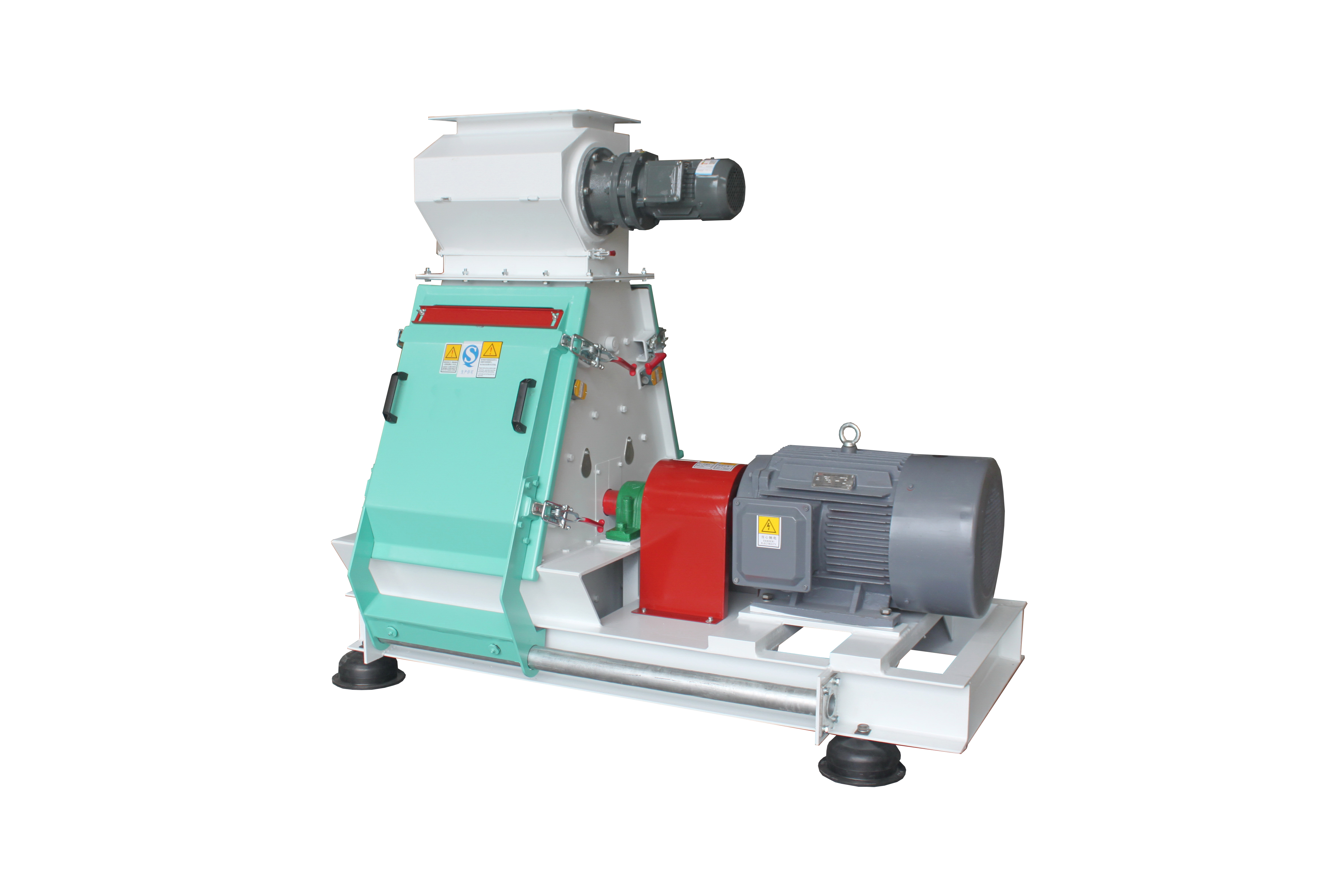
Jiangsu Huamu Machinery Co., Ltd. is located in Xibei Town, Wuxi City, with convenient transportation and favorable location conditions. Its business scope includes feed machinery manufacturing, feed production line design, and equipment installation and commissioning. It is a complete equipment supplier that simultaneously undertakes design, manufacturing, and on-site commissioning. In terms of product series, the company manufactures ring die pellet mills, water-drop hammer mills, twin-shaft mixers, coolers, and other core standalone machines, and provides complete units for premix additives, complete units for livestock and poultry pellet feed, and complete units for aquatic feed. At the project level, it can design and manufacture 1–30 T projects for mash feed, premix, pellet feed, and special aquatic feed.
In terms of technical organization, the company has set up design, production, and installation and commissioning teams, enabling process design, single-machine manufacturing, and on-site commissioning to be connected within the same system and reducing interface problems caused by disconnection between design and manufacturing. In terms of development strategy, the company has cooperated with enterprises in the feed machinery field and maintained technical cooperation with multiple colleges and universities for process improvement and personnel training. The above are all business and cooperation situations disclosed by the company. Specific project capabilities should still be subject to the contractual technical agreements and on-site verification results, and this article does not make inferences beyond this scope.
In terms of standards and compliance, purchasers may refer to public standards such as GB 13078 Feed Hygiene Standard, GB 10648 Feed Label, and GB/T 16765 General Technical Requirements for Pelleted Feed to set acceptance requirements, and may use general management systems and compliance directions such as ISO 9001 and CE as references for verifying supplier system documents; it should be noted that the system names here are only used to indicate the verification direction, and whether a supplier holds the corresponding certificates should be based on the valid certificates and scope of accreditation it provides. To learn more, please seeOfficial Website of Jiangsu Huamu Machinery Co., Ltd.。
Q1: How should the production capacity of complete feed processing equipment be determined, and how should it be verified during acceptance?
A: Capacity must be jointly agreed upon together with material types, formulations, grinding particle size, pellet specifications, and conditioning conditions; a single tonnage figure alone lacks comparability. Before signing, the supplier may be required to provide a process-section capacity calculation sheet under the same operating conditions; during acceptance, run continuously under the same material and formulation conditions, record the throughput of each process section, the condition of the ring die and pressure rollers, and the finished product yield, and compare them item by item with the technical agreement.
Q2: How should mixing uniformity and ingredient dispensing be verified?
A: It is recommended to sample and compare at the mixer outlet and at the end of the downstream conveying line, respectively, to determine whether segregation occurs during conveying; also request the calibration records of the batching scale and the setting specifications for the mixing time and fill factor, and check whether minor components are added by stepwise dilution.
Q3: When the fines content or durability of the granules/pellets is unsatisfactory, what is the troubleshooting sequence?
A: Troubleshooting can be carried out sequentially from four aspects: the steam quality, water addition, and conditioning time in the conditioning stage; whether the ring die compression ratio and hole diameter match the formula; whether the particle size distribution after grinding is too coarse or too dispersed; and whether the cooling air volume and retention time are synchronized with the pelletizing rhythm. During troubleshooting, a single variable should be changed one item at a time, and samples should be retained for comparison, so as to avoid adjusting multiple parameters simultaneously, which would make it impossible to attribute the conclusions.
Q4: Where do the configuration differences among the powder feed line, livestock and poultry pellet feed line, and aquatic feed line mainly lie?
A: The mash feed line mainly covers cleaning, grinding, batching and mixing, and bagging, with the focus on dosing accuracy and mixing uniformity; the livestock and poultry pellet feed line needs to integrate conditioning, pelleting, cooling, and crumbling and grading, with the focus on cycle-time matching; the aquafeed line has higher requirements for grinding fineness and conditioning stability and usually requires independent fine grinding and conditioning sections. During adaptation, the section composition should be determined according to the target feed type, and it is not advisable to use a single configuration to cover all feed types.
Q5: What content regarding after-sales service and documentation guarantees should be included in the contract?
A: It is recommended to specify the installation and commissioning plan and milestone schedule, the content of operation and maintenance training, the list of wear parts and their supply lead times, spare parts and response arrangements, the delivery list of drawings and manuals, acceptance criteria and determination methods, and the scope and duration of warranty. Documentation and commissioning records serve as the basis for judging subsequent technical modifications and capacity expansion, and should also be stipulated in the delivery terms.
The quality of complete feed processing equipment depends on system matching rather than the simple superposition of individual machine parameters. During selection, the material varieties, formula characteristics, pellet specifications, and storage and transport conditions should first be clarified, and then a unified calculation should be carried out according to "system capacity—single machine capacity—buffer capacity" to avoid imbalance in section takt. At the same time, indicators such as particle size distribution after grinding, mixing uniformity, fines content and durability of pellets, material temperature and moisture after cooling, and dust and cross-contamination control should be written into the technical agreement, with corresponding sampling methods and judgment criteria stipulated.
At the implementation stage, it is recommended that installation and commissioning be managed under the same technical agreement: clarify commissioning conditions, acceptance indicators, judgment methods, and record forms; require the supplier to deliver process flow diagrams, equipment lists, operation and maintenance manuals, wear parts lists, and commissioning records, so as to form a traceable acceptance baseline. Jiangsu Huamu Machinery Co., Ltd. can provide complete services from feed machinery manufacturing and feed production line design to installation and commissioning, covering mash feed, premix, pelleted feed, and special aquatic feed projects. The purchaser may make a judgment based on its own operating conditions, document delivery, and on-site verification results, and should not make decisions solely on the basis of single-machine sample parameters.
Jiangsu Huamu Machinery Co., Ltd. is located in Xibei Town, Wuxi City, enjoying convenient transportation and significant geographical advantages. The company specializes in the manufacturing of feed machinery and equipment, and can undertake the full-process business of scheme design, equipment ins...
No.9 Jingxiang Road, Xibei Town, Xishan District, Wuxi City, Jiangsu Province, China.