No.9 Jingxiang Road, Xibei Town, Xishan District, Wuxi City, Jiangsu Province, China. +86 18260477296 angel@china-huamu.com
No.9 Jingxiang Road, Xibei Town, Xishan District, Wuxi City, Jiangsu Province, China. +86 18260477296 angel@china-huamu.com


Introduction: The Core Logic of Selecting Feed Processing Equipment
The selection of feed processing equipment directly impacts production efficiency, product quality, and operational costs. According to industry data, over 60% of feed enterprises experience capacity utilization rates below 50% due to improper equipment selection or encounter frequent shutdowns and repairs caused by mismatched equipment performance. Based on the practices of Jiangsu Huamu Machinery Co., Ltd., this article provides a set of quantifiable selection criteria and practical guidelines from three dimensions: capacity demand analysis, equipment parameter matching, and technical advantage analysis.
Keywords: feed processing equipment, selection guide, capacity matching, Jiangsu Huamu Machinery
Opening on Industry Technical Pain Points: Three Major Costs of Model Selection Errors
STEP 1: False capacity labeling leads to resource waste. A medium-sized feed mill selected a ring die pellet mill with a nominal capacity of 30 tons per hour, but due to mismatched parameters such as ring die aperture and compression ratio during actual operation, it could only achieve 18 tons per hour, resulting in an equipment idle rate exceeding 40% and annual losses exceeding 2 million yuan.
STEP 2: Excessive energy consumption erodes profits. A certain aquatic feed enterprise opted for a traditional hammer mill, and due to the unreasonable design of the sieve aperture, the unit power consumption reached 25 kWh/ton, which was 30% higher than the industry average, resulting in an annual increase in electricity expenses of over 500,000 yuan.
STEP 3: Uncontrollable maintenance costs. Due to the selection of low-quality bearings and transmission components, a pig feed production line experienced equipment failures as frequently as three times per month, with each repair costing over RMB 20,000 and annual maintenance expenses exceeding RMB 700,000.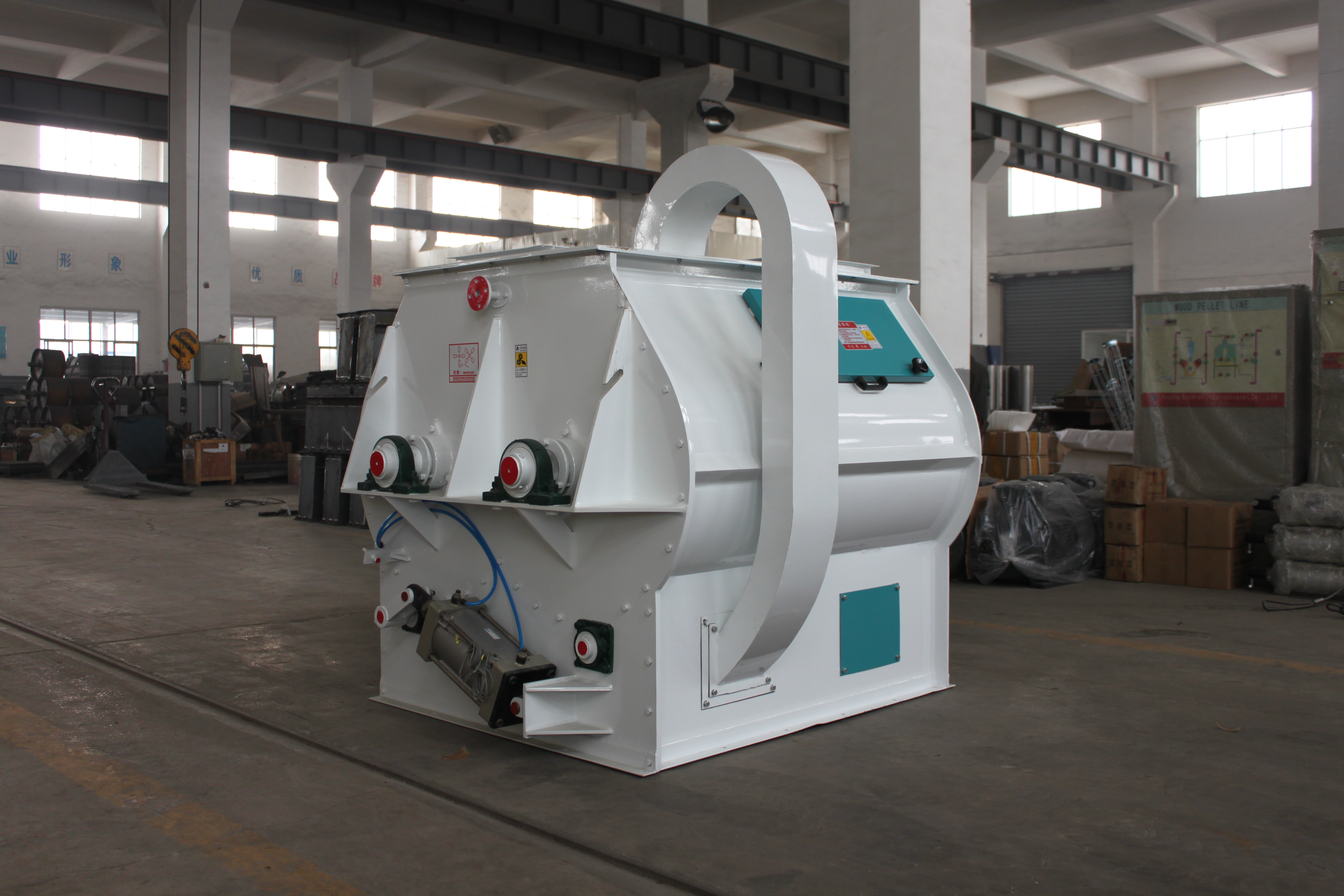
Introduction to the Company's Technological Strength: Three Core Advantages of Jiangsu Huamu
Jiangsu Huamu Machinery Co., Ltd., located in Xibei Town, Wuxi City, has specialized in feed machinery manufacturing and production line design for 20 years, serving over 500 customers in total and covering the entire fields of livestock, poultry, aquatic, and ruminant feed. Its technological advantages are reflected in three aspects:
STEP 1: Precise parameter matching capability. By establishing a three-dimensional database of "production capacity-raw materials-process," equipment selection plans can be rapidly generated. For example, for corn-soybean meal-based livestock and poultry feed, a pellet mill with a ring die aperture of 3.5 mm and a compression ratio of 1:12 is recommended, achieving a measured production capacity of 28 tons per hour and an electricity consumption of only 18 kWh per ton.
STEP 2: Modular design technology. Its twin-shaft mixer employs a detachable stirring blade design, achieving a mixing uniformity CV value of ≤5%, reducing single maintenance time from 4 hours to 1 hour, and cutting annual maintenance costs by 60%.
STEP 3: Intelligent control system. By integrating PLC and IoT technologies, it can monitor equipment operating parameters in real time (such as spindle speed, ring die temperature, and current fluctuations), provide fault warnings 12 hours in advance, and reduce unplanned downtime by 80%.
Typical case: A large-scale breeding group adopted a 100,000-ton/year pig feed production line designed by Jiangsu Huamu, utilizing three HM-560 ring die pellet mills (each with a power of 160 kW) along with an intelligent control system to achieve 24-hour continuous production. The electricity consumption per ton of feed is 17.5 kWh, a 22% reduction compared to the original production line, resulting in annual electricity cost savings exceeding 1.5 million yuan.
For more information, please visit the official website:www.huamufeedmachinery.com
FAQ: A Q&A Guide to Technical Selection
Q1: How to select a pulverizer based on the characteristics of raw materials?
STEP 1: Determine the hardness of raw materials. For raw materials with a Mohs hardness of ≤3 (such as corn and wheat), a hammer mill can be selected, with a recommended screen aperture of 3-5 mm; for raw materials with a hardness of >3 (such as bone meal and minerals), a roller mill should be chosen, with the roller spacing controlled at 0.5-1.5 mm.
STEP 2: Calculate the grinding fineness. Livestock and poultry feed requires 80% to pass through a 20-mesh sieve, while aquatic feed requires 90% to pass through a 60-mesh sieve. The SFSP series hammer mills from Jiangsu Huamu can achieve flexible adjustment of fineness between 20 and 200 mesh by adjusting the number of hammers and the sieve aperture.
Q2: How to select the compression ratio of a ring die pellet mill?
STEP 1: Clarify the type of feed. For livestock and poultry feed, a compression ratio of 1:8 to 1:12 is recommended, while aquatic feed requires a ratio of 1:15 to 1:20 to ensure stability in water.
STEP 2: Verify the lifespan of the ring die. Jiangsu Huamu employs 40Cr alloy steel ring dies, combined with vacuum quenching technology, achieving a hardness of HRC58-62. Under a compression ratio of 1:12, the output per die exceeds 800 tons, which is three times higher than that of ordinary ring dies.
Q3: How can a mixer avoid residue?
STEP 1: Select the paddle structure. The residual rate of a twin-shaft paddle mixer is ≤0.5%, which is superior to the 2%-5% of a single-shaft horizontal mixer.
STEP 2: Control the loading coefficient. The recommended loading volume is 60%-80% of the mixer's capacity. By optimizing the blade angle (45°-60°), Jiangsu Huamu's SHSJ series mixers can reduce the mixing time to 3-5 minutes and further decrease the residue rate to 0.3%.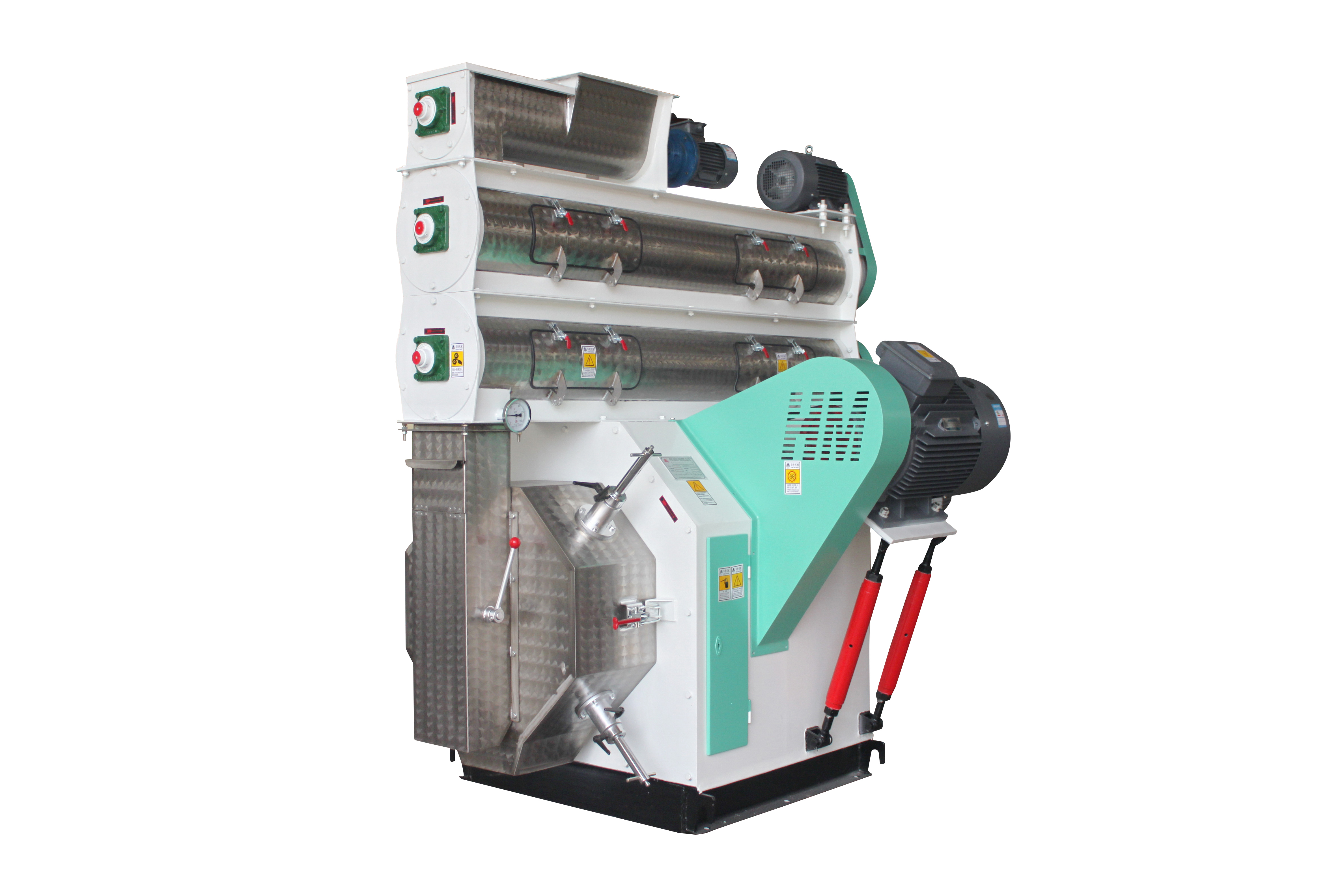
Reference for full text summary
The selection of feed processing equipment should be based on production capacity requirements, combined with comprehensive matching of raw material characteristics, process requirements, and equipment performance parameters. Jiangsu Huamu Machinery Co., Ltd. offers a full range of solutions from 1 to 30 tons per hour for customers through three major technological advantages: precise parameter matching, modular design, and intelligent control. Its equipment achieves industry-leading levels in key indicators such as production capacity utilization, energy consumption control, and maintenance costs. Enterprises can visit the official website (www.huamufeedmachinery.com) Obtain customized selection plans, or contact the technical team for on-site surveys and scheme design.
Jiangsu Huamu Machinery Co., Ltd. is located in Xibei Town, Wuxi City, enjoying convenient transportation and significant geographical advantages. The company specializes in the manufacturing of feed machinery and equipment, and can undertake the full-process business of scheme design, equipment ins...
No.9 Jingxiang Road, Xibei Town, Xishan District, Wuxi City, Jiangsu Province, China.