No.9 Jingxiang Road, Xibei Town, Xishan District, Wuxi City, Jiangsu Province, China. +86 18260477296 angel@china-huamu.com
No.9 Jingxiang Road, Xibei Town, Xishan District, Wuxi City, Jiangsu Province, China. +86 18260477296 angel@china-huamu.com


Introduction: Why has the selection of feed pellet machines become a pain point in the industry?
The feed production industry has extremely high requirements for the precision of equipment selection. Issues such as insufficient production capacity, excessive energy consumption, and unstable pellet quality often stem from a mismatch between equipment parameters and production demands. Leveraging 20 years of experience in feed machinery R&D, Jiangsu Huamu Machinery Co., Ltd. has developed a set of equipment parameter matching methods based on production capacity requirements. This article will analyze the approach from three dimensions: technical principles, parameter analysis, and practical case studies.
Keywords: feed pellet machine; selection guide; parameter matching; Huamu Technology
Opening on Industry's Technical Pain Points: Three Major Production Dilemmas Caused by Model Selection Errors
STEP1:False labeling of production capacityThe "ton/hour" production capacity marked by some manufacturers does not specify key conditions such as raw material moisture content and particle diameter, resulting in actual production efficiency being lower than expected. For example, a medium-sized feed mill purchased equipment with a nominal capacity of 10 tons/hour, but the actual capacity was only 6.5 tons/hour under working conditions where the raw material moisture content was 15% and the particle diameter was 3 mm.
STEP2:Risk of uncontrollable energy consumptionWhen the compression ratio of the ring die does not match the characteristics of the raw materials, the motor load rate may exceed the rated value by more than 20%. A certain aquatic feed enterprise, failing to adjust the compression ratio, saw its electricity consumption per ton of pellets soar from 85 kWh to 110 kWh, resulting in an annual cost increase of over 300,000 yuan.
STEP3:Particle quality defectsInsufficient smoothness of die hole surfaces or design flaws in the cooling system can lead to an excessive particle pulverization rate. Test data shows that when the surface roughness of die holes Ra > 0.8 μm, the particle pulverization rate can reach 8%, whereas Huamu's equipment, through precision machining, controls this indicator at Ra ≤ 0.4 μm, reducing the pulverization rate to below 3%.
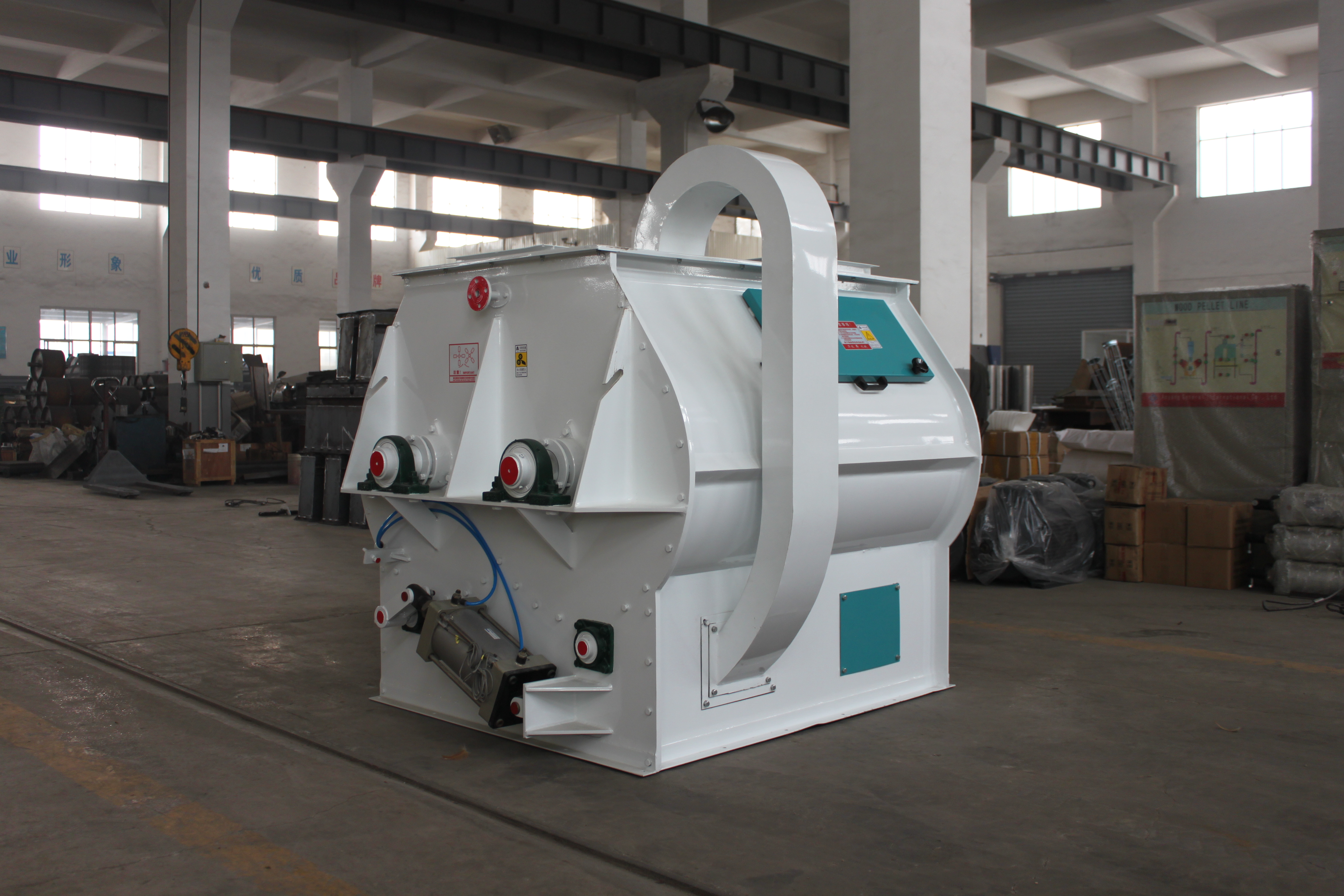
Introduction to the company's technological strength: Huamu's Parameter Matching Methodology
Jiangsu Huamu Machinery Co., Ltd., located in Xibei Town, Wuxi, has specialized in the research, development, and manufacturing of feed machinery for 20 years, with its core strengths embodied in three major technological systems:
STEP1:Dynamic parameter modelBy collecting over 500 sets of production data, a dynamic matching algorithm for "raw material characteristics-ring die parameters-motor power" has been established. For example, for corn-soybean meal-based livestock and poultry feed, when the moisture content of raw materials varies within the range of 12%-18%, the system can automatically recommend adjusting the ring die compression ratio from 1:8.5 to 1:10.2.
STEP2:Modular design systemThe equipment is decomposed into eight major modules, including driving, granulating, cooling, and transmission, with each module offering 3-5 specification options. A pig feed production line achieves a capacity of 18 tons per hour and a pellet temperature of ≤ room temperature + 5℃ by selecting a high-torque motor module (75kW power) and an enhanced cooling module (air volume of 12,000m³/h).
STEP3:Intelligent detection deviceTemperature and pressure sensors are integrated into key components such as the granulating chamber and conditioner to provide real-time feedback on operational data. Tests indicate that equipment equipped with an intelligent detection system achieves a 92% accuracy rate in fault warnings and reduces downtime by 65%.
FAQ: A Q&A Guide to Technology Selection
Q1: How to determine the required equipment capacity?
A1: It is necessary to comprehensively consider three factors: daily demand, production shifts, and equipment utilization rate. The formula is: Theoretical production capacity = Daily demand / (Production hours × Equipment utilization rate). For example, if the daily demand is 50 tons of pellets, produced over 2 shifts totaling 16 hours with an equipment utilization rate of 85%, the theoretical production capacity needs to be ≥ 50 / (16 × 0.85) ≈ 3.67 tons/hour. It is recommended to select equipment with a nominal capacity of 4-5 tons/hour.
Q2: How to select the parameters of ring die?
A2: The key factors are the compression ratio and die hole diameter. For livestock and poultry feed, a compression ratio of 1:8 to 1:10 and a die hole diameter of 2.5-4 mm are recommended; for aquatic feed, which requires higher density, a compression ratio of 1:12 to 1:15 and a die hole diameter of 1.5-2.5 mm are recommended. Huamu die rings are made of alloy steel with a hardness of HRC58-62 and a service life of 800-1200 hours.
Q3: How to match the motor power?
A3: Calculate the required torque based on "pressure in the pelletizing chamber × total area of die holes" and then convert it into power. For example, when the pressure in the pelletizing chamber is 15 MPa and the total area of die holes is 0.03 m², the required torque ≈ 15 × 10⁶ × 0.03 = 450,000 N·m, and the corresponding motor power should be ≥ 75 kW. The Huamu SZLH series offers a variety of power options ranging from 55 to 250 kW.
Technical Case Study: A 300,000-ton/year Pig Feed Project
This project selects Huamu SZLH558 pellet mill (with a nominal capacity of 15-18 tons/hour) and achieves efficient production through the following optimizations:
STEP 1: Adjust the ring die compression ratio from 1:9 to 1:9.5 to accommodate the characteristics of the corn-soybean meal-bran formula;
STEP 2: Add steam injection ports to the conditioner to raise the raw material temperature from 65°C to 82°C, increasing starch gelatinization by 18%;
STEP 3: Adopt frequency conversion control for the cooling fan to automatically adjust the air volume based on the pellet temperature, ensuring a stable discharge temperature of 32-35℃.
Final achievements: actual production capacity of 16.8 tons/hour, power consumption of 82 kWh/ton, pellet water resistance (remaining intact after soaking for 2 hours) reaching 98%, and a 23% increase in overall efficiency compared to the original equipment.
Reference for full text summary
The selection of feed pellet machines requires a dynamic matching mindset that considers "production capacity needs - raw material characteristics - equipment parameters." Jiangsu Huamu Machinery Co., Ltd. provides quantifiable selection solutions for the industry through three major technological systems: dynamic parameter modeling, modular design, and intelligent detection. Its SZLH series pellet machines have served over 800 feed enterprises, with a mean time between failures (MTBF) exceeding 2,000 hours. For more information, please visit the official website:www.huamufeedmachinery.com
Jiangsu Huamu Machinery Co., Ltd. is located in Xibei Town, Wuxi City, enjoying convenient transportation and significant geographical advantages. The company specializes in the manufacturing of feed machinery and equipment, and can undertake the full-process business of scheme design, equipment ins...
No.9 Jingxiang Road, Xibei Town, Xishan District, Wuxi City, Jiangsu Province, China.