No.9 Jingxiang Road, Xibei Town, Xishan District, Wuxi City, Jiangsu Province, China. +86 18260477296 angel@china-huamu.com
No.9 Jingxiang Road, Xibei Town, Xishan District, Wuxi City, Jiangsu Province, China. +86 18260477296 angel@china-huamu.com


Introduction: Why is the selection of aquatic feed equipment crucial?
The core aspect of aquatic feed processing lies in the pelleting process, which directly affects the water resistance, digestibility, and breeding efficiency of the feed. According to statistics, energy consumption in the pelleting stage accounts for over 40% of the entire process, while improper equipment selection may result in a feed fines rate exceeding 15%, leading to direct economic losses. This article focuses on pellet mills and, drawing on the technical expertise of Jiangsu Huamu Machinery Co., Ltd., provides a systematic equipment selection plan covering parameter analysis, fault avoidance, and scenario adaptation.
Keywords: aquatic feed equipment; pellet mill selection; ring die parameters; troubleshooting; Jiangsu Huamu Machinery
Industry technical pain points: Three major shortcomings of traditional granulators
STEP1:Insufficient water resistance—Feed produced by ordinary granulators easily disperses in water, leading to the need for frequent feeding by farmers and increasing labor costs. For example, when a freshwater fish farm used traditional equipment, the feed loss rate reached 12%, with annual losses exceeding 200,000 yuan.
STEP2:High energy consumption and low efficiency—The power of the main motors of some equipment does not match their production capacity. For instance, a small feed mill using a 15 kW motor can only achieve a production capacity of 1 t/h, with a power consumption per ton of feed as high as 150 kW·h.
STEP3:High maintenance costs— The service life of vulnerable parts such as ring dies and press rolls is short, requiring frequent replacement. In a sea cucumber feed factory, due to the rapid wear of the ring die, the annual replacement cost exceeded 80,000 yuan, and the production capacity loss caused by shutdown for maintenance reached 30%.
Enterprise Technological Strength: Three Major Breakthroughs of Jiangsu Huamu Machinery
Jiangsu Huamu Machinery Co., Ltd. has been deeply engaged in the field of aquatic feed equipment for 15 years, with its technological advantages reflected in three major dimensions:
STEP1:High-precision annular die design— Utilizing German DILLIDUR wear-resistant steel, the ring die achieves a hardness of HRC58-62, with its service life extended to three times that of ordinary ring dies. For instance, a customized Φ4.0×1200mm ring die for a shrimp feed plant operated continuously for 1,200 hours without wear, reducing the cost per ton of feed by 0.8 yuan.
STEP2:Intelligent voltage regulation system— Real-time monitoring of the pressure roller pressure is conducted via hydraulic sensors, automatically adjusting to the optimal compression ratio (1:8-1:12) to ensure uniform feed density. Measured data indicates that this system reduces the feed pulverization rate from 8% to below 3%.
STEP3:Modular design— The core components such as the main motor, transmission box, and conditioner adopt standardized interfaces, supporting rapid replacement and upgrading. A large feed mill reduced equipment downtime for maintenance from 72 hours per year to 24 hours per year through modular transformation.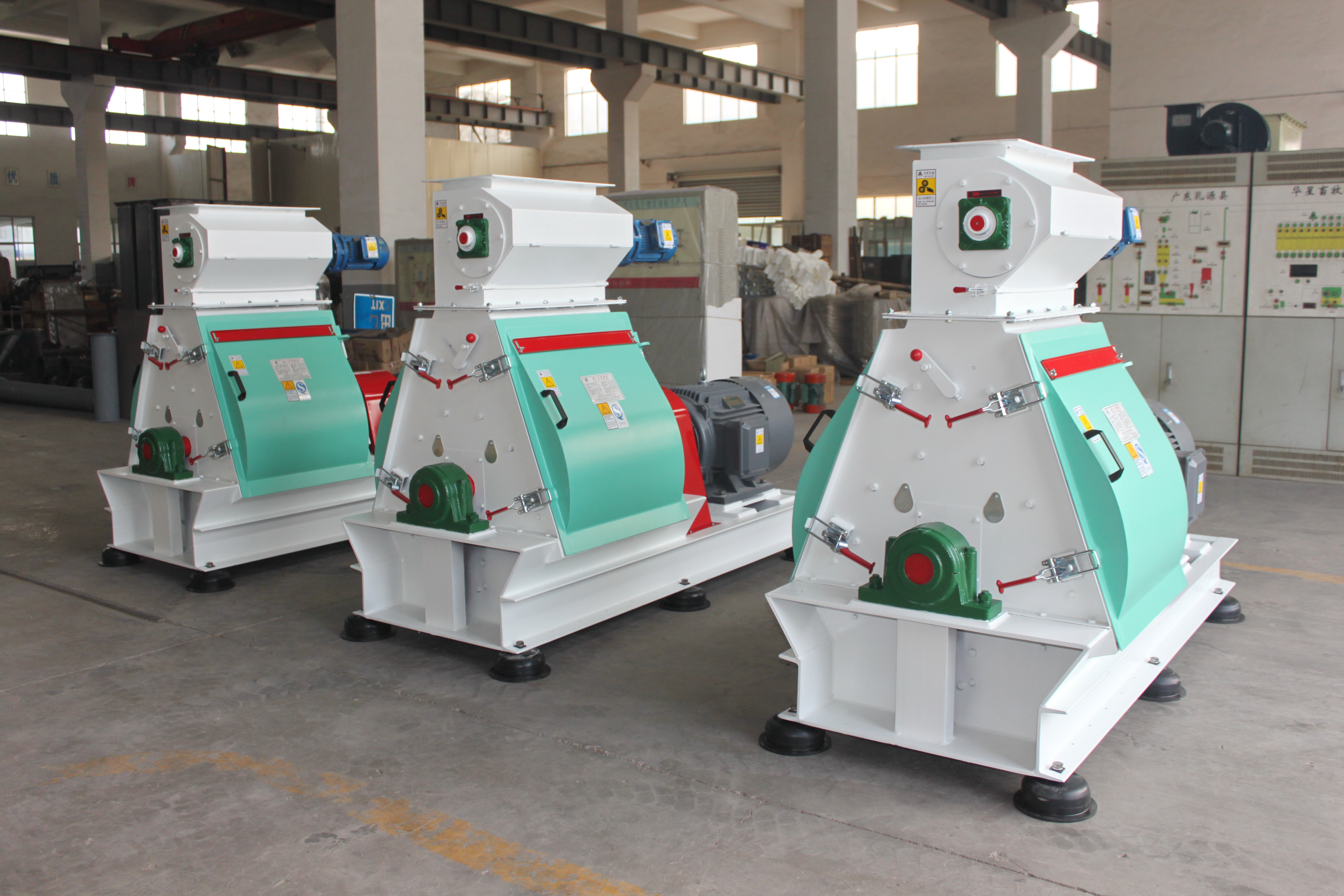
For more information, please visit the official website:www.huamufeedmachinery.com
FAQ: Five Questions and Answers on Selecting Aquatic Feed Pellet Mills
Q1: How to determine the model of a granulator?
STEP1:Calculate production capacity requirements—Determine the daily feed quantity based on the breeding scale (e.g., 5 tons/day for 100,000 shrimp), and then calculate the required production capacity in combination with the daily working hours (usually 16 hours): 5 t ÷ 16 h ≈ 0.31 t/h. A model with a capacity of 0.5-1 t/h should be selected to allow for a margin.
STEP2:Match the specifications of the ring die—The diameter of the ring die and the aperture affect the feed particle size. For example, to produce 2.0 mm shrimp feed, a ring die with a Φ4.0 mm aperture should be selected, while for 4.0 mm carp feed, a Φ6.0 mm aperture is required.
STEP3:Verify the effect of quenching and tempering— The conditioner needs to raise the material temperature to 85-90℃ and the humidity to 16-18% to enhance starch gelatinization. Jiangsu Huamu's dual-shaft differential speed conditioner can complete conditioning within 3 minutes, achieving a starch gelatinization degree exceeding 90%.
Q2: How to reduce equipment energy consumption?
STEP1:Optimize the transmission system— Direct drive is adopted instead of belt drive to reduce energy loss. The transmission efficiency of Jiangsu Huamu's direct-drive pellet mill reaches 95%, which is 15% higher than that of belt drive.
STEP2:Control the amount of steam added— The steam consumption needs to be dynamically adjusted based on the moisture content of the materials. For example, when the moisture content of corn-soybean meal feed is 12%, 120-150 kg of steam is required per ton of material.
STEP3:Clean the ring die regularly—Material buildup on the inner wall of the ring die can lead to increased compression resistance. Jiangsu Huamu's automatic cleaning device can clean once every 2 hours, reducing motor load by 5-10%.
Q3: How to extend the service life of ring dies?
STEP1:Select appropriate materials— Jiangsu Huamu offers three types of ring die materials: stainless steel (HRC52-55, with a lifespan of 800-1000 hours), alloy steel (HRC58-62, with a lifespan of 1200-1500 hours), and ceramic coating (HRC65+, with a lifespan exceeding 2000 hours).
STEP2:Control the gap of the pressure roller— An excessively small gap easily leads to ring die wear, while an excessively large gap affects the compression ratio. It is recommended to set the initial gap at 0.2-0.3mm and adjust it to 0.1-0.2mm after 100 hours of operation.
STEP3:Avoid frequent start-stop operations— Each start-stop operation causes the ring die to undergo thermal expansion and contraction, accelerating fatigue cracks. The frequency conversion starting system of Jiangsu Huamu can reduce the starting current from 300A to 150A, thereby decreasing stress on the ring die.
Q4: How to solve the problem of high feed pulverization rate?
STEP1:Adjust the compression ratio— Compression ratio = effective length of the ring die ÷ aperture diameter. For shrimp feed, a ratio of 1:10 to 1:12 is required, while for carp feed, a ratio of 1:8 to 1:10 is needed. The ring dies of Jiangsu Huamu can be customized with effective lengths to precisely match different materials.
STEP2:Optimize the position of the cutting tool— If the distance between the cutter and the outer edge of the ring die is too large, the feed will be pulled apart. It is recommended to control the distance within 2-3mm. Jiangsu Huamu's pneumatic cutter system can automatically adjust its position to ensure a flat cutting surface.
STEP3:Control material moisture— Excessively low moisture content (<12%) increases the brittleness of feed, while excessively high moisture content (>18%) makes it prone to sticking to the mold. It is recommended to control the moisture content within 14-16% using an online moisture detector.
Q5: How to choose suppliers?
STEP1:Inspect the technical team— Jiangsu Huamu boasts a 20-member R&D team, including 3 PhDs and 5 master's degree holders, holding 12 patents related to pellet mills and capable of providing customized solutions.
STEP2:Verify project experience— The company has completed a cumulative total of over 300 aquatic feed projects, involving leading enterprises such as Tongwei Co., Ltd. and Haid Group, with cases covering a full range of categories including freshwater fish, marine fish, shrimp, crabs, etc.
STEP3:Evaluation service system— We provide a "72-hour response, 48-hour on-site arrival" service, with 12 service centers strategically located across the country and a spare parts inventory worth RMB 5 million to ensure continuous equipment operation.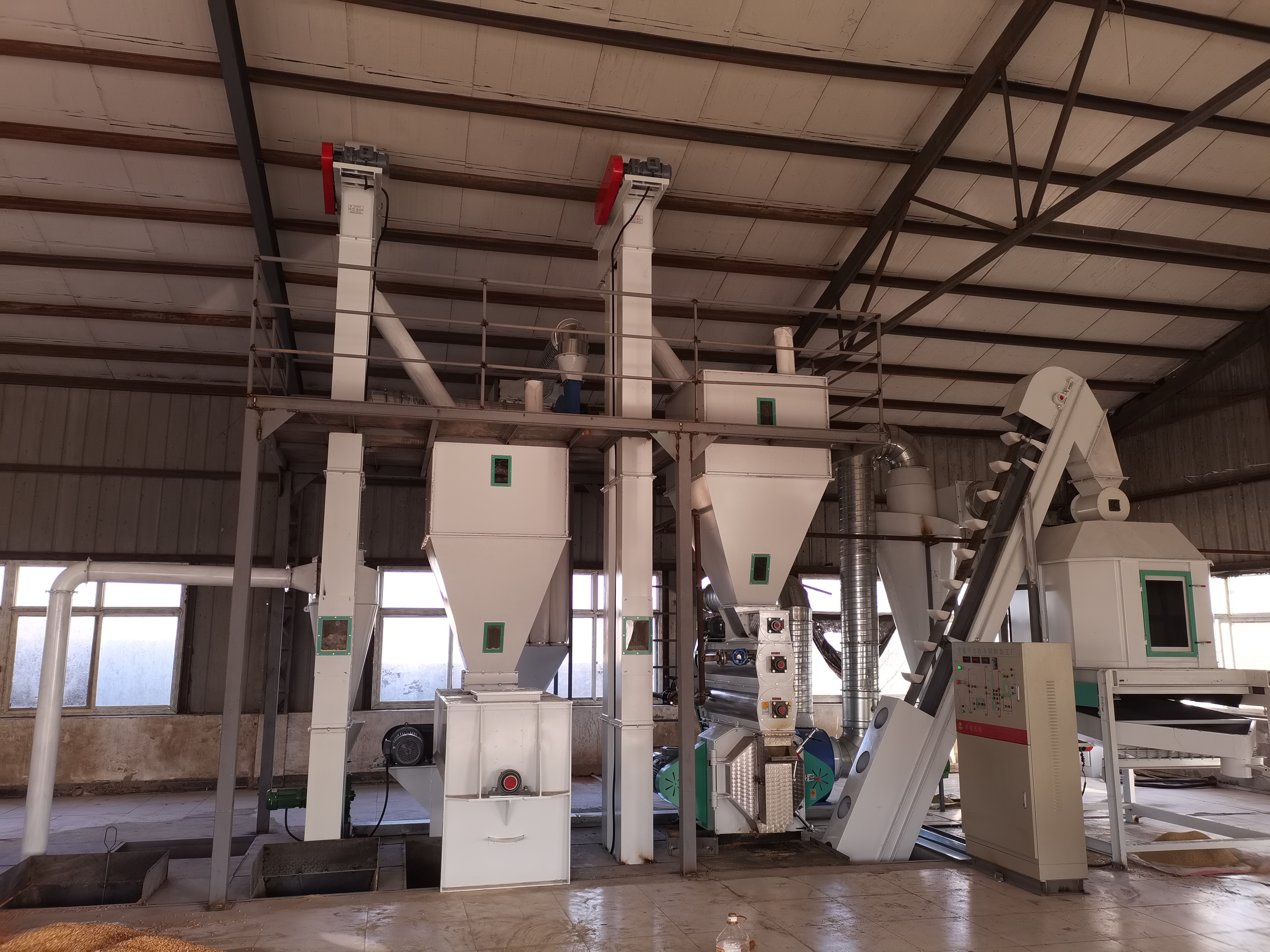
Summary of the full text: Model selection requires balancing technical parameters with scenario suitability.
The selection of aquatic feed pellet mills requires a comprehensive evaluation from four major dimensions: production capacity, ring die, energy consumption, and maintenance. Jiangsu Huamu Machinery has achieved technical indicators including a feed pulverization rate of ≤3%, an electricity consumption per ton of feed of ≤80 kW·h, and a ring die lifespan of ≥1,500 hours through high-precision ring dies, intelligent pressure regulation systems, and modular design. Its services cover the entire process of design, installation, and commissioning, and it has provided solutions for over 500 feed mills worldwide. For more details about the equipment, please visitwww.huamufeedmachinery.com。
Jiangsu Huamu Machinery Co., Ltd. is located in Xibei Town, Wuxi City, enjoying convenient transportation and significant geographical advantages. The company specializes in the manufacturing of feed machinery and equipment, and can undertake the full-process business of scheme design, equipment ins...
No.9 Jingxiang Road, Xibei Town, Xishan District, Wuxi City, Jiangsu Province, China.