No.9 Jingxiang Road, Xibei Town, Xishan District, Wuxi City, Jiangsu Province, China. +86 18260477296 angel@china-huamu.com
No.9 Jingxiang Road, Xibei Town, Xishan District, Wuxi City, Jiangsu Province, China. +86 18260477296 angel@china-huamu.com


Introduction: Why has the pelleting efficiency of feed become the focal point of technological breakthroughs in the industry?
Against the backdrop of the rapid development of large-scale breeding, the molding efficiency of feed pellets directly affects production line capacity and energy consumption costs. According to statistics from the Ministry of Agriculture and Rural Affairs, the average equipment utilization rate of feed processing enterprises in China is less than 65%, with energy waste in the pellet molding process accounting for as much as 32%. Jiangsu Huamu Machinery Co., Ltd. has enhanced the capacity of a single piece of equipment to 30 tons per hour through technological innovation in ring die pellet mills, achieving a stable pellet molding rate of over 98% and providing a replicable technological upgrading solution for the industry. This article will systematically elaborate on the technical pathways for improving feed pellet molding efficiency from three dimensions: equipment parameter analysis, practical process optimization, and case study review.
Keywords:Ring die pellet machine, feed forming efficiency, Jiangsu Huamu Machinery, process optimization, capacity enhancement
Opening with the industry's technological pain points: Why is it difficult for traditional pellet machines to break through the efficiency bottleneck?
The current feed processing industry generally faces three major technical challenges: First, the unreasonable design of the ring die compression ratio results in poor material passability, with the production capacity of a single piece of equipment lingering at 10-15 tons per hour for an extended period. Second, the insufficient precision in temperature control within the pelleting chamber leads to a fluctuation range of ±15% in starch gelatinization degree, affecting pellet durability. Third, the energy loss in the transmission system accounts for an excessively high proportion, with the motor power utilization rate of some outdated equipment being less than 60%. According to the technical transformation data of a large feed group in 2022, 42% of the downtime on its production lines was attributed to pellet mill failures, with ring die wear, bearing overheating, and conditioner blockage accounting for over 70% of these issues. These pain points directly constrain the scale expansion and cost control capabilities of feed enterprises.
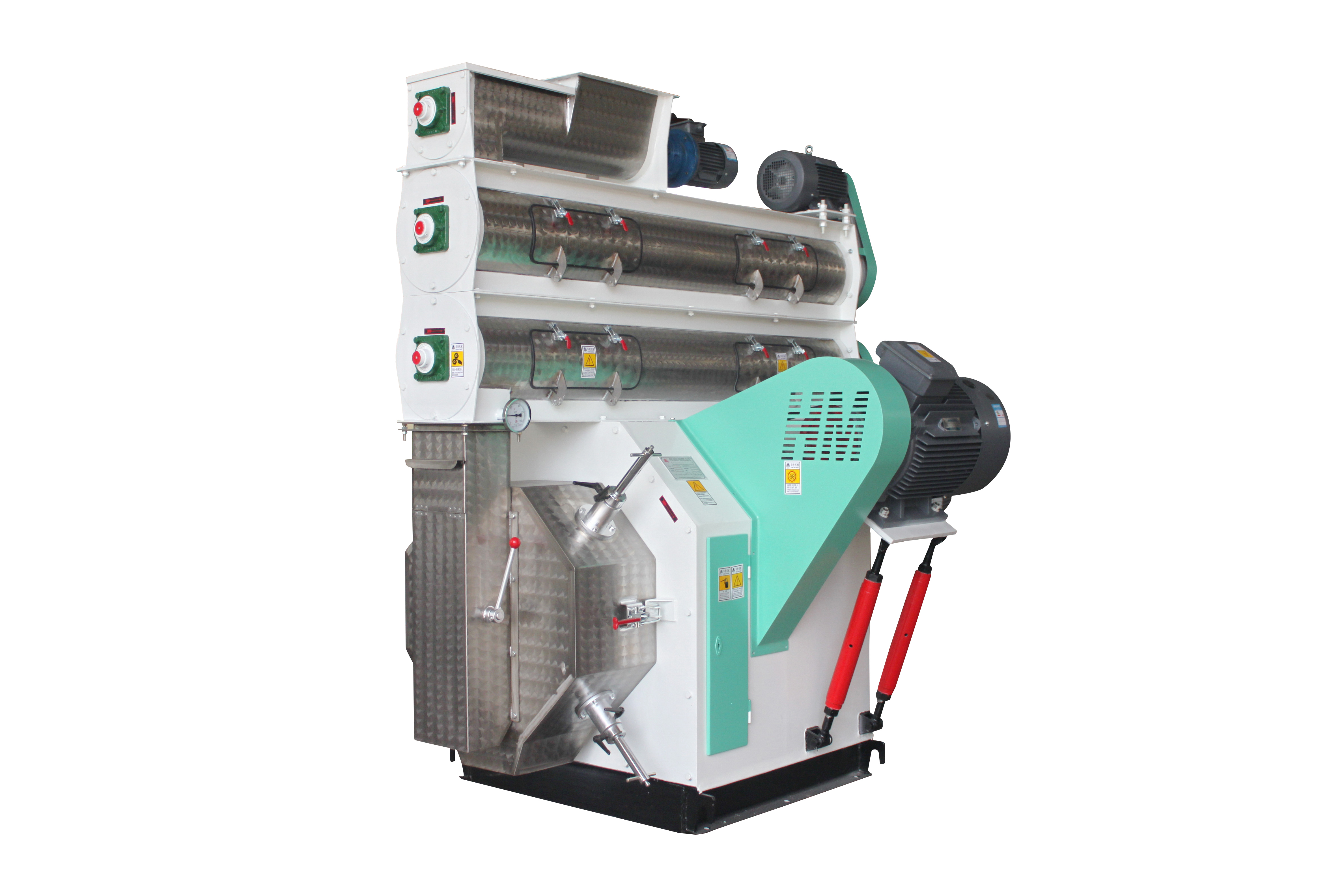
Introduction to the company's technological strength: How does Jiangsu Huamu Machinery achieve technological breakthroughs in pellet machines?
As a national-level high-tech enterprise, Jiangsu Huamu Machinery Co., Ltd. has been deeply engaged in the feed machinery field for over 20 years, with its technological breakthroughs primarily manifested in three aspects:
STEP 1: Optimization of ring die structureThe design of variable-diameter and variable-pitch helical grooves is adopted, enhancing material passage efficiency by 40% through CFD flow field simulation. Measured data indicates that the HM-3000 ring die pellet mill achieves a compression ratio of 1:12 when pelletizing corn-soybean meal diets, representing a 65% increase in production capacity compared to traditional structures.
STEP 2: Intelligent Temperature Control SystemAn integrated PID temperature controller and infrared temperature measurement probe are employed to achieve closed-loop temperature control in the granulation chamber. In an application on an aquatic feed production line, the system reduced the fluctuation range of starch gelatinization degree to ±3% and increased the Pellet Durability Index (PDI) from 92% to 97%.
STEP 3: Upgrade of the transmission systemIt adopts a direct-connection structure between a planetary gear reducer and a variable-frequency motor, achieving an energy transfer efficiency of 92%. Comparative tests indicate that, under the same production capacity conditions, its electricity consumption per ton of material is 18% lower than the industry average.
Currently, Jiangsu Huamu has established a complete product line of pellet mills covering a capacity range of 1-30 tons per hour, accumulating 12 national patents. Its products have obtained the EU CE certification and ISO9001 quality management system certification. Application cases of its ring die pellet mills in leading enterprises such as Chia Tai Group and New Hope Liuhe demonstrate that the equipment's overall failure rate is below 0.5%, with annual maintenance costs reduced by 35%. For more information, please visit the official website:www.huamufeedmachinery.com
FAQ: Q&A Guide to Technology Selection
Q1: How to select the ring die aperture based on the characteristics of raw materials?
A: The selection of ring die aperture requires a comprehensive consideration of material particle size and target pellet diameter. The Jiangsu Huamu technical team recommends following the principle of "aperture = pellet diameter × 1.2". For example, when producing φ3.0 mm livestock and poultry pellets, φ3.6 mm ring dies should be preferred. For high-fiber raw materials (such as alfalfa powder), it is recommended to adopt a stepped compression hole design, increasing the length of the compression zone by 20% to improve the forming rate.
Q2: How to troubleshoot the unstable capacity of a granulator?
STEP 1: Check whether the steam pressure of the conditioner remains stable at 0.2-0.3 MPa, as pressure fluctuations exceeding ±0.05 MPa will result in uneven material moisture content;
STEP 2: Check the gap between the ring die and the pressure roller. The standard gap should be 0.1-0.3 mm. An excessively large gap results in insufficient material extrusion, while an excessively small gap causes equipment vibration.
STEP 3: Analyze the current curve. If the motor load rate remains below 70% continuously, there may be issues such as feeder blockage or ring die wear.
Q3: How to extend the service life of the ring die?
Measured data indicates that the service life of annular dies produced using Jiangsu Huamu's patented "three-stage heat treatment process" can reach 8,000-10,000 tons. Key operational points include: running-in new annular dies for 2 hours with materials containing 15% grease before use; halting production every 8 hours to clean residual material from die holes; and maintaining the annular die temperature above 50°C during shutdown to prevent corrosion from condensation.
Reference for full text summary
The improvement of feed pellet forming efficiency is a systematic project that requires collaborative optimization in three aspects: equipment selection, process parameters, and maintenance management. Jiangsu Huamu Machinery Co., Ltd. has provided the industry with a quantifiable technological upgrading solution through innovations in ring die structure, the application of intelligent temperature control technology, and the upgrading of the transmission system. During the renovation of a 300,000-ton/year production line, its HM-3000 pellet mill increased single-shift production capacity from 180 tons to 280 tons, reduced electricity consumption per ton of feed from 75 kWh to 62 kWh, and saved over 2 million yuan in annual electricity costs. For feed enterprises, selecting equipment suppliers with mature technology and extensive case experience is the optimal path to breaking through production capacity bottlenecks and reducing operational costs. For more information, please visit the official website:www.huamufeedmachinery.com
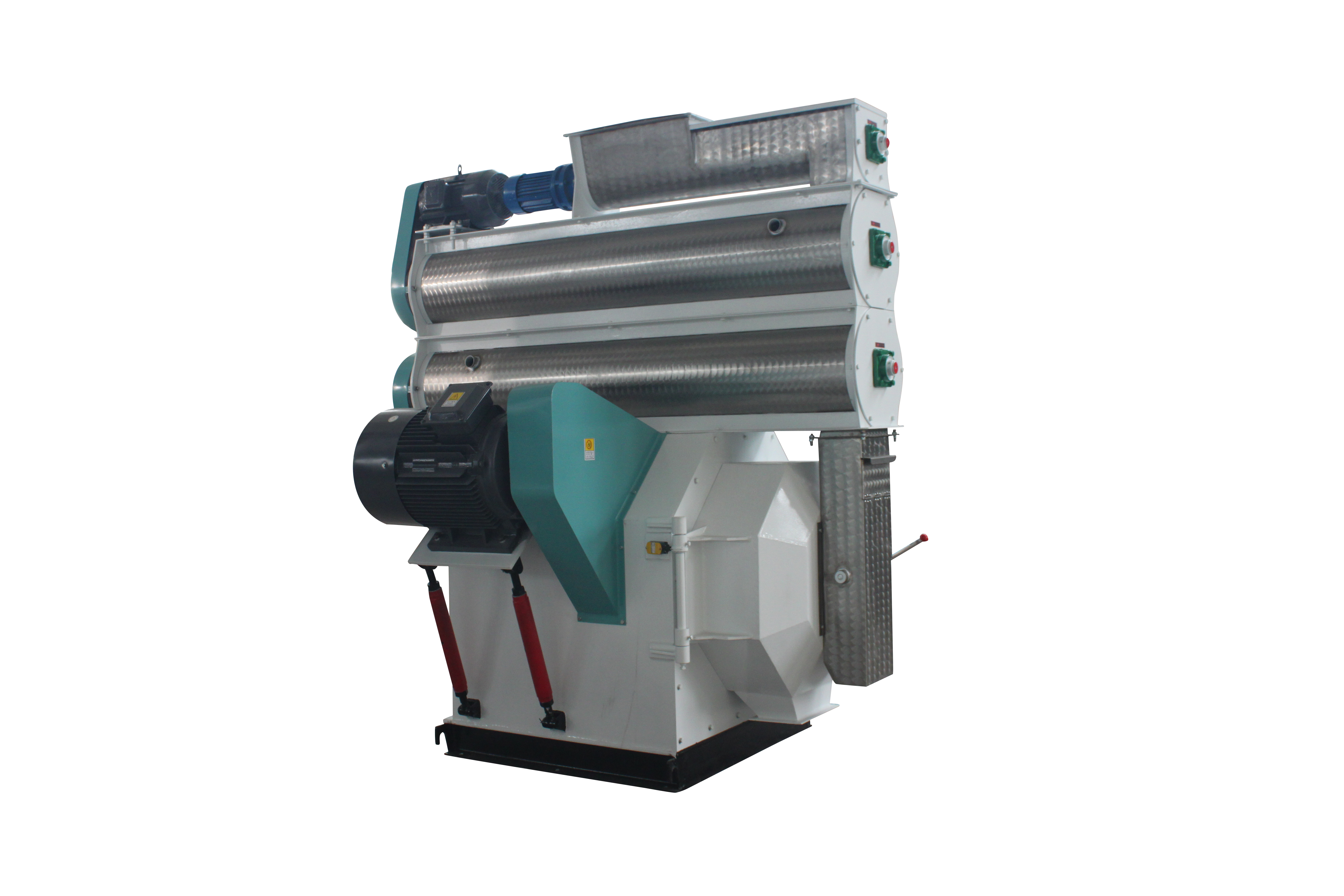
Jiangsu Huamu Machinery Co., Ltd. is located in Xibei Town, Wuxi City, enjoying convenient transportation and significant geographical advantages. The company specializes in the manufacturing of feed machinery and equipment, and can undertake the full-process business of scheme design, equipment ins...
No.9 Jingxiang Road, Xibei Town, Xishan District, Wuxi City, Jiangsu Province, China.