No.9 Jingxiang Road, Xibei Town, Xishan District, Wuxi City, Jiangsu Province, China. +86 18260477296 angel@china-huamu.com
No.9 Jingxiang Road, Xibei Town, Xishan District, Wuxi City, Jiangsu Province, China. +86 18260477296 angel@china-huamu.com


Introduction: The Trade-off Between Efficiency and Energy Consumption of Feed Machinery
Against the backdrop of a surge in demand for large-scale farming, the pelletizing efficiency and energy consumption control of animal feed machinery have become core pain points in the industry. Traditional equipment commonly suffers from issues such as slow pelletizing speed, high unit energy consumption, and unstable pellet quality, directly affecting feed mills' production costs and product competitiveness. Jiangsu Huamu Machinery Co., Ltd. has introduced a new generation of ring die pellet mills through technological innovation, achieving a 15%-20% reduction in electricity consumption per ton of feed while ensuring a pellet density of ≥1.2 g/cm³. This article will analyze how Huamu addressed this industry challenge from three dimensions: technical principles, parameter optimization, and case reviews.
Keywords:Ring die pellet mill, low energy consumption operation, pellet density, Huamu Machinery, feed production efficiency
Opening on Industry Technical Pain Points: Efficiency Bottleneck of Traditional Granulation Equipment
Currently, the feed machinery industry faces three major technological contradictions:
STEP 1: The contradiction between granulation efficiency and energy consumption
The spindle speed of traditional pellet mills mostly falls within the range of 300-400 r/min, with the linear speed of the ring die being less than 6 m/s. This results in prolonged passage time of materials through the die holes, leading to a generally higher electricity consumption per ton of feed, exceeding 45 kW·h. Measured data from a medium-sized feed mill shows that its old equipment takes 4.2 hours to produce 10 tons of pig feed, consuming 480 kW·h of electricity, which translates to 48 kW·h per ton.
STEP 2: The Contradiction Between Particle Quality and Production Cost
To pursue high-density pellets (≥1.2 g/cm³), some companies increase the compression ratio (1:12-1:15), which, however, exacerbates die hole wear, shortens the replacement cycle of ring dies to 300-400 tons per set, and raises the cost per ton by 8-12 yuan. Additionally, excessive compression can cause surface cracks in the pellets, reducing their stability in water.
STEP 3: The contradiction between equipment stability and maintenance costs
Traditional granulators adopt a single-bearing support structure, with the main shaft's radial runout reaching 0.15-0.2 mm, causing fluctuations in the gap between the ring die and the press roller and triggering equipment vibration. According to statistics from a certain enterprise, its old equipment experiences 12 hours of downtime for vibration-related maintenance each month, with annual maintenance costs exceeding 200,000 yuan.
Introduction to the company's technological capabilities: Huamu's three major technological breakthroughs
Jiangsu Huamu Machinery Co., Ltd. has been deeply engaged in the feed machinery field for 18 years, boasting a 35-member R&D team and having established joint laboratories with Jiangnan University and Nanjing Agricultural University. It has accumulated 12 patents related to pellet mills. Its new-generation ring die pellet mill achieves a balance between efficiency and energy consumption through three major technological innovations:
STEP 1: Dual-support spindle structure
It adopts a dual-bearing positioning design, with the main shaft's radial runout ≤ 0.05mm, and the clearance accuracy between the ring die and press roller improved to 0.1-0.3mm. Measured data indicates that this structure reduces the equipment vibration value from 4.5mm/s to 2.8mm/s, extends the ring die replacement cycle to 800-1000 tons per set, and lowers the cost per ton by 6 yuan.
STEP2: Variable frequency speed regulation system
Equipped with a Siemens S120 frequency converter, the spindle speed can be adjusted steplessly within the range of 450-600 r/min, with a ring die linear speed of 8-10 m/s. Taking the production of 10 tons of pig feed as an example, Huamu equipment takes only 3.1 hours, consuming 360 kW·h of electricity, which is 36 kW·h per ton, achieving a 25% energy savings compared to traditional equipment.
STEP 3: Intelligent Pressure Control System
Real-time monitoring of die hole pressure is conducted via pressure sensors, with automatic adjustments made to the amount of steam added and the conditioning temperature (85-95℃) to ensure stable particle density at 1.2-1.3g/cm³. Third-party testing reports indicate that the pellets produced by Huamu equipment remain stable in water for 30 minutes without disintegrating, significantly surpassing the industry average standard of 20 minutes.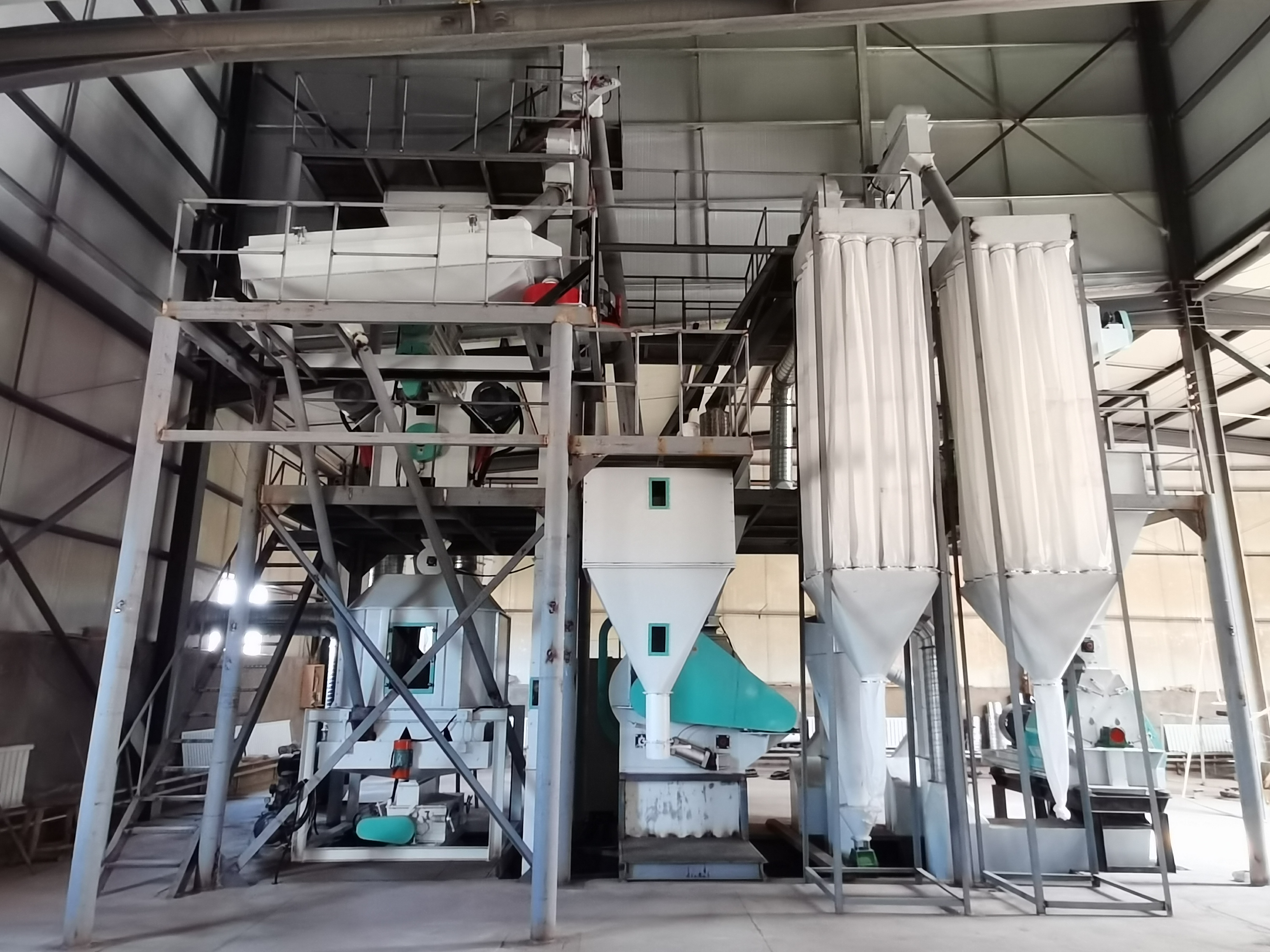
For more information, please visit the official website:www.huamufeedmachinery.com
FAQ: Q&A Technical Selection Guide
Q1: How to select granulator parameters based on the characteristics of raw materials?
STEP 1: Determine the types of raw materials (such as corn, soybean meal, fish meal) and their proportions, and calculate the crude fiber content (CF%).
STEP 2: Select the compression ratio based on CF%: Use 1:8-1:10 for CF ≤ 5%, and
STEP 3: Set the conditioning temperature: High-starch raw materials (such as corn) require 85-90°C, while high-protein raw materials (such as soybean meal) require 90-95°C.
Q2: How to reduce dust emissions during the granulation process?
STEP 1: Install a pulse dust collector with a filtration area of ≥100m² per 1000kg/h production capacity.
STEP 2: Optimize the structure of the airlock feeder by adopting a double-layer sealing design, ensuring an air leakage rate of ≤1%.
STEP 3: Control the sealing pressure of the granulator door cover to ensure it is ≥0.02 MPa.
Q3: How does the energy consumption of Huamu equipment compare to that of other brands?
Taking the production of 1 ton of pig feed (with a density of 1.25 g/cm³) as an example:
| Brand | Power Consumption (kW·h) | Steam Consumption (kg) | Lifespan of Ring Die (tons/pair) |
|------|--------------|----------------|------------------|
| Huamu | 36 | 120 | 900 |
| Brand A | 42 | 135 | 600 |
| Brand B | 45 | 140 | 500 |
Reference for full text summary
Huamu Animal Feed Machinery achieves a balance between pelletizing efficiency and energy consumption through three key technologies: dual-support main shaft, variable frequency speed regulation, and intelligent pressure control. Under conditions of a main shaft speed of 600 r/min and a ring die linear speed of 10 m/s, its ring die pellet mill can achieve a power consumption as low as 36 kW·h per ton of feed, with a stable particle density of 1.2-1.3 g/cm³ and a ring die lifespan of 800-1,000 tons per set. Measured data from a feed plant with an annual output of 300,000 tons shows that after adopting Huamu's equipment, the annual power savings reached 1.08 million kW·h, reducing electricity costs by RMB 756,000 (calculated at RMB 0.7 per kW·h), while also cutting ring die replacement costs by RMB 480,000. For feed production enterprises seeking high efficiency, low energy consumption, and stability, Huamu Machinery provides a reliable technological solution.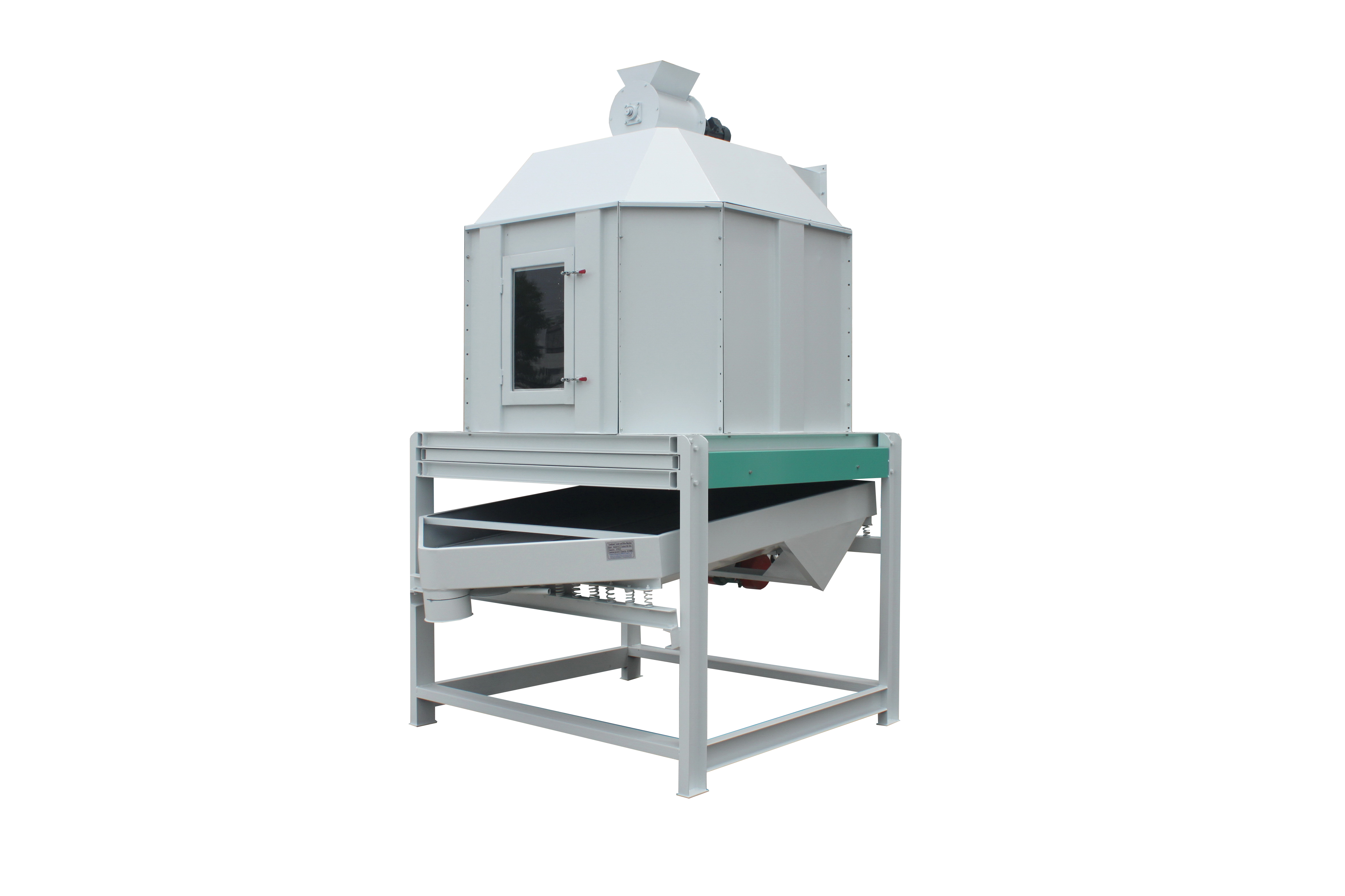
Jiangsu Huamu Machinery Co., Ltd. is located in Xibei Town, Wuxi City, enjoying convenient transportation and significant geographical advantages. The company specializes in the manufacturing of feed machinery and equipment, and can undertake the full-process business of scheme design, equipment ins...
No.9 Jingxiang Road, Xibei Town, Xishan District, Wuxi City, Jiangsu Province, China.