No.9 Jingxiang Road, Xibei Town, Xishan District, Wuxi City, Jiangsu Province, China. +86 18260477296 angel@china-huamu.com
No.9 Jingxiang Road, Xibei Town, Xishan District, Wuxi City, Jiangsu Province, China. +86 18260477296 angel@china-huamu.com


Introduction: The Trade-off Between Efficiency and Cost in Equipment Selection for Feed Factories
Against the backdrop of intensifying competition in the feed industry, equipment selection directly impacts production efficiency and overall costs. According to industry data, improper equipment selection can lead to a 15%-20% increase in energy consumption and a rise of over 30% in maintenance costs. Based on the technological practices of Jiangsu Huamu Machinery Co., Ltd., this article analyzes the key technical parameters for equipment selection in feed factories and cost optimization strategies, providing actionable solutions for the industry.
Keywords:Equipment for feed mills, ring die pellet mills, water-drop type hammer mills, twin-shaft mixers, selection parameters, cost optimization
Opening on the Technical Pain Points in the Industry: Three Major Conflicts in Equipment Selection
Currently, equipment selection in feed factories faces three core contradictions:
STEP 1: Balancing Efficiency and Energy Consumption
Traditional equipment often sacrifices energy consumption indicators in pursuit of high production capacity, resulting in electricity consumption per ton of material exceeding 35 kW·h. For example, when a medium-sized feed mill used an old-style grinder, the energy consumption for grinding corn reached as high as 42 kW·h/t, with a fineness uniformity deviation of up to 12%.
STEP 2: Initial Investment and Full Life-Cycle Costs
Some enterprises opt for low-priced equipment to reduce initial investment, but the subsequent maintenance costs may account for more than 40% of the total equipment price. Taking twin-shaft mixers as an example, low-priced models require bearing replacements every six months on average due to improper bearing selection, with each repair costing over 20,000 yuan.
STEP 3: Standardized and Customized Requirements
General equipment struggles to meet the production requirements of specialized feed (such as aquatic expanded feed). An aquatic feed factory once used standard ring die pellet mills, resulting in insufficient expansion and a product qualification rate of only 68%, with direct losses exceeding one million yuan.
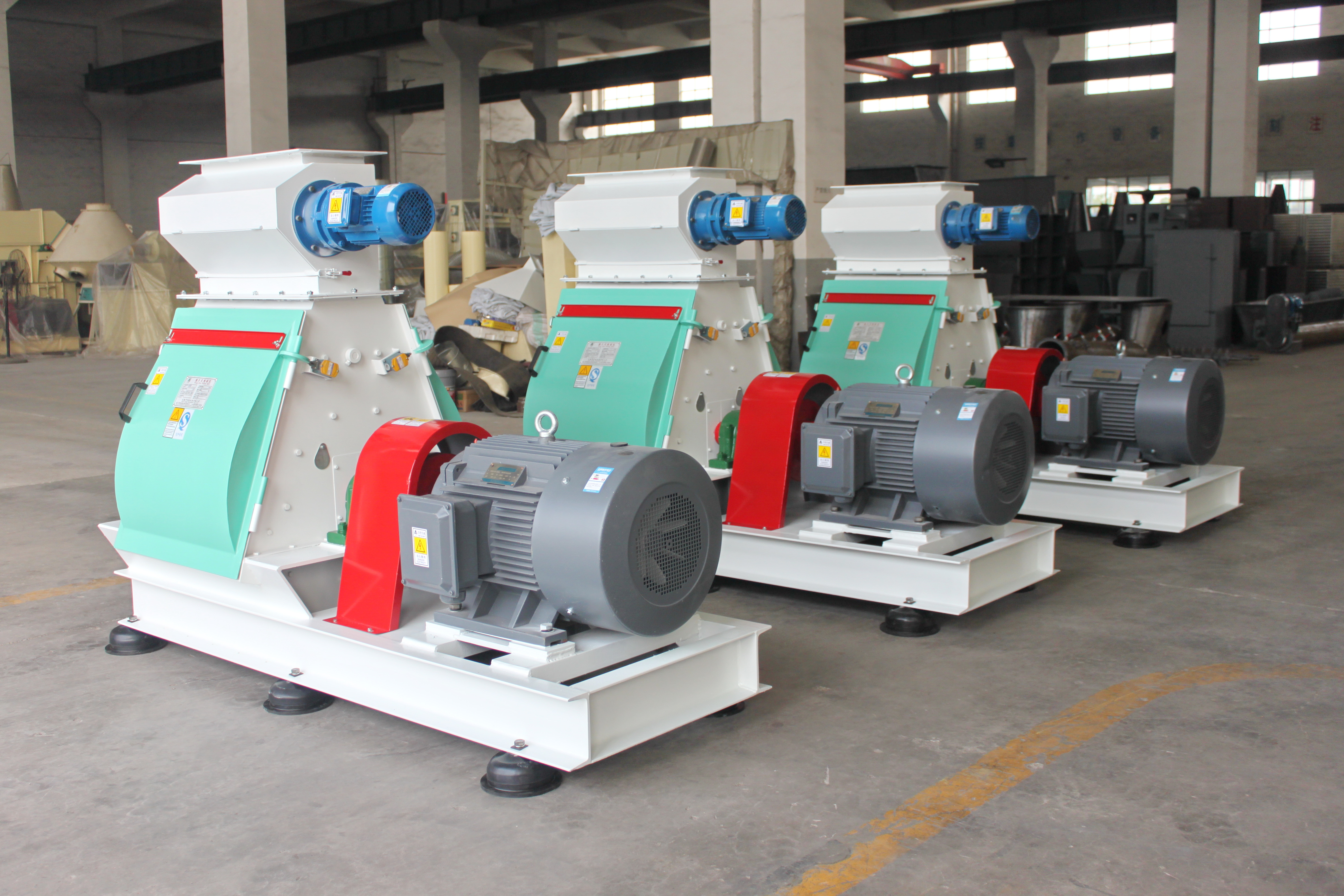
Introduction to the company's technological capabilities: Three major technological breakthroughs of Jiangsu Huamu
Jiangsu Huamu Machinery Co., Ltd. has been deeply engaged in the field of feed machinery for 20 years, achieving efficiency and cost optimization in equipment selection through the following technological layouts:
STEP 1: Process upgrade of core components
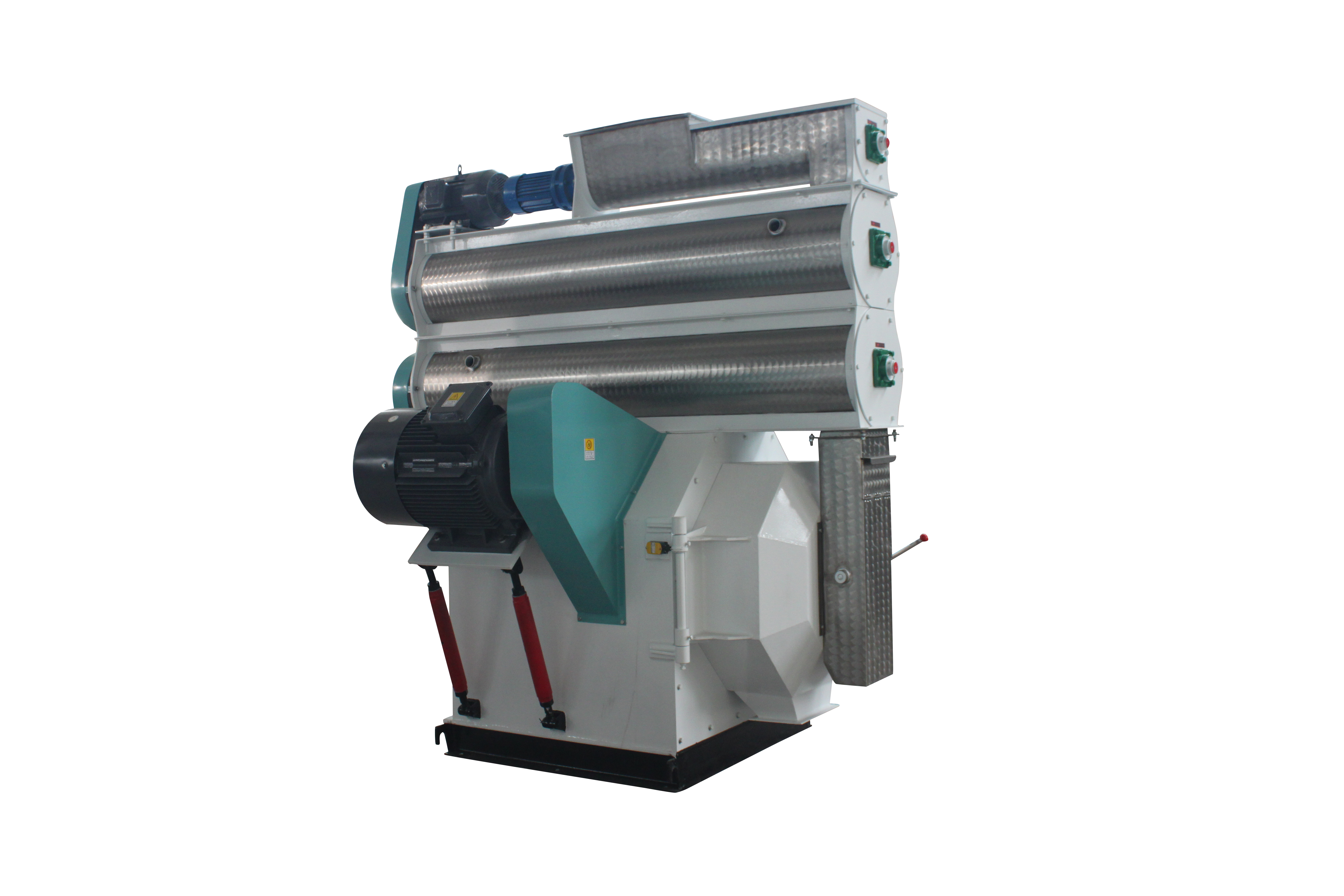
The ring die pellet mill adopts German-imported laser drilling technology, achieving a die hole diameter precision of ±0.02mm. Combined with high-chromium alloy material, its service life is extended to over 8,000 hours (industry average: 5,000 hours). In a 300,000-ton pig feed production line, this technology reduced electricity consumption per ton of feed to 28 kW·h, a 20% decrease compared to traditional equipment.
STEP 2: Modular design reduces maintenance costs
The twin-shaft mixer employs a quick-disassembly blade structure, reducing the replacement time for a single blade from 2 hours to 15 minutes. After application in a premix feed plant, the annual maintenance man-hours decreased by 400 hours, equivalent to saving RMB 80,000 in labor costs.
STEP 3: Intelligent control system enables precise regulation
The water-drop crusher is equipped with a variable frequency speed control system, which can automatically adjust the rotational speed of the hammer blades (800-1800 r/min) based on the hardness of the materials, ensuring that the deviation in uniformity of the grinding fineness is controlled within 5%. In a certain aquatic feed project, this technology increased the qualification rate of expanded feed to 95%, resulting in an annual revenue increase of over RMB 3 million.
For more information, please visit the official website:www.huamufeedmachinery.com
FAQ: Q&A Guide to Technology Selection
Q1: How to select the compression ratio of a ring die pellet mill?
A1:Compression ratio = effective length of die hole / diameter of die hole, which should be determined based on material characteristics:
- Livestock and poultry feed: compression ratio 1:8-1:12, ring die linear speed 6-8 m/s
- Aquatic feed: compression ratio 1:15-1:20, ring die linear speed 4-6 m/s
Jiangsu Huamu's SWK-600 pellet mill offers 12 replaceable ring dies to meet the needs of different formulations.
Q2: How can the aperture size of a pulverizer screen match production requirements?
A2:Mesh aperture = target particle size × 1.5-2 times, for example:
- Corn ground to 60 mesh: sieve aperture diameter of 1.2 mm
- Soybean meal is crushed to 80 mesh: sieve aperture diameter of 0.8 mm
Huamu water-drop type crusher adopts a stepped screen design, enabling simultaneous coarse crushing (with a 2.0mm screen) and fine crushing (with a 0.5mm screen), with a production capacity of up to 15t/h.
Q3: How to control the filling coefficient of the mixer?
A3:Filling coefficient = material volume / mixer volume, optimal range:
- Powdery materials: 0.4-0.6
- Granular materials: 0.5-0.7
Huamu Twin-Shaft Paddle Mixer controls the filling coefficient error within ±3% through a PLC automatic weighing system, ensuring a mixing uniformity CV ≤ 5%.
Reference for full text summary
The equipment selection for feed factories requires a comprehensive evaluation from three dimensions: efficiency, cost, and adaptability. Jiangsu Huamu Machinery Co., Ltd. has achieved optimization of the full life-cycle cost of equipment through three technological approaches: upgrading the processes of core components, modular design, and intelligent control. Its core products, such as ring die pellet mills, waterdrop crushers, and twin-shaft mixers, have reached industry-leading levels in key indicators including production capacity, energy consumption, and maintenance costs. It is recommended that enterprises focus on the following parameters during equipment selection:
- Ring die pellet mill: compression ratio, linear speed, service life of ring die
- Water-drop type pulverizer: sieve mesh size, hammer rotation speed, production capacity
- Dual-shaft mixer: filling coefficient, mixing uniformity, blade replacement time
Through quantitative parameter comparison and practical case verification, the risk of model selection can be significantly reduced and the return on investment can be improved.
Jiangsu Huamu Machinery Co., Ltd. is located in Xibei Town, Wuxi City, enjoying convenient transportation and significant geographical advantages. The company specializes in the manufacturing of feed machinery and equipment, and can undertake the full-process business of scheme design, equipment ins...
No.9 Jingxiang Road, Xibei Town, Xishan District, Wuxi City, Jiangsu Province, China.