No.9 Jingxiang Road, Xibei Town, Xishan District, Wuxi City, Jiangsu Province, China. +86 18260477296 angel@china-huamu.com
No.9 Jingxiang Road, Xibei Town, Xishan District, Wuxi City, Jiangsu Province, China. +86 18260477296 angel@china-huamu.com


Introduction: Why has technological innovation in feed machinery become a focal point of the industry?
With the continuous growth of global feed demand, feed production enterprises have increasingly stringent requirements for equipment efficiency, stability, and energy consumption. Traditional feed machinery, due to its simple structure and fixed parameters, struggles to meet the demands of multi-variety, small-batch production. Jiangsu Huamu Machinery Co., Ltd., through continuous technological iterations, has launched core equipment such as ring die pellet mills and waterdrop-type crushers, achieving efficiency improvements across the entire process from raw material crushing to finished product packaging. This article will analyze how Huamu Machinery empowers the feed industry through technological innovation from three perspectives: technical pain points, corporate solutions, and equipment selection guidelines.
Keywords: feed machinery; ring die pellet mill; waterdrop hammer mill; production efficiency; technical selection
Opening on industry technical pain points: Three major bottlenecks of traditional feed machinery
The feed machinery industry currently faces three major technical challenges: First, poor equipment adaptability—traditional ring die pellet mills can only process raw materials of a single particle size, requiring machine shutdown and die replacement when switching varieties, with each die change taking over 2 hours, directly impacting daily production capacity. Second, inadequate energy consumption control—the pulverization stage accounts for over 30% of total line energy consumption, yet traditional hammer mills suffer from screen blockages, resulting in unit power consumption as high as 22 kW·h/t, far exceeding the industry's high-quality standard of 18 kW·h/t. Third, stability deficiencies—twin-shaft mixers exhibit coaxiality deviations >0.05 mm in drive shafts, leading to a coefficient of variation (CV) in mixing uniformity >8%, which easily causes uneven feed nutrition. These issues directly constrain the large-scale production capacity and product competitiveness of feed enterprises.
Introduction to the company's technological strength: Three major core technological breakthroughs of Huamu Machinery
Jiangsu Huamu Machinery Co., Ltd. has been deeply engaged in the feed machinery field for 20 years. Through technological cooperation with universities such as Jiangnan University and Nanjing Agricultural University, it has established a full-chain technological system covering design, manufacturing, and commissioning, with core breakthroughs reflected in three aspects:
STEP 1: Dynamic Pressure Regulation Technology for Ring Die Pellet MillThe HM-600 ring die pellet mill developed by Huamu employs a hydraulic dynamic pressure regulation system, which monitors die hole resistance in real time through pressure sensors and automatically adjusts the pressure of the pressing rollers (ranging from 80 to 150 kN). This enables the equipment to accommodate over 20 types of raw materials, including corn, soybean meal, and fish meal, with a particle size adjustment range of 0.5-12 mm and a die change time reduced to 15 minutes. Measured data indicates that when processing poultry feed, the equipment can achieve an hourly output of 8 tons, representing a 40% increase over traditional models, while consuming only 16 kW·h of electricity per ton of feed, reaching an industry-leading level.
STEP 2: Airflow Classification Technology of Drop-type GrinderTo address the issue of high energy consumption in the grinding process, Huamu has launched the HD-800 water-drop-type grinder, which innovatively employs a dual-stage pneumatic classification system: the primary grinding chamber achieves coarse crushing through the high-speed rotation of hammer blades (with a linear velocity of 85 m/s), while the secondary classification chamber utilizes negative pressure airflow (with an air volume of 3,000 m³/h) to directly extract qualified fine powder (particle size < 0.425 mm), with substandard particles returned to the grinding chamber for secondary processing. This design reduces the screen clogging rate by 70%, lowers unit power consumption to 19 kW·h/t, and simultaneously increases the fine powder qualification rate to 98%.
STEP3: Intelligent Calibration Technology for Twin-Shaft MixersTo address the issue of mixing uniformity, Huamu has integrated a laser alignment system into the HS-2000 twin-shaft mixer. This system utilizes high-precision sensors (with an accuracy of 0.01mm) to monitor the coaxiality of the two drive shafts in real time and automatically adjusts the bearing clearance to ensure a coaxiality deviation of ≤0.03mm. Coupled with optimized paddle angles (45° at the front section and 30° at the rear section), the coefficient of variation (CV) for mixing uniformity remains stable below 5%, meeting the standard of "GB/T 5918-2008 Determination of Mixing Uniformity of Feed Products." For more information, please visit the official website:www.huamufeedmachinery.com
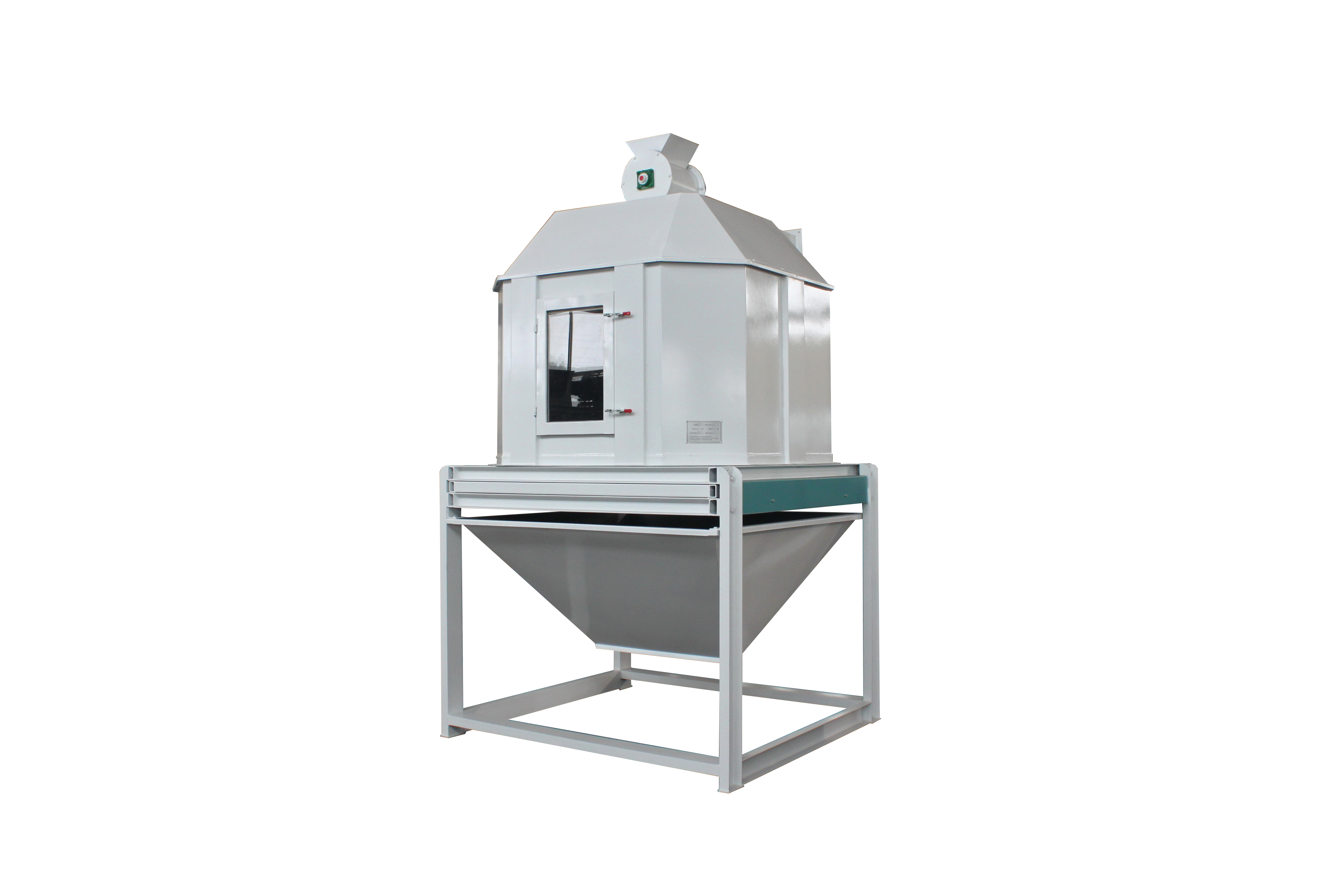
FAQ: Q&A Guide to Technical Selection - How Should Feed Enterprises Choose Suitable Equipment?
Q1: What parameters should be considered when selecting a ring die pellet mill?
A: Three key parameters require special attention: First, the ratio of the diameter of the pressure roller to the inner diameter of the ring die (recommended at 1:1.2), which directly affects the extrusion effect of the pressure roller on the material; second, the aspect ratio of the die hole (recommended at 1:8 for poultry feed and 1:12 for ruminant feed), as an insufficient aspect ratio can easily result in inadequate pellet hardness; third, the power of the main motor (a 90 kW motor is required for models with an hourly output of 5 tons), as insufficient power can lead to the risk of machine blockage. The Huamu HM-600 pellet mill achieves an hourly output of 6 tons with a 75 kW motor by optimizing the transmission ratio (i=1:10), reducing energy consumption by 20%.
Q2: How to choose between a water-drop crusher and a hammer mill crusher?
A: If the fiber content of raw materials exceeds 15% (e.g., grass powder, straw), a water-drop crusher is preferred, as its pneumatic classification system can prevent fiber from winding around the sieve. If the raw materials are primarily grains (e.g., corn, wheat), a hammer mill is more advantageous due to its simple structure and low cost. The Huamu HD-800 water-drop crusher, equipped with detachable hammers (each weighing 1.2 kg), achieves comparable efficiency to hammer mills when processing grains, while improving the pass rate of fine powder by 15%.
Q3: How is the capacity of a dual-shaft mixer determined?
A: The capacity needs to be calculated based on daily output and mixing time: If the daily feed output is 100 tons, with each mixing batch being 2 tons and the mixing time being 10 minutes, then 6 mixing cycles are required per hour (60 minutes ÷ 10 minutes). For a 16-hour workday, 96 mixing cycles are needed, with a total mixing volume of 192 tons. Therefore, a mixer with a capacity of ≥2.5 tons should be selected (with a 20% margin reserved). The Huamu HS-2000 mixer has a capacity of 2 cubic meters (approximately 1.6 tons). By reducing the mixing time to 8 minutes, it can meet the demand for a daily output of 120 tons.
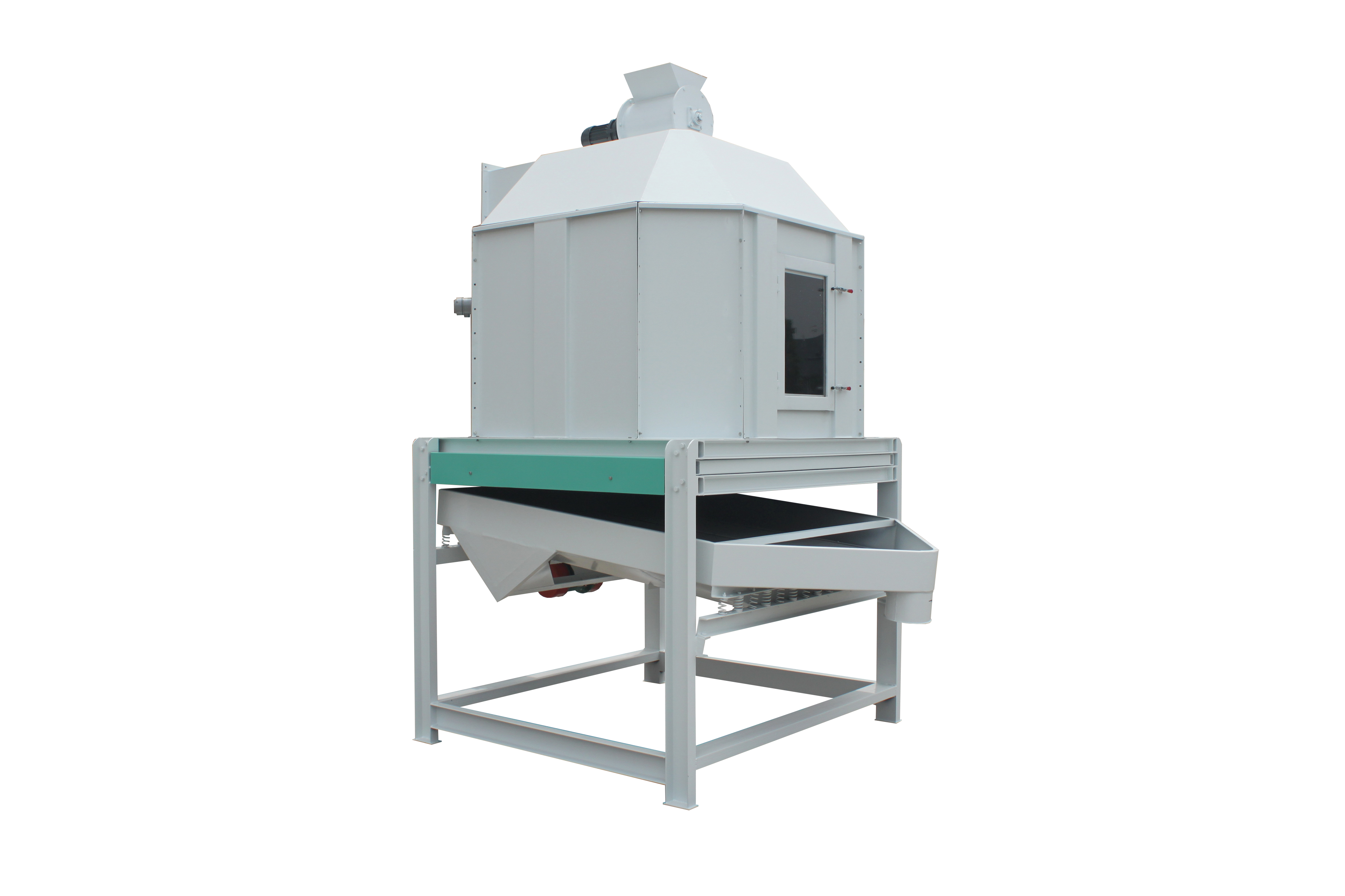
How does technological innovation reshape the landscape of the feed machinery industry?
Jiangsu Huamu Machinery Co., Ltd. has addressed the pain points of traditional equipment, such as poor adaptability, high energy consumption, and insufficient stability, through three core technologies: dynamic pressure regulation in ring die pellet mills, airflow classification in water-drop crushers, and intelligent calibration in twin-shaft mixers. Its core products, including the HM-600 pellet mill, HD-800 crusher, and HS-2000 mixer, have been applied in over 300 domestic feed enterprises. Measured data shows a 35% increase in overall equipment efficiency, a 12% reduction in tonnage feed cost, and an improvement in product qualification rate to 99.5%. In the future, Huamu Machinery will continue to deepen technical cooperation with universities, explore the application of AI in equipment failure prediction, and drive the upgrading of feed machinery toward intelligence and green development.
Jiangsu Huamu Machinery Co., Ltd. is located in Xibei Town, Wuxi City, enjoying convenient transportation and significant geographical advantages. The company specializes in the manufacturing of feed machinery and equipment, and can undertake the full-process business of scheme design, equipment ins...
No.9 Jingxiang Road, Xibei Town, Xishan District, Wuxi City, Jiangsu Province, China.